COVID in Pakistan, the Role of Middle-Classes and the Unprecedented Demand for a New Social Contract

Screenshot 2020-06-21 at 10.15.40

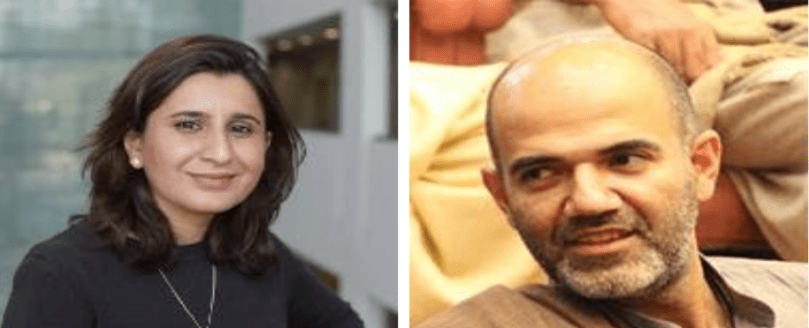
A conversation with and Dr. Juvaria Jafri and Dr. Aasim Sajjad.

Aasim Sajjad Akhtar is Professor of Political Economy at the National Institute of Pakistan Studies, Quaid-e-Azam University and a founder of the Awami Workers Party (AWP).  His research has focused on state theory, informality, colonial history, rise of the middle classes and social movements in Pakistan. His latest book is ‘The Politics of Common Sense: State, Society and Culture in Pakistan’.

 Juvaria Jafri is a Lecturer in International Political Economy at City University. Her research is on financial development in Pakistan, including inclusive finance, fintech, and impact investing strategies. Her latest co-edited book is ‘Geofinance between Political and Financial Geographies: A Focus on the Semi-Periphery of the Global Financial System.’

Introduction

The full impact of the COVID-19 pandemic on developing countries is still unfolding. While many countries have managed to achieve some stability in eliminating the spread of the crisis, others are struggling on various fronts. In South Asia, India has received much global attention owing to the violence of a hasty lockdown which was imposed without warning and an accompanying social safety net. Other countries in the region including Bangladesh, Srilanka and Nepal also continue to grapple with the existential question of how to ensure that contagion control does not come at the expense of destroying livelihoods. 

In this interview we focus on the situation in Pakistan. We invited Aasim Sajjad and Juvaria Jafri to address some questions related to the current situation in Pakistan. The following four questions were designed to provide a glimpse of how the pandemic is impacting the existing socio-economic structure of the Pakistani economy particularly focusing on class inequality, fin-tech as a potential solution and the activist and citizen-led first historic demand for a long-term welfare package. 
Read More »

Addressing the Pandemic in the Philippines Necessitates a New Economic Paradigm

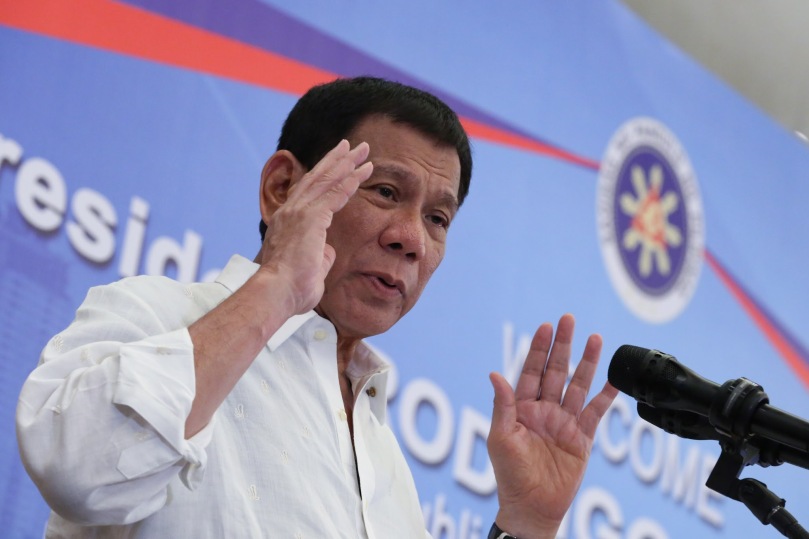
Rodrigo_Duterte_delivers_his_message_to_the_Filipino_community_in_Vietnam_during_a_meeting_on_September_28In his late-night Talk to the Nation on COVID-19 on 6 April, Rodrigo Duterte, the populist President of the Philippines, echoed the affirmation of leaders from rich countries in North America, Europe, and Asia: to do “whatever it takes” for the economy to survive the pandemic. The problem, however, is that, on his own admission, Duterte is incompetent in economics. His stubbornly militaristic mindset and police-centric approach to governance is even more problematic when dealing with complex developmental causes and impacts of the coronavirus outbreak.

Yet the Philippine state’s inadequate institutional capacity to respond to the epidemic goes deeper. Given the national economy’s position in the hierarchical global economic system, its structural weaknesses impacts on how effective the government’s response can be. The current mainstream approaches to resolve the pandemic and the multiple crises of capitalism would fail to address the convoluted historical process of maldevelopment of the Philippines. Thus, a radical political strategy with a new economic paradigm for post-pandemic reconstruction is needed.    Read More »

Financializing state capitalism: Exchanges, financial infrastructures & the active management of capital markets in China

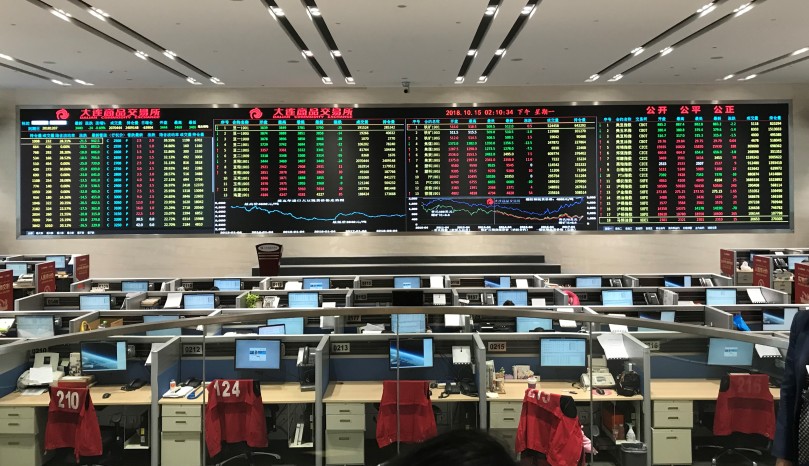
DCE trading floorThe development of capital markets has been a core focus of financialization research. For Epstein, financialization ‘means the increasing role of financial motives, financial markets, financial actors and financial institutions in the operation of the domestic and international economies’, while Pike and Pollard define financialization as the ‘growing influence of capital markets, their intermediaries and processes in economic and political life’. Other scholars also attribute a significant role to capital markets in financialization processes, be it in the dissemination of market-based financial activities and practices, the rise of shareholder value-oriented corporate governance, or ‘the increased ability to trade risk’. At the heart of and as a precondition of many aspects of financialization stand capital markets and their development. 
This is not only the case when it comes to financialization in advanced economies, but also with respect to the study of financialization in developing and emerging economies. Financialization processes are not uniform, they are rather variegated and refracted by national institutional settings that lead to different trajectories of financialization. As Lapavitsas and Powell emphasized, ‘both the form and the content of financialization vary according to institutional, historical and political conditions in each country’. This has also been picked up in debates about the relationship between financialization and the state. Previously, many scholars argued that financialization often results in a relative loss of state power vis-à-vis finance and the effects on developing economies are often described as potentially negative with financialization for instance decreasing their borrowing capacity and thereby policy space or deepening existing power asymmetries between states. But stemming from earlier discussions on transformations of the developmental state, more recent scholarship has highlighted that financial market development has often been actively facilitated by states. It argues that an increasing hybridization of financialization processes takes place in which state and (quasi-)state institutions often co-constitute financialization processes. 

Contributing to the growing literatures on variegated financialization and the state, in a paper titled ‘Financialization with Chinese characteristics? Exchanges, control and capital markets in authoritarian capitalism’ (recently published in Economy & Society) I argue that states are not only important actors facilitating financialization but can also exercise a considerable degree of control over financialization, thereby shaping its very form. Instead of a financialization process that follows a neoliberal logic and constrains state power, what we see in China is a ‘financialization with Chinese characteristics’ where the state actively tries to manage financialization and its social outcomes. Read More »

Pandemic Discourses – A Global Contagion Demands Global Perspectives

EYjy6gEWAAAKYPI


By Sakiko Fukuda-Parr, Manjari Mahajan, and Mark W. Frazier

As the inaugural issue of Pandemic Discourses goes online, 4.7 million cases of COVID-19 and nearly 320,000 deaths have been recorded by the World Health Organization. The waves of cases and deaths have been closely followed by mounting economic losses, leaving governments, communities, and individuals scrambling to find appropriate responses. Yet, even in this uniquely global moment, popular discourse around the pandemic has remained trapped within familiar terms.

Media coverage has to a large extent focused on experiences of the United States and Europe. The frameworks developed to respond to the pandemic have also been US/Euro-centric, frequently inward-looking and isolationist, paying scant attention to expertise, knowledge, and capacities elsewhere. The experiences of other parts of the world, even when taken into account, often serve to cement prior prejudices. In response to this lopsided discussion, Pandemic Discourses aims to foster a more expansive dialogue that encompasses voices from the global South, including China, India, and beyond.Read More »

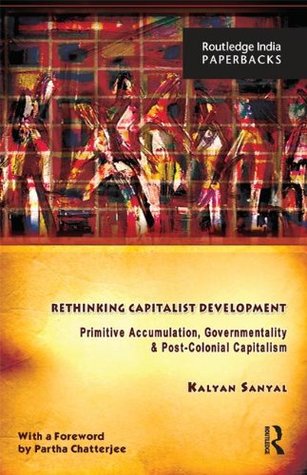
Is Postcolonial Capitalism a Thing to Itself? Reviewing Sanyal’s Rethinking Capitalist Development

18607553

Kalyan Sanyal’s Rethinking Capitalist Development (2007, 2014) is a rare work of political economy for many reasons. It is written by an economist, but it’s so interdisciplinary that you won’t be able to tell. It is an attempt to theorize capitalism in the postcolonial context from the inside-out rather than outside-in, i.e. with no reference to an ideal type. It refuses to sit neatly in theoretical boundaries — it is not entirely Marxist, not entirely Postmarxist, not entirely neo-Gramscian, not entirely Foucauldian, but a strange concoction of all. Perhaps the only thing that is not rare is that like most interesting and influential works that emerge from the Global South, it too has been largely ignored in the academic circles of the Global North, especially in Economics. Read More »

RMB internationalisation as an extension of Chinese state capitalism

wallpaperflare.com_wallpaper

Why has the RMB gone global?

More than a decade has passed since the launch of what is now widely known as ‘RMB internationalisation’, or the strategic attempt by the Communist Party of China (CPC) to expand the global reach and usage of the Chinese currency, the renminbi (RMB). Such is the scale and ambition of this strategy, some policymakers and scholars have proclaimed RMB internationalisation as a form of reserve currency succession – as a challenge to the US dollar as the world’s preferred currency for market exchange. This development is especially intriguing given how the financial system within China remains relatively insulated in spite of market oriented reforms since 1978. Could RMB internationalisation truly be about global currency supremacy when financial flows in and through China continue to be highly scrutinised?Read More »

When does state-permeated capitalism work?

9780367203696

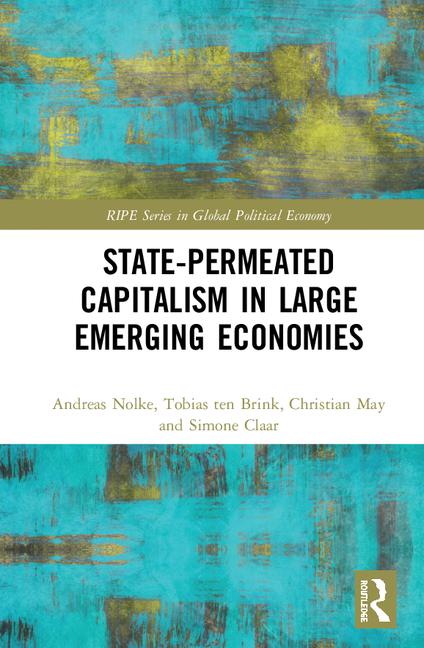
In recent years, state capitalism has become an important buzzword in the development economics discussion (again). In view of the very different ways in which this term is used, Ilias Alami and Adam Dixon recently highlighted the dangers of using the term too loosely in an article in Competition and Change. In view of its recent popularity, state capitalism could suffer a similar fate to the terms “neoliberalism” or “financialisation” by becoming a very loose rallying cry without any significant analytical value. To overcome this problematic situation, Alami and Dixon propose that future research should (1) develop a theory of the capitalist state, (2) circumscribe the time horizons of state capitalism, and (3) locate state capitalism more precisely in territorial and geographical terms.

Although I am not sure whether the genius can be put back into the bottle by developing a unified theory of the state (too many different theoretical traditions are involved by now), I am very sympathetic to the latter two demands. Our recently published book “State-permeated Capitalism in Large Emerging Economies” (Routledge) is a modest contribution to the latter goals. It deals with the economic development of Brazil, India, China and South Africa between 2000 and 2015. Departing from a comparative capitalism perspective, we have developed an ideal type of state-permeated capitalism as opposed to liberal, coordinated and dependent capitalism – and examined to what extent large emerging markets are approaching this ideal type. Read More »