Macro-economic policy and planning economic transformation- Prabhat Patnaik

Webinar 1: Why Revisit National Planning

Prabhat Patnaik. Download full Paper at IDEAs Website

The case for ‘planning’, in the sense of a co-ordinated set of policies to realise, at least in some key sectors, certain magnitudes of investment and output-growth, remains as strong today for developing countries wishing to achieve economic and social transformation, as it ever was. There are at least three reasons for this. First, the pace of investment in a spontaneously-operating capitalist economy depends upon the so-called ‘state of business confidence’. The state of business confidence may be such that it leaves the economy demand-constrained for long-stretches of time; what is more, even when the macroeconomy is not demand-constrained, the mix between consumption and investment in aggregate demand may be too much in favour of consumption relative to social requirements. Deliberate intervention by the State is needed not only to overcome demand-constraints, as the Keynesians argue, but, more importantly, to alter the composition of aggregate demand, and to do so in a manner which is socially equitable. The second reason relates to the need for sectoral balance. While the previous argument remains valid even in a one-good world, an additional problem arises the moment we recognise the real life multiplicity of commodities. For a spontaneously-operating capitalist economy, the pattern of supplies adjusts to the pattern of demand through episodes of profit-inflation located in particular sectors. These provide the signals for supply-adjustments to occur over a period of time. In short, the episodes of sectoral profit-inflation are more or less protracted, less protracted, depending upon the speed of adjustment of supplies. But such episodes of profit inflation, if they are severe, protracted and relate to certain essential sectors, are capable of causing extreme social hardships and devastation. The most notable case here relates of course to the supply of wage-goods. A sharp profit inflation in the wage-goods sector can cause, and is known to have caused, severe famines. Deliberate State investment is needed to eliminate supply- adjustment lags in wage-goods and in other key sectors. In sectors like agriculture, it is essential in any case to activate private investment, i.e. for the process of supply adjustment itself. In addition, by anticipating profit inflation and activating supplies before the event, it can in fact eliminate the very need for profit-inflation, and hence the attendant economic hardships. The third reason tums on the distinction between spontaneous and non-spontaneous structural change. Even if a system is not demand- constrained, and even if sectoral imbalances are instantaneously eliminated through the perfect shiftability of capital from one sector to another, the accumulation process is accompanied by a process of spontaneous structural change. The introduction of new processes and products which are perceived to be marketable gives rise to spontaneous structural change. The market in other words responds not only to visible signals, but also to a certain range of invisible signals. What it does not respond to is a range of other kinds of invisible signals, e.g. the social discontent inherent in a situation of unemployment, poverty and sub-human existence. The latter require the deliberate introduction of non-spontaneous structural changes, and this can only be done through deliberate State intervention.

It may be thought that the elimination of poverty is a matter merely of raising the rate of accumulation further, leaving the market to decide where this accumulation goes, so that this case is merely a part of our first reason. This however is not necessarily correct. Raising the rate of accumulation, if it simply accelerates spontaneous structural change and thereby raises the rate of growth of labour-productivity, may have a negligible additional impact by way of absorbing the poor and the dispossessed into higher-paid wage-employment. And if the population is expanding rapidly, then this absorption may require rates of accumulation which are impracticably high if a reasonably meaningful time-horizon is chose. The need arises therefore for introducing non-spontaneous structural change, and curbing to an extent spontaneous structural change. Both this introduction as well as this curbing require State intervention

Taken together, these three reasons for State intervention constitute an argument for more than mere fiscal interventionism, for more than mere public investment policy. They amount to a case for the state shaping broadly the trajectory of growth itself. While this is what I mean by planning it is obviously not synonymous with central planning, with detailed output targets, that was current in the Soviet Union earlier. There would be a range of public investment targets that the State would try to meet. It would seek to realise complementary private investment targets, and hence certain minimal levels of output growth-targets in some key sectors. These would determine the overall trajectory of development, within which there would be sufficient room for the operation of the free market, with the State imaginatively improvising responses to the strains that would inevitably arise from time to time owing to the operation of such a mix between the plan and the market. As is obvious from the above, the operation of such a system is not only not predicated upon universal public or collective ownership of the means of production, but is even compatible with private capitalist (not to mention petty) ownership in several spheres, provided of course the capitalists are responsive to the social need underlying the trajectory of development articulated by the state.

II

I should like to distinguish this vision, which I think has relevance for a democratic South African economy in the current conjuncture, from two other possible visions. The first of these believes in a ‘minimalist’ State. While the need for State intervention for undertaking certain infrastructural investments which the capitalists may be unwilling to do, for providing certain social services, and for weaving a ‘safely-net’ for the poor and the unemployed (the need for which is often seen to be only transitional), is recognised, the basic solution to social and economic problems is seen to lie in rapid economic growth, and the chief means of growth are seen to lie in the provision of freedom of operation to capital, both domestic as well as multinational, in the domestic economy. Allowing markets to function without interference, removing domestic controls of various kinds, and liberalising trade, are visualised as ushering in an internationally competitive, efficient economy which would exhibit rapid and sustained growth. While a certain amount of taxation by the state is accepted as being necessary for meeting its spending obligations, such taxation, it is suggested, should neither result in domestic price-distortions nor destroy capitalists’ incentives by being excessively high (at any rate by international standards).

A variant of this argument in the South African context would state that since tax-rates here are already very high by international standards, the State should meet its expenditure obligations, especially for the uplift of the oppressed in a democratic South Africa, by privatising State owned assets. This particular argument is palpably wrong. In a supply-constrained system, an increase in State expenditure on the upliftment of the blacks would not cause any additional macro-imbalances only if there is a simultaneous reduction in aggregate demand elsewhere i.e. in other avenues of public expenditure or in private consumption or investment (apart from foreign capital inflow). Now, unless the sale of State-owned assets to the private sector results in a reduction of private consumption or investment in order to finance their purchase, privatisation financed State expenditure would cause serious macro-imbalances by generating excess aggregate demand. Putting it differently, if private purchases of State-owned assets are financed by credit-creation, then using the proceeds from privatisation to expand State expenditure is no different in its macro-impact from a straight-forward credit-financed expansion of State expenditure; while causing exactly the same macro-imbalance as the latter, it amounts to a gratuitous transfer of State-owned assets to private hands. The fallacy of this argument incidentally is a replication of a fallacy which one finds in IMF-stabilisation policy packages. For stabilisation, the Fund argues, fiscal deficits should be cut; suggesting targets for fiscal deficits is a part of the Fund’s usual ‘conditionalities’. But in calculating the fiscal deficit, the Fund takes the proceeds from the sale of State-owned assets as an item of receipt, which in general is analytically illegitimate. The Fund may have ideological reasons for treating the sale proceeds of State-owned assets as if they constituted flow-receipts, but to accept this argument amounts to subscribing to a fallacy.

Let us however get back to the vision of a ‘minimalist State’. In a ‘liberal trade’ regime, assuming a given exchange rate, assuming a given import propensity, assuming that there is no deficiency of aggregate demand arising on the domestic side, i.e. that the State and the private sector taken together spend what they get, and ignoring all capital flows and debt-servicing, the rate of growth of output would be tethered to the rate of growth of exports. Those who argue for a ‘minimalist State’, therefore, pin their hopes for rapid growth on the ability of a ‘liberal’ regime, because of its acquired international competitiveness, to achieve high export growth-rates as well as a progressive lowering of the import propensity. The argument in other words is that such an economy would hold on to, or even improve upon, its share of the world market in a period when this market itself is believed, on the whole, to be a rapidly expanding one, and to witness no further increases in restrictive trade practices.

Even if we concede for a moment the last two beliefs, the argument is an invalid one for the following reasons. First of all a ‘liberal trade’ regime is a weapon that cuts both ways. While it is a truism that, if the world market is expanding rapidly, a country that retains or improves its share of it would witness rapid growth, a ‘liberal trade’ regime is as likely to allow others to encroach upon the country’s own home market as it is to allow the country to encroach upon the markets of others. In a typical third world context in fact, it is the encroachment by others upon the country’s own home market which is the fall-out of ‘trade liberalisation’. What is more, whatever prospects might have existed for the country’s eventually encroaching upon others’ markets get sabotaged in the very process of transition to a ‘liberal’ regime; in other words, the very nature of the traverse from a dirigiste to a ‘liberal’ regime determines the eventual position the country finds itself in, no matter what potential a ‘liberal’ regime held for it in the abstract.

Trade liberalisation brings immediately in its train a process of domestic de-industrialisation (together often with a lowering of the domestic savings-ratio), which is financed by borrowings from the Fund, the Bank, and, through their courtesy, from multinational banks. The beneficial effects which are supposed to accrue to the export profile from trade liberalisation, can after all manifest themselves, if at all, only after a considerable length of time. Meanwhile, the debt incurred at the initial stage of the traverse has to be serviced, and for this a further deflation of the economy is undertaken. The unemployment initially engendered by de- industrialisation is added to by the subsequent deflation. The running down of infrastructure because of the deflation subverts to an extent the prospects of export growth. And even if perchance exports do eventually pick up, the additional exchange earnings go largely into debt-service payments, somewhat easing perhaps the magnitude of domestic deflation, but by no means lifting the economy to the promised higher growth-profile. This picture of the traverse is made only grimmer to the extent that the exchange rate is depreciated as an accompaniment to the deflationary policy. This accentuates inflation, lowers the real wages especially of the unorganised workers and gives rise to speculative capital flight. In other words, the deflation-cum- devaluation package succeeds in ensuring that the burden of domestic adjustment during the traverse falls precisely on those sections of the population which are least able to bear it.

But this is not all. The argument for a ‘liberal’ economic regime is flawed for a second, even more important, reason. If it entails freedom for capital flows, then it makes the growth-process of the domestic economy dependent entirely upon the caprices of domestic and international investors. In any case, a theoretical flaw in any conception of a free global economy, where each country accepts the world prices of commodities and adjusts its production structure to these prices, lies in the fact that, even assuming that there are no problems of global aggregate demand, the locations where capital accumulates remain indeterminate; the fact that underdeveloped countries have lower wages does not by any means ensure that capital would flow towards them, rather than away from them as has historically happened. But when we superimpose freedom of capital flows upon a situation of traverse as discussed above, the problem becomes acute. Domestic deflation, growing unemployment, accelerating inflation accompanied by repeated depreciations of the exchange rate, declining real wages of unorganised workers, and the growing discontent that all this gives rise to, together with the increasing criminalisation of the society, provide the setting for capital flight; and this only exacerbates the problem ensuring that the promised turnaround in the economy is postponed still further.

COOPT, EMPTY, EVISCERATE: Nievas and Piketty on Unequal Exchange

By Güney Işıkara and Patrick Mokre

The recent paper by Gastón Nievas and Thomas Piketty, “Unequal Exchange and North-South Relations” has gained substantial praise as well as criticism in a short period of time. Their empirical endeavor is impressive: the authors compiled and published a large dataset of balance of payments, including traded goods, services, direct transfers, and income from foreign labor and capital assets. This is a gruelling task in itself, and the dataset will certainly provide the foundations for many fruitful studies. For many academic economists, Nievas and Piketty’s own interpretation of the data constitutes one such great contribution for it puts forward, as the title of their paper suggests, that modern inequalities across regions and countries have their roots in colonial extraction and unequal exchange characterizing international trade until today. 

We on the other hand argue that the paper falls behind the state of perception of international inequalities in the Marxist tradition, dependency and structural economics literature. It (1) grasps global inequality as the outcome of a collection of distortions of the capitalist market mechanism rather than as an intrinsic feature of the latter; (2) consequently, proposes structural reforms to alter the power asymmetries in international trade, without an appropriate model of those power relations and why they exist in the first place; (3) lacks an adequate theory of production, value and price to understand the exchange relations at stake; and (4) artificially separates the term unequal exchange from the existing literature on trade inequalities, value transfers, and drain of wealth.  

Read More »

The white saviour industrial complex and global AI governance

In the realm of international development, the ‘white saviour’ trope has long been a subject of critique and controversy. This phenomenon, often rooted in colonialist attitudes, positions Western individuals or entities as benevolent rescuers of non-Western communities, usually without acknowledging or addressing systemic multidimensional inequalities, colonial/racial privilege, and local agency of indigenous communities. The white saviour complex has not only perpetuated harmful stereotypes but has also undermined the efforts and voices of those it claims to help.

As artificial intelligence (AI) has emerged as a global force to potentially achieve sustainable development goals, we see a new manifestation of the white saviour industrial complex within emerging global AI governance.

Read More »

The state in Africa is a colonial state

Map of Africa from 1583

The default unit of analysis for many economists when dealing with national economics is the state. Yet, in economics textbooks ‘the state’ is often assumed to be a neutral actor exogenous to economic processes. It is assumed to be the same – in essence – everywhere. This conception is based on a Eurocentric view of the state, which assumes all states are ahistorical Westphalian nation states based on Enlightenment principles. However, states are not neutral, but deeply shaped by historical processes. Analyses of ‘states’ in economics – country analyses, country data, evaluations of so-called ‘macroeconomic fundamentals’ – must be rethought by taking the complexities of the state in Africa into account in their conceptualisations, analyses and policy proposals. In this piece, I unpack how the African state evolved as a colonial project and the implications of it being mischaracterized as neutral state.

A state like no other

The state in Africa has been mischaracterized as a neutral institution devoid of a problematic history which affects its present. In its simplest terms, the state is an institution of governing, i.e., a political organization whose main aim is to establish and maintain security, law and order within its geographic jurisdiction. In economics, the state is discussed and perceived as a one size-fit-all institution, one that is and must be similar in Europe, Asia, Africa, and the Americas. The African state, in particular, has been presented as if it is similar to other states, especially in Europe and the United States of America to which it must aspire.

Moreover, the African has been evaluated and judged on the basis of other perceived progressive states, especially those on the western hemisphere. That states are the same is both untrue, misleading, and ahistorical. African states are very different from other states as they are products of conquest, colonialism, genocides, epistemicides and slavery. It was created to support these processes and it still dispenses them mainly through violence. Those who colonised African countries did so not only to access markets and raw materials, but to displace epistemologies and decentre the colonized; and in the process they centered the colonising countries as the centre of knowledge production and essence of humanity. This is the origin of the superiority of liberal economics as the dominant way of understanding and doing economics in Africa.

Read More »

Decolonising for Whom? Recentring grassroots struggles and voices in the ‘decolonising fintech’ narrative

By Serena Natile and Joy Malala

Over the last few years ‘decolonisation’ has become an increasingly popular subject in Western academia. Broadly considered the process of recognising and undoing the intellectual and institutional structures that enabled and maintain the reproduction of imperial power, calls for decolonisation have opened uncomfortable debates about epistemological privilege, forcing us to confront biases and injustices and to revisit hidden histories and visions for the future. While these debates remain essential, particularly at a time of political authoritarianism, racism, and violence, they also highlight the contradictions in Western academia between decolonisation as a fashionable conceptual trend and its real commitment to justice.

In formerly colonised communities, generational consciousness of colonial oppression and struggles to recover land, property, wealth, and political institutions have created a lived experience of the long-term consequences of colonialism, usually conceptualised as ‘coloniality’, that is not a concept but a reality. This experience has shaped movements and protests in the Global South, including within universities. An example is the #FeesMustFall movement in South Africa, which followed the significant decline of government subsidisation of universities with discriminatory consequences for the disadvantaged Black population without historical wealth and economic privilege. Similar protests concern the recognition of and fight against pillars of colonial power including philanthropists such as British colonialist Cecil Rhodes, who accumulated wealth by appropriating land, enslaving people and extracting resources, and used that wealth to shape knowledge production.

Other significant protests involve resistance against neocolonial powers such as Western financial infrastructures, corporations and international institutions i.e. the International Monetary Fund (IMF) and the World Bank. A  recent example is the ongoing youth-led (Gen Z) round of protests in Kenya #rejectfinancebill2024, motivated by demands to reject the IMF-supported Finance Bill that, if approved, would have imposed a fresh round of government cuts to basic services and austerity measures on Kenyans. The young people protesting in the streets of Nairobi showed awareness of the colonial legacy and long-term impact of the 1980s structural adjustment policies (SAPs) on the lives of people – particularly those at the lower end of the income distribution, and demanded economic sovereignty as the only way to achieve social justice. The protests were successful in impeding the adoption of the Bill, but many young people paid with their lives, as the government deployed a deadly military response to the protests. 

The demands for decolonisation are based on ending economic and epistemological oppression, two interrelated aims, each grounded in colonialism. Reclaiming knowledge and the economic means that allow its production and dissemination has always been at the centre of decolonisation as an opportunity to remake societies, nations, and the world itself for the better. In its fight for justice, decolonisation is a grassroots struggle against colonial and neo-colonial rulers and rules, as well as against all global and local actors and structures that enable and reinforce those rules. For this reason, grassroots voices need to be at the centre of any decolonisation project.

Read More »

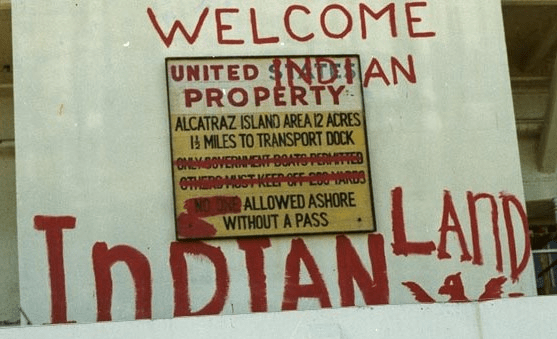
Misreading Indigenous Politics: A Eulogy for the Eurocentric Left

Response to Thomas Meaney, “Red Power” in LRB (Vol. 46, No. 14, 18 July 2024)

In the latest issue of the London Review of Books under the title of “Red Power: Indigenous Political Strategies,” Thomas Meaney has written a review of three recent award-winning books by historians of Native North America: Pekka Hämäläinen’s Indigenous Continent; Ned Blackhawk’s The Rediscovery of America; and Nick Estes Our History is the Future. In some ways, the review is impressively learned. Meaney uses the occasion to canvass a generations-spanning array of scholarship on the history of Native North America and engages figures, events, and historiographic questions of which only a very small body of Native and non-native scholars on these topics are even aware.

Marks of erudition aside, Meaney is out to weave together a broader narrative that extends beyond the historical bona fides of these books. The key moment in setting up this narrative comes after Meaney has raised his readers’ hopes by opening with a quite historically literate summary of European settler expansionism and Indigenous peoples’ responses to it. In the paragraph that then really begins the substance of his review, Meaney pivots: “but recent roadmaps of the historiography either sidestep material questions or mistake a colonized mindset for progressivist one.” This is where Meaney divides the three books under review into three categories of political and historical errors: Hämäläinen’s revisionist history overstretches the notion of “empire” in his account of “Indigenous power” by labeling the Lakota (and in earlier work, the Comanche) as such. (I agree with this critique, so I leave it aside in this review). Blackhawk represents a trend of scholars of Native history and federal Indian law who “have so thoroughly internalized constitutional ideology that they seem not to notice how their cause has been instrumentalized by the most fanatically libertarian segment of American society.” And finally, “a nominally [!] left-wing Native scholarship” that romanticizes Indigenous experiences, engaging in a politics of authenticity. The latter is how Meaney represents the work of Lakota scholar Nick Estes.

After establishing these categories, Meaney argues that these various limitations are “all the more regrettable because the 20th century offered examples of Indigenous co-operation with the left, cases contemporary political theorists have examined with more care than their historian peers.” This is a strange thing to assert at the outset, given that there was no recognizable anticolonial “left” in the US settler colony that Native nations could possibly have “cooperated” with in the 19th century. The consensus on the necessity and inevitability of land dispossession and structural predation cut across almost all categories of white society, including almost all of those on the far left of the political spectrum. Moreover, this included, as many others have noted, some key figures in the history of African-American political thought such as Douglas and Du Bois. What these historians—particularly Blackhawk and Estes—ask us to do is to suspend some assumptions about what constitutes the commitments of “the left” at all, given the deep investments of American republicanism and many later iterations of US leftism (let alone the liberalism of the Democratic Party) in colonial dispossession or just racialized indifference.

Read More »

Is women’s access to land path dependent? Evidence from Punjab (Pakistan)

Women have historically been excluded from formal land rights in the Indian subcontinent. For its rural population, land remains the most prevalent and significant asset, making bequests of land parcels the main channel through which women can acquire land (Gazdar, 2003; Nelson, 2011; Agarwal, 1994).  Customary land rights prevented inheritance along gendered lines and in colonial times, these laws were codified to prevent the sale and purchase of land parcels (Nelson, 2011). To what extent and how have such gendered patterns of land ownership persisted in different areas of Punjab in Pakistan? To what extent is there path dependence in gendered land ownership? Those are the research questions I’ll tackle in this blog post.

In 2015, the Government of Punjab introduced a series of reforms aimed at enforcing women’s existing legal land rights in the process of inheritance. One enforcement mechanism introduced was making it the responsibility of local revenue officials to ensure that after the death of a landed individual, each heir would be transferred their inherited share in the land parcel by revenue officials even if the family did not initiate an inheritance mutation process. In addition, paper-based land records originating from the era of British colonial rule were digitized and stored in a central database. The new system made it mandatory to conduct in-person biometric verification of all heirs (male and female) of the deceased for an inheritance mutation case to move forward with the official transfer of land parcels. The introduction of these enforcement mechanisms made an historically exclusive inheritance mutation process more inclusive towards women. But fieldwork suggests that previous patterns of land ownership continue to be repeated in Punjab putting women at a disadvantage. In this blog post I unpack some of these findings, which raise questions about land reform alone as the solution to gendered division of land ownership. Instead, I find that the manner in which old patronage structures interacted with the British colonial system has had lasting implications on the way in which land is distributed.

Read More »

Colonialism and Indian Famines: A Response

Tamoghna Halder criticized one of my writings on nineteenth-century Indian famines. Halder distorts my views and wrongly implies that I suppressed data. He misreads the very nature of the Indian famine debate, thinking it is about facts. It is not. It is about method, about how economic historians and development scholars should read the history of climatic shocks. The piece demands a response and a clarification of the issues involved.

Read More »