Beating around the Bush: Polycrisis, Overlapping Emergencies, and Capitalism

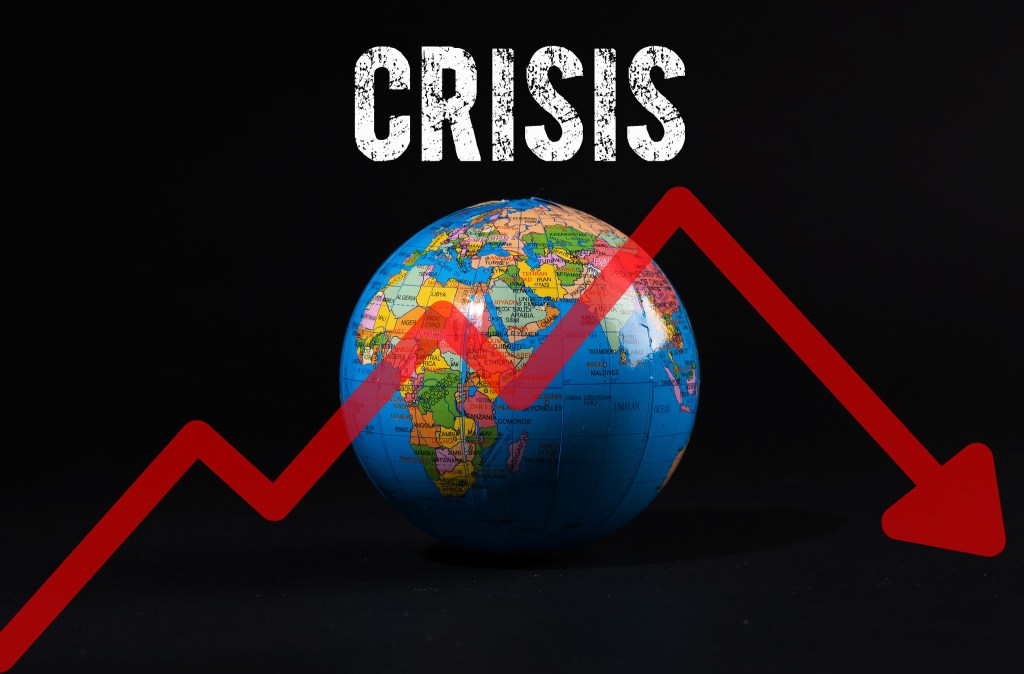
It is in vogue nowadays to describe the multifaceted and intertwined crises of capitalism without referring to capitalism itself. Obscure jargon of ‘overlapping emergencies’ and ‘polycrisis’ are brought up to describe the complexity of the situation, and they serve, with or without intention, to conceal the culprit, namely the totality of capitalist relations. This short piece discusses the content, function, and limits of these evasive practices with concrete examples.

A Hodgepodge of Risks

“A polycrisis is not just a situation where you face multiple crises” writes Adam Tooze, it is rather a situation “where the whole is even more dangerous than the sum of the parts” (Tooze 2022a). Even at first sight, he is able to count seven radical challenges on the radar, including Covid, inflation, recession, hunger crisis, climate crisis, nuclear escalation, and a ‘Trumpite’ Republican Party storming back to power.

Former long-time Harvard President, Larry Summers celebrates the term polycrisis for its capacity to capture the many aspects at stake, and adds: “I can remember previous moments of equal or even greater gravity for the world economy, but I cannot remember moments when there were as many separate aspects and as many cross-currents as there are right now” (Summers 2022). Make no mistake, the approval comes from a life-time mouthpiece of the establishment, foe of the working classes and the oppressed, frank enough to argue as the then Chief Economist of the World Bank that “the economic logic behind dumping a load of toxic waste in the lowest wage country is impeccable”.   

In Tooze’s view, in the 1970s, too much or too little growth, or late capitalism could be shown as the ultimate source of the problems at hand depending on one’s political position. What makes the current moment distinctive is the fact that “it no longer seems plausible to point to a single cause” (Tooze 2022b). He is thus quite explicit that one should avoid the use of grand narratives, or, in line with that, the designation of the capitalist mode of production as the root cause of the radical challenges upon us.

Read More »
Marx and Colonialism

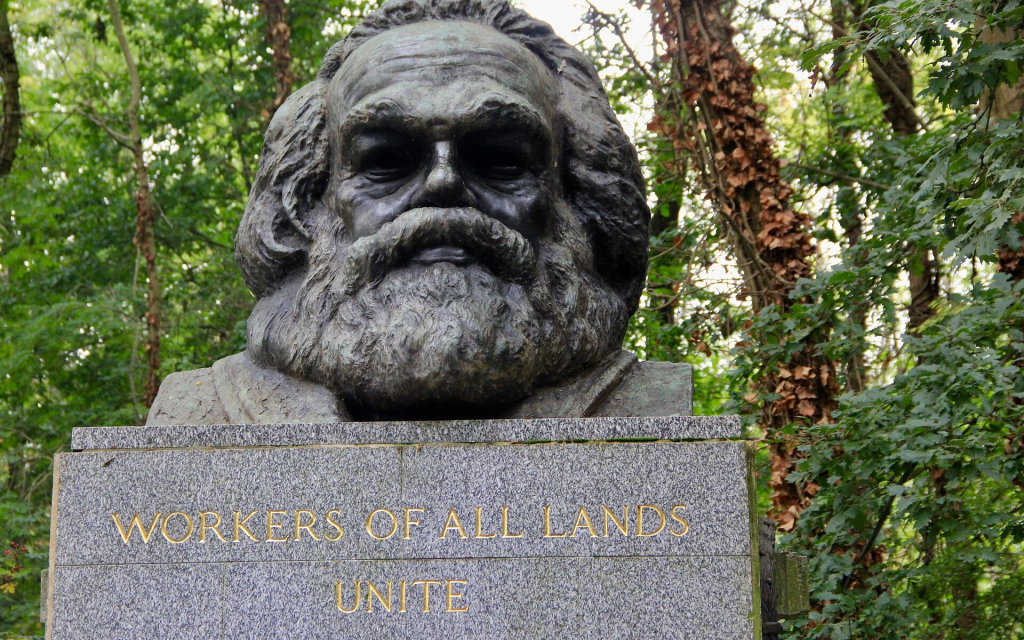
It is widely believed that Marx did not systematically consider the role of colonialism within the process of capital accumulation. According to David Harvey, Marx concentrated on a self-closed national economy in his main work. Although he did mention colonialism in Part 8 of Capital Volume 1 on the so-called primitive accumulation, this would only belong to a pre-history of capital, not to its everyday development. Based on a similar assumption, some postcolonial scholars criticise Marx for being Eurocentric, even a complicit supporter of Western imperialism, who ignored the agency of non-Western people.

If we read some passages from the Manifesto we could think that they are right. How can we explain otherwise Marx and Engels praising the role of the bourgeoisie drawing even the most barbarian nations into civilisation or the view that the liberation of colonised peoples depended on the victory of the revolution in Europe?

Before I start, let me make a short premise. In my first book I read Marx’s Capital in the light of his writings and articles on Ireland, China, India, Russia, and the American Civil War. At the time I believed that Marx only published a significant, but still limited amount of writings on the colonial question, those available in the Collected Works and in collections like Marx & Colonialism. But then in 2007 I worked at the Berlin-Brandenburg Academy of Sciences and Humanities, contributing to the complete edition of Marx’s and Engels’s writings. I thus “discovered” some of Marx’s 20,000 print page long notebooks (just to give you an idea, the printed notebooks alone would look like a new Collected Works). These writings show that Marx was interested in colonialism all his life, including when he wrote the Manifesto.

What came out of my reading? Let me start with the question of Marx’s field of analysis in Capital Volume 1. To analyse capital reproduction ‘in its integrity, free from all disturbing subsidiary circumstances’, Marx treats the world of commerce as one nation (1976: 727) and presupposes the full worldwide imposition of the capitalist mode of production. Does this mean that Marx analysed a “self-enclosed national economy” as Harvey and others believe? In my view, this abstraction means exactly the opposite. Marx’s positing a coincidence between the national and global levels is a premise for conceptualising the world market, which includes both internal and foreign markets of all nations participating in it. This abstraction makes it possible to include expansionism into the analysis of capital accumulation. In this framework, a country’s economic system is not confined within its national borders but consists of all production branches where capital is freely transferable, including the colonies and dependent economies.

Read More »

Who’s in control? Wall Street Consensus, state capitalism, and spatialised industrial policy

By Seth Schindler, Ilias Alami and Nick Jepson

Recent trends may well have puzzled critical observers of global development policy. On the one hand, we witness the rise of what Daniela Gabor has aptly termed the ‘Wall Street Consensus,’ an emerging paradigm promoting the mobilisation of private finance as a developmental priority. Southern states are encouraged to re-engineer their domestic financial systems around securities and derivatives markets, create ‘investable’ opportunities in sectors such as infrastructure, water, climate adaptation, health and education, as well as deploy policies that specifically ‘de-risk’ investment for global investors. In this formulation Southern states are subordinated to global financial capital and their policy space is significantly constrained.

On the other hand, however, we observe a tendency towards state capitalism, wherein states are increasingly active within markets, as entrepreneurs and owners of capital as well as regulatory agents in the world economy. Across the income spectrum states have embraced the role of agents of transformation and development. In the global South, one way these trends manifest is in the proliferation of new modalities of spatialised industrial policy underpinned by large-scale development projects. Examples include the China–Pakistan Economic Corridor, Indonesia Vision 2045, the Plan Sénégal Émergent, Morocco’s New Development Model, and the developmental aspects of Mexico’s Fourth Transformation such as the Tehuantepec Isthmus Interoceanic Corridor. Some of these plans have benefitted from the rise of China and its multitrillion-dollar Belt and Road Initiative, which traditional development actors now increasingly seek to counter by providing alternative initiatives.

Read More »

Beyond Green Restoration: An Eco-Socialist GND

Following the resolution introduced by Alexandria Ocasio-Cortez and Ed Markey, the term Green New Deal (GND) has become the gravitational center of climate action debates. On the one hand, conservatives, as well as some leftist circles, designate the AOC-Markey resolution as “socialist”. On the other hand, the term GND was first made public by Thomas Friedman in his NY Times column as a capitalistic and patriotic project which serves as “the basis of a new unifying political movement for the 21st century” (p.4). It comes as no surprise that so much political confusion accrues around the concept of a GND.

Max Ajl’s A People’s Green New Deal is the best leftist response I have read to the discussions whirling around this notion. It is clear-minded and well written. Politically, it constructs a consistent, uncompromising, anti-imperialist vision, well aware of the fact that tamed horizons are easily coopted and rearticulated by the ruling classes thanks to the elasticity of capital accumulation. Theoretically, its foundations are found in the “inherently polarizing” frameworks of dependency theory, world-system analysis, and (environmentally) unequal exchange (p.14).

Ajl evaluates GND proposals not only on the basis of targeted changes in physical production, but also in terms of their systemic implications. Some GNDs aim to preserve or strengthen capitalism, while others are designed to attack or abolish it (p.3). Correspondingly, the book is divided into two parts. The first one is concerned with what Ajl calls Capitalist Green Transitions (p.16) or “ruling class agendas” (p.20), while the second part sketches his vision of a People’s Green New Deal.

Read More »

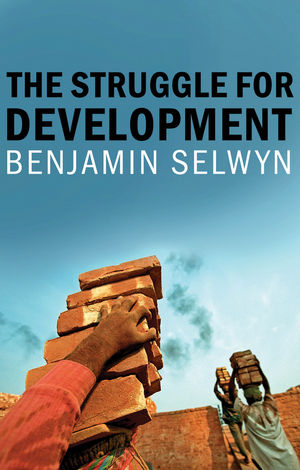
The Struggle for Development

This post is adapted from the preface for the newly published Turkish edition of The Struggle for Development, first published in 2017. The original edition aimed to root development thinking and practice in the analysis of class relations, and intellectual and political support for labouring class struggles. Turkey is experiencing numerous social struggles that illuminate the relevance of the arguments in this book. It is my hope that this book contributes to illuminating the social, developmental, value of these struggles.

Collective struggles by labouring class communities – in and beyond the workplace – have the capacity to generate real human developmental gains for these communities. Consequently, these struggles and the labouring classes that pursue them, should be considered as developmental.  

The majority of development thinking across the political spectrum – whether theoretically or policy focussed – tends to downplay labouring classes, their struggles and the gains they generate.  Rather, such struggles are usually ignored or are portrayed as obstacles to development, because they do not adhere to dominant capitalist notions of development. 

Capitalist notions and strategies of development take many forms, and can be thought of as existing along a spectrum – from more market-led/neoliberal, to more state-directed forms. In this book I argue that, despite notable differences, these forms of development represent varieties of capital-centred development. Here capital accumulation is prioritised as the basis of economic and human development. As I show in this book, both market led and state led forms of development are based upon the assumption that labouring classes represent an objective input into the development process, rather than a subjective agent of development. This assumption legitimates labour exploitation and repression for the greater ‘good’ of capital accumulation.  

Read More »

The limits of “design ethics” under capitalism

Working as a product designer in media for the past five years, I’ve witnessed the topic of “design ethics” raised at industry conferences, presentations, and meetups. Yet I’ve noticed that in our discussions, designers rarely mention the economic context within which we design. We hold up examples like news feeds promoting fake news and financial apps encouraging users to trade the riskiest stocks and we ask: how might we design better? Conventional discourse presents these unintended consequences of our work as technical problems: how might we design and code ethically, while maintaining profitability and growth? (Perhaps the most well-known example of this framing is The Center for Humane Technology’s “The Social Dilemma,” which confuses correlation with causation by attributing negative mental health and political trends to technology, with no mention of technology’s place in capitalism.)

We will not solve problems of authoritarianism, racism and xenophobia, misinformation and addictive technology, mental health and public health, or climate change with design ethics. While designers should thoroughly consider the consequences of our work, the problems facing the design and technology industry are not ones of individual bad actors (though some exist). Rather, we must acknowledge that design decisions are economic decisions––and in our current economic system, the economic interests of individuals often conflict with their social consequences. Technology firms are not cultural or ideological actors, but “economic actors within a capitalist mode of production…compelled to seek out profits in order to fend off competition” (Srnicek 2017, 3). If we truly want to design ethically, we must first consider how technology is embedded in capitalism. Our ability to make technology work better for society as a whole depends upon our willingness to reorder our priorities and redefine value as more than profit maximization.

Read More »

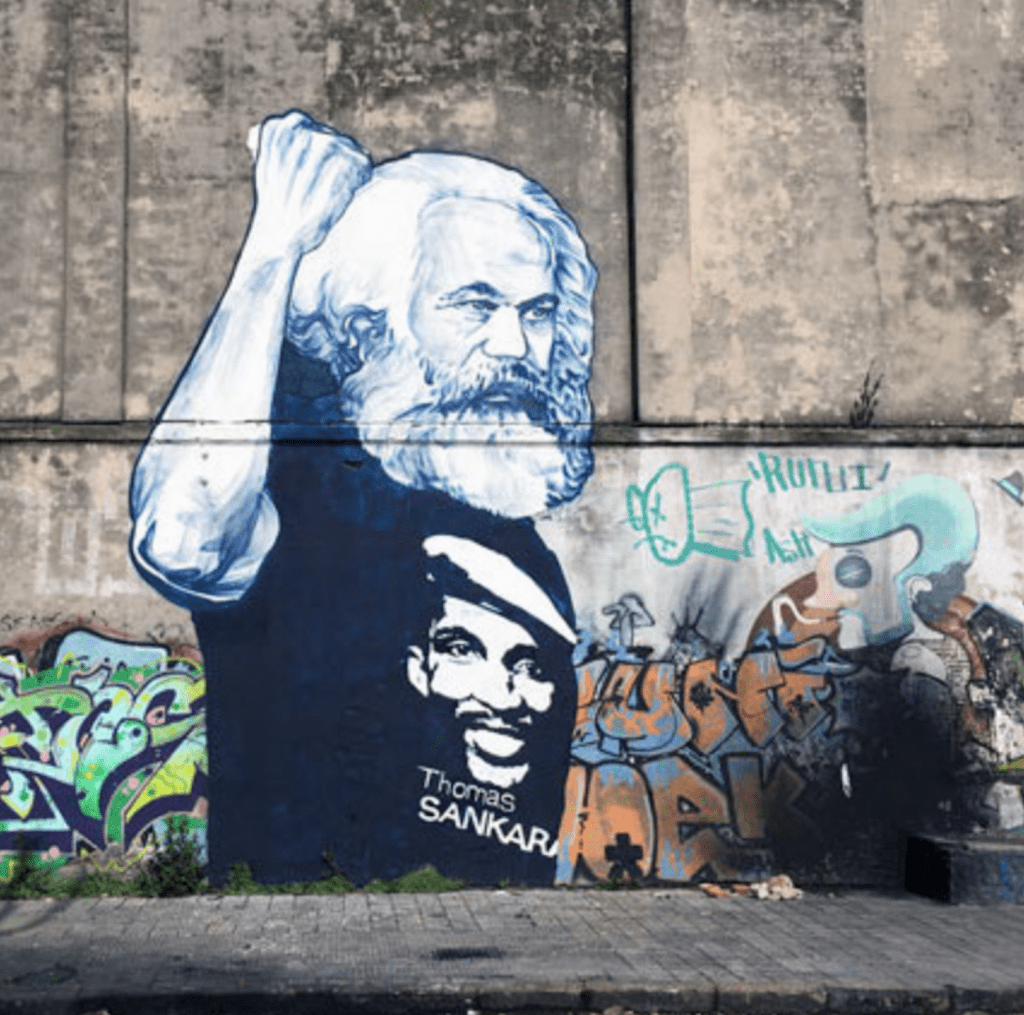
From Post-Marxism back to Marxism?

The Handbook of Marxism and Post-Marxism I co-edited with Alex Callinicos and Stathis Kouvelakis aims to present the development of Marxism as a militant tradition in dialogue with other traditions and within itself. Even if it was conceived almost six years ago, the multiple crises we are confronting today – economic, political, social, gender, environmental and biological – vindicate the spirit of our project. The project seeks to look at Marxism as a tradition that is rooted in and addresses the totality of capitalist social antagonisms and, by doing so, is able to think strategically beyond capital. 

Several contributions challenge reductionist interpretations of Marx’s critique of political economy, and the idea that Marxism is irremediably Eurocentric and underestimates race, gender and ecology. This opens a space for a more complex, and I would say fertile, dialogue with Post-Marxists currents. The format of the Handbook – combining longer contextual essays and shorter essays on individual thinkers mainly – aims at facilitating this dialogue. We chose this format, rather than concentrating on themes and concepts, in order to capture the specificity of, and interactions between, individual thinkers and problematics. 

In the final part of the book, “Marxism in an Age of Catastrophe”, John Bellamy Foster and Intan Suwandi forcefully argue that Marx inaugurated traditions of thought that can intellectually encompass the present age of catastrophe, announced by the floods and fires around the world as well as by the Covid-19 pandemic. These reflections complement the first part of the Handbook, “Foundation”, which points to the strong connection Marx and Engels posited between the critique of political economy and a politics of working-class self-emancipation. Thanks to this connection, they were able to conceive of capitalism as a global, gendered, racialized and ecological class antagonism in which struggles over wages and working conditions are organically linked to struggles over dispossession, social reproduction, ecology, imperialism and racism. Support for the demands of the most oppressed is thus crucial for the advancement of the working class as a whole. 

Read More »

“Are we all in this together?”: Reflecting on a year of COVID-19 marketing messages

In Spring 2020 the first signs of consumer and marketing messages related to the COVID-19 (Coronavirus) pandemic emerged. Like the virus itself, such marketing spread rapidly. The words “we’re all in this together”, and representations of such a sentiment, appeared in adverts and campaigns that were intended to invoke a sense of connectedness, community, and mutual care. Brands wanted people to relate to them and to seek comfort in the form of retail purchases during this time of crisis. Hence, taglines that alluded to togetherness cropped up amid the wave of content that companies created in response to COVID-19, including the marketing of supermarket giants Asda, Lidl, Marks & Spencer (M&S), and Tesco. When noticing this I found myself thinking about the relationship between COVID-19, capitalism, and consumer culture.

Although during the COVID-19 crisis brands have worked hard to cloak their capitalist activities in claims of connectedness, community, and care, to many people it is obvious that the main purpose of such promotional work is to keep the soul-grinding cogs of commerce turning. Despite their efforts to sometimes suggest otherwise, brands are not community organisers. They are not at the core of mutual aid and community care. If anything, brands are often a component of the very structural problems that community organisers strive towards dismantling as part of liberationist work. The imagined “we” that brands brazenly construct via adverts that are meant to tug on the heart strings of individuals during the pandemic is a “we” with money to spend. Such a “we” consists of consumption, not care, and profit, not people.

Are the often overworked and underpaid employees of such brands part of the imagined universal experience that they refer to in adverts about togetherness and weathering this storm with each other? Will such brands make meaningful shifts to substantially improve the precarious work and labour conditions of their employees or will they simply stick to surface-level representations of human connection and care rather than enacting change? There is nothing new about commercial organizations with track records of mistreating and exploiting staff arrogantly making sentimental and marketed claims about the experiences of “you”, “me”, “us”, and “we”. However, this does not detract from the reality that companies being so quick to create such crass content during this ongoing crisis was jarring. Furthermore, the way that some brands have implied that everyone has been impacted by the COVID-19 pandemic in the same way is outright inaccurate.

Read More »