Unsettling Epistemologies of Climate Finance for Critical Just Transitions

Celine Tan and Paul Gilbert*

2026 has brought the urgency of just transitions to the fore across different registers. This year has witnessed the capitals of global finance and postcolonial economic expansion in Europe and North America face unprecedented heatwaves and droughts. The US-Israel war on Iran continues to choke shipping traffic through the Strait of Hormuz and disrupt oil and gas production in the Gulf states. These events have underscored the social, economic and ecological vulnerability inherent in a fossil fuel-based global economy and highlighted the perils of disorderly transitions at the very moment when international law and policymaking arenas have opened up spaces for conversations on just, orderly and equitable transitions and how to finance them.

The 30th meeting of the United Nations Framework Convention on Climate Change (UNFCCC) Conference of Parties in Belém, Brazil in November last year launched a process to establish a Just Transition Mechanism (JTM), a focal point for supporting countries transition to decarbonised and climate resilient futures in a just and equitable manner. In parallel, the COP30 Presidency developed a Roadmap on Transitioning Away from Fossil Fuels (TAFF) with the aim of ‘advancing concrete action and deepening the discussions initiated at COP30 in Belém and ‘to build a shared understanding of the transition’. At the same time, a coalition of states, subnational governments and civil society groups led by Colombia and the Netherlands had initiated the high-profile First Conference on Transitioning Away from Fossil Fuels in Santa Marta, Colombia (the Santa Marta Conference) to accelerate the global transition away from fossil fuel dependence in ‘a just, orderly and equitable manner’.

Finance as an Enabler of Climate Action

A crucial aspect of the legal, policy and political climate negotiations is the question of finance, a fundamental means for states to implement their commitments on mitigating and adapting to climate change, redressing the loss and damage of climate impacts and implementing just transition pathways. Financial resources, along with technical assistance and technology transfer, are key to ensuring that the costs and benefits of local and global transitions to low-carbon and climate resilient economies and societies are distributed fairly across countries and communities. Alongside green technologies and capital investments for the energy transition and shoring up infrastructure to withstand climatic impacts, finance is also required to fund social safety nets, workforce training and deployment and ensuring stable and affordable energy access. This is necessary to ensure that the socio-economic transformation does not exacerbate existing social and economic inequalities and disparities within and between countries.

Finance operationalises the principle of ‘common but differentiated responsibilities and respective capabilities (CBDR-RC)’ that underpins the UNFCCC and other multilateral environmental agreements (MEAs). This principle recognises that while climate change is a shared concern for all states, different states have contributed to climate change unequally and have different financial, technological and institutional capacities to respond. Here, industrialised countries – which are disproportionately responsible for historical greenhouse gas (GHG) emissions, and which possess greater financial and technological resources – should take the lead in reducing GHG emissions and providing support to developing countries to undertake climate action.

The stark disparity in capacities to respond to disorderly transitions has been witnessed this year as the financial, economic and social impacts of the US-Israel-Iran war has demonstrated. According to the United Nations Conference on Trade and Development (UNCTAD), the disruption of shipping flows through the Straits of Hormuz have resulted in
higher energy, fertiliser and transport costs across the world, with impacts more acutely felt in developing countries, especially in countries struggling with high levels of external debt.

As demonstrated during other global crises, notably during the COVID-19 pandemic, developing countries lack the fiscal and policy space and limited resources to respond to global shocks in the same way as developed countries. Dependence on oil and gas imports, reliance on remittances (especially countries with high dependence on Gulf state migrant workers), and financial exposure to monetary policy responses in other countries (notably interest rate rises) place many developing countries in especially vulnerable positions when confronted with a sudden and disorderly shock to energy markets and supply of fossil fuel-based products.

Ideational Infrastructure of Climate Finance

The current overlapping economic, military and climate crises underscore the imperative of international efforts to operationalise a fair and equitable global just transition, with the modalities of finance being a core element of their success. It is crucial that the epistemic and operational roadmaps towards decarbonisation and climate resilience include financial means of implementation that are inclusive and emancipatory and respond to domestic conditions and circumstances. As a field of inquiry and a field of practice, financial concepts, methods, institutions and regulatory landscapes shape decision-making on climate action and just transitions.

Yet much of the literature on climate finance remain organised around the technocratic concern of how to close the ‘finance gap’ or the shortfall between resources needed and resources available to support climate action). Specifically, the focus on expanding the financial toolkit and on using public resources to mobilise, catalyse or ‘derisk’ private capital flows in order to plug this gap has effectively become hegemonic in policy discussions around climate action and achieving just transitions. Part of the process of attracting these climate flows relies on what Collington and Hasselbach have recently called ‘epistemic derisking’ or using authoritative knowledge and risk models to encourage private financial flows. All this dovetails with the ongoing implementation of what Gabor has coined the ‘Wall Street Consensus’, the global effort to ‘reorganize development interventions around partnerships with global finance’ and ‘escort’ global investors into development and environmental infrastructure asset classes.

The dominance of these approaches have tangible impacts on climate law and policymaking. The epistemic authority of mainstream climate finance organises and legitimises particular pathways for just transition that are ahistorical and neocolonial. The prevailing focus on market mechanisms – blended finance, green and blue bonds, debt swaps, carbon credits, and catastrophe bond instruments – as key solutions to scaling-up and fine-tuning the climate finance toolkit discounts broader structural challengesof debt, uneven development, unequal terms of trade, and asymmetrical global economic governance  as well as legacies of colonial extraction and exploitation. These regimes are reproduced and codified through legal infrastructures of the global market economy and are then reinforced through embedding within the multilateral climate regime.

Collectively, they form an ideational infrastructure of knowledge, expertise and power about climate finance that privilege certain constituencies (global north/ powerful/ private/ corporate) over others (global south/ vulnerable/ public/ community-centred). This epistemic architecture can and does influence negotiating trajectories and regulatory options within the multilateral climate regime. As Okonjo argues, the ‘ideological and performative role of ideas and their related technologies and practice’ both conceals the reproduction of inequality and power asymmetries between developing and developed countries as well as restricting ‘the regulatory possibilities’ available to global south law and policymakers. In other words, the debates around climate and just transition finance within the UNFCCC and other international law and policymaking fora can be foreclosed by epistemic capture that can and does privilege some groups while marginalising others. This, in turn, can lead to poor outcomes for developing countries at the sharp end of the climate crisis and foreclose broader sustainable development pathways.

For example, by presenting financialised, private sector-led, market-based finance as the only viable options for addressing the climate finance challenge to implementing multilateral climate commitments, developed countries have shifted away from commitments to ‘provide’ direct financial resources to developing countries to discharge their commitments under the Paris Agreement and instead focused on vague commitments to ‘mobilise’ them from a variety of sources instead of increasing the amounts of grant-based and concessional official finance..

Unsettling Climate Finance Epistemologies

The centrality of knowledge regimes to the framing of climate finance challenges and solutions within the international financial architecture and the multilateral climate regime renders it imperative that we map and understand the epistemic authority of climate finance and how its constituent elements shape law and policymaking for global climate action. Critical scholars have examined the epistemic geographies of climate science and knowledge gaps shaping climate law and policy . Less attention has been paid to epistemic ecosystems within which climate finance paradigms are authorised and governed.

It is crucial that we examine the epistemic foundations of climate finance and interrogate the knowledge politics, institutional logics, discursive frames and epistemological practices underpinning climate finance scholarship, law and policymaking to better understand how these dynamics and structures work to enable or constrain transformative just transitions in developing countries. There is an imperative to move away from treating the challenge of climate finance as a technical exercise and instead, approach it as a terrain of legal, socio-political and economic contestation which needs to be unpacked for it to be effective.

The prospective impact of not critically unsettling these climate finance epistemologies can be deeply damaging to climate action and just transitions, especially in developing countries. For example, the Academic Dialogue at the aforementioned Santa Marta TAFF conference published a ‘menu of actions’ for global energy transition which included ‘Border Carbon Adjustments for traded energy intensive commodities,’ so as to allay concerns about carbon leakage and to ensure that ‘investments in clean industrial capacity thrive on an international level playing field’ (Santa Marta Action Repertoire (SMART)). This policy option is one that has been heavily contested by global south researchers, policymakers and other stakeholders for its potential to shift the terms of trade dramatically in favour of developed countries while doing very little to reduce global greenhouse gas emissions.

The reinforcement of historical and present-day realities of unequal global economic structures within climate policy prescriptions is unsurprising given the continued marginalisation of global south and critical voices from these sites of law and policymaking. Within a few days of the publication of the SMART document, an open letter was circulated criticising the organisers of the Academic Dialogue for lack of meaningful inclusion and representation from global south constituencies in the drafting of the SMART Synthesis Report and the monopoly of the process by a handful of global north academics.

This example of epistemic hierarchies is only one of many within the climate architecture. Trawling through Bilateral Transparency Reviews recording climate finance flows, or examining International Aid Transparency Initiative data on climate finance, reveals the extent to which a small handful of influential consultancy firms shape climate finance policy advice and instrument design.  Recent research has identified an overwhelming dominance of a handful of institutions, individuals and journals – primarily in the global north – shaping knowledge around just transitions. This epistemic capture of climate and climate policy and practiceby global north scholars, experts, institutions and networks steers discourses towards technical fixes over transformative structural social and political change and gatekeeping access to finance, with other recent work demonstrating how the widespread use of global north-based climate finance intermediaries steers developing country options toward donor priorities  and results in uneven distribution of financial resources.

The establishment of the aforementioned UNFCCC Just Transition Mechanism and parallel TAFF roadmaps and processes open up spaces in which mechanisms for financing just transitions are being actively designed and contested but these spaces are often established without a critical framework for scrutinising whose expertise are shaping those instruments. The marginalisation of global south knowledge and critical ideas within this architecture can undermine the legitimacy of norms and policy prescriptions produced within these spaces and create more gridlocks in multilateral climate governance.

The work to unsettle and decolonise climate finance epistemologies is therefore imperative because material effects are being acutely felt across the global south, where critical minerals extraction, battery supply chains, data centres and carbon markets are reshaping land use and resource access in countries with the least historic responsibility for but bear the greatest burden of climate change. But without paying close attention to the geographies and ecosystems of academics and consultants who shape climate finance instruments, there is a risk that the ‘menu’ of policy options considered essential for just and equitable transitions is one which in fact entrenches inequalities and hierarchies within the global economy, doing little more than greening empire.


* Celine Tan is Professor of International Economic Law, Warwick Law School, University of Warwick and Paul Gilbert is Reader in Development, Justice and Inequality (Anthropology), School of Global Studies, University of Sussex.

New World Order against Tariffs: SCO Development Bank as an anti-sanctions tool?

The Shanghai Cooperation Organisation (SCO’s) 2025 summit in Tianjin produced a series of outcomes that, although modest in appearance, are strategically significant. The most prominent developments were the agreement in principle to establish an SCO Development Bank, seeded with approximately ¥2 billion in grants and a further ¥10–14 billion in concessional loans from China. The summit also saw Beijing extend access to its BeiDou satellite navigation system to member states, enhancing both civilian and defence applications from aviation and port logistics to military procurement. On the security side, leaders condemned the Pahalgam attack in India, a diplomatic win for India that underscores China’s effort to align with India at a moment when the U.S. has imposed tariffs of up to 50% on Indian exports, citing India’s purchases of Russian oil. These headline measures were complemented by renewed emphasis on counter-terrorism through RATS (the Regional Anti-Terrorist Structure) and a set of intensified SCO security-council meetings, together signalling a broadening of the organisation’s remit from finance into hard security enablers.

An additional dimension, often overlooked, is the SCO’s latent potential to serve as a platform for India–Pakistan rapprochement. Much as Beijing successfully mediated the Iran–Saudi détente in 2023, the SCO framework offers a structured environment in which India and Pakistan are compelled to engage on shared issues such as counter-terrorism, energy connectivity, and infrastructure finance, under the auspices of a formal multilateralism rather than crude bilateral confrontation. The Tianjin summit’s emphasis on regional security cooperation, and its explicit condemnation of the Pahalgam attack, is already a small step in this direction, reflecting a willingness to acknowledge Indian concerns in a joint forum. With signs that India-China relations have modestly stabilised following high-level military disengagement talks along the LAC, there is space for Beijing to use the SCO to nudge India and Pakistan toward functional cooperation. This is not purely hypothetical: emergent trilateral conversations between India, Pakistan, and Bangladesh around trade corridors and energy-grid integration suggest that South Asia’s major economies are beginning to see value in pragmatic coordination despite unresolved disputes. In this sense, the SCO could provide an institutional ecosystem for gradual confidence-building between New Delhi and Islamabad, where shared participation in multilateral projects lowers the political cost of engagement, much as regional institutions elsewhere have historically diluted bilateral rivalries.

In line with a broader shift in global governance, recent commentary by Xinhua portrays the SCO as emblematic of Eurasian agency and multipolar resonance; “a living expression of multipolarity,” bringing together diverse actors under a shared framework of non‑interference, counter‑terrorism, and connectivity. The enrolment of rivals within a single institutional ecosystem, makes the SCO, less of a confrontational bloc and closer to a practical architecture for regional autonomy and development.

Literature on the international financial architecture, has often highlighted the tension between established Western institutions and the alternative arrangements that have grown around them with much of the scholarship focusing on institutional challenges such as the creation of the Asian Infrastructure Investment Bank (AIIB) or the New Development Bank (NDB). Yet the more subtle processes of institutional layering, where new mechanisms grow alongside existing ones, gradually altering the balance of power have received far less attention.

Read More »

The Doughnut and the Divide: Can Norway Confront Its Imperial Mode of Living?

In June, 1,200 scholars and activists from around the world gathered in Norway for a historic convergence of two movements: degrowth and ecological economics. During the closing plenary session, I listened to three speakers, two of whom—Kate Raworth and Max Ajl—represented radically different approaches to our current crises. Though Raworth and Ajl engaged in respectful dialogue, the tension in the room became almost palpable when Raworth’s polished slides on doughnut economics gave way to Ajl’s anti-imperialist critique: Can an apolitical reform tool truly coexist with the Global South’s demand for systemic revolution?

Read More »

Climate and Trade Explainer

The Gender and Trade Coalition was initiated in 2018 by feminist and progressive activists to put forward feminist trade analysis and advocate for equitable trade policy.

This article is the fourth in a series of short, Q&A format ‘explainers’ unpacking key trade issues produced for the Gender and Trade Coalition by Regions Refocus. It was written by Erica Levenson (Regions Refocus) with inputs from Maureen Penjueli (PANG), Adam Wolfenden (PANG), and Ranja Sengupta (Third World Network). The authors give their thanks to Mariama Williams (Global Afro-Descendant Climate Justice Collaborative), who reviewed various versions of the article and provided helpful feedback. Read the full article here and catch up on past explainers here.

1. How is Trade Connected to Climate Change?

For the past 500 years in which capitalism has been the dominant economic system, continuing profit accumulation has been dependent on the unsustainable use, commodification, privatization, and destruction of natural resources on the one hand, and exploitation of human resources on the other. While natural resources have always fueled the metaphorical fire of capitalism, the Industrial Revolution greatly increased the ease and speed with which they could be destroyed. It is scientifically proven that greenhouse gas (GHG) emissions are the main cause of climate change, with carbon dioxide (CO2) that results from the burning of fossil fuels as the number one source of warming and methane (largely emitted by the industrial agriculture sector) at number two. [1] Trade in particular has contributed to climate change: international trade alone accounts for an estimated 20–30% of annual GHG emissions.[2]

The current structural configuration of the economy, with trade at the center, is fundamentally incompatible with the reduction of GHG emissions. Free trade aims to expand the volume of trade in terms of production as well as consumption, so as to increase the potential gains to countries from

participating in international trade— as established by Ricardo’s theory of comparative advantage.[3] But this theory pays no attention to the distributional impacts of free trade, or its environmental impacts. Trade-related production activities are often hugely detrimental to the environment and come at the price of forever contaminating or destroying essential ecosystems. Since all modes of transport— air, land, sea, and train shipping— are fossil fuel-dependent, an increase in consumption necessarily means an increase in GHG emissions. Gasoline and diesel power every form of shipping; maritime transport, fueled by diesel, makes up the majority of international trade in terms of both volume and value.[4]

Read More »

Anti-Colonial Solutions to climate change

When we discuss the climate crisis in economics, we are often confronted with a debate resting on technical solutions, emissions paths, and energy use: a certain amount of time to go from coal to turbines means a certain amount of carbon dioxide emitted, which means a certain likely degree of global temperature change. In environmental economics, climate change and its associated environmental problems are often framed as ‘externalities’; that is, unfortunate and unintended spillovers caused by market mechanisms. Often, social issues are taken into account within this narrative through sunny phrases like “sustainable development” or “just transition.” The responsible parties are often individuals, states, or firms that are often thought to take action within the market. What does this debate look like if we take two different questions as starting points: not how to solve the climate crisis through market mechanisms and regulation, but how to solve the climate crisis while attending to the colonial legacy and exiting from contemporary neo-colonial accumulation patterns? Let us take a look.

Read More »

Building up debt traps: Risk, climate adaptation and microfinance

How to adapt to a changing climate is one of the foremost questions of our era. In the last decade, microfinance has shot to prominence as a highly-promoted tool of adaptation to climate and environmental change. In an abridged version of a 2009 report commissioned by the Grameen Foundation and Oxfam US, Dowla argues that ‘within the populations that will be most affected by global warming, the plight of many individuals is linked to the ability of microfinance institutions to adapt to the consequences of climate change’.

With access to already-existing as well as newly-adapted financial products and ser­vices, the argument goes that people and communities will be better placed to reduce risk, diversify their livelihoods, and build assets. ‘Green microfinance’ would facilitate adaptation in two key ways: ‘by improving ex-post [after the event] risk recovery’ via coping capacity enhancement, and ‘by improving ex-ante [before the event] risk reduction’ via adaptive capacity enhancement. Recommended strategies include improving access to microcredit for climate change responses as well as promoting insurance schemes to reduce the burden of climate risk on society.

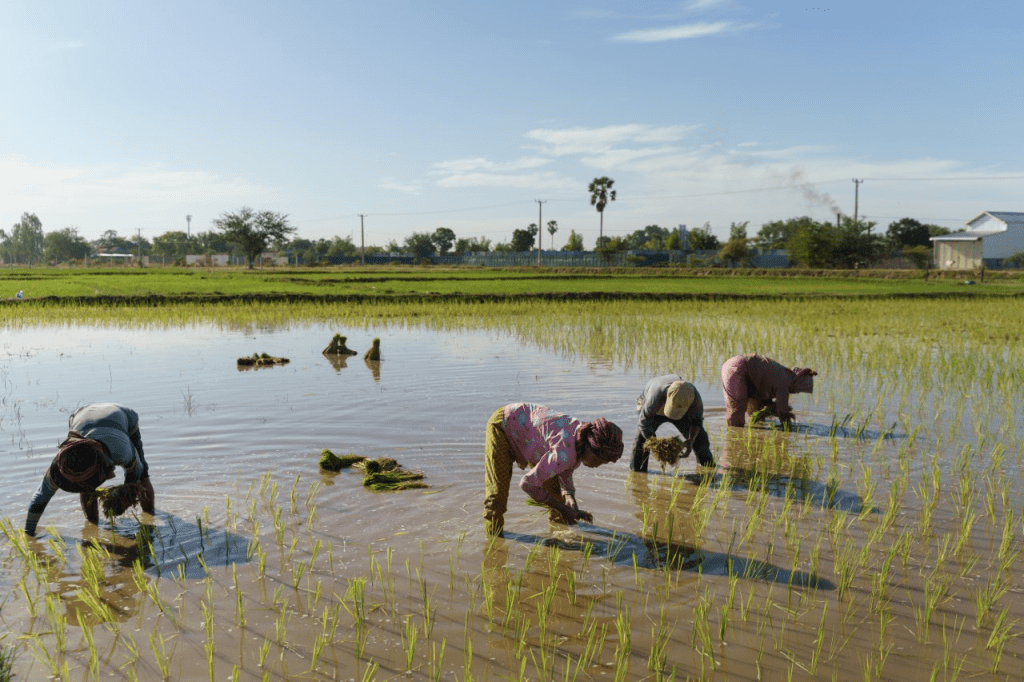
In contrast to these emerging discourses and practices that frame microfinance as a key tool of climate adaptation, our recent research with rice farmers in rural Cambodia finds that microfinance loans are leading to an over-indebtedness emergency that significantly undermines borrowers’ long-term coping and adaptive capacity in a changing climate. Such loans often push households to borrow more, work more, sacrifice food quality and quantity, quit farming, and erode and sell their assets, including land. The cost of financialised coping strategies can trap rural populaces in financial obligations which they struggle to service and which manifests ultimately as over-indebtedness. Microfinance ends up promoting a particular form of climate adaptation: one that is individualised, incremental, and geared towards the further integration of populations into processes of capital accumulation.

This form of adaptation is highly profitable. Indeed, as Dowla argues in that same paper, each new climate-linked shock ‘opens up opportunities for the microfinance institutions and their clients’. Yet the corollary to this profitability is that the costs of such an adaptation tend to be borne by the poor, who find themselves exposed not only to the rigours of the environment but now the global market too.

Read More »

Green financialization and de-risking in Zambia’s renewable energy transition

By Simone Claar and Franziska Müller

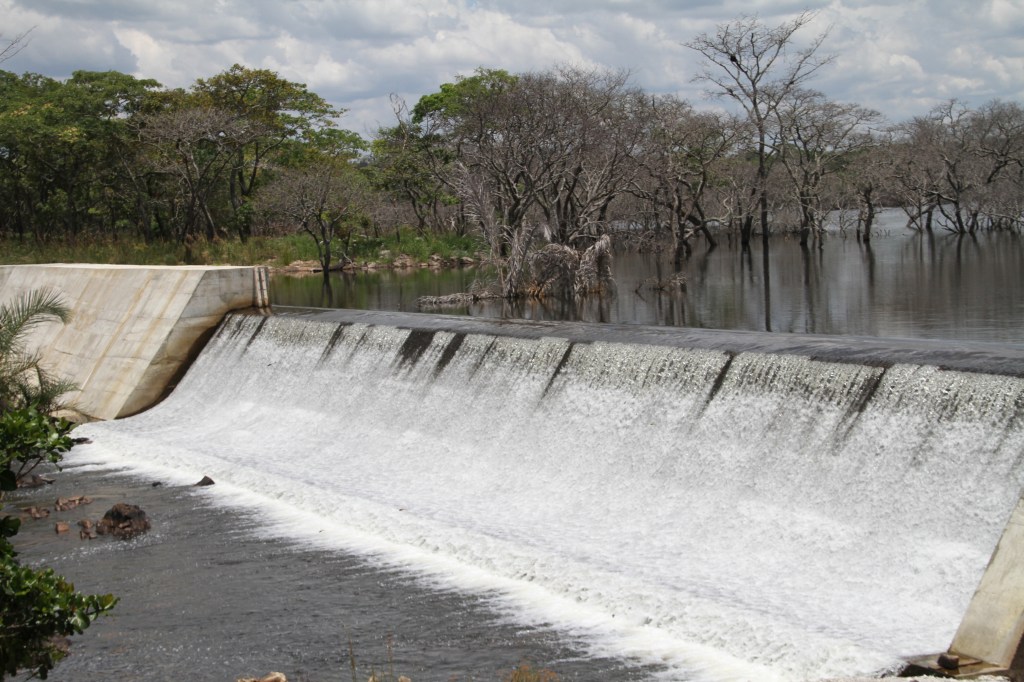
Zambia’s has a history full of hopeful prospects and broken dreams. In the 1980s and again in the early 2010s, Zambia experienced an economic upswing. Labelled as an emerging middle-income country and called the new ‘African Tiger’, a mix of copper extractivism, an aspiring tourism sector, as well as political stability led to an impressive rise. However, the phase was short-lived, as Zambia’s political economy remains fragile: dependent on the price of copper and the world market, it is regularly on the verge of state bankruptcy due to a significant foreign debt burden. A history of structural adjustment programs in exchange for IMF loans and dependency on billion-scale Chinese loans means that Zambia became the first African country to declare bankruptcy in the wake of the Covid pandemic, first asking for a moratorium, and later for restructuring its Eurobond loans and Chinese loans. In this context, Zambia’s dependence on development financing is highly evident and deeply anchored in the state structures. Zambia’s political economy of energy and the ongoing energy transition reflect this tedious situation. Rising energy demands and lack of investment mean that widespread load shedding has become a frequent phenomenon. Climate change and recurring droughts negatively affect hydropower performance, which makes up 95 per cent of installed capacity. The current roll-out of renewable energy is a beacon of hope. Nevertheless, its financial structures give rise to the assumption that Zambia may also be the first African state where the miracle of green capitalism and “white magic” (Girvan 1978) is becoming manifest, resulting in both shiny solar panels and a loss of political and economic sovereignty. Analyzing Zambia’s energy transition’s political and financial toolbox, we delineate how green financialization and de-risking are executed based on blended development finance. 

Read More »

A People’s Green New Deal – An Exercise in Just Knowledge Production

In his speech before the General Assembly of the United Nations in 1984, Thomas Sankara makes the following astute observation regarding the African petite bourgeoisie and its public intellectuals:  

“Our professors, engineers and economists are content simply to add a little colouring, because they have brought from the European universities of which they are the products only their diplomas and the surface smoothness of adjectives and superlatives. It is urgently necessary that our qualified personnel and those who work with ideas learn that there is no innocent writing. In these tempestuous times, we cannot leave it to our enemies of the past and of the present to think and to imagine and to create. We also must do so.”

In the same speech, Sankara continues to caution against planning for the uplifting of a nation if such plans are ignorant of, or are wilfully erasing, the disinherited masses and the wretchedness inherited by them. Sankara’s postulation, emerging from the socio-political contexts of the African continent, provides a sound theoretical foundation for knowledge production in the contemporary worlds we inhabit. The popular narratives around climate change have strived to communicate the gravity of planetary collapse and measures required to avert ecological and environmental crises worldwide. Nevertheless, the urgency of envisioning a new world shows little self-reflection as to its epistemic positions and privileges. Climate change discourses in the Global North, academic or otherwise, have largely been constrained by the desire to brave the planetary crises with limited disruption to existing race and class privileges. In terms of how the problems of climate change are identified and defined and the range of solutions to address them, the western epistemologies remain rudimentary.

Consequently, the range of green new deals or the visions for just-transition and sustainable utopias remain agnostic to the everyday realities and struggles of the Global South against imperialism and colonialism. It is unclear if Black, Indigenous, and People of Colour are better placed to partake in these futures than they are now. Max Ajl’s A People’s Green New Deal provides a refreshing and rich scholarly alternative to how an ideal green new deal should be imagined.

Read More »