The Fiscal Black Holes of Mainstream Economics

By Jacob Assa and Marc Morgan

“The purpose of studying economics is not to acquire a set of ready-made answers to economic questions, but to learn how to avoid being deceived by economists.”
― Joan Robinson

Recent years have seen a proliferation of debates on the shrinking of fiscal space in both industrialized and developing countries. In the former, the discussion often takes the form of agonizing over fiscal ‘black holes’, whereas in the latter it is usually presented in the context of ‘unaffordable debt’.

In reality, the real black holes, or blind spots, are those found in neoclassical economic models underlying such debates, rather than in the real economy (Table 1). We describe three such neoclassical fiscal black holes, based on our recent paper ‘The General Relativity of Fiscal Space’.

Table 1. Overview of fiscal black holes in the neoclassical paradigm.

Source: Authors’ elaboration. Shaded in black are the black holes of the neoclassical fiscal paradigm.

We show how fiscal space is not the absolute sum of taxes and borrowing, but rather relative in several ways. It depends on macroeconomic conditions, such as unemployment and inflation, countries’ degree of monetary sovereignty, and their level of productive capacity. Furthermore, fiscal space is relative to what governments do with it, expanding or contracting depending on the function of public spending.

Read More »

Private Equity in the Global South: Locusts? Vampires? The contagion effect

The effectiveness of private equity has been a subject of ongoing debate in countries of the Global North. There is substantial evidence highlighting the extractive practices associated with private equity operations across Western nations. Examples include the decline of the British high street and the financial instability of local councils in the UK, particularly in the provision of child care. Similarly, in the United States, private equity has been linked to the attrition of an already fragile healthcare system. In France, Germany and the UK., its influence has contributed to the deterioration of care homes, raising significant concerns about its broader social and economic impact.

In a recent blog, Michael Roberts characterized private equity as “vampire capital“, encapsulating the widely recognized critique that private equity firms function through a rentier model. These firms are frequently associated with practices such as asset stripping, worker lay-offs, and opting for excess leverage that increases the debt burdens of their acquisitions, all while failing to provide compelling evidence of value creation. This perspective aligns closely with earlier criticisms of private equity. During the 2000s, private equity operations were similarly likened to a swarm of locusts, reflecting widespread disapproval of their extractive and often detrimental economic practices.

In summary, such analogies emphasize the aftermath of private equity operations, leaving behind “carcasses and barren landscapes.” Nevertheless, the evidence of a hollowed-out socio-economic landscape in the Global North has not deterred the international expansion of private equity into countries of the Global South. On the contrary, ongoing reports of American private equity capturing British markets have emerged in tandem with the globalization of Western private equity. In so-called “emerging markets,” this expansion manifests in various forms, including an enthusiasm for deploying “moral money” through international development initiatives.

This article examines the role of private equity in Global South countries, focusing on three key characteristics: the escalation of indebtedness, the weakening of public markets, and the public subsidy function of development finance in facilitating private equity investments.

Read More »

Gendering the debt crisis: Feminists on Sri Lanka’s financial crisis

By Kanchana N. Ruwanpura, Bhumika Muchhala and Smriti Rao

Countless images of women carers flitted through April-July 2022 on Sri Lankan television screens, social media, and newspapers. Carers with young children, mothers with new-borns leaving them with equally young children while they stood in queue for gas or kerosene, children doing their homework on tuk-tuks while their parents got in line for petrol and diesel. Yet, Sri Lankan policy pronouncements rarely mention working-class women. In a country where women comprise 52% of the population, this is astounding. Especially so when the dominant three foreign exchange earners for the country – garments, tea exports and migrant workers to the Middle East – rest on the efforts of women workers. 

In the current response to Sri Lanka’s debt crisis, the voices and needs of working-class women are once again being ignored by policymakers, despite the evidence all-around of women intensifying their unpaid labour even as the conditions under which they perform paid labour deteriorate. 

As feminist economists, our argument is straightforward: debt justice is a feminist value and principle. And at the core of our understanding of debt justice is the principle that working class women cannot be made to pay for the ‘odious debt’ generated by the recklessness and corruption of (almost entirely male) Sri Lankan political elites.

Read More »

Building up debt traps: Risk, climate adaptation and microfinance

How to adapt to a changing climate is one of the foremost questions of our era. In the last decade, microfinance has shot to prominence as a highly-promoted tool of adaptation to climate and environmental change. In an abridged version of a 2009 report commissioned by the Grameen Foundation and Oxfam US, Dowla argues that ‘within the populations that will be most affected by global warming, the plight of many individuals is linked to the ability of microfinance institutions to adapt to the consequences of climate change’.

With access to already-existing as well as newly-adapted financial products and ser­vices, the argument goes that people and communities will be better placed to reduce risk, diversify their livelihoods, and build assets. ‘Green microfinance’ would facilitate adaptation in two key ways: ‘by improving ex-post [after the event] risk recovery’ via coping capacity enhancement, and ‘by improving ex-ante [before the event] risk reduction’ via adaptive capacity enhancement. Recommended strategies include improving access to microcredit for climate change responses as well as promoting insurance schemes to reduce the burden of climate risk on society.

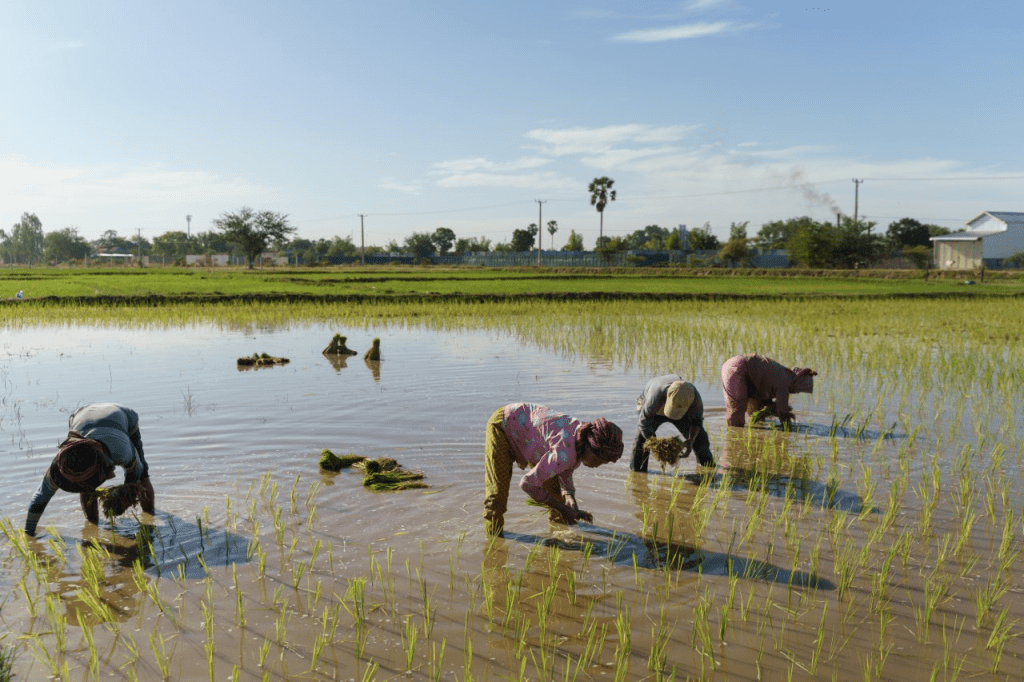
In contrast to these emerging discourses and practices that frame microfinance as a key tool of climate adaptation, our recent research with rice farmers in rural Cambodia finds that microfinance loans are leading to an over-indebtedness emergency that significantly undermines borrowers’ long-term coping and adaptive capacity in a changing climate. Such loans often push households to borrow more, work more, sacrifice food quality and quantity, quit farming, and erode and sell their assets, including land. The cost of financialised coping strategies can trap rural populaces in financial obligations which they struggle to service and which manifests ultimately as over-indebtedness. Microfinance ends up promoting a particular form of climate adaptation: one that is individualised, incremental, and geared towards the further integration of populations into processes of capital accumulation.

This form of adaptation is highly profitable. Indeed, as Dowla argues in that same paper, each new climate-linked shock ‘opens up opportunities for the microfinance institutions and their clients’. Yet the corollary to this profitability is that the costs of such an adaptation tend to be borne by the poor, who find themselves exposed not only to the rigours of the environment but now the global market too.

Read More »

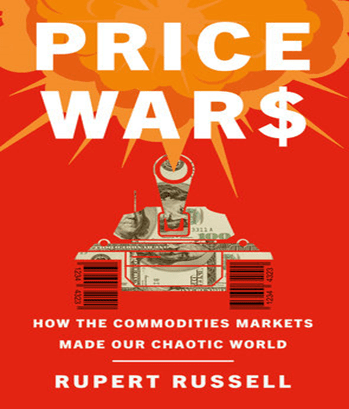
Price Wars: How the Commodities Markets Made Our Chaotic World: Q&A with Rupert Russel

In Price Wars: How the Commodities Markets Made Our Chaotic World, sociologist and filmmaker Rupert Russell travelled to some of the world’s most chaotic places: war zones in Ukraine, Iraq, and Somalia, the climate wars in Kenya and Guatemala, and Venezuela’s economic catastrophe. Told as gonzo investigation into what made the 2010s so tumultuous, Russell links each of these eruptions to swings in commodity prices, and the financial speculators whose bets set their prices.

Read More »

Green financialization and de-risking in Zambia’s renewable energy transition

By Simone Claar and Franziska Müller

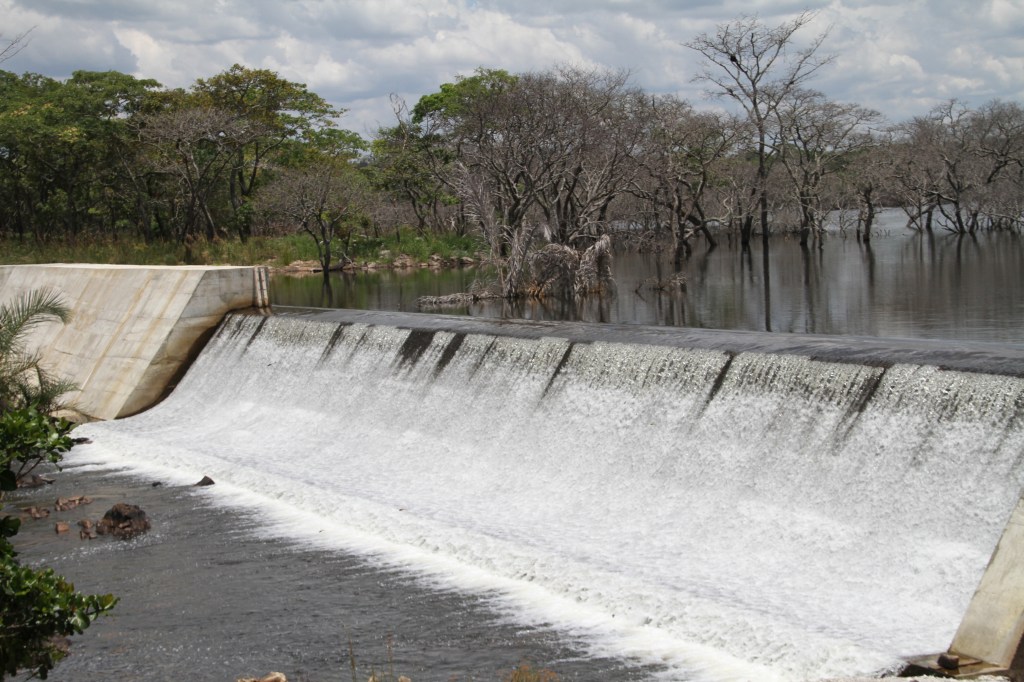
Zambia’s has a history full of hopeful prospects and broken dreams. In the 1980s and again in the early 2010s, Zambia experienced an economic upswing. Labelled as an emerging middle-income country and called the new ‘African Tiger’, a mix of copper extractivism, an aspiring tourism sector, as well as political stability led to an impressive rise. However, the phase was short-lived, as Zambia’s political economy remains fragile: dependent on the price of copper and the world market, it is regularly on the verge of state bankruptcy due to a significant foreign debt burden. A history of structural adjustment programs in exchange for IMF loans and dependency on billion-scale Chinese loans means that Zambia became the first African country to declare bankruptcy in the wake of the Covid pandemic, first asking for a moratorium, and later for restructuring its Eurobond loans and Chinese loans. In this context, Zambia’s dependence on development financing is highly evident and deeply anchored in the state structures. Zambia’s political economy of energy and the ongoing energy transition reflect this tedious situation. Rising energy demands and lack of investment mean that widespread load shedding has become a frequent phenomenon. Climate change and recurring droughts negatively affect hydropower performance, which makes up 95 per cent of installed capacity. The current roll-out of renewable energy is a beacon of hope. Nevertheless, its financial structures give rise to the assumption that Zambia may also be the first African state where the miracle of green capitalism and “white magic” (Girvan 1978) is becoming manifest, resulting in both shiny solar panels and a loss of political and economic sovereignty. Analyzing Zambia’s energy transition’s political and financial toolbox, we delineate how green financialization and de-risking are executed based on blended development finance. 

Read More »

The frailties of diaspora bonds 

The interest in diaspora bonds is sustained by the theoretical potential to finance development in poor economies by raising funds from expatriate communities, often labor migrants, living abroad. At the start of the COVID-19 pandemic in 2020, as developing nations faced sudden reversals in capital flows, diaspora bonds were hypothesized to counter the international capital markets’ volatility. A year later, the most recent bout of portfolio ‘de-risking’ and less optimistic outlook for emerging markets by the international institutional investors may prompt renewed calls for tapping into diaspora. But is the alternative scheme so easily deployable? 

Diaspora bonds are sovereign debt securities issued by countries appealing to the altruistic motives of their cultural and national diasporas across the world. Historically, there have been several attempts to leverage the diaspora premium, with Israel and India running the most effective diaspora bonds initiatives

Read More »

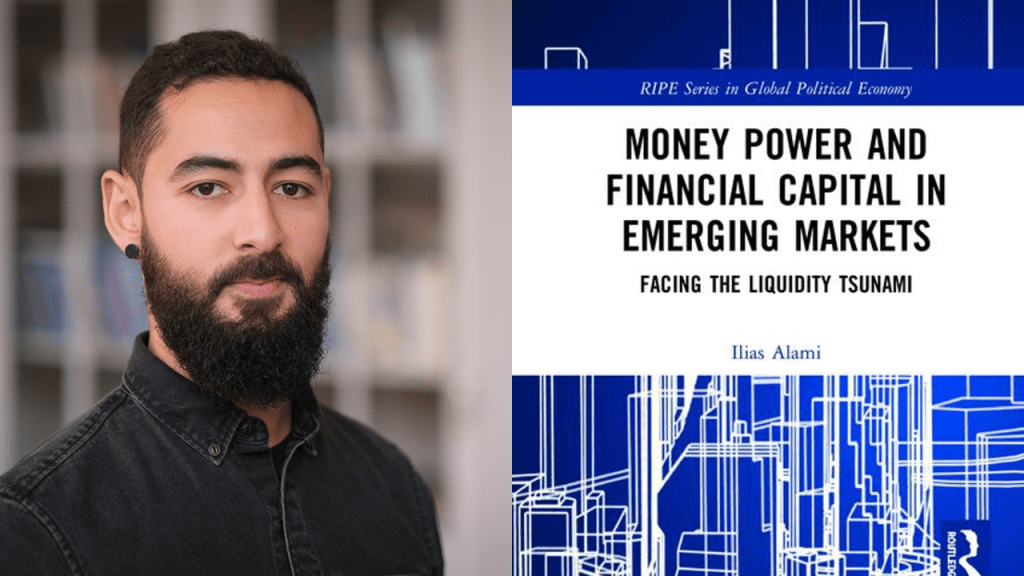
The Geopolitics of Financialisation and Development: Interview with Ilias Alami

This interview was originally published in German in the special issue on financialisation and development policies of the journal Peripherie, September 2021, No. 162/163. Frauke Banse and Anil Shah (both based at Kassel University) spoke with political economist Ilias Alami (Maastricht University) about some of his recent work on the relationship between geopolitics, financial flows for development and emerging forms of ‘state capitalism,’ as well as related new imperialist formations. The interview was conducted via email in May 2021.  

The interview covers a series of International Political Economy topics. Ilias first locates the emergence of the Wall Street Consensus in the long and turbulent histories of the relation between finance and development as well as in secular capitalist transformations. He then outlines some of the conceptual tools he’s developed in his work in order to make sense of the contemporary interconnections of money and finance and the reproduction of imperialism and race/coloniality. Next, he situates these interconnections within broader scholarly debates about financialisation and highlights the similarities and differences between ongoing sovereign debt crises in the global South and the so-called 1980s ‘Third World debt crisis.’ Finally, Ilias discusses the recent emergence of new forms of ‘state capitalism’ and their complex relation to the extension and deepening of market-based finance. 

Read More »