De-dollarisation and Internationalisation of Other Currencies: Geopolitics and Implications for Dollar Diplomacy

By Sangita Gazi and Christabel Randolph

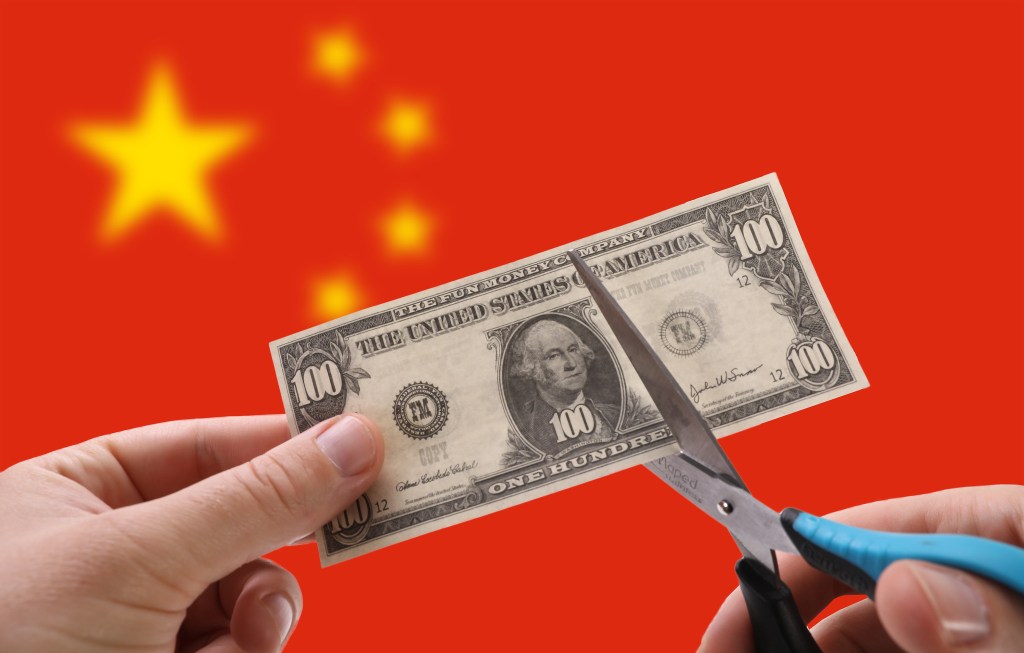
In a 2022 report, International Monetary Fund (IMF) states that ‘[t]he dollar’s share of global foreign-exchange reserves fell below 59 percent in the final quarter of last year, extending a two-decade decline’. However, surprisingly, the decline in the dollar is not associated with the ‘increase in the shares of the pound sterling, yen, euro, and other long-standing reserve currencies.’ Instead, the shift in the dollar’s share in the reserve currency system went in two directions—a quarter into the Chinese renminbi and three-quarters into the currencies of smaller countries that have historically played a limited role as reserve currencies. This piece examines the shifts underlying this trend with a focus on increased regional alliances in trade and payment systems technology. We conclude with forecasts and implications for a more multipolar monetary order and ‘dollar diplomacy.’

Since the onset of the Covid-19 pandemic, geopolitical tensions and economic stagnation have led to fragmentation in cross-border trade and payment systems. The ongoing Ukraine-Russia conflict and international sanctions imposed by the Western economies have also contributed to this situation by causing disruptions for countries with trade relationships with Russia, particularly for essential commodities like fuel, grain, and oilseed. Moreover, many countries are running low on U.S. dollar reserves amidst inflation, prompting them to consider alternative currencies for cross-border trade settlements. This is further exacerbated by the aggressive rate hikes by the Federal Reserve in an attempt to contain domestic inflation within the U.S. The historical correlation between the U.S. dollar and commodity prices has been disrupted for the first time. As a result, evidence suggests a degree of regional fragmentation in trade-related activities and the use of alternative currencies, leading to a shift away from the U.S. dollar as the primary currency for international trade. For instance, in March 2023, the yuan was the most widely used global currency, surpassing the U.S. dollar and euro.

Further, central banks from emerging markets and developing economies seek to diversify their foreign currency reserve composition. The shift began in April 2022, after key Russian banks were removed from SWIFT following Russia’s invasion of Ukraine. China increasingly uses the yuan to buy Russian commodities, such as oil, coal, and metals, settling their bilateral trade with Russia in Chinese currency instead of dollars. In a similar effort, India has made several initiatives to create bilateral trade relationships with countries like Bangladesh, the United Arab Emirates, and Malaysia to internationalize the rupee and use it to settle cross-border trades. This trend toward exploring alternative currencies may affect the global financial landscape. Still, its impact is uncertain due to concerns about newer currencies’ volatility and regulatory systems.

Read More »
Financial Statecraft and its Limits in the Semi-Periphery

Over the past decade, two, intertwined research agendas on international financial subordination (IFS) and subordinate financialization (SF) have proposed to identify how an increasingly finance-dominated global capitalism incorporates the (Semi-)Peripheries.

The IFS research agenda recognizes that a “subordinate” national currency comes with a risk premium increasing the costs of financing public debt – in other words, the current, US dollar-based currency hierarchy acts as a structural fiscal constraint in the Global South, limiting the scope for badly needed public investments. Foreign capital – in the form of foreign currency-denominated sovereign and private debt-, foreign aid, and foreign direct investment – is then touted as a solution to this artificial and unfair developmental constraint.

The SF agenda examines how this straightjacket on fiscal space has been further compounded with the liberalization of global capital mobility over the past forty years, diffusing credit-based accumulation strategies from the Core to the Peripheries: the financialization of (semi-)peripheral economies radically misallocates financial resources from socially and environmentally vital public goods and transformative industrial policies towards developmentally regressive strategies of accumulation driven by speculation and asset-price inflation.

Programmatic visions for liberating (semi-) peripheral economies from the dual constraints of a national fiscal space suffocated by the global currency hierarchy and globally mobile capital flows which deepen financialization are underdeveloped. Two scales of action are plausible: At the international level, de-dollarization is promoted by the BRICS bloc, but it remains uncertain what forms of international financial solidarity and collaboration, if any, will materialize under its aegis. The national level comprises an alternative scale as the State continues to be perceived as the most likely candidate for ringfencing domestic social, environmental, and developmental objectives from the pressures of global capital mobility and the structural constraints of the global currency hierarchy.

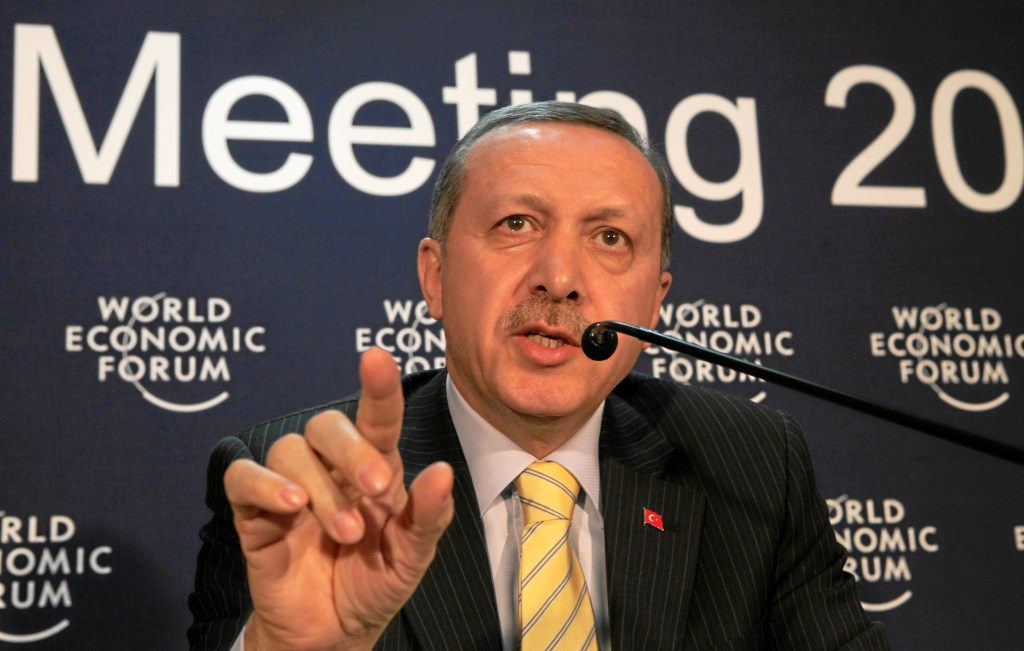
In a recent co-authored piece with Pınar EDönmez, we study the politics governing the management of money in Hungary and Turkey, two semi-peripheral economies where the executive has built a vast array of direct and indirect tools to intervene in monetary policy, retail banking and credit allocation to manage financial subordination.

Read More »

Gendering the debt crisis: Feminists on Sri Lanka’s financial crisis

By Kanchana N. Ruwanpura, Bhumika Muchhala and Smriti Rao

Countless images of women carers flitted through April-July 2022 on Sri Lankan television screens, social media, and newspapers. Carers with young children, mothers with new-borns leaving them with equally young children while they stood in queue for gas or kerosene, children doing their homework on tuk-tuks while their parents got in line for petrol and diesel. Yet, Sri Lankan policy pronouncements rarely mention working-class women. In a country where women comprise 52% of the population, this is astounding. Especially so when the dominant three foreign exchange earners for the country – garments, tea exports and migrant workers to the Middle East – rest on the efforts of women workers. 

In the current response to Sri Lanka’s debt crisis, the voices and needs of working-class women are once again being ignored by policymakers, despite the evidence all-around of women intensifying their unpaid labour even as the conditions under which they perform paid labour deteriorate. 

As feminist economists, our argument is straightforward: debt justice is a feminist value and principle. And at the core of our understanding of debt justice is the principle that working class women cannot be made to pay for the ‘odious debt’ generated by the recklessness and corruption of (almost entirely male) Sri Lankan political elites.

Read More »

Building up debt traps: Risk, climate adaptation and microfinance

How to adapt to a changing climate is one of the foremost questions of our era. In the last decade, microfinance has shot to prominence as a highly-promoted tool of adaptation to climate and environmental change. In an abridged version of a 2009 report commissioned by the Grameen Foundation and Oxfam US, Dowla argues that ‘within the populations that will be most affected by global warming, the plight of many individuals is linked to the ability of microfinance institutions to adapt to the consequences of climate change’.

With access to already-existing as well as newly-adapted financial products and ser­vices, the argument goes that people and communities will be better placed to reduce risk, diversify their livelihoods, and build assets. ‘Green microfinance’ would facilitate adaptation in two key ways: ‘by improving ex-post [after the event] risk recovery’ via coping capacity enhancement, and ‘by improving ex-ante [before the event] risk reduction’ via adaptive capacity enhancement. Recommended strategies include improving access to microcredit for climate change responses as well as promoting insurance schemes to reduce the burden of climate risk on society.

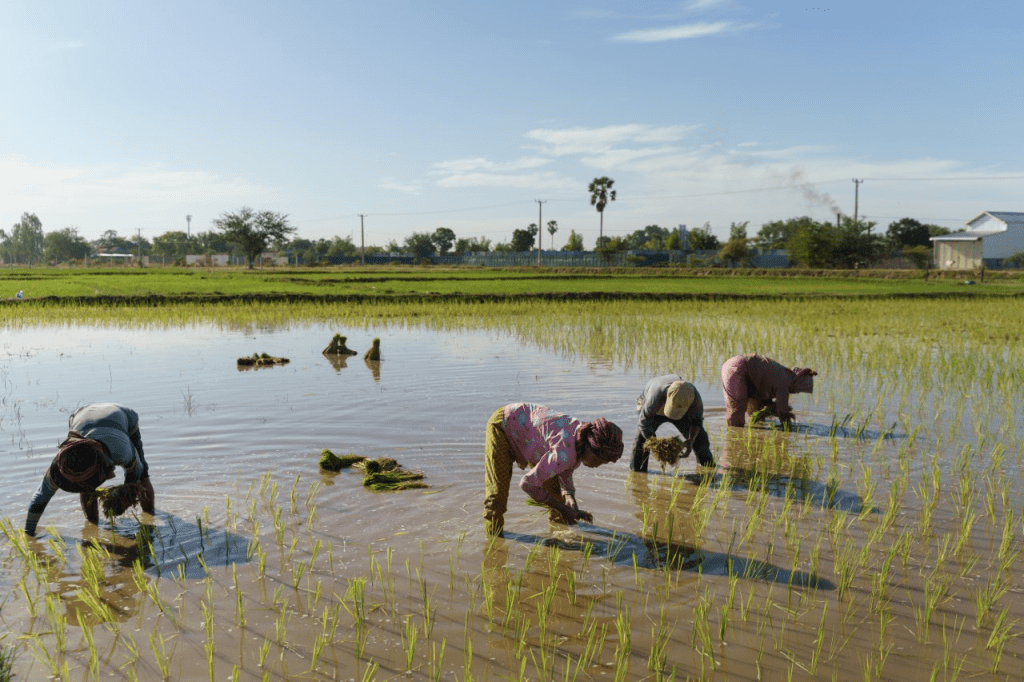
In contrast to these emerging discourses and practices that frame microfinance as a key tool of climate adaptation, our recent research with rice farmers in rural Cambodia finds that microfinance loans are leading to an over-indebtedness emergency that significantly undermines borrowers’ long-term coping and adaptive capacity in a changing climate. Such loans often push households to borrow more, work more, sacrifice food quality and quantity, quit farming, and erode and sell their assets, including land. The cost of financialised coping strategies can trap rural populaces in financial obligations which they struggle to service and which manifests ultimately as over-indebtedness. Microfinance ends up promoting a particular form of climate adaptation: one that is individualised, incremental, and geared towards the further integration of populations into processes of capital accumulation.

This form of adaptation is highly profitable. Indeed, as Dowla argues in that same paper, each new climate-linked shock ‘opens up opportunities for the microfinance institutions and their clients’. Yet the corollary to this profitability is that the costs of such an adaptation tend to be borne by the poor, who find themselves exposed not only to the rigours of the environment but now the global market too.

Read More »

Who’s in control? Wall Street Consensus, state capitalism, and spatialised industrial policy

By Seth Schindler, Ilias Alami and Nick Jepson

Recent trends may well have puzzled critical observers of global development policy. On the one hand, we witness the rise of what Daniela Gabor has aptly termed the ‘Wall Street Consensus,’ an emerging paradigm promoting the mobilisation of private finance as a developmental priority. Southern states are encouraged to re-engineer their domestic financial systems around securities and derivatives markets, create ‘investable’ opportunities in sectors such as infrastructure, water, climate adaptation, health and education, as well as deploy policies that specifically ‘de-risk’ investment for global investors. In this formulation Southern states are subordinated to global financial capital and their policy space is significantly constrained.

On the other hand, however, we observe a tendency towards state capitalism, wherein states are increasingly active within markets, as entrepreneurs and owners of capital as well as regulatory agents in the world economy. Across the income spectrum states have embraced the role of agents of transformation and development. In the global South, one way these trends manifest is in the proliferation of new modalities of spatialised industrial policy underpinned by large-scale development projects. Examples include the China–Pakistan Economic Corridor, Indonesia Vision 2045, the Plan Sénégal Émergent, Morocco’s New Development Model, and the developmental aspects of Mexico’s Fourth Transformation such as the Tehuantepec Isthmus Interoceanic Corridor. Some of these plans have benefitted from the rise of China and its multitrillion-dollar Belt and Road Initiative, which traditional development actors now increasingly seek to counter by providing alternative initiatives.

Read More »

Land and the Mortgage: History, Culture, Belonging

By Daivi Rodima-Taylor and Parker Shipton

The mortgaging of land, a risky practice usually treated as just an economic and legal contract, has needed a broader set of perspectives for a fuller, more humanist understanding. Most of the existing scholarly literature on land and mortgages has been written by economists and legal specialists, reflecting the perspectives of their disciplinary traditions. Lacking are assessments from a wider range of disciplines in the social sciences and humanities, drawing upon historical experiences, cultural meanings, and locally informed perspectives.

Our recent edited volume, drawing on historical and observational research in different parts of the world, is meant to help fill that gap. It examines mortgaging as a social and cultural phenomenon to show its origins, variation, and effects on human lives and communities. Here anthropologists, historians, and economists explore archival, printed, and ethnographic evidence about mortgage. The book shows how mortgages affect people on the ground, where local forms of mutuality mix with larger bureaucracies. Tracing origins of land titling, pledging, and the mortgage in over millennia and incorporating findings from authors’ original field research, the book explores effects of government, bank, and aid agency attempts and impositions meant to encourage mortgage lending and borrowing.  It shows how these mix in practice, in different languages, currencies, and contexts, with locally rooted understandings, and how all parties have sought, and too often failed, to make adjustments. The outcomes of mortgage in Africa, Europe, Asia, and America challenge economic development orthodoxies, calling for a human-centered exploration of this age-old institution.  It must take account, we insist, of emotions, vulnerabilities, and histories of unexpected outcomes, as shown in different societies, cultures, and environmental and political conditions.

Read More »

Exploring the Platform Political Economy of Self-Help in Africa

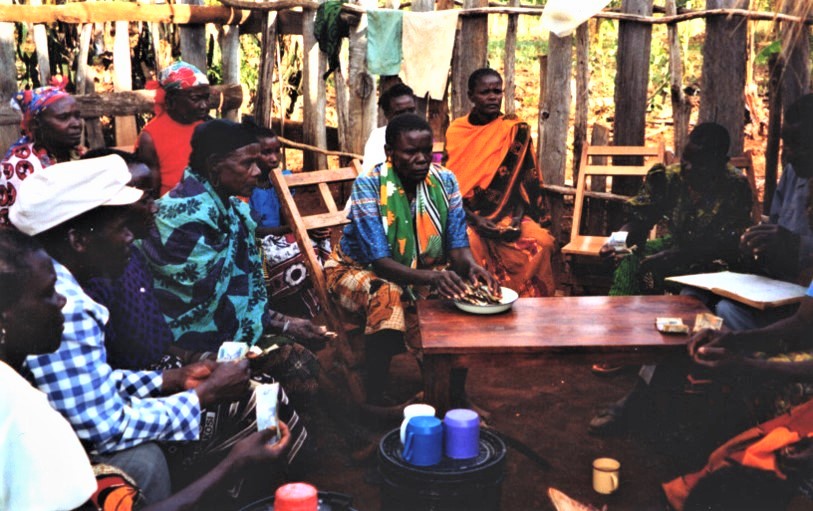
Informal savings group in Tarime district, Tanzania. Photo: Daivi Rodima-Taylor

Self-help groups can be found in many areas of Africa—including the chama groups of Kenya, isusu of Nigeria, and stokvels of South Africa (Ardener and Burman 1995). Their customary rotating credit arrangement is also popular among African diaspora communities (Hossein 2018; Ardener 2010). A significant rise has occurred in these groups at the wake of the neoliberal restructuring reforms of the 1980s-90s, with a decline in formal sector employment and state-funded producer cooperatives. At present, these mutual support groups are targeted by FinTech platforms as well as conventional banks with various financial products and software apps. My recent research explores of the contentious interplay between the formal and informal finance in these emerging digital interfaces in Africa. It studies the intersection of FinTech with the social economies of African mutual help groups in Kenya and South Africa, situating this dynamic in longer-term colonial legacies and present-day policies of extractive financialization (Rodima-Taylor 2022).

Informal mutual support groups with their saving-credit patterns have long served as an inspiration for the development industry. The initially successful Grameen micro-finance model drew on pre-existing reciprocities and mutually negotiated liability in largely informal contexts. However, as the microfinance formula shifted from socially situated lending towards ‘fast-scaling’ and universalizing group lending in an expanding range of localities, the industry was faced with repayment crisis (see Haldar and Stiglitz 2016). The recent conceptual shift from microfinance to digital financial inclusion foregrounds mobile payments and fee-based service delivery, with payment industry also experimenting with new sources of value such as customer data (Maurer 2015). Microloans have remained an important part of the digital financial inclusion enterprise, with poorly regulated lending apps fueling over-indebtedness. As informal savings groups and mutual support associations have become central in the livelihoods in many low-income communities, I suggest that more attention is needed to the intersection between the self-help groups and FinTech initiatives in the global South.

Read More »

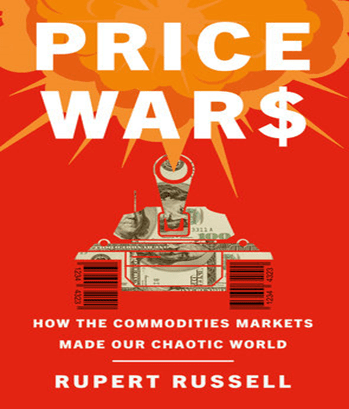
Price Wars: How the Commodities Markets Made Our Chaotic World: Q&A with Rupert Russel

In Price Wars: How the Commodities Markets Made Our Chaotic World, sociologist and filmmaker Rupert Russell travelled to some of the world’s most chaotic places: war zones in Ukraine, Iraq, and Somalia, the climate wars in Kenya and Guatemala, and Venezuela’s economic catastrophe. Told as gonzo investigation into what made the 2010s so tumultuous, Russell links each of these eruptions to swings in commodity prices, and the financial speculators whose bets set their prices.

Read More »