Lula da Silva and Brazilian financialization: Learning from Dilma and the Limits of Confronting Finance

The year 2025 will be the third consecutive year in which the Brazilian economy experiences sustained growth. During the first two years of his administration, economic expansion was above 3% annually, while the outlook for 2025 is for a slowdown: 2.4%, according to IPEA, one of Brazil’s leading state economic analysis agencies.

Since June-July 2024, during the U.S. presidential election and with the possibility of Trump being re-elected, Brazil, like other emerging economies, faced devaluation pressures. This led to higher inflation due to rising exchange rates and supply shocks caused by climate issues. These issues have reduced the food supply (mainly coffee, eggs, and beans), causing prices to rise.

This macroeconomic instability scenario was reloaded by the Trump-driven trade war, particularly when the 50% tariff on purchases from Brazil was announced under a mix of arguments between commercial (trade deficit), political (preventing Bolsonaro from being judged for an attempted coup d’état and US bigtech’s regulation), and geopolitical (the advance of the BRICS on a possible replacement of the dollar in commercial relationships).

What was the response in terms of economic policy? The institutionalization of the inflation target led to an increase in the SELIC interest rate from 10.75% in September 2024 to 15% in June 2025, the highest level since 2006. The orthodox argument suggests that raising interest rates reduces the money supply, curbing aggregate demand and reducing inflation. From another perspective, raising interest rates promotes carry trade, which attracts foreign capital through the capital account and allows the exchange rate to appreciate. In this way, the economy partially protects itself from speculative capital outflows and reduces the prices of imports and exports, thus decreasing the inflation.

In contrast, a sharp rise in interest rates deepens the pernicious effects of financialization: it impoverishes indebted families and concentrates income. Are there any other alternatives available? The economic toolbox offers other options. Many observers have noted a striking characteristic of Lula’s third administration: the absence of open confrontation with Brazil’s powerful financial sector. This is no coincidence. The painful lessons of Dilma Rousseff’s presidency (2011-2016) and her impeachment weigh heavily on current political calculations.

To understand this, we need to analyze the historical lesson of Rousseff’s removal, its macroeconomic causes, and how this experience has limited economic policy options.

Read More »
Decolonising for Whom? Recentring grassroots struggles and voices in the ‘decolonising fintech’ narrative

By Serena Natile and Joy Malala

Over the last few years ‘decolonisation’ has become an increasingly popular subject in Western academia. Broadly considered the process of recognising and undoing the intellectual and institutional structures that enabled and maintain the reproduction of imperial power, calls for decolonisation have opened uncomfortable debates about epistemological privilege, forcing us to confront biases and injustices and to revisit hidden histories and visions for the future. While these debates remain essential, particularly at a time of political authoritarianism, racism, and violence, they also highlight the contradictions in Western academia between decolonisation as a fashionable conceptual trend and its real commitment to justice.

In formerly colonised communities, generational consciousness of colonial oppression and struggles to recover land, property, wealth, and political institutions have created a lived experience of the long-term consequences of colonialism, usually conceptualised as ‘coloniality’, that is not a concept but a reality. This experience has shaped movements and protests in the Global South, including within universities. An example is the #FeesMustFall movement in South Africa, which followed the significant decline of government subsidisation of universities with discriminatory consequences for the disadvantaged Black population without historical wealth and economic privilege. Similar protests concern the recognition of and fight against pillars of colonial power including philanthropists such as British colonialist Cecil Rhodes, who accumulated wealth by appropriating land, enslaving people and extracting resources, and used that wealth to shape knowledge production.

Other significant protests involve resistance against neocolonial powers such as Western financial infrastructures, corporations and international institutions i.e. the International Monetary Fund (IMF) and the World Bank. A  recent example is the ongoing youth-led (Gen Z) round of protests in Kenya #rejectfinancebill2024, motivated by demands to reject the IMF-supported Finance Bill that, if approved, would have imposed a fresh round of government cuts to basic services and austerity measures on Kenyans. The young people protesting in the streets of Nairobi showed awareness of the colonial legacy and long-term impact of the 1980s structural adjustment policies (SAPs) on the lives of people – particularly those at the lower end of the income distribution, and demanded economic sovereignty as the only way to achieve social justice. The protests were successful in impeding the adoption of the Bill, but many young people paid with their lives, as the government deployed a deadly military response to the protests. 

The demands for decolonisation are based on ending economic and epistemological oppression, two interrelated aims, each grounded in colonialism. Reclaiming knowledge and the economic means that allow its production and dissemination has always been at the centre of decolonisation as an opportunity to remake societies, nations, and the world itself for the better. In its fight for justice, decolonisation is a grassroots struggle against colonial and neo-colonial rulers and rules, as well as against all global and local actors and structures that enable and reinforce those rules. For this reason, grassroots voices need to be at the centre of any decolonisation project.

Read More »

Financial Statecraft and its Limits in the Semi-Periphery

Over the past decade, two, intertwined research agendas on international financial subordination (IFS) and subordinate financialization (SF) have proposed to identify how an increasingly finance-dominated global capitalism incorporates the (Semi-)Peripheries.

The IFS research agenda recognizes that a “subordinate” national currency comes with a risk premium increasing the costs of financing public debt – in other words, the current, US dollar-based currency hierarchy acts as a structural fiscal constraint in the Global South, limiting the scope for badly needed public investments. Foreign capital – in the form of foreign currency-denominated sovereign and private debt-, foreign aid, and foreign direct investment – is then touted as a solution to this artificial and unfair developmental constraint.

The SF agenda examines how this straightjacket on fiscal space has been further compounded with the liberalization of global capital mobility over the past forty years, diffusing credit-based accumulation strategies from the Core to the Peripheries: the financialization of (semi-)peripheral economies radically misallocates financial resources from socially and environmentally vital public goods and transformative industrial policies towards developmentally regressive strategies of accumulation driven by speculation and asset-price inflation.

Programmatic visions for liberating (semi-) peripheral economies from the dual constraints of a national fiscal space suffocated by the global currency hierarchy and globally mobile capital flows which deepen financialization are underdeveloped. Two scales of action are plausible: At the international level, de-dollarization is promoted by the BRICS bloc, but it remains uncertain what forms of international financial solidarity and collaboration, if any, will materialize under its aegis. The national level comprises an alternative scale as the State continues to be perceived as the most likely candidate for ringfencing domestic social, environmental, and developmental objectives from the pressures of global capital mobility and the structural constraints of the global currency hierarchy.

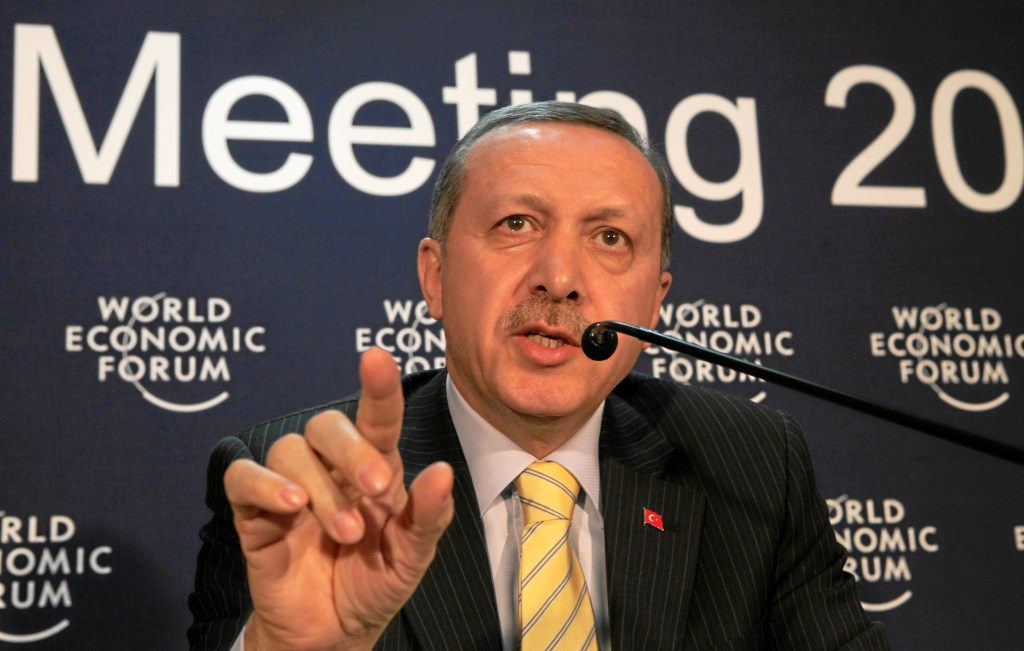
In a recent co-authored piece with Pınar EDönmez, we study the politics governing the management of money in Hungary and Turkey, two semi-peripheral economies where the executive has built a vast array of direct and indirect tools to intervene in monetary policy, retail banking and credit allocation to manage financial subordination.

Read More »

Exploring the Platform Political Economy of Self-Help in Africa

Informal savings group in Tarime district, Tanzania. Photo: Daivi Rodima-Taylor

Self-help groups can be found in many areas of Africa—including the chama groups of Kenya, isusu of Nigeria, and stokvels of South Africa (Ardener and Burman 1995). Their customary rotating credit arrangement is also popular among African diaspora communities (Hossein 2018; Ardener 2010). A significant rise has occurred in these groups at the wake of the neoliberal restructuring reforms of the 1980s-90s, with a decline in formal sector employment and state-funded producer cooperatives. At present, these mutual support groups are targeted by FinTech platforms as well as conventional banks with various financial products and software apps. My recent research explores of the contentious interplay between the formal and informal finance in these emerging digital interfaces in Africa. It studies the intersection of FinTech with the social economies of African mutual help groups in Kenya and South Africa, situating this dynamic in longer-term colonial legacies and present-day policies of extractive financialization (Rodima-Taylor 2022).

Informal mutual support groups with their saving-credit patterns have long served as an inspiration for the development industry. The initially successful Grameen micro-finance model drew on pre-existing reciprocities and mutually negotiated liability in largely informal contexts. However, as the microfinance formula shifted from socially situated lending towards ‘fast-scaling’ and universalizing group lending in an expanding range of localities, the industry was faced with repayment crisis (see Haldar and Stiglitz 2016). The recent conceptual shift from microfinance to digital financial inclusion foregrounds mobile payments and fee-based service delivery, with payment industry also experimenting with new sources of value such as customer data (Maurer 2015). Microloans have remained an important part of the digital financial inclusion enterprise, with poorly regulated lending apps fueling over-indebtedness. As informal savings groups and mutual support associations have become central in the livelihoods in many low-income communities, I suggest that more attention is needed to the intersection between the self-help groups and FinTech initiatives in the global South.

Read More »

Green financialization and de-risking in Zambia’s renewable energy transition

By Simone Claar and Franziska Müller

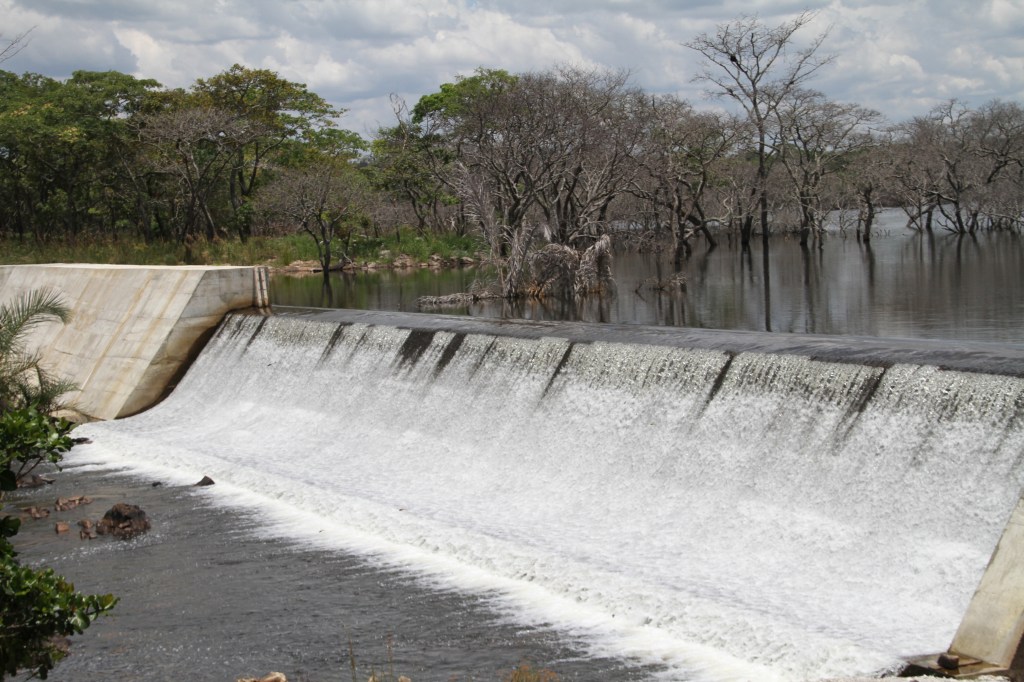
Zambia’s has a history full of hopeful prospects and broken dreams. In the 1980s and again in the early 2010s, Zambia experienced an economic upswing. Labelled as an emerging middle-income country and called the new ‘African Tiger’, a mix of copper extractivism, an aspiring tourism sector, as well as political stability led to an impressive rise. However, the phase was short-lived, as Zambia’s political economy remains fragile: dependent on the price of copper and the world market, it is regularly on the verge of state bankruptcy due to a significant foreign debt burden. A history of structural adjustment programs in exchange for IMF loans and dependency on billion-scale Chinese loans means that Zambia became the first African country to declare bankruptcy in the wake of the Covid pandemic, first asking for a moratorium, and later for restructuring its Eurobond loans and Chinese loans. In this context, Zambia’s dependence on development financing is highly evident and deeply anchored in the state structures. Zambia’s political economy of energy and the ongoing energy transition reflect this tedious situation. Rising energy demands and lack of investment mean that widespread load shedding has become a frequent phenomenon. Climate change and recurring droughts negatively affect hydropower performance, which makes up 95 per cent of installed capacity. The current roll-out of renewable energy is a beacon of hope. Nevertheless, its financial structures give rise to the assumption that Zambia may also be the first African state where the miracle of green capitalism and “white magic” (Girvan 1978) is becoming manifest, resulting in both shiny solar panels and a loss of political and economic sovereignty. Analyzing Zambia’s energy transition’s political and financial toolbox, we delineate how green financialization and de-risking are executed based on blended development finance. 

Read More »

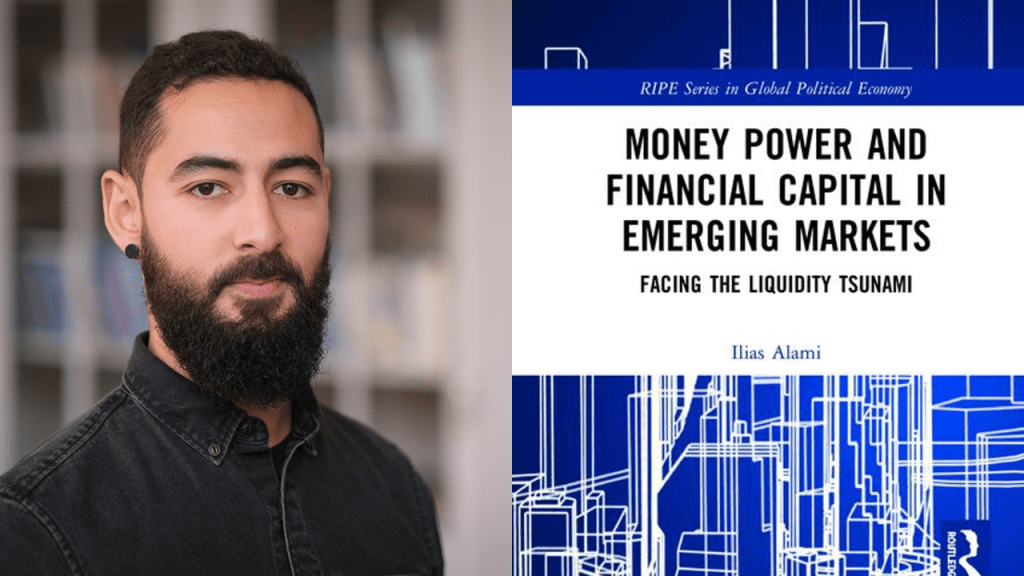
The Geopolitics of Financialisation and Development: Interview with Ilias Alami

This interview was originally published in German in the special issue on financialisation and development policies of the journal Peripherie, September 2021, No. 162/163. Frauke Banse and Anil Shah (both based at Kassel University) spoke with political economist Ilias Alami (Maastricht University) about some of his recent work on the relationship between geopolitics, financial flows for development and emerging forms of ‘state capitalism,’ as well as related new imperialist formations. The interview was conducted via email in May 2021.  

The interview covers a series of International Political Economy topics. Ilias first locates the emergence of the Wall Street Consensus in the long and turbulent histories of the relation between finance and development as well as in secular capitalist transformations. He then outlines some of the conceptual tools he’s developed in his work in order to make sense of the contemporary interconnections of money and finance and the reproduction of imperialism and race/coloniality. Next, he situates these interconnections within broader scholarly debates about financialisation and highlights the similarities and differences between ongoing sovereign debt crises in the global South and the so-called 1980s ‘Third World debt crisis.’ Finally, Ilias discusses the recent emergence of new forms of ‘state capitalism’ and their complex relation to the extension and deepening of market-based finance. 

Read More »

Does financialization provoke increasing prices? The case of Brazilian private health insurance 

Since the Brazilian Regulatory Agency for Supplementary Health’s (ANS) creation in 2000, health insurance inflation has grown at a much greater pace than general inflation. Indeed, after eighteen years the private health insurance price index was close to double the official inflation index, with its 382% (see here). 

The upward course of prices can be interpreted as a response to the problems arising from the escalating costs. Baumol (2012) calls this phenomenon “cost disease”, designating that labor relates differently to production: in the case of the goods, work would be incorporated into the product; in the case of services, labor would be the product being exchanged, making difficult to substitute factors.

Read More »

Neoliberalism and Resistance in South Africa: Economic and Political Coalitions

In the first quarter of 2021, amidst the social and economic devastation wrought by the Covid-19 pandemic, the South African Treasury announced, and subsequently defended, its decision to refrain from increasing the country’s extensive social grant payments—which now reach 18 million impoverished citizens—beyond the growth in inflation. Treasury officials have argued that a larger increase in social welfare protection is simply not currently feasible given the country’s rapidly rising public debt—which has now breached 80% of the debt/GDP ratio—and investor demands for fiscal consolidation. This type of fiscal restraint is unfolding in a context of heightened wealth inequality and an official unemployment rate now above 30%.

Those familiar with the financialization scholarship pertaining to developing countries—that strand which portrays the global financial markets as a force that can alter committed policy trajectories on a whim (Koelble, 2004), as well as the more nuanced literature (Mosley, 2000; Hager, 2017; Streeck, 2014; Ansari, 2017)—may recognize the Treasury’s framing of South Africa’s fiscal dilemma. However, as much of the international development literature on industrial upgrading and state policy has noted (Wade, 2018; Alami, 2019; Rodrik, 2006), there is a third option available to policy-makers in developing countries beyond the binary of debt build-up vs. austerity; namely, comprehensive, employment generating state-led development.

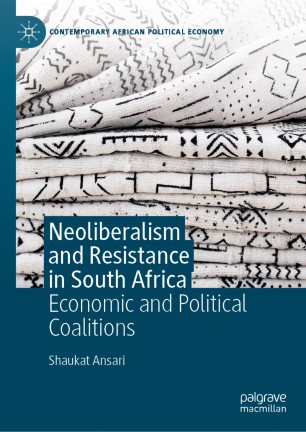
This is precisely the case I make in my new book, published by Palgrave (2021), Neoliberalism and Resistance in South Africa: Economic and Political Coalitions. In addition to documenting the onset of a financialized accumulation regime in post-apartheid South Africa since the democratic transition and the ANC’s adoption of economic liberalization, the monograph also highlights the missed opportunities that could have allowed the country to embark on a self-sustaining path of industrial up-grading, inclusive development, and internal revenue generation. Such missed opportunities include the early rejection by party leaders of the heterodox “Macro-Economic Research Group” (MERG) policy cluster, the removal of the trade unions from broader macro-policy-making processes, the rejection of a modest reconstruction and wealth tax, and the abandonment of much of the “Reconstruction and Development Program” (RDP) platform in favor of the orthodox “Growth, Employment, and Redistribution” (GEAR) package in 1996. Had some of these missed opportunities been pursued, South African state officials would likely be in a much better position to currently adopt expansionary fiscal policies, and perhaps could have lifted their citizens out of poverty via inclusive development instead of cash-transfers.

Yet, as my monograph further documents, since the democratic transition Treasury officials have continued, despite recommendations from other government ministries such as the Department of Trade and Industry (DTI), to veto or oppose heterodox policy proposals that could potentially offer South Africa a path away from the current neoliberal quagmire. Such proposed polices include capital controls, export taxes on raw materials, the utilization of foreign exchange reserves to capitalize State-Owned-Enterprises (SOEs), and targeting specific industrial sectors for subsidies and state promotion.

Read More »