Geopolitics isn’t killing global supply chains—it’s powering them

Global supply chains (GSCs) – which account for around 70 percent of international trade – are often referred to as the backbone of the world economy. As tensions rise between major powers—especially the United States and China – many commentators fear for the future of GSC’s and hence the world economySuch projections overlook how geopolitical rivalries have stimulated the development of advanced technologies, which in turn enabled the rise and ongoing transformation of global supply chains.

A close look at the US-led development of technology during the Cold War shows that it enabled the formation and expansion of many contemporary global supply chains. China in turn has made efforts to catch-up to US technological development, and in response, the US has been deploying strategies to curb China’s tech rise amid a new geopolitical rivalry.

Read More »

Systems Thinking, Polycrisis, and the Blind Spot of Power

Why do so many people who claim to “see the whole system” remain blind to power?

This question struck me while listening to a recent episode of Planet Critical. The guest was Joseph Tainter, best known for The Collapse of Complex Societies. Tainter is celebrated as a pioneer of collapse studies and systems thinking. Yet when the conversation turned to the genocide in Gaza, his framing reduced it to Israel’s “historical fear of Arabs.” The structural realities of colonialism, imperialism, and resource politics — central to understanding both Gaza and the Middle East more broadly — disappeared. Here was a thinker revered for complexity, offering an analysis that was Eurocentric, ahistorical, and politically naïve.

This is not about Tainter alone. Similar patterns appear in the work of figures like Nate Hagens and Daniel Schmachtenberger, both of whom have influenced me personally. Their mission is helping people make sense of the complex issues: Nate by weaving ecology, energy, financial systems and human behavior into accessible frameworks; Daniel by building sweeping syntheses across cognitive science, culture, and existential risk.

The often criticise most disciplines for their blindness. But their critique of blindness has its own blindness. Across their work, capitalism, imperialism, colonialism, and class power rarely appear as sustained focal points. Yes, Daniel sometimes critiques modernity and gestures toward indigenous knowledge, and Nate occasionally hosts guests who reference colonial history. But overall, the crisis is cast as a species-level problem — as though “humanity” collectively overshoots limits — rather than as the outcome of specific, historically rooted systems of exploitation with identifiable beneficiaries and victims.

Read More »

The geopolitics of China in Chile’s lithium strategy and the trouble with critical minerals

On May 7th 2025, the Chilean government confirmed a report published earlier that morning: Chinese companies BYD and Yongqing Technology (Tsingshan Group) had abandoned their planned lithium cathode production facilities in Chile. This announcement dealt a significant blow to the ambitions of a country with a longstanding mining tradition, now striving to build industrial capabilities and develop value-added products from its mineral resources amid the global energy transition. However, just one day later, the Chinese embassy in Chile contradicted both the initial report and the Chilean government’s confirmation. After consultations with both companies, the embassy clarified that neither had officially withdrawn their investment plans. Instead, they reaffirmed ongoing interest in maintaining dialogue with Chilean authorities. The embassy further emphasized Chile’s continuing attractiveness to Chinese businesses, highlighting the numerous firms eager to participate in the country’s National Lithium Strategy. Despite Tsingshan’s formal withdrawal and BYD moving in the same direction, the Chinese embassy’s statement—issued amidst escalating trade tensions and shifts in the international order—suggests this chapter is far from concluded.

This episode highlights the complexity and uncertainty confronting peripheral economies attempting to industrialize by leveraging their comparative advantages amidst the so-called energy transition and broader geopolitical tensions marked by trade wars. While significant global attention remains focused on the socio-environmental impacts of critical mineral extraction, less consideration has been given to examining how peripheral economies—countries heavily reliant on natural resource extraction—are strategically navigating or capitalizing on this “critical minerals moment” in relation to their own ambitions to industrialize.

Read More »

De-dollarisation and Internationalisation of Other Currencies: Geopolitics and Implications for Dollar Diplomacy

By Sangita Gazi and Christabel Randolph

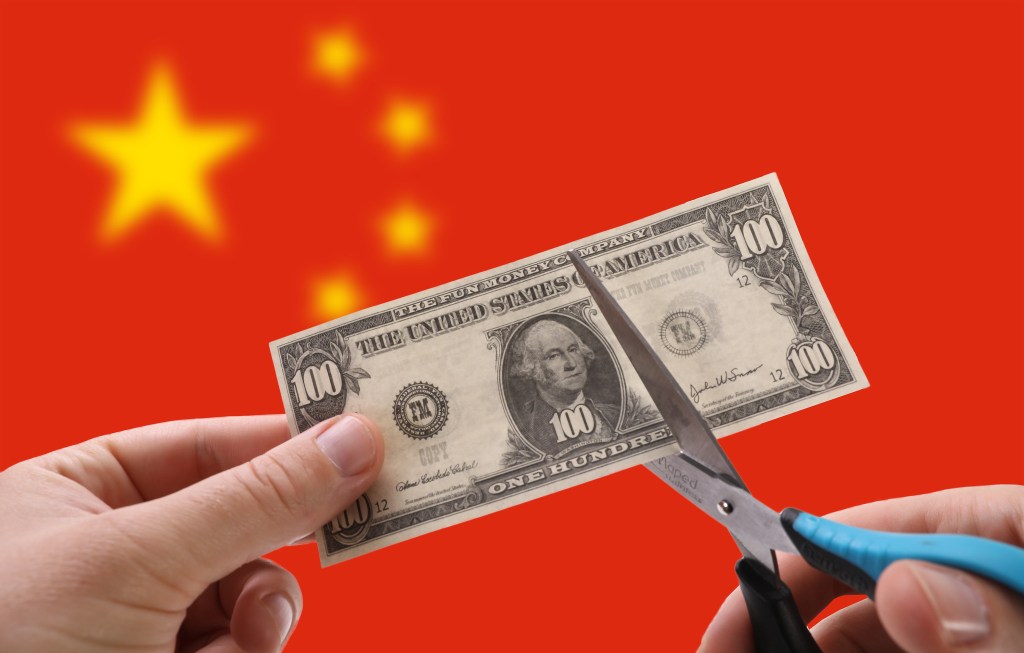
In a 2022 report, International Monetary Fund (IMF) states that ‘[t]he dollar’s share of global foreign-exchange reserves fell below 59 percent in the final quarter of last year, extending a two-decade decline’. However, surprisingly, the decline in the dollar is not associated with the ‘increase in the shares of the pound sterling, yen, euro, and other long-standing reserve currencies.’ Instead, the shift in the dollar’s share in the reserve currency system went in two directions—a quarter into the Chinese renminbi and three-quarters into the currencies of smaller countries that have historically played a limited role as reserve currencies. This piece examines the shifts underlying this trend with a focus on increased regional alliances in trade and payment systems technology. We conclude with forecasts and implications for a more multipolar monetary order and ‘dollar diplomacy.’

Since the onset of the Covid-19 pandemic, geopolitical tensions and economic stagnation have led to fragmentation in cross-border trade and payment systems. The ongoing Ukraine-Russia conflict and international sanctions imposed by the Western economies have also contributed to this situation by causing disruptions for countries with trade relationships with Russia, particularly for essential commodities like fuel, grain, and oilseed. Moreover, many countries are running low on U.S. dollar reserves amidst inflation, prompting them to consider alternative currencies for cross-border trade settlements. This is further exacerbated by the aggressive rate hikes by the Federal Reserve in an attempt to contain domestic inflation within the U.S. The historical correlation between the U.S. dollar and commodity prices has been disrupted for the first time. As a result, evidence suggests a degree of regional fragmentation in trade-related activities and the use of alternative currencies, leading to a shift away from the U.S. dollar as the primary currency for international trade. For instance, in March 2023, the yuan was the most widely used global currency, surpassing the U.S. dollar and euro.

Further, central banks from emerging markets and developing economies seek to diversify their foreign currency reserve composition. The shift began in April 2022, after key Russian banks were removed from SWIFT following Russia’s invasion of Ukraine. China increasingly uses the yuan to buy Russian commodities, such as oil, coal, and metals, settling their bilateral trade with Russia in Chinese currency instead of dollars. In a similar effort, India has made several initiatives to create bilateral trade relationships with countries like Bangladesh, the United Arab Emirates, and Malaysia to internationalize the rupee and use it to settle cross-border trades. This trend toward exploring alternative currencies may affect the global financial landscape. Still, its impact is uncertain due to concerns about newer currencies’ volatility and regulatory systems.

Read More »

Everyday Politics in the Libyan Arab Jamahiriya: Q&A with Matteo Capasso

In Everyday Politics in the Libyan Arab Jamahiriya, Matteo Capasso provides an alternative analysis of Libya’s history and regime under Colonel Gaddafi leading up to the 2011 events that sanctioned its fall. The book offers a compelling counterargument to the mainstream narrative of Libya as a stateless, authoritarian and rogue state by focusing on international and geopolitical dynamics impacting Libya’s governance.

Q.1 Your book argues against the dominant western analysis of Libya under Colonel Gaddafi as a dictatorship, completely dependent on its economic legitimacy from oil. To quote:

This book has cautioned readers from rushing to define the Jamahiriya as an umpteenth authoritarian regime in the Arab world that crushes and controls its people. The significance of this issue lies in how the increasing repressible characteristic of the regime inevitably reflected wider power’

What do you mean by wider power dynamics?

When you pick any book on the political history of Libya, you are bound to encounter the argument that Qaddafi’s Libya (not the Libyan Arab Jamahiriya or the Libyan government) was a stateless society, governed ruthlessly by a dictator who was aiming to disrupt the US-led international order.  In the book, I define these arguments as a conceptual tryptic, including the ideas of statelessness, authoritarianism and rogue state. The book starts off questioning the use of these analytical frameworks and instead proposes to address questions of political legitimacy and authority via the study of the everyday. To do so, however, brought me to face another problem, namely the fact that most academic studies approach the ‘everyday’ with an overemphasis on the agency and power of the people. This, in turn, has led to dismiss a bit too quickly the impact of global and structural factors; and this is where I come to answer your question. While the everyday gained prominence and became a privileged site for studying politics in the Arab region, especially in the aftermath of the 2011 mass uprisings, these analyses  remain disconnected from long-standing international dynamics of politics and political economy. In other worlds, how were these states integrated in the wider international political economy? Did the political projects pursued by the Libyan government, especially in the aftermath of the 1969 revolution, challenge the interests of Western geopolitical forces? Why was Libya progressively subject to military assaults and geopolitical pressure?  If one ignores—rather conveniently—these aspects, it ends up to square one, basically explaining the politics of the country as the result of internal factors. In this manner, one not only delinks the socio-political formation of countries in the Global South from the international world, but also ends up flattening out its hierarchies existing.

Read More »

Limits to Supply Chain Resilience: A Monopoly Capital Critique

As the COVID-19 pandemic expanded across the world in early 2020, it generated the “first global supply chain crisis.”1 Global supply chains represent the integrative structure of contemporary global capitalism, and any disruption to them potentially threatens the functioning of the system itself.

In response to the crisis, the global supply chain community, encompassing academics and policymakers keen to promote their purported benefits, are proposing ways to increase supply chain “resilience.” The notion has been defined by the World Trade Organization and Asian Development Bank as “the ability of these chains to anticipate and prepare for severe disruptions in a way that maximizes capacity to absorb shocks, adapt to new realities, and re-establish optimized operations in the shortest possible time.”2 Enhanced global supply chain resilience is to be pursued through a range of policies to be implemented by lead firm managers and supported by states.

While global supply chains are promoted as generating positive gains—for firms and workers, North and South—there is mounting evidence to suggest that they represent organizational forms of capitalism designed to raise the rate of surplus value extraction from labor by capital and facilitate its geographic transfer from the Global South to the Global North. As demonstrated in a previous Monthly Review article (“World Development under Monopoly Capitalism,” November 2021), global supply chains have contributed to dynamics of concentration in leading firms, and a marked shift in national income from labor to capital across much of the world.3

Capitalism, as Karl Marx observed, is rooted in the exploitation of labor by capital through the latter’s ability to extract surplus value from the former.4 It is characterized by dynamics of concentration and centralization of capital, where fewer and larger firms increasingly dominate each economic sector. These dynamics are intrinsically related to capitalism’s uneven geographical development and the reproduction of geopolitical tensions and rivalries. As Harry Magdoff once wrote:

Centrifugal and centripetal forces have always coexisted at the very core of the capitalist process.… Periods of peace and harmony have alternated with periods of discord and violence. Generally the mechanism of this alternation involves both economic and military forms of struggle, with the strongest power emerging victorious and enforcing acquiescence on the losers. But uneven development soon takes over, and a period of renewed struggle for hegemony emerges.5

In fact, a recent World Bank publication explicates how the COVID-19 crisis is exacerbating capitalism’s inner monopolistic tendencies:

COVID-19 could cause a further rise in corporations’ market power because large corporations are in the best position to withstand the economic downturn and deploy new technologies.… In the past three recessions, the share prices of US firms in the top quartile across 10 sectors rose by an average of 6 percent whereas the share prices of those in the bottom quartile fell by 44 percent. The same divergence has been evident since the start of the COVID-19 outbreak.6

This article argues that the resilience agenda represents an ideological justification and fortification of these very same tendencies—of labor exploitation, of concentration and centralization of capital, and of an increasingly geopolitical dimension to capitalist competition.

Following this introduction, the first section of this article outlines the emerging notion of resilience as formulated within the global supply chain community. The next section discusses how the first response by firms and states to the COVID-19 crisis was to make workers bear the brunt of the crisis. The concluding section identifies the geopolitical dynamics of resilience, focusing on the White House’s 2021 report, Building Resilient Supply Chains, Revitalizing American Manufacturing, and Fostering Broad-Based Growth.7

Read More »

Whose Polycrisis?

‘if God the Father had created things by naming them, Elstir recreated them by removing their names, or by giving them another name’.

Marcel Proust (II, 566)

An emerging consensus originated in the US has declared 2022 as the year of the ‘Polycrisis’, with a view to marking the beginning of an era of turbulence and unrest in the global economy.  Under this conceptualisation, recent events including the Covid-19 pandemic, climate change catastrophes, the Russian invasion of Ukraine and the rise in energy and food prices are generally postulated as separate crises, which can have an effect on each other but nevertheless have separate origins.  This centrifugal analysis of events predicates on the decline of the uni-polar world order, as well as acknowledging the emergent structural weaknesses in the traditional western powers; all of which can be loosely interpreted as occurring in a period during which power is dispersing and perhaps as a consequence of this dispersion, the current drivers of crisis have multiplied, leading to a multitude of crises, in contrast to preceding historical instances.

In spite of the current use of the term, the origins of the Polycrisis date further and can be more sparsely contextualised. However, there is no doubt that it has now become an important neologism for conventional western media and policy institutes, especially adopted by Bretton Woods Institutions, as well as other leading investors.

Civil society has also used this term as a neat summary, however, theirs is a critical response and is not interchangeable with how powerful International Financial Institutions (IFIs), policy think-tanks and investors use the term.  In this sense, the instrumentalisation of this neologism, seems to have more value than its meaning, with the discernible possibility that any perceived political mileage of the Polycrisis, is a complete transformation away from its intellectual roots. Nonetheless, as an artefact, the intellectual roots and the political role of the Polycrisis merits an integrated analysis beyond its instrumentalisation. 

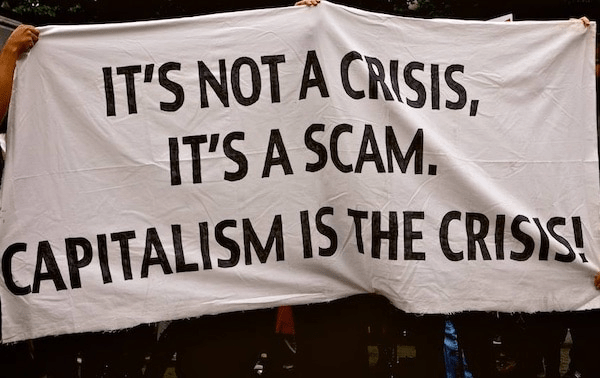
A remarkable feature of liberal thought is the tendency towards identification of social phenomena through the selective elevation of their key distinguishing features, which are abstract enough to form ‘systems’ and neutral enough to subsume the inherent contradictions of capitalist development. Pandemics, climate breakdown, wars and global deflationary pressures are not mere externalities of the capitalist system but intrinsic to its operations- long predicted by a diverse group of thinkers. That these events converge in time is a political outcome, subject to planetary limits, not abstract systemisation, as the Polycrisis seems to imply.  

Critical responses to the Polycrisis have pointed towards its disregard in accounting for the long and sustained crisis of the capitalist world order and a resort towards ‘brute empiricism’ to conceptualise things as they appear to be,  rather than questioning what is occurring beneath mere appearances. Prima-facie accounts often seek to capture the zeitgeist in the endeavour to simplify things. However, there is a need to differentiate between simplification and reductionism. As a concept, the Polycrisis is simultaneously all-encompassing as well as abstract.

In an attempt to grasp both these aspects, this short blog starts with a focus on three messages of the Polycrisis: a) the qualitative nature of change, b) the drivers or causes of crises and c) the role of Bretton Woods Institutions in adopting the concept. In addition, the blog proposes an alternative way of understanding the contemporary crisis, which hinges on the decline of the western capitalist model, followed by some thoughts on multipolarity and geopolitics. 

Read More »

Sanctions and the changing world Order: Some Views from the Global South

In the aftermath of the Russian invasion of Ukraine, major world powers including the United States and the European Union have introduced sanctions on Russia. These wide ranging sanctions have been approached diversely by states, leading to distinct  bilateral and  multilateral approaches. The marked absence of a global consensus is notable. As the invasion and the sanction regime continues, the global economy is also slowing down with the imminence of a global depression. While the majority of analysis debates the efficacy of the current sanctions, this Q&A with sociologist and author of the A People’s Green New Deal, Max Ajl, political scientist and author of the forthcoming Race, Nature, and Accumulation, Bikrum Gil, and historian and author of Finance in Colonial Zimbabwe: Money, Sanctions and War Economy, Tinashe Nyamunda, analyses the structural and political nature of sanctions situating its modern iteration in a historical light. We ask them about the history of global sanctions, whether they an effective deterrent to wars, why countries in the global south have abstained from the current sanctions, how should we understand the current sanctions in the global order of neoliberalism, and whether sanctions are leading towards a new round of a non-aligned movement.

Read More »