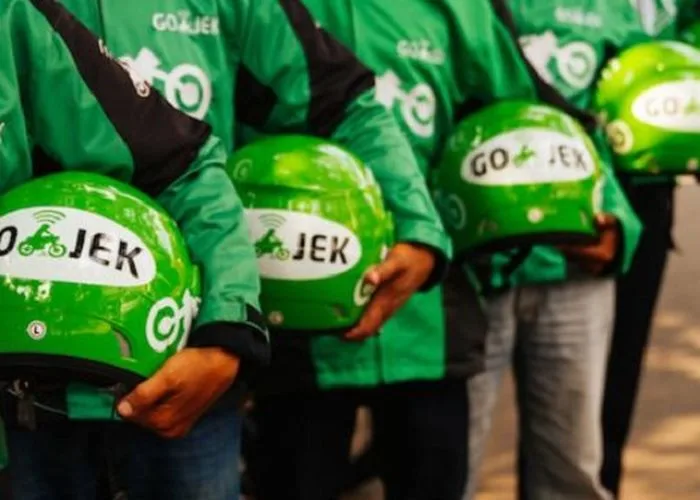
Somewhere in the state of Maharashtra, a cotton farmer took his own life after years of compounding debt and crop failure. Across India, this tragedy is not rare. The National Crime Records Bureau recorded 11,290 farmer and farm-labourer suicides in 2022—roughly one death every hour—with debt consistently identified as a leading cause (Down to Earth, 2023). In Sulawesi, Indonesia, villages are being cleared to make way for nickel smelters that supply the batteries of the global electric-vehicle boom. Workers at the Indonesia Morowali Industrial Park earn higher wages than they would in farming, but face fatal furnace explosions and respiratory damage as recurring occupational risks (Campbell & Lee, 2024; Global Witness, 2025). And on the streets of Jakarta, Yogyakarta, and Surabaya, a new population of electric motorcycle drivers pedal their way through twelve-, fourteen-, sixteen-hour days (Novianto, 2025a), servicing loans they never chose and rental fees that can never be fully paid.
These are not three unrelated stories. They are distinct moments in a single global process: the uneven, extractive, and deeply political reorganisation of labour under the banner of the green transition. In this article, I want to argue, drawing on my fieldwork with electric-vehicle (EV) platform drivers in Indonesia, that this reorganisation has produced what I call a regime of green debt bondage—a configuration in which ecological transition, platform governance, and financialised credit converge to bind workers to perpetual labour without delivering the promised climate dividend.
Debt bondage is most often associated with pre-capitalist or early-capitalist forms of coercion: the indentured plantation worker, the brick-kiln labourer, the trafficked domestic servant (Breman, 2007; Brass, 2011; LeBaron, 2014). Its reappearance inside the shiny, algorithmic, climate-friendly infrastructure of platform capitalism should unsettle us. It signals not a rupture from coercive labour regimes, but their transformation into more diffuse and systemically embedded forms. What I call green debt bondage refers to a condition in which workers are not only tied through credit, rental schemes, and platform deductions, but are also structurally compelled to remain within precarious work due to the absence of viable, decent employment alternatives.
In this regime, indebtedness does not operate in isolation; it interacts with broader labour market constraints that limit workers’ capacity to exit. Debt becomes a mechanism that deepens this entrapment—pushing drivers to work longer hours, accept worsening conditions, and absorb greater risks simply to service obligations they cannot easily escape. As such, the “greening” of transport in Southeast Asia does not merely reorganise infrastructure, but reconfigures coercion itself: embedding exploitation within both financial relations and structural labour precarity under the banner of ecological transition.
Read More »

