Private Equity in the Global South: Locusts? Vampires? The contagion effect

The effectiveness of private equity has been a subject of ongoing debate in countries of the Global North. There is substantial evidence highlighting the extractive practices associated with private equity operations across Western nations. Examples include the decline of the British high street and the financial instability of local councils in the UK, particularly in the provision of child care. Similarly, in the United States, private equity has been linked to the attrition of an already fragile healthcare system. In France, Germany and the UK., its influence has contributed to the deterioration of care homes, raising significant concerns about its broader social and economic impact.

In a recent blog, Michael Roberts characterized private equity as “vampire capital“, encapsulating the widely recognized critique that private equity firms function through a rentier model. These firms are frequently associated with practices such as asset stripping, worker lay-offs, and opting for excess leverage that increases the debt burdens of their acquisitions, all while failing to provide compelling evidence of value creation. This perspective aligns closely with earlier criticisms of private equity. During the 2000s, private equity operations were similarly likened to a swarm of locusts, reflecting widespread disapproval of their extractive and often detrimental economic practices.

In summary, such analogies emphasize the aftermath of private equity operations, leaving behind “carcasses and barren landscapes.” Nevertheless, the evidence of a hollowed-out socio-economic landscape in the Global North has not deterred the international expansion of private equity into countries of the Global South. On the contrary, ongoing reports of American private equity capturing British markets have emerged in tandem with the globalization of Western private equity. In so-called “emerging markets,” this expansion manifests in various forms, including an enthusiasm for deploying “moral money” through international development initiatives.

This article examines the role of private equity in Global South countries, focusing on three key characteristics: the escalation of indebtedness, the weakening of public markets, and the public subsidy function of development finance in facilitating private equity investments.

Read More »

C. T. Kurien and Rethinking Economics

Born in 1931, C. T. Kurien contributed to rethinking economics through his various writings, particularly books and his vision for a practical B.A degree in Economics at Madras Christian College (MCC), an autonomous college situated in Chennai, a port city in Southern India. Besides MCC, another institution he contributed to was Madras Institute of Development Studies (MIDS), a research-only institute, also in Chennai. Kurien passed away in July 2024 aged 93.

This blog post provides a brief introduction to Kurien’s life and economics.

Read More »

Amartya Sen’s Work Shows Us the Human Cost of Capitalist Development

Indian economist Amartya Sen has posed a devastating challenge to the dominant capitalist understanding of development. But Sen’s own analytical framework doesn’t go far enough in exposing the inherently exploitative logic of capitalism.

Amartya Sen is one of the most influential thinkers about development in the contemporary world. Since the 1970s, he has published widely across the disciplines of economics and philosophy. He received the Nobel Prize for Economic Science in 1998. In 2010, Time magazine rated Sen as one of the world’s one hundred most influential people.

There is a predominant notion of development trumpeted by international institutions, many academics and journalists, and politicians of most stripes. It holds that economic growth provides the basis for human development. Given that under capitalism, economic growth is for the most part rooted in capital accumulation, “growth-first” notions of development are essentially capital-first notions.

This way of thinking places capitalist firms, managers, and the states that back them at the helm of the human development project. It conveniently excuses the ways in which such growth generates, and is often based upon, novel forms of poverty and oppression for workers. Sen’s writings pose a major challenge to the growth-first/capital-first idea of development.

Read More »

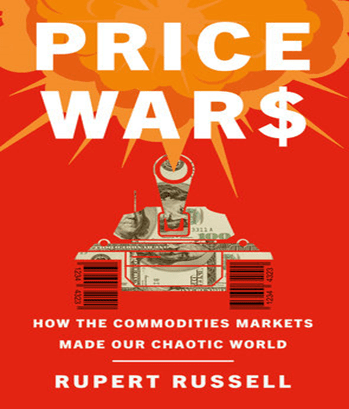
Price Wars: How the Commodities Markets Made Our Chaotic World: Q&A with Rupert Russel

In Price Wars: How the Commodities Markets Made Our Chaotic World, sociologist and filmmaker Rupert Russell travelled to some of the world’s most chaotic places: war zones in Ukraine, Iraq, and Somalia, the climate wars in Kenya and Guatemala, and Venezuela’s economic catastrophe. Told as gonzo investigation into what made the 2010s so tumultuous, Russell links each of these eruptions to swings in commodity prices, and the financial speculators whose bets set their prices.

Read More »

A need to re-examine the temporality of anti-trust action

The structure of anti-trust laws is generally and neatly divided into ex-post enforcement and ex-ante regulation of market conduct and its participants. It is a matter of social and economic policy choice as to whether any regulation should precede ‘harm’ or follow it, as is the construction of ‘harm’ across statutes. For example, the requirement of a merger notification is an ex ante means to understand and assess the market impact of a merger. On the other hand, abuse of dominant position is an ex-post assessment once the dominance has set in, which may be in the long run. The determination of abuse is subject to a rule of reason and analysis by the competition authorities. Against this background, the question is what happens in the intervening period when an undertaking is slowly and surely inching towards domination, engaging in conduct which would be punished only once it becomes dominant ? What happens to the process of concentration of markets, along with the practices in concentrated markets? These questions are not borne out of academic interest alone and are not completely answered by a simple focus on anti-competitive agreements, as will be seen below. The analysis will zoom in on the Indian market conditions to make a case for questioning the timing of regulatory intervention and proceed to show that new economic methods may be required in this task.

Read More »

Neoliberalism and global development before and after the Washington Consensus: Agricultural credit at the World Bank

We’ve witnessed a revival of debates about the Washington Consensus and the future of neoliberalism in recent months. Recent increases in public spending have led several commentators to conclude, or lament, that decades of neoliberal consensus have been shattered. Much of this debate is misguided, rooted in a mistaken dichotomy between ‘states’ and ‘markets’, and a corresponding conception of neoliberalism as primarily involving a reduction in the role of the former. Efforts to rehabilitate the Washington Consensus, meanwhile, rely on flimsy and heavily ideological counterfactuals.

In this post, I want to take up another angle on this question, asking: what is ‘the market’ in practice? In particular, I take a closer look at the emergence of the idea that ‘interest rates should be market-determined’. This was a core tenet of the ‘Washington Consensus’ in John Williamson’s original formulation. It was also, historically, a key argument of neoliberal economists. From the early 1970s, several influential pieces (e.g. McKinnon 1973; Shaw 1973) urged the deregulation of interest rates, arguing that while usury caps were intended to assist small farmers, they wound up forcing banks to concentrate on relatively low-risk loans to government or large-scale industry.

In practice, though, the relatively simple proposition that ‘interest rates should be left to the market’ invited a whole range of difficult questions and political challenges.

In a recent article in New Political Economy tracing the history of World Bank agricultural credit programmes (Bernards 2021), I show how neoliberal approaches to development have never really involved ‘shrinking the state’ and unleashing markets so much as fraught and failure-prone efforts to figure out who and what should be governed by, and how to construct, markets.

Read More »

The power of private philanthropy in international development

By Arun Kumar and Sally Brooks

In 1959, the Ford and Rockefeller Foundations pledged seven million US$ to establish the International Rice Research Institute (IRRI) at Los Baños in the Philippines. They planted technologies originating in the US into the Philippines landscape, along with new institutions, infrastructures, and attitudes. Yet this intervention was far from unique, nor was it spectacular relative to other philanthropic ‘missions’ from the 20th century.

How did philanthropic foundations come to wield such influence over how we think about and do development, despite being so far removed from the poor and their poverty in the Global South?

In a recent paper published in the journal Economy and Society, we suggest that metaphors – bridge, leapfrog, platform, satellite, interdigitate – are useful for thinking about the machinations of philanthropic foundations. In the Philippines, for example, the Ford and Rockefeller foundations were trying to bridge what they saw as a developmental lag. In endowing new scientific institutions such as IRRI that juxtaposed spaces of modernity and underdevelopment, they saw themselves bringing so-called third world countries into present–day modernity from elsewhere by leapfrogging historical time. In so doing, they purposively bypassed actors that might otherwise have been central: such as post–colonial governments, trade unions, and peasantry, along with their respective interests and demands, while providing platforms for other – preferred – ideas, institutions, and interests to dominate.

Read More »

The Use and Abuse of the Phrase “Global Public Good”

24133986625_cac64b3352_o
Photo by Miroslav Petrasko

A flawed understanding of the concept of “public good” hampers the fight for equitable access to the upcoming COVID-19 vaccine

The term “global public good” has been used in very different ways by policy makers, economists and others. The term “global” is not particularly controversial, and in this context is generally understood to involve cases where the benefits of the service or good impact residents of more than one country, even if not necessarily the whole world. The term “public good” is subject to more diverse uses, often depending upon one’s educational or professional training.

For many people, perhaps most, the term “public good” is loosely defined to include cases where governments are willing to undertake measures to expand access, with universal access at least an aspirational goal. However, among the other influential definitions of “public good” is one that is exceptionally restrictive. A proposal by Paul Samuelson first published in 1954, meant at the time as an extreme and polar case, has found its way into countless articles, textbooks and academic courses, and has parameters that are rarely met in practice. At times, Samuelson’s 66-year-old paper is actually an obstacle to collective efforts to supply and distribute goods that have considerable impact on society.

The COVID-19 pandemic presents an astonishing global challenge regarding the control of the pandemic and the reduction of harm. The health impacts are large, particularly for older patients, and growing unpredictably, and the pandemic has had an enormous social and economic impact on everyone, with no obvious end in sight.Read More »