The geopolitics of China in Chile’s lithium strategy and the trouble with critical minerals

On May 7th 2025, the Chilean government confirmed a report published earlier that morning: Chinese companies BYD and Yongqing Technology (Tsingshan Group) had abandoned their planned lithium cathode production facilities in Chile. This announcement dealt a significant blow to the ambitions of a country with a longstanding mining tradition, now striving to build industrial capabilities and develop value-added products from its mineral resources amid the global energy transition. However, just one day later, the Chinese embassy in Chile contradicted both the initial report and the Chilean government’s confirmation. After consultations with both companies, the embassy clarified that neither had officially withdrawn their investment plans. Instead, they reaffirmed ongoing interest in maintaining dialogue with Chilean authorities. The embassy further emphasized Chile’s continuing attractiveness to Chinese businesses, highlighting the numerous firms eager to participate in the country’s National Lithium Strategy. Despite Tsingshan’s formal withdrawal and BYD moving in the same direction, the Chinese embassy’s statement—issued amidst escalating trade tensions and shifts in the international order—suggests this chapter is far from concluded.

This episode highlights the complexity and uncertainty confronting peripheral economies attempting to industrialize by leveraging their comparative advantages amidst the so-called energy transition and broader geopolitical tensions marked by trade wars. While significant global attention remains focused on the socio-environmental impacts of critical mineral extraction, less consideration has been given to examining how peripheral economies—countries heavily reliant on natural resource extraction—are strategically navigating or capitalizing on this “critical minerals moment” in relation to their own ambitions to industrialize.

Read More »
Copper and Economic Sovereignty

By Robrecht Declercq & Duncan Money

7 January 1968 was a day of celebration across the Congolese Copperbelt, marked with marches and festivities in the mining towns, bonuses for mineworkers and medals for those who had labored many years in the industry. All this marked the one-year anniversary of the foundation of Gécamines, the state-owned company that was established when the Congolese government nationalized the operations of Union Minière du Haut Katanga (UMHK).

Early in 1967, the Democratic Republic of Congo (DRC) had decided to nationalize the largest and most powerful colonial company that still operated on its soil, after a dispute about where the headquarters of the company should reside. But deeper concerns stemmed from the fact that a former colonial business still controlled the most important natural treasures of the newly independent Congo. The Congolese had high hopes that the new company would propel economic growth through significant expansion of production. Ultimately, these hopes met with bitter disappointment.

It was not only Congolese people who entertained such hopes, however. What happened in Congo was part of what we term a post-colonial world of copper (1960-1980) in our edited collection Born with a Copper Spoon. The book is a history of the global production of copper, its labour relations, technologies and the international political economy across the 19th and 20th century. The transition, and ultimately, failure of this unique albeit brief episode of postcolonial control is one of the focuses of the book. We assert that the national fragmentation of copper production in the postcolonial world, was in fact deeply intertwined with transnational influences and exchanges. It expressed an agenda that was shared in the Global South: to straighten out the huge economic imbalances with the Global North.

Read More »

The three-stage process through which African resource sovereignty was ceded to foreign mining corporations

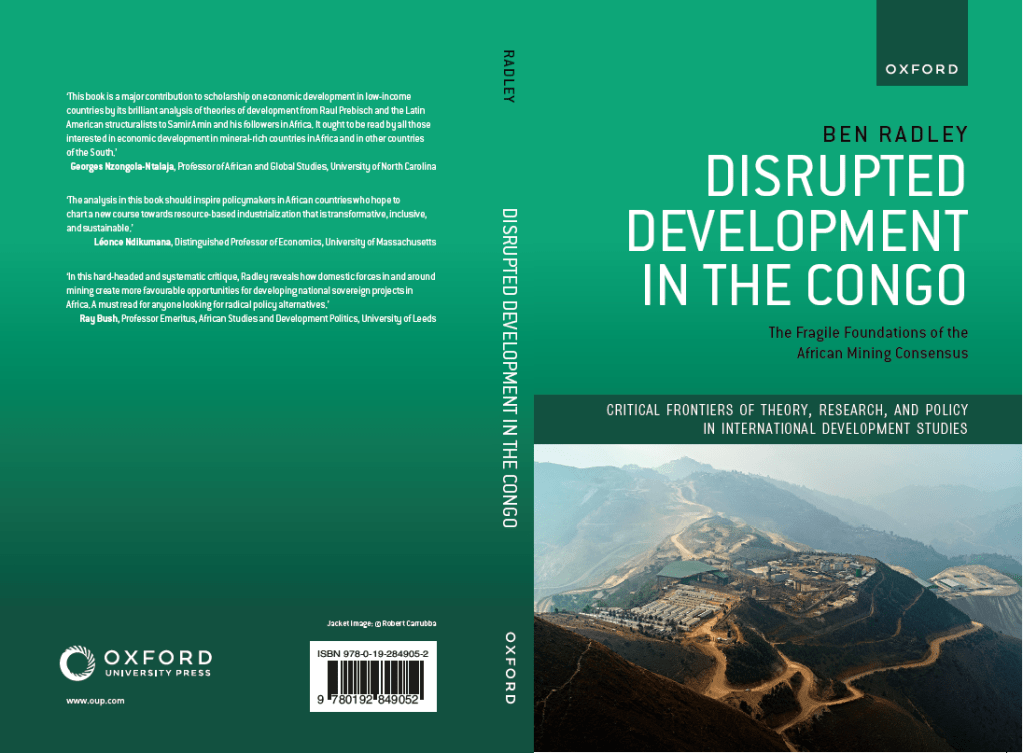
In the 1960s, newly independent African governments asserted sovereignty over their metal and mineral resources, in a reversal of their prior colonial exploitation by European mining corporations. In this excerpt from his new book Disrupted Development in the Congo: The Fragile Foundations of the African Mining Consensus, Ben Radley shows how transnational corporations have once again become the dominant force assuming ownership and management of industrial mining projects. Radley argues this latest reversal has taken place through a three-stage process grounded in a misguided reading of African economic stagnation from the mid-1970s onwards. Recent mining code revisions in several countries have been heralded by some as marking a new era of resource nationalism. Yet the new codes remain a far cry from the earlier period of resource sovereignty. The first three chapters of the book can be downloaded for free here.

Read More »

Impotent Capital

It is an uncontroversial observation that the history of capitalist development in South America is characterised by its subsumption to global capital accumulation through the production and export of agricultural and mining commodities for the world market. From this common starting point, however, there emerge divergent ways to account for the reproduction, and development limits, of this mode of insertion into the global economy. For many working in Latin American traditions of political economy it is almost common sense to assume, depending on one’s political and theoretical tastes, that a combination of centre-periphery power relations such as imperialism, monopoly capital, declining terms of trade and/or super-exploitation are the conceptual tools to understand, analyse, and strategize the overcoming of so-called ‘commodity dependence’ and embark on genuine development. It is noteworthy that in this new book – Quantifying the Historical Development of the Valorization of Capital in South America, edited by Javiera Rojas Cifuentes, Gabriel Rivas Castro, Mauricio Fuentes Salvo, and Juan Kornblihtt, not only are these concepts eschewed but their underlying trade premise – the transfer of ‘surplus’ from periphery to the centre through mechanisms such as ‘unequal exchange’ – is turned on its head. As opposed to structural power relations operating as the barrier to development, this collection opens an internal window onto the impotence of capital to develop the productive forces and, in doing so, offers distinctive strategic implications for the centralised organisation of working-class political action across the region.

The book builds on work that has been developed under the auspices of the Centre for Research as Practical Criticism (CICP) in Buenos Aires, following the original contributions of Argentine scholar Juan Iñigo-Carrera to the Marxian critique of political economy. It is Iñigo-Carrera’s opening chapter that frames the distinguishing features of this Marxian scholarship and the original critique of structuralist and dependency theories of Latin American development. Rather than the pitfalls of international exchange determined by direct power relations between geo-spatial containers, the cause of uneven development in South America is predicated on the valorisation of capital through its position in the international division of labour through production relations. This bears emphasis because, for all the authors, capital is not an asymmetric relation between countries, a factor of production, a social group, or a firm wielding monopoly power but an objectified general social relation of private and independent production (i.e., capitalism), subsumed under the movement of formation of the general rate of profit. Indeed, the antagonistic formation of the general rate profit is the concrete form in which capital organises and reproduces itself as a social relation behind the backs of states, capitalists, labour, and landlords. The crucial category here, and what all the chapters demonstrate, is the extent to which capital valorises in South America, as an aliquot part of the international division of labour of global capitalism, through the appropriation of ground rent.

Read More »

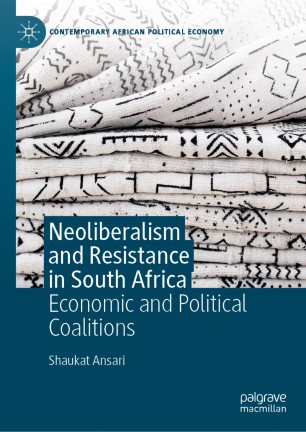
Neoliberalism and Resistance in South Africa: Economic and Political Coalitions

In the first quarter of 2021, amidst the social and economic devastation wrought by the Covid-19 pandemic, the South African Treasury announced, and subsequently defended, its decision to refrain from increasing the country’s extensive social grant payments—which now reach 18 million impoverished citizens—beyond the growth in inflation. Treasury officials have argued that a larger increase in social welfare protection is simply not currently feasible given the country’s rapidly rising public debt—which has now breached 80% of the debt/GDP ratio—and investor demands for fiscal consolidation. This type of fiscal restraint is unfolding in a context of heightened wealth inequality and an official unemployment rate now above 30%.

Those familiar with the financialization scholarship pertaining to developing countries—that strand which portrays the global financial markets as a force that can alter committed policy trajectories on a whim (Koelble, 2004), as well as the more nuanced literature (Mosley, 2000; Hager, 2017; Streeck, 2014; Ansari, 2017)—may recognize the Treasury’s framing of South Africa’s fiscal dilemma. However, as much of the international development literature on industrial upgrading and state policy has noted (Wade, 2018; Alami, 2019; Rodrik, 2006), there is a third option available to policy-makers in developing countries beyond the binary of debt build-up vs. austerity; namely, comprehensive, employment generating state-led development.

This is precisely the case I make in my new book, published by Palgrave (2021), Neoliberalism and Resistance in South Africa: Economic and Political Coalitions. In addition to documenting the onset of a financialized accumulation regime in post-apartheid South Africa since the democratic transition and the ANC’s adoption of economic liberalization, the monograph also highlights the missed opportunities that could have allowed the country to embark on a self-sustaining path of industrial up-grading, inclusive development, and internal revenue generation. Such missed opportunities include the early rejection by party leaders of the heterodox “Macro-Economic Research Group” (MERG) policy cluster, the removal of the trade unions from broader macro-policy-making processes, the rejection of a modest reconstruction and wealth tax, and the abandonment of much of the “Reconstruction and Development Program” (RDP) platform in favor of the orthodox “Growth, Employment, and Redistribution” (GEAR) package in 1996. Had some of these missed opportunities been pursued, South African state officials would likely be in a much better position to currently adopt expansionary fiscal policies, and perhaps could have lifted their citizens out of poverty via inclusive development instead of cash-transfers.

Yet, as my monograph further documents, since the democratic transition Treasury officials have continued, despite recommendations from other government ministries such as the Department of Trade and Industry (DTI), to veto or oppose heterodox policy proposals that could potentially offer South Africa a path away from the current neoliberal quagmire. Such proposed polices include capital controls, export taxes on raw materials, the utilization of foreign exchange reserves to capitalize State-Owned-Enterprises (SOEs), and targeting specific industrial sectors for subsidies and state promotion.

Read More »

Struggles Over Value: Suppression of locally-led capital accumulation in the Congo

By Ben Radley and Sara Geenen

Over the last few decades, African governments have liberalised and privatised their mining industries, attracting significant foreign direct investment. Transnational corporations (TNCs) have become the dominant forces. Their en masse arrival across the continent has been accompanied by the displacement and marginalisation of artisanal and small-scale mining (ASM). This has been a political process not just to create value, but to transfer value to foreign firms. In this same process, particular production modes are devalued. According to Jennifer Bair and Marion Werner (2011), this is a deliberate process linked to ‘everyday practices and struggles over value’, whereby certain forms and logics of value creation are prioritised and asserted over others.

Yet a consideration or even acknowledgement of these everyday practices and struggles is generally absent from the Global Value Chain (GVC) analysis which dominates the African mining literature (especially the more influential policy papers and flagship development agency reports). This literature is mainly preoccupied with how African firms can integrate into and ‘upgrade’ within TNC-led industrial mining GVCs. It remains largely blind to a consideration of how and from whom value is transferred when recently established TNC-led mines interact with pre-existing and more locally-anchored ASM economies.

Locally driven mechanisation and capital accumulation in the Congo (Sara Geenen).

In our recently published research in ROAPE’s journal looking at the case of South Kivu Province in the eastern Democratic Republic of the Congo (DRC), we redress this imbalance by documenting precisely these ‘everyday practices and struggles over value’. We demonstrate how a coalition between foreign corporate capital and the Congolese state has marginalised and held back locally-led processes of technological assimilation, capital formation and mechanisation in ASM. By so doing, we direct attention towards the developmental potential of domestically embedded networks of African mining production, and how these networks are disrupted by incoming TNCs.

Read More »