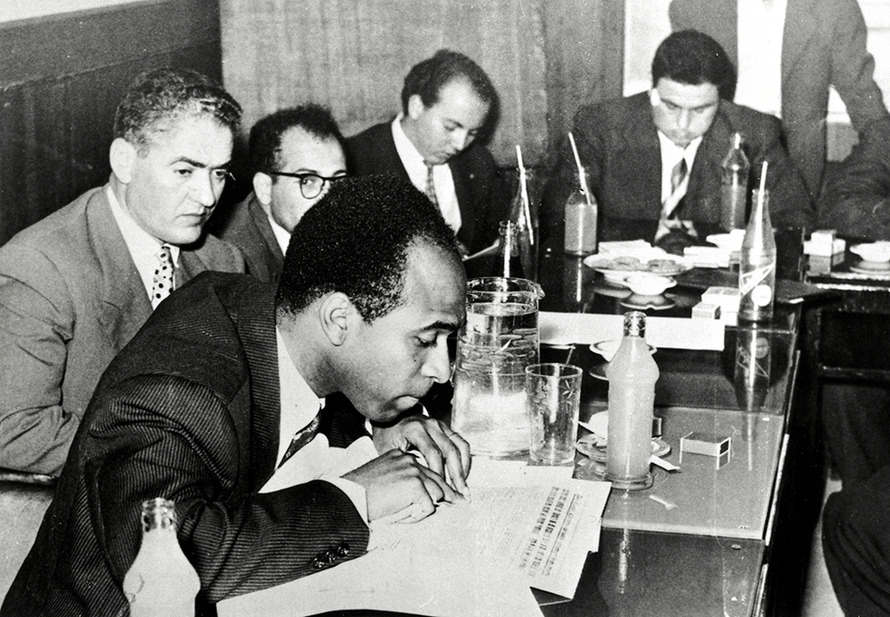
The great cultural theorist Stuart Hall called Frantz Fanon’s The Wretched of the Earth ‘the bible of decolonisation’ as it encapsulated the urge for freedom across the colonial world (1). Fanon illuminates how racism represented an organising principle for capitalist classes by systematically devaluing the lives of the majority of the world’s population. ‘For centuries the capitalists have behaved like real war criminals in the underdeveloped world,’ he wrote. ‘Deportation, massacres, forced labour, and slavery were the primary methods used by capitalism to increase its gold and diamond reserves, and establish its wealth and power’ (2).
One of the reasons for Fanon’s popularity among those who want to decolonise development is that he argued that post-colonial countries should forge their own paths to development rather than attempting to follow already developed countries. ‘The Third World must not be content to define itself in relation to values which preceded it,’ he warned. ’On the contrary, the underdeveloped countries must endeavour to focus on their very own values as well as methods and style specific to them.’
Not only did Fanon explain the horrors inflicted by colonialism upon native populations; crucially, he also conceived of real human development as a process rooted in a collective labouring class (comprising workers and poor peasants) transcending capitalist brutality.
However these two elements of his thought — the critical identification of the violence of colonialism, and a real human developmental alternative to it — have often been disconnected by thinkers influential to the decolonial movement. This represents a dangerous misinterpretation of Fanon. It obscures his vision of a decolonised world and the social forces able to construct it.
Read More »

 Developing Economics