Financial Statecraft and its Limits in the Semi-Periphery

Over the past decade, two, intertwined research agendas on international financial subordination (IFS) and subordinate financialization (SF) have proposed to identify how an increasingly finance-dominated global capitalism incorporates the (Semi-)Peripheries.

The IFS research agenda recognizes that a “subordinate” national currency comes with a risk premium increasing the costs of financing public debt – in other words, the current, US dollar-based currency hierarchy acts as a structural fiscal constraint in the Global South, limiting the scope for badly needed public investments. Foreign capital – in the form of foreign currency-denominated sovereign and private debt-, foreign aid, and foreign direct investment – is then touted as a solution to this artificial and unfair developmental constraint.

The SF agenda examines how this straightjacket on fiscal space has been further compounded with the liberalization of global capital mobility over the past forty years, diffusing credit-based accumulation strategies from the Core to the Peripheries: the financialization of (semi-)peripheral economies radically misallocates financial resources from socially and environmentally vital public goods and transformative industrial policies towards developmentally regressive strategies of accumulation driven by speculation and asset-price inflation.

Programmatic visions for liberating (semi-) peripheral economies from the dual constraints of a national fiscal space suffocated by the global currency hierarchy and globally mobile capital flows which deepen financialization are underdeveloped. Two scales of action are plausible: At the international level, de-dollarization is promoted by the BRICS bloc, but it remains uncertain what forms of international financial solidarity and collaboration, if any, will materialize under its aegis. The national level comprises an alternative scale as the State continues to be perceived as the most likely candidate for ringfencing domestic social, environmental, and developmental objectives from the pressures of global capital mobility and the structural constraints of the global currency hierarchy.

In a recent co-authored piece with Pınar EDönmez, we study the politics governing the management of money in Hungary and Turkey, two semi-peripheral economies where the executive has built a vast array of direct and indirect tools to intervene in monetary policy, retail banking and credit allocation to manage financial subordination.

Read More »
The Struggle for Development

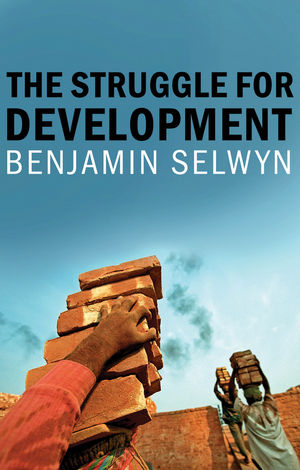
This post is adapted from the preface for the newly published Turkish edition of The Struggle for Development, first published in 2017. The original edition aimed to root development thinking and practice in the analysis of class relations, and intellectual and political support for labouring class struggles. Turkey is experiencing numerous social struggles that illuminate the relevance of the arguments in this book. It is my hope that this book contributes to illuminating the social, developmental, value of these struggles.

Collective struggles by labouring class communities – in and beyond the workplace – have the capacity to generate real human developmental gains for these communities. Consequently, these struggles and the labouring classes that pursue them, should be considered as developmental.  

The majority of development thinking across the political spectrum – whether theoretically or policy focussed – tends to downplay labouring classes, their struggles and the gains they generate.  Rather, such struggles are usually ignored or are portrayed as obstacles to development, because they do not adhere to dominant capitalist notions of development. 

Capitalist notions and strategies of development take many forms, and can be thought of as existing along a spectrum – from more market-led/neoliberal, to more state-directed forms. In this book I argue that, despite notable differences, these forms of development represent varieties of capital-centred development. Here capital accumulation is prioritised as the basis of economic and human development. As I show in this book, both market led and state led forms of development are based upon the assumption that labouring classes represent an objective input into the development process, rather than a subjective agent of development. This assumption legitimates labour exploitation and repression for the greater ‘good’ of capital accumulation.  

Read More »

Social Reproduction and Production in Capitalist Society: A Comprehensive Relational Approach

Although social reproductive work has historically been associated with women in different modes of production, with the spatial separation of reproduction from production in industrial capitalist society, women were further associated with the domestic sphere and reproductive work. The burden of reproductive work on women has increased even more in the last four decades as a result of neoliberal policies. Neoliberalism, which is characterised by the increasing privatisation of social reproduction and worsening labour conditions, has forced more women to accept low-paying, informal jobs while at the same time performing an increased amount of reproductive work in their families due to significant cuts in social welfare provisions.

Today, the COVID-19 pandemic has once again shown the great importance of social reproduction to international and national political economies, and the destructive effects of neoliberalism on lives on a global level. Thus, in both the academic and political arenas, we need once again to underline the centrality of social reproduction and women’s unpaid reproductive labour to society and capitalist production.

In my recently published article, I suggest a methodological-analytical approach to understand the relations of production and social reproduction: a comprehensive and relational approach that locates these social relations in their historical and geographical context and within the everyday.

Read More »

Debating ‘State Capitalism’ in Turkey: Beyond False Dichotomies

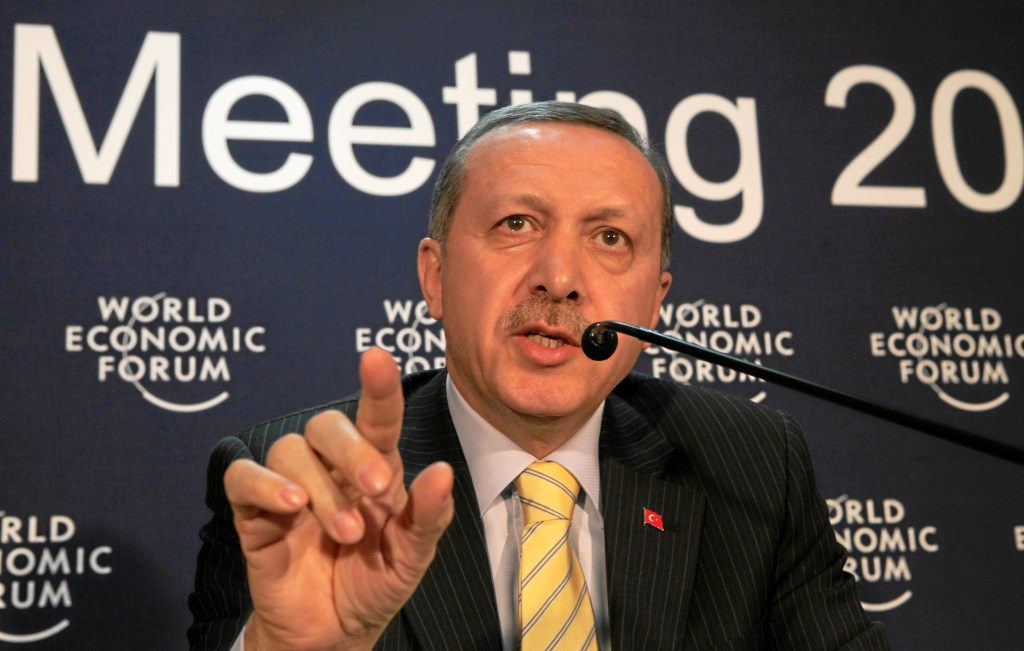
Following the 2016 failed coup attempt, and in the context of increasing mistrust towards the West, Turkey’s president Erdogan reflected his discontent with the EU and argued that Turkey should instead join the Shanghai Five, namely the Shanghai Cooperation Organisation (SCO) led primarily by China and Russia. Soon after, despite being a NATO member, Turkey signed a deal with Russia to buy the S-400 air defence missile system. Taken together with Turkey’s other ‘adventures’ in its region, these developments were perceived as manifestations of a changing political economy of Turkey, and were deeply disturbing to Western powers. After all, since the end of the Second World War, Turkey had been a close ally of the US-led Western capitalist bloc, it continued to be one during the Cold War; and had remained very close to US and EU interests following the end of the Cold War in 1991.

For some accounts[i], these developments are related to the changing world order and global power shifts following the 2008 crisis, as the decline of the ‘liberal international order’ and the rise of BRICS (Brazil, Russia, India, China and South Africa) marked transformations of the global political economy. Hence, there is a tendency to explain Turkey’s late political economy in this context. It is argued that, in this ‘post-liberal international order’ where two competing political economies come to the fore, Turkey is moving towards the ‘East’ or ‘non-West’ – mainly China and Russia. As such, Turkey’s engagement with non-Western ‘great powers’ (which are generally characterised by ‘authoritarian state capitalism’ as opposed to the ‘neoliberal political economy’/liberal democracy/’democratic capitalism’ of the West), shapes Turkey’s political economy and paves the way for ‘authoritarianism’, ‘illiberal democracy’ and ‘state capitalism’. Put differently, as the legitimacy crisis of ‘Western neoliberalism’ makes it less desirable for countries like Turkey, Turkey is regarded to have deviated from neoliberalism and liberal democracy and moved to state capitalism and authoritarianism.

Read More »