Let’s start with a story. A friend asked me what my favourite genre of fiction is. I replied: microeconomics. If you get the joke, you would be laughing. Otherwise, you would be wondering why I said that. Well, that’s the truth. Take any standard economics textbook, we find ourselves in the fictional worlds of ‘let’s assume there are two goods’ and ‘if we move from point A to B’. It is true and well understood that these assumptions and imaginations are meant to break down complex phenomena. However, this entry point of supply and demand curves with the endless possibilities of hypothetical scenarios is not the only way to study/introduce economics. In this regard, I put forth the relevance of studying Wassily Leontief’s work and argue that it adds pluralism to economics education at least in three aspects: 1) methodology (philosophical and mathematical approach), 2) the unit of analysis (micro to macro and in between), and 3) ideas at the margins (reading thinkers like Piero Sraffa and other classical political economists). Now we shall deal with these three themes individually.
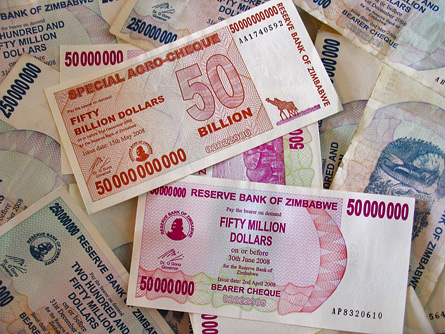
In his mid-term budget speech, Zimbabwe’s Finance and Economic Development Minister, Hon. Prof. Mthuli Ncube identified rising inflation and currency depreciation as the major challenges requiring “the support of all stakeholders and citizens”. Zimbabwe is failing to ward off persistent inflation. According to Ncube’s mid-term budget report, headline inflation increased from 60.7% in January to 191.6% in June 2022.
In this post, I will argue that whilst price and the exchange rate have some importance, preoccupation with them can constrain economic development. I start off by giving a brief background of inflation in Zimbabwe as well as inflation targeting policies, before arguing that sheepishly pursuing currency and price stability equates to commodity fetishism. I then look at the real beneficiaries of price and currency stabilisation policies. Finally, I attempt to demystify value and price in Zimbabwe’s context.
This famous sentence from Joseph Ki-Zerbo could be translated as ‘we do not enforce development; we develop ourselves.’ However, development paradigms have been largely influenced by external views, mainly those of Western countries. “Development” is considered as a moral concept. Many people around the world suffer and don’t have access to welfare programmes that are fundamental to strive, hence the need for development, through the improvement in terms of basic needs and democratic institutions. However, development as a concept is far from having a universal definition, on how to develop and the ultimate goals of this development. Development paradigms are fundamentally linked to ideologies. In particular, the connection between the economics discipline and the dominant development paradigm is deep. Thus, rethinking development also calls for rethinking the assumptions in the economics discipline. In this blog, I summarize the main ideas of a recent paper I published (“From economic growth to the human: reviewing the history of development visions over time and moving forward”).
The holy triad of economics: ‘market-scarcity-rationality’
Karl Polanyi established two different definitions of economics: a formal one, used to justify the rise of self-regulated markets, and a substantive one, trying to show that markets are not a universal truth in the history of human exchanges. The formal definition refers to the logic of rational action and decision-making based on alternative uses of scarce resources. This formal approach has gradually become the dominant definition of (mainstream) economics, through the theory of utility value, based on the subjective utility associated with the consumption of goods and services. In this view, the primary focus is the individual, captured through the market relationships that he or she enters into. Resources, as natural resources, are allocated through market mechanisms, the main instrument of efficiency in what is called neoclassical economics. The implications of these assumptions are very important for development.
Since the process of formal decolonization began, the mainstream view of development has been founded on the assumption that post-colonial economies can develop in the same manner that Western countries did. In this sense, they are assumed to simply be at a later stage of Western economic history. In this context, economic growth is often considered an indicator of progress. This idea gained currency with modernization theories that started to dominate mainstream development discourse after the second World War, conceiving development as an imitative process, establishing from the onset a distinction between a modern sector (capitalist economy derived from the Global North) and a traditional sector (considered as a subsistence economy, that should be abolished). With the Washington consensus in the 1980s and the resulting structural adjustments, pulling developing countries towards stability, getting them as close as possible to the market ideal was the new goal for development, society becoming an auxiliary of the economy. In the 1990s, the discourse of international financial institutions evolved, as they incorporated political and social dimensions to their economic analyses to better explain the failures of the past. However, instead of challenging the fundamental assumption of this narrative, the new incorporations simply include more ways in which the developing countries need to ‘catch up’, such as through developing better institutions. We went from economic determinism to institutional determinism and not much has changed over time.
However, the mainstream view of development has been challenged from many quarters. For example, as scholars from the Global South long understood, underdevelopment and development are actually two sides of the same coin, based around the uneven accumulation of capital on a world scale. Dependency theorists, the regulation school, and post-developmentalist theorists all recognized this. Economic growth and capital accumulation in the Global North still relies on continuous patterns of colonization. Even alleged attempts to become more sustainable, as with electric cars or renewable energy, rely on continuous extraction of raw material in the Global South. It is time now for new frameworks for development thinking.
In the aftermath of the Russian invasion of Ukraine, major world powers including the United States and the European Union have introduced sanctions on Russia. These wide ranging sanctions have been approached diversely by states, leading to distinct bilateral and multilateral approaches. The marked absence of a global consensus is notable. As the invasion and the sanction regime continues, the global economy is also slowing down with the imminence of a global depression. While the majority of analysis debates the efficacy of the current sanctions, this Q&A with sociologist and author of the A People’s Green New Deal, Max Ajl, political scientist and author of the forthcoming Race, Nature, and Accumulation,Bikrum Gil, and historian and author of Finance in Colonial Zimbabwe: Money, Sanctions and War Economy, Tinashe Nyamunda, analyses the structural and political nature of sanctions situating its modern iteration in a historical light. We ask them about the history of global sanctions, whether they an effective deterrent to wars, why countries in the global south have abstained from the current sanctions, how should we understand the current sanctions in the global order of neoliberalism, and whether sanctions are leading towards a new round of a non-aligned movement.
Having laid out the horizontal dimensions of diversity in property in Part 1, I here offer a critique of the assumption in mainstream economics that all kinds of property institutions need to be or will be transformed into private property to promote economic development. I also reflect on my previous work that applies and develops Darwinian mechanisms of variation, inheritance, and selection—which has been extensively discussed in evolutionary biology and evolutionary economics—to study property regime transformation in China.
This blog post builds on the ‘Institutions, Economic Development, and China’s Development Policy for Escaping Poverty’ piece and comprises two parts dealing with the key concepts (Part 1) and mechanisms (Part 2) for evaluating the co-evolution of diversity in property and economic development. I argue that diversity in property plays a key role in economic development and that there are two dimensions that are important for examining the co-evolution of diversity in property and economic development—horizontal (Part 1) and vertical (Part 2).
In this post, I offer a critique of the assumption in mainstream economics that private property is the only kind of property institutions that can stimulate and preserve economic development (I am, of course, not the first to offer critiques of this assumption; for existing studies, see e.g., Kennedy 2011). I focus on the meaning of ‘diversity in property’, which concerns the horizontal level analysis.
Recent trends may well have puzzled critical observers of global development policy. On the one hand, we witness the rise of what Daniela Gabor has aptly termed the ‘Wall Street Consensus,’ an emerging paradigm promoting the mobilisation of private finance as a developmental priority. Southern states are encouraged to re-engineer their domestic financial systems around securities and derivatives markets, create ‘investable’ opportunities in sectors such as infrastructure, water, climate adaptation, health and education, as well as deploy policies that specifically ‘de-risk’ investment for global investors. In this formulation Southern states are subordinated to global financial capital and their policy space is significantly constrained.
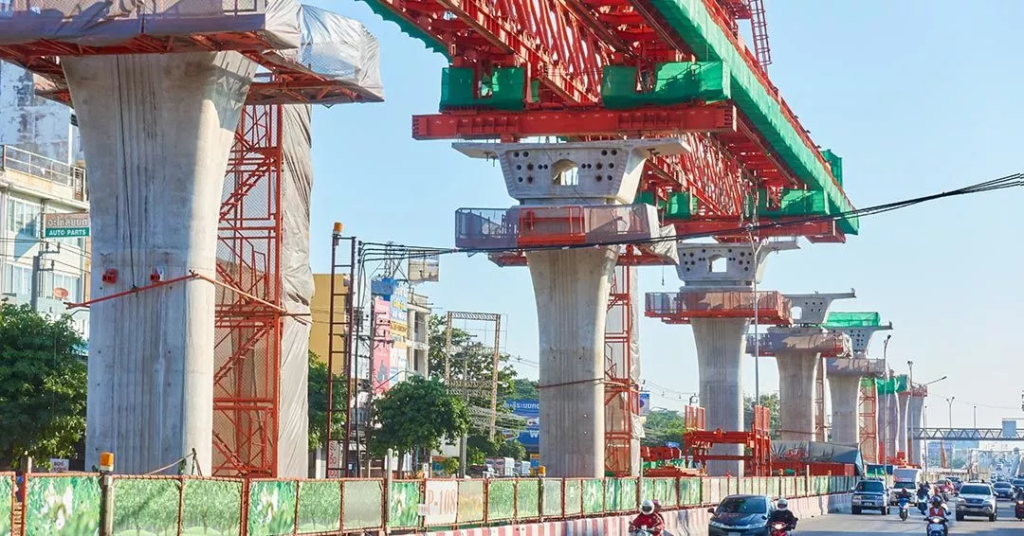
On the other hand, however, we observe a tendency towards state capitalism, wherein states are increasingly active within markets, as entrepreneurs and owners of capital as well as regulatory agents in the world economy. Across the income spectrum states have embraced the role of agents of transformation and development. In the global South, one way these trends manifest is in the proliferation of new modalities of spatialised industrial policy underpinned by large-scale development projects. Examples include the China–Pakistan Economic Corridor, Indonesia Vision 2045, the Plan Sénégal Émergent, Morocco’s New Development Model, and the developmental aspects of Mexico’s Fourth Transformation such as the Tehuantepec Isthmus Interoceanic Corridor. Some of these plans have benefitted from the rise of China and its multitrillion-dollar Belt and Road Initiative, which traditional development actors now increasingly seek to counter by providing alternative initiatives.
The mortgaging of land, a risky practice usually treated as just an economic and legal contract, hasneeded a broader set of perspectives for a fuller, more humanist understanding. Most of the existing scholarly literature on land and mortgages has been written by economists and legal specialists, reflecting the perspectives of their disciplinary traditions. Lacking are assessments from a wider range of disciplines in the social sciences and humanities, drawing upon historical experiences, cultural meanings, and locally informed perspectives.
Our recent edited volume, drawing on historical and observational research in different parts of the world, is meant to help fill that gap. It examines mortgaging as a social and cultural phenomenon to show its origins, variation, and effects on human lives and communities. Here anthropologists, historians, and economists explore archival, printed, and ethnographic evidence about mortgage. The book shows how mortgages affect people on the ground, where local forms of mutuality mix with larger bureaucracies. Tracing origins of land titling, pledging, and the mortgage in over millennia and incorporating findings from authors’ original field research, the book explores effects of government, bank, and aid agency attempts and impositions meant to encourage mortgage lending and borrowing. It shows how these mix in practice, in different languages, currencies, and contexts, with locally rooted understandings, and how all parties have sought, and too often failed, to make adjustments. The outcomes of mortgage in Africa, Europe, Asia, and America challenge economic development orthodoxies, calling for a human-centered exploration of this age-old institution. It must take account, we insist, of emotions, vulnerabilities, and histories of unexpected outcomes, as shown in different societies, cultures, and environmental and political conditions.




 Developing Economics