The Use and Abuse of the Phrase “Global Public Good”

24133986625_cac64b3352_o
Photo by Miroslav Petrasko

A flawed understanding of the concept of “public good” hampers the fight for equitable access to the upcoming COVID-19 vaccine

The term “global public good” has been used in very different ways by policy makers, economists and others. The term “global” is not particularly controversial, and in this context is generally understood to involve cases where the benefits of the service or good impact residents of more than one country, even if not necessarily the whole world. The term “public good” is subject to more diverse uses, often depending upon one’s educational or professional training.

For many people, perhaps most, the term “public good” is loosely defined to include cases where governments are willing to undertake measures to expand access, with universal access at least an aspirational goal. However, among the other influential definitions of “public good” is one that is exceptionally restrictive. A proposal by Paul Samuelson first published in 1954, meant at the time as an extreme and polar case, has found its way into countless articles, textbooks and academic courses, and has parameters that are rarely met in practice. At times, Samuelson’s 66-year-old paper is actually an obstacle to collective efforts to supply and distribute goods that have considerable impact on society.

The COVID-19 pandemic presents an astonishing global challenge regarding the control of the pandemic and the reduction of harm. The health impacts are large, particularly for older patients, and growing unpredictably, and the pandemic has had an enormous social and economic impact on everyone, with no obvious end in sight.Read More »

Problems with a bottom-up approach to governance reform: Evidence from India

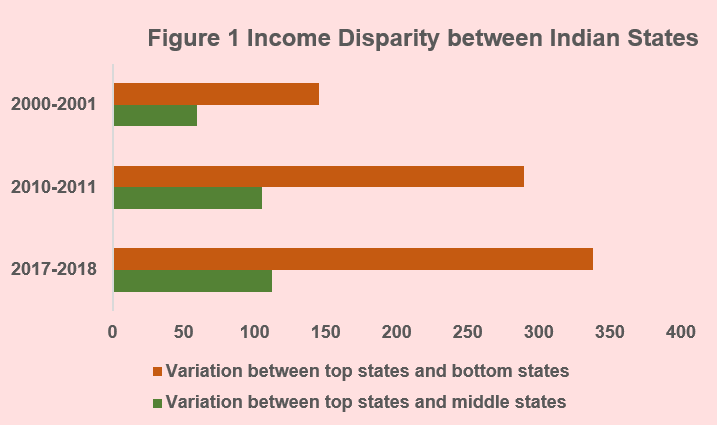
There is a neoliberal consensus pioneered by Hayek and Tiebout in the 1940s and 1950s in the idea that a market economy-like organisation of sub-national units in a federation will result in overall gains in institutional performance. Literature has focused on the efficiency gains to be derived from making sub-national units competitive guided by the principle that devolved government is better able to respond to voters’ choices. This rests on the assumption that local and national needs vary significantly. In this article, I ask whether the prioritisation of service delivery in healthcare and education sectors is indeed something that varies across states in India. The Indian federal system has been increasingly under pressure to devolve power to the states since the economy was set on a path to liberalisation. Initially, this pressure came from the outside, through international institutions (Bretton Woods, largely) but this opportunity was instantaneously accepted by sub-national politicians who promoted, rightly, the cause of their constituencies. This has taken shape in the form of reduced centralised monitoring of service delivery, and the funds previously allocated to this end are now being directly transferred to states who have unconditional leeway to allocate it to various uses. This occurred too suddenly without a mechanism in place to safeguard and ensure the equitable delivery of essential services in healthcare and education, and an ever widening gap among states.

fig1Source: Data from CMIE States of India, RBI

Building on to this, we also have inter-regional issues due to clustering economies. Some states benefit whilst others (often, the poorer ones) lose out by disgraceful margins. There is a race to the bottom on regulatory easing for corporations, and inter-state bargaining for central resources is competitive, rather than cooperative. Transplantation of a European approach to governance and institutions in the Indian context has meant that natural resources are being plundered by sub-national governments to promote corporate interests, as their citizens remain deprived. Public hospitals and primary healthcare infrastructure are slowly decaying into obscurity as shiny, private health players enter the market. This is the same case within the education sector, cheap, private schools largely targeting the middle class are driving away resources and interest away from the public school system, which in its crippled state cannot justify a case to be the recipient of sub-national governments’ interest. Read More »

Ephemeral universalism in the social protection response to the COVID-19 lockdown in the Philippines

By Emma Lynn Dadap-Cantal, Andrew M. Fischer and Charmaine G. Ramos

Since March 2020, the Philippines has implemented one of the world’s strictest and longest lockdowns in response to the COVID-19 pandemic, which has caused severe disruptions in peoples’ livelihoods. The government’s emergency social protection response, the ‘Social Amelioration Program’ (SAP), has also been notably massive, introducing one-off near-universal income protection. It is an insightful case given that the country’s existing social assistance system has been celebrated as a model for developing countries, even though it has been mostly bypassed in the emergency response. Moreover, the country’s highly stratified and fragmented social policy system has resulted in implementation delays and irregularities that have fostered social hostilities and undermined the potential for such momentary universalism to have lasting transformative effects.

The Philippine government first imposed its ‘community quarantine’ on 15 March, which has since been extended until 30 June. Thus far, the pandemic has not been severe relative to evolving global indicators, with 302 confirmed infections per million people and 11 confirmed deaths per million people as of 25 June (although at only 5,760 tests per million people, these confirmed rates are likely to be significantly underestimated). However, as elsewhere in the Global South, the lockdown has thrown the country into an employment crisis given that more than 60 percent of its workforce is informal, most in precarious situations even when earning above the official poverty line.

In response, the government rolled out the ‘Social Amelioration Program’ (SAP), comprising at least 13 different schemes and with an estimated total budget equivalent to as much as 3.1 percent of the country’s GDP [1]. The largest scheme is the Emergency Subsidy Program (ESP), which has been allocated 200 billion Philippines pesos (PhP; about 3.5 billion euros), more than three times the combined budget of all the other schemes.Read More »

Green Structural Adjustment in The World Bank’s Resilient Cities


jakarta-indonesia-city-building
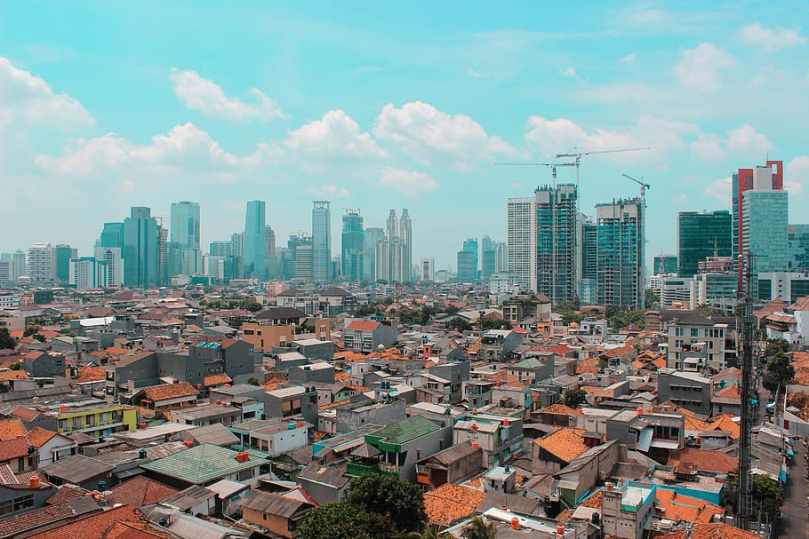
Jakarta, Indonesia

By Patrick Bigger and Sophie Webber

Cities across the world are facing a double-barreled existential problem: how to adapt to climate change and how to pay for it. Over the next thirty years, more than 570 coastal cities are poised to face frequent catastrophic flooding owing to sea level rise and more intense storms, while as many as 3.2 billion urban residents may run out of water by 2050. Other looming crises include soaring urban temperatures, the urgent need to transition away from fossil-fueled energy and transport systems, and plummeting rates of local biodiversity.

Responding to these problems will, international bodies project, require a virtually unprecedented buildout of infrastructure, from hardened municipal water and sewage systems, to urban afforestation, to renewable energy systems. This massive infrastructural program coincides with global economic conditions marked by the lingering ideological stranglehold of austerity, unprecedented levels of capital concentration, and now, myriad uncertainties produced by COVID-19. Cities across the world are facing a double-barreled existential problem: how to adapt to climate change and how to pay for it. Over the next thirty years, more than 570 coastal cities are poised to face frequent catastrophic flooding owing to sea level rise and more intense storms, while as many as 3.2 billion urban residents may run out of water by 2050. Other looming crises include soaring urban temperatures, the urgent need to transition away from fossil-fueled energy and transport systems, and plummeting rates of local biodiversity.

In response to the twin problems of resilient infrastructure needs and public fiscal constraints, the World Bank and an array of partner institutions from the Rockefeller Foundation to USAID have been ramping up programs to facilitate private investment in urban resilience. From a baseline of $10 billion across 77 cities in 2016, the World Bank aims to ‘catalyze’ investment of more than $500 billion into urban resilience projects across 500 cities by 2025. Read More »

COVID in Pakistan, the Role of Middle-Classes and the Unprecedented Demand for a New Social Contract

Screenshot 2020-06-21 at 10.15.40

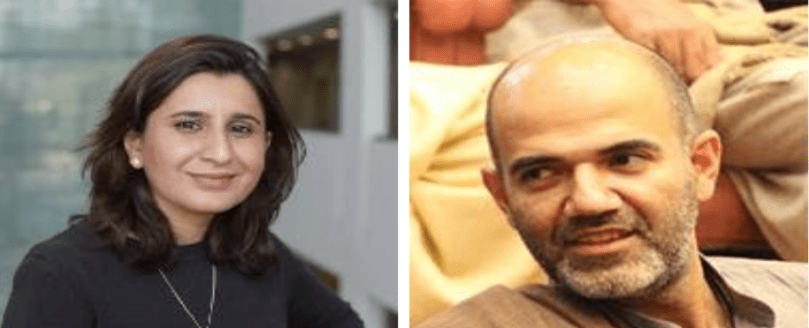
A conversation with and Dr. Juvaria Jafri and Dr. Aasim Sajjad.

Aasim Sajjad Akhtar is Professor of Political Economy at the National Institute of Pakistan Studies, Quaid-e-Azam University and a founder of the Awami Workers Party (AWP).  His research has focused on state theory, informality, colonial history, rise of the middle classes and social movements in Pakistan. His latest book is ‘The Politics of Common Sense: State, Society and Culture in Pakistan’.

 Juvaria Jafri is a Lecturer in International Political Economy at City University. Her research is on financial development in Pakistan, including inclusive finance, fintech, and impact investing strategies. Her latest co-edited book is ‘Geofinance between Political and Financial Geographies: A Focus on the Semi-Periphery of the Global Financial System.’

Introduction

The full impact of the COVID-19 pandemic on developing countries is still unfolding. While many countries have managed to achieve some stability in eliminating the spread of the crisis, others are struggling on various fronts. In South Asia, India has received much global attention owing to the violence of a hasty lockdown which was imposed without warning and an accompanying social safety net. Other countries in the region including Bangladesh, Srilanka and Nepal also continue to grapple with the existential question of how to ensure that contagion control does not come at the expense of destroying livelihoods. 

In this interview we focus on the situation in Pakistan. We invited Aasim Sajjad and Juvaria Jafri to address some questions related to the current situation in Pakistan. The following four questions were designed to provide a glimpse of how the pandemic is impacting the existing socio-economic structure of the Pakistani economy particularly focusing on class inequality, fin-tech as a potential solution and the activist and citizen-led first historic demand for a long-term welfare package. 

Read More »

The latest significant step in the UK’s development agenda

Michael Haig DFiD CC BY-NC-ND 2.0

By Susan Newman and Sara Stevano

Johnson’s announcement on 16 June that Department for International Development (DfID) would be merged into the Foreign and Commonwealth Office (FCO) has been met with criticism and condemnation from aid charities, NGOs and humanitarian organisations. By institutionally tying aid to UK foreign policy objectives, the merger would shift humanitarian aid away from the immediate needs for relief and longer-term development.

This latest move to merge the departments should be seen as the latest, and a very significant, step in the restructuring and redefinition of British Official Development Assistance (ODA) to serve the interests of British capital investment abroad, that has been taking place over the last decade. These developments need to be considered within a wider shift in development policy that has been shaped by the demand for new assets by investors in the global North in the context of a global savings glut that has grown out of economic slowdown.Read More »

Privatization and the Pandemic

medical-transportation-hospital-help

By Jacob Assa and Cecilia Calderon

Unlike other epidemics or pandemics – such as tuberculosis, SARS, MERS or HIV/AIDS – COVID-19 has hit hardest at the world’s wealthiest countries. As of early June 2020, the 37 industrialized countries of the OECD accounted for 59% of all cases and 78% of deaths, even though they constitute less than 18% of the total population affected.

Looking at the pandemic’s effects in another way – using cases and deaths per million population – paints an even starker picture. OECD countries have a prevalence ratio of 2,890 cases per million and a mortality rate of 225 per million, compared with 869 cases and 51 deaths per million in the rest of the world. Furthermore, the case fatality ratio (CFR) – the ratio of deaths to cases – is also higher in the OECD (7.8%) than in the rest of the world (5.9%).

What can explain this phenomenon, the world’s richest countries impacted more than middle-income and poor countries?  One explanation is that COVID-19 spreads faster in countries that are more integrated to the globalized economy, as the OECD members certainly are. A recent study found that globalized countries have indeed experienced more cases per population, but less mortality.Read More »

Neoliberalism’s many deaths and strange non-deaths 

neoliberalismBy Jack Copley and Alexis Moraitis

The coronavirus pandemic has required states to take unprecedented steps to backstop the world capitalist economy. This has included enormous liquidity injections into financial markets, guaranteeing the wages of furloughed workers, and temporarily requisitioning and coordinating parts of the private sector. Yet last year a different threat – not epidemiological but proletarian – similarly forced states to adopt redistributive policies against their wills, albeit on a smaller scale. 

From the vantage point of the current uprisings against racist police violence, the empty streets of the early 2020 lockdown appear as a brief exception to the broader trend of mass unrest. In 2019, streets, avenues, and squares in different parts of the world flooded with protestors decrying the pro-rich policies of their respective governments. The scale, endurance, and spectacular disruptiveness of these popular explosions pressed governments from Western Asia to Europe to Latin America to abandon so-called neoliberal fiscal rectitude and reluctantly embrace Keynesian stimulus policies.

In Chile, on the eve of the autumn 2019 revolt, billionaire austerian president Sebastián Piñera invoked a classic metaphor of neoliberal stoicism to explain how he would resist popular opposition to his painful reform programme: ‘Ulysses tied himself to a ship’s mast and put pieces of wax in his ears to avoid falling for the … siren calls’. Less than one month later, this modern Ulysses had broken free from his tethers, announcing increases in the minimum wage, healthcare benefits, pensions, electricity subsidies, and the reform of Chile’s very constitution. There are clear parallels with France’s Emmanuel Macron, a former investment banker who assumed power in 2017 on a platform of market discipline, only to buckle under the weight of the relentless Gilet Jaunes movement and announce a €17 billion package of concessions.

How are we to grasp the jarring Keynesian U-turns of such cartoonish neoliberal governments in the face of mass protest and pandemic? It is commonly assumed that the neoliberal project represented the shrinking of the state sphere and its replacement by the cold logic of the marketplace. The 2008 bank bailouts appeared to buck this trend, as states were called upon to undertake drastic interventions. But this turned out to be a hiccup in neoliberalism’s larger narrative arc, as austerity quickly took hold. Yet perhaps this latest accumulation of crises will at last force states to reclaim the territory they had ceded to the market. After its ‘strange non-death’, is neoliberalism finally dying?Read More »