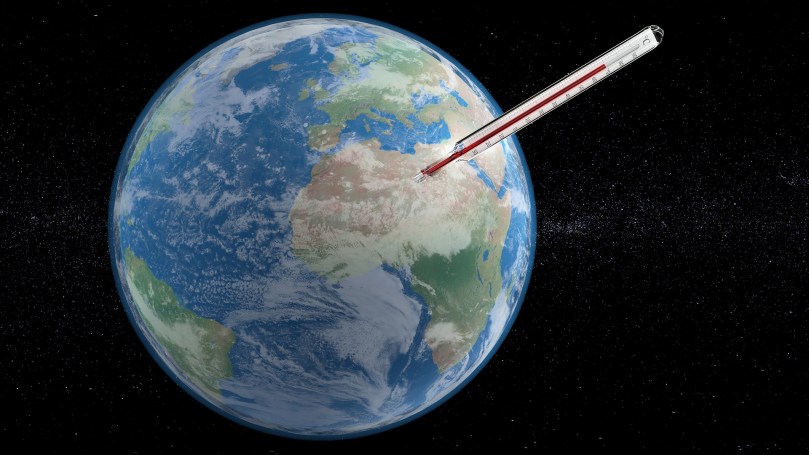
This post deconstructs the following statement:
If reducing greenhouse emissions had economic benefits then we would do it anyway without new policy.
The statement above is used by economists to argue against the introduction of policies to reduce greenhouse gas emissions on the basis that the costs would outweigh the benefits of reducing climate change. It is part of a wider narrative that regulatory policy can only lead to economic costs. However, the statement is perhaps one of the most perverse conclusions from neoclassical economics. It depends on a raft of assumptions that run contrary to real-world experience. Further, as discussed below, if just one assumption is taken out, the conclusion changes.
Sadly, economists and (in particular) economic modellers, have played a key role in turning this fallacy into accepted reality. They have done this by using simple optimisation-based approaches that make strong assumptions about human behaviour. Often the modellers do not critically question or even fully understand these assumptions. Read More »



 In this article I remind readers about the existence of “sacrificial generations” within global capitalist history. By sacrificial generation I mean a group of people at a point in time that experiences suffering with the immanent or intentional effect of changing economic, political or social conditions, which are in turn disproportionately enjoyed by another group of people at a later period in time. I identify four areas in which there systematically exists sacrificial generations: three stages of capitalist development (state formation, capitalist property rights transition and early industrialization) and a cyclical aspect of capitalism (Polanyian-Marxian cycles). It could also be argued that the future generations which would disproportionately experience the environmental costs of past and present generations’ consumption are “climatic sacrificial generations”, but this will not be explored.
 By Callum Cant,
  There has recently been much talk that the hegemony of the United States is crumbling, from the decline in its share of world GDP to its possible submission to a new economic power such as China. However, little has been said about the fundamental pillar that sustains the power of the United States, the US dollar.

