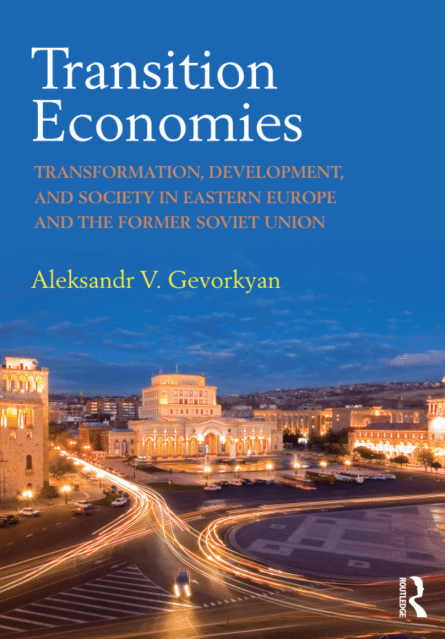
How History Matters in Post-Socialist Economies

Screenshot 2018-08-01 at 20.53.25.png

Though it has been suggested that The Beatles Rocked the Kremlin’ it was “Wind of Change” by Scorpions in the early 1991 that captured the minds of the new generation of Eastern Europe (EE) and the Former Soviet Union (FSU).

The promise of more open societies following Mikhail Gorbachev’s perestroika announcement set in motion powerful dynamics completely transforming the world. The Berlin Wall fell in 1989 and by the end of 1991 the Soviet Union disintegrated bringing down the entire socialist institutional edifice. Newly independent nation-states emerged across Europe, the Caucasus, and Central Asia. This new “wind” was that of hope, progressive stability and economic prosperity, or so it seemed at the time. And yet, “[f]or whom the wall fell?” as Branko Milanovic has recently inquired, is not as straightforward as might have been expected.

Despite the independence premium in national policy and in parallel with evidence suggesting recent strong economic growth the post-socialist economies are yet to achieve the ideals announced at the outset of market reforms. Ironically, the most unfortunate economic plan was the 1990s script of transition from planned economy to free market in the EE and FSU.

Read More »

Increasing and Diminishing Returns – Africa’s Opportunity to Develop

A drone shot of colorful shipping containers in a shipping terminal

‘This tendency to Diminishing Returns was the cause of Abraham’s parting from Lot, and of most of the migrations of which history tells’ wrote the founder of neo-classical economics, Alfred Marshall, in the first edition of his textbook Principles of Economics (1890). In a footnote he refers to the Bible’s Genesis xiii : 6: ‘And the land was not able to bear them that they might dwell together; for their substance was great so they could not dwell together’. (Marshall 1890: 201)

Marshall’s observation also applies to today’s migration patterns: from countries where most activities are subject to constant or diminishing returns to countries whose key economic activities are subject to increasing returns to scale. Diminishing returns occur when one factor of production is limited by nature, which means that it occurs in agriculture, mining, and fisheries. Normally the best land, the best ore, and the richest fishing grounds are exploited first, and – after a point – the more a country specialises in these activities, the poorer it gets. OECD (2018) shows how this occurs in Chilean copper mining: every ton of copper is produced with a higher cost than the previous ton.

In Alfred Marshall’s theory, the ‘Law of Diminishing Returns’ is juxtaposed with ‘The Law of Increasing Returns’, also called economies of scale. Here we find the opposite phenomenon; the larger the volume of production, the cheaper the next unit of production becomes. Traditionally economies of scale were mainly found in manufacturing industry, and increasing returns combined with technological change has for centuries been the main driving force of economic growth. Increasing returns creates imperfect competition, market power and large barriers to entry for challengers – companies or nations – making it difficult for them to enter these industries. In contrast to the rents produced under conditions of increasing returns, raw materials – commodities – on the other hand, are subject to perfect markets, and productivity improvements spread as lowered prices. This is the essence of the theory which explains why former World Bank Chief Economist Justin Yifu Lin was correct hen he asserted that ‘Except for a few oil-exporting countries, no countries have ever gotten rich without industrialization first’ (Lin 2012 : 350).Read More »

Trade for Human Rights as a Minimum Core Obligation

Money and healthimage from torange_biz free photobank.jpg

In his report on the Minimum Core Doctrine (MCD) John Tasioulas states:

“the essence of the concept will be taken to be the sub-set of obligations associated with socio-economic rights that must be immediately complied with in full (obligations of immediate effect)” (p. 3).

He contrasts these against those obligations that require significant resources and are therefore subject to ‘progressive realization’. Thus, the defining characteristic of MCD is that it differentiates obligations between those of immediate effect and those of progressive realization. And the focus is on the nature of the obligations (what the state must do when) rather than the nature of substantive rights (the condition of people’s lives).

However, the discussion about what constitutes minimum core obligations in substance focuses on the nature of rights enjoyment and a package of minimum goods and services that would be required rather than the nature of obligations. This starts with General Comment 3 that refers to ‘a minimum core obligation to ensure the satisfaction of, at the very least, minimum essential levels of each of the rights’, and to the provision of ‘essential primary health care’ (ICESCR quoted in Tasioulas p. 5). Further, human rights-based practice begins to specify specific types of diseases to be treated and goods and services that would be included in the minimum, as under the ‘selective primary health care model’ adopted by UNICEF (Tasioulas p. 5).Read More »

An Alternative Economics Summer Reading List

WhatsApp Image 2018-07-01 at 18.02.18.jpeg

by Carolina Alves, Besiana Balla, Devika Dutt and Ingrid H. Kvangraven

This is a response list to Martin Wolf’s FT column recommending Economics books of 2018 for summer reading. While there are many good books listed, we were struck by the consistent monism in his choices, as the books are all by scholars based in either the UK or the US, 12/13 of the authors are men and most of them come from the same theoretical tradition. Such lists perpetuate the strong white male – and mainstream – biases in our field (the recent list by The Economist suffers from the same biases).

To counter these biases, and with the purpose of broadening our field to become more inclusive of diverse approaches and perspectives, we have put together an alternative list. We deliberately chose books by scholars approaching Economics with alternative theoretical frameworks and by scholars from groups that tend to be excluded from the field, namely women, people of color, and scholars from the Global South. We recognize that no one is exempt from biases, which is why we are providing an explanation for the motivation behind our selection. Due to institutional and language barriers we were unable to include as many scholars from the Global South as we would have liked. For example, we would love to read the new book Valsa Brasileira by Laura Carvalho, but we are still waiting for the English translation. We hope you enjoy it and welcome more suggestions in the comments section.

Read More »

Keynes or New-Keynesian: Why Not Teach Both?

19375688ISIPE-cartoon-380px.jpg

For economists, the Great Recession, the worst crisis the world economy has seen since the Great Depression of the 1930s, has highlighted the need for plurality in macroeconomics education. Ironically, however, there is a move towards greater insularity from alternative or contrasting points of view. Where as, what is required for vibrant policy making is an open-minded academic engagement between contesting viewpoints. In fact, there does not even exist a textbook which contrasts these contesting ideas in a tractable manner. This blog post is as an attempt to provide certain pointers towards developing macroeconomics in a unified framework.

Macroeconomics as a subject proper came into existence with the writings of John Maynard Keynes[i]. There were debates during his time about how to characterise a capitalist economy, most of which are still a part of the discussion among economists. Keynes argued that capitalism is a fundamentally unstable system so the state needs to intervene to control this instability.Read More »

Revisiting Hirschman’s Tunnel Effect and Its Relevance for China

maclaren-2681536_960_720

As within-country inequality is on the rise worldwide, considering how people actually perceive inequality in their societies and how they respond to it is a question worth asking. In 1973 Albert Otto Hirschman proposed an explanation of changing tolerance for inequality associated with different ‘stages’ of the development process. In this post I’ll revisit Hirschman’s theory and link it to emerging studies of how inequality is perceived in China. The Chinese people generally seem to be satisfied with rising inequality, yet it is unclear how long this tolerance will last.Read More »

Marx’s Birthday and the Dismal Science: A Few Observations

Nocopyrights.jpg

by Carolina Alves and Ingrid H. Kvangraven

With 2017 marking the 150th anniversary of Capital and 2018 marking the bicentennial of the birth of Karl Marx, it is not a surprise that the number of events and exhibitions celebrating Marx’s work and exploring the significance of Marxism in the world today have gone through the roof. A little sample can be found here, here, here, here and here (see also The Guardian’s sum up of exhibitions, books – and pub crawls)! And it would be unfair to not mention the British Library’s PhD placement on Karl Marx offered last summer, which aimed to develop ideas for events and activities that would engage the public and research communities with Marx’s life and his wider legacy (with a brilliant emphasis on Marx’s daughter Eleanor – a writer and political activist in her own right). Some of the results can be seen here, here, here and here.

Of course, Friedrich Engels’ far-reaching contributions have not been ignored (here and here); and neither should Jenny Marx’s contributions, who, like Mary Burns, have never been a mere accessory[1] and, before falling in love with the Jewish romantic rebel, was a woman interested in French socialism and German romanticism, engaged in an early feminist views on women’s equality, and committed to the struggle for the working-class (influenced by her father). Hence, Jenny’s possible allusion that Marx was “Goethe’s Wilhelm Meister and Schiller’s Karl von Moor, and he would be Shelley’s Prometheus, chained to a precipice because he dared to challenge a tyrannical god” (Gabriel, 2011, p. 20).

Putting aside this rich line-up of events, what has caught our attention is the equal proliferation of pieces celebrating Marx’s birthday, for the better or for the worse. From misleading and derogatory articles such as the Rulers of the world: read Karl Marx! published by The Economist to educational short pieces such as Cooper’s It’s time to normalize Karl Marx, it is difficult to not wonder about the reasons behind such opposing views. Similarly, it is difficult to resist the temptation to add a little contribution to the debate. So here we are.

We will not dwell on Marx’s contributions and current relevance, which has been done effectively by so many academics, political activists and journalists. Neither will we unpack and discuss the issues with value-laden opinions on Marx’s economic theory, and simple-minded association of Marx’s political ideas with historical events of the 20th century. We will, however, for the sake of being one more blog post on Marx’s 200th birthday, reiterate and explore Marx’s work’s undeniable and vital influence in contemporary thought, politics and political practice. Further, and perhaps the main inspiration that led us to write this blog post, we wish to add some more thoughts on Marx’s influence (or lack thereof)  in modern times, namely the effects of the marginalization of his ideas in the field of Economics.Read More »