Degrowth and the Global South: remarks on the twin problem of structural interdependencies

By Claudius Gräbner-Radkowitsch and Birte Strunk

The degrowth movement is a radical attempt to challenge our current economic system, arguing that its excessive focus on economic growth will ultimately harm people and planet. It has recently gained increasing attention, not only because it has found its way into mainstream political debates (see, for example, the Beyond Growth conference at the European Parliament), but also because related research projects have won prestigious international funding awards (see, for example, here). However, as you may have noticed, these events are mainly taking place in the Global North. The concept as such was also originally developed in the Global North. At the same time, the movement is strongly committed to the idea of global justice and a decolonization of relations between the Global North and South.

This begs the question: What is the role of the Global South in the contemporary degrowth discourse? To what extent does the discourse take into account Southern perspectives? Does it think that the South should also degrow, or is Northern degrowth mainly seen as a self-prescription? And to what extent does the degrowth community reflect on the implications of Northern degrowth for the Global South? To answer these questions, we have taken stock of how the academic degrowth discourse considers the Global South. But before we go into the details of what we found and what we make of it, let us briefly outline what degrowth is all about.

Read More »

Neoclassical Economics and Urban Planning: A Contentious Theoretical and Policy Making Relationship

Neoclassical economics – and contemporary extensions of it – has an outsized presence in academic and policy making circuits. This position of privilege builds upon more than a century of theoretical development, comprising the contemporary “mainstream” of economic science. The characteristics and rise of this mainstream, determined in many cases by means beyond pure intellectual merit, has been regularly documented in the existing scholarship.

Economic imperialism has been one of the results of mainstream dominance, and its academic impact on other social sciences has been widely documented, including their corresponding areas of policy making. In this regard, I present here an approach to the problematic relationship between Neoclassical Urban Economics and Urban Planning. These are two related social science disciplines, which however have very different epistemologies and approaches to policy advice.

The main difference between academic mainstream Economics and Urban Planning is methodological, in terms of what is considered a valid approach to scientific knowledge. Economics builds upon logical positivism; it first performs deductive theory construction that “describes” reality, and then subsequently tests its theoretical predictions, which in some cases (not all the cases) lead to policy prescriptions. In contrast, Urban Planning is an action-oriented and problem-solving scientific discipline. It inductively produces normative theory, which explicitly shows the analyst’s point of view regarding the topic and how to intervene on it (public policy advice).

Mainstream Economics is in essence defined by the method and theoretical approach, not by the topic (the economy). This allows it to engage with a wide variety of topics, one of them being the spatial analysis of the built environment, which is also the topic of academic Urban Planning.

Read More »

The city of the evicted: lives under pressure in the margins of an urban fantasy in Benin

by Joël Noret & Narcisse M. Yedji

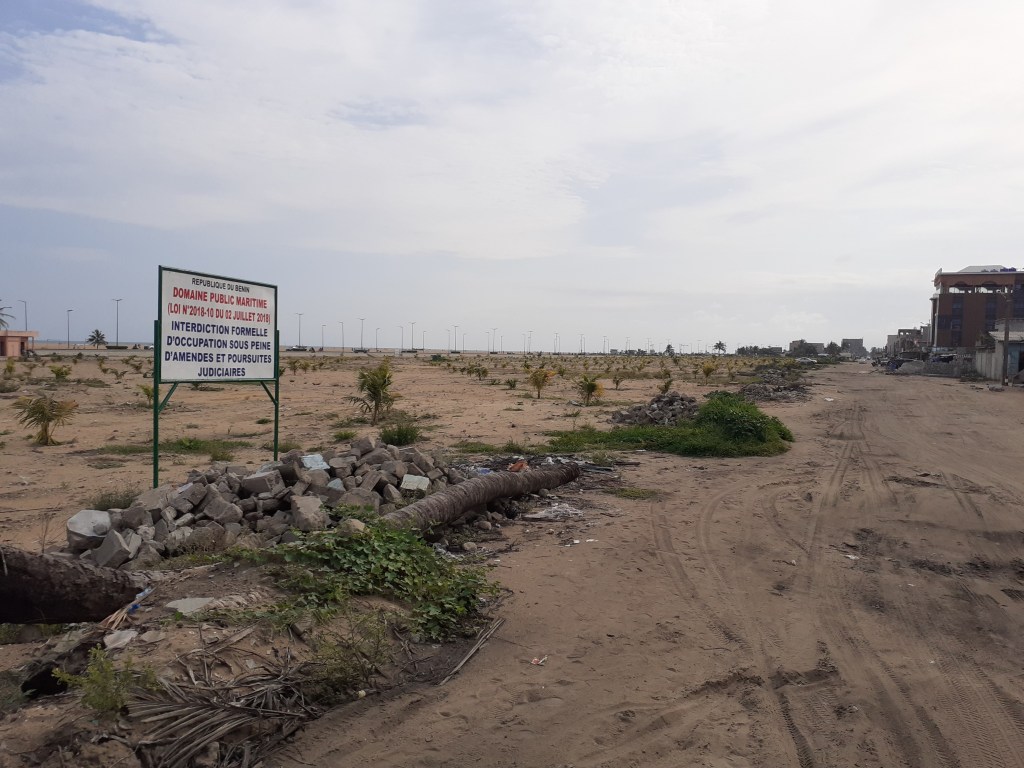
Since 2017, Cotonou – the economic capital of Benin – has witnessed several urban development projects. Aiming to showcase the city as the new face of a new Benin, attractive to both businessmen and tourists, the plans have involved extensive tarmacking projects, the development of the city’s first shopping malls, the rebuilding of several markets to ‘modern’ standards, the erection of emblematic statues – notably that of ‘the Amazon’, branded as an ode to feminine courage and a national emblem –, and the design of a new coast line. The urban poor have paid a disproportionate price in the implementation of this new urban fantasy – that is, a shiny urban renovation project disconnected from the sociological realities of the city and from the needs of whole swathes of its population, especially in the urban precariat.

In what follows, we argue that the successive waves of evictions of thousands of poor urban dwellers have pressurized in multiple ways and in the longer run already fragile existences. As neighbourhoods and livelihood were dislocated, their ex-residents were simultaneously witnessing their life chances shrinking for the foreseeable future, and faced with the traumatic aftermath of dislocated homes. A ‘generative’ process in itself, as Gunvór Jonsson recently argued on this blog about evictions in Dakar, there is no doubt that state pressure grounded in neoliberal urbanism affects the urban poor in multiple ways. The following paragraphs explore such multi-layered consequences, from degraded economic conditions to tarnished senses of one’s place in the social world.

Read More »

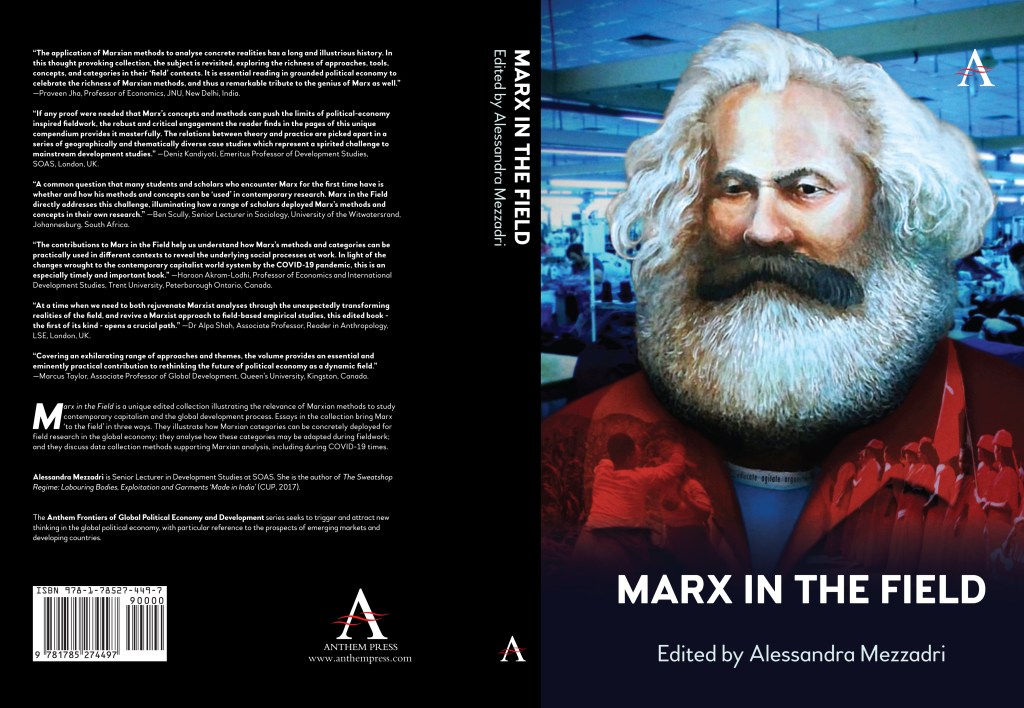
So, Global or International Development: Why Not Both? Marx in the Field, Planetary Immanent Development, and Centering Political Economy in Development Studies

In a compelling new contribution in the journal Development and Change, a political economy collective led by Jeorg Wiegratz builds a strong case against calls to “universalize” Development Studies shifting the focus from “International” to “Global” Development. Indeed, many such calls at universalization – at least in the two influential “pandemic papers” the collective thoroughly revises, one is main-authored by Oldekop and the other by Leach – are misguided. As convincingly argued by the collective, these calls tone down the structural historical nature of the Global North-Global South divide; they erase development paradigms and understandings from the Global South and trivialize the nature of challenges emerging from long histories of colonialization and plunder, which still regenerate along global value chains and networks, as authors like Suwandi have shown, as well as distinct regimes of social reproduction and contemporary crises, such as the COVID-19 pandemic, as I explain here and here.

Yet, universalizing and globalizing are not the same thing; they can be operated in distinct ways, and through entirely different intellectual projects. Moreover, the discipline of Development Studies, in its mainstream dominant avatar, badly needs “globalizing,” given its Eurocentrism – yet in ways that center the experiences in/of the majority world; think through plural frameworks and locations; and speak to the extraordinarily diverse material realities and practices of power, inequality, and subordination across our planet. Crucially, such experiences, realities, and practices are, at once, the result of trajectories mediated by the Global North-Global South Divide, as emphasized in critical International Development frameworks, yet also always been global in nature – calling for Global Development lenses – unlike what narrow development economic theorizing heavily relying on modernization theory has and still suggest/ed. Ultimately, one may wonder: in the debate between “International” and “Global” Development, why and what exactly do we need to choose?

Read More »

An acknowledgement of women’s work in economics – hits, misses, and a long road ahead

By Rosa Abraham and Surbhi Kesar

The Sveriges Riksbank Prize in Economic Sciences in Memory of Alfred Nobel 2023 was awarded to Claudia Goldin, professor of economics at Harvard University, for “having advanced our understanding of women’s labour market outcomes”. Goldin is now one of three women who have been awarded the prize, and, more importantly, this is the first time that the prize recognises research that makes a fundamental distinction between economic outcomes of men and women. Her work makes significant contributions to both the empirical and theoretical aspects of the theme, particularly in the context of the US.

Empirically, she applied innovative ways to unearth data for women’s labour market outcomes in the US at a time when the labour force surveys only collected this information for men. This allowed her to uncover the long-term trend of economic outcomes for women. Her work revealed that there was no linear relationship between economic growth and development and the women’s labour force participation. Instead, bringing together cross-country evidence and historical data, she empirically established a U-shaped relationship between women’s employment and economic growth. This implies that at low levels of economic growth, larger share of women tend to participate in the labour market, largely in agriculture. However, with economic growth and a sectoral shift away from agriculture, women’s participation faltered. Goldin argued that the “income effect” — the rise in household incomes alongside economic growth along with the increasing use of technology in agricultural activities — may explain women’s initial withdrawal from employment. However, beyond a certain level of economic growth, women’s participation rose as their education levels increased and as more white-collar emerged by replacing the factory jobs that are often stigmatised for women.

Read More »

Decolonising development with Frantz Fanon

The great cultural theorist Stuart Hall called Frantz Fanon’s The Wretched of the Earth ‘the bible of decolonisation’ as it encapsulated the urge for freedom across the colonial world (1). Fanon illuminates how racism represented an organising principle for capitalist classes by systematically devaluing the lives of the majority of the world’s population. ‘For centuries the capitalists have behaved like real war criminals in the underdeveloped world,’ he wrote. ‘Deportation, massacres, forced labour, and slavery were the primary methods used by capitalism to increase its gold and diamond reserves, and establish its wealth and power’ (2).

One of the reasons for Fanon’s popularity among those who want to decolonise development is that he argued that post-colonial countries should forge their own paths to development rather than attempting to follow already developed countries. ‘The Third World must not be content to define itself in relation to values which preceded it,’ he warned. ’On the contrary, the underdeveloped countries must endeavour to focus on their very own values as well as methods and style specific to them.’

Not only did Fanon explain the horrors inflicted by colonialism upon native populations; crucially, he also conceived of real human development as a process rooted in a collective labouring class (comprising workers and poor peasants) transcending capitalist brutality.

However these two elements of his thought — the critical identification of the violence of colonialism, and a real human developmental alternative to it — have often been disconnected by thinkers influential to the decolonial movement. This represents a dangerous misinterpretation of Fanon. It obscures his vision of a decolonised world and the social forces able to construct it.

Read More »

What Pressure Produces: The Generative Aspects of Pressure amidst Urban Displacement in Dakar

Figure 1: The old terminus building in Dakar, known simply as “La Gare”

During my early days of fieldwork in the old city centre of Dakar, Senegal, I was sitting with the trader Fatim in her tiny market stall under a tattered, weather-worn parasol. Fatim watched over her goods that were balanced on top of some old, repurposed metal drums. The rusty tracks of the former Dakar-Niger railway line stretched out on the ground behind us, forming the backdrop to this small outdoor market. A few dozen other rickety stalls were lined up along the old platform that led to the abandoned terminus building known simply as “La Gare” (Figure 1). Fatim thrust her arm out to indicate the space around her and exclaimed, ‘Often, when people come here, they look around and say, “There is nothing here! …Some people think the market at the Terminus (Marché de la Gare) doesn’t exist anymore, so they don’t come’.

The Terminus (La Gare) was the last station at the end of the Dakar-Niger railway line. The line had formerly connected the landlocked Malian capital, Bamako, to the Senegalese capital on the Atlantic coast. During the first decade of decolonisation a thriving Malian wholesale and retail market – le Marché de la Gare – had emerged at the Dakar Terminus. When I arrived in Dakar in 2013 to conduct fieldwork, however, the passenger train, on which the Malian shuttle traders supplying the market had travelled, was no longer running; and the flourishing Malian market at the Terminus no longer existed. In 2003, under pressure from the World Bank, the Malian and Senegalese governments had privatized the formerly State-owned rail network. In 2009, the Senegalese passenger train running between the Malian border and Dakar was discontinued. In the same year, the Malian market at the Dakar terminus was bulldozed by Senegalese authorities, supposedly to make way for “The Seven Wonders of Dakar” (https://www.youtube.com/watch?v=s1O1wNsfmaM, accessed 7th of June 2023) – a prestigious, but as yet unfinished, construction project.

In this blog post I explore how the traders evicted from the Terminus had responded to persistent uncertainty and economic pressure following the demolition of their market. Rapid and unequal urban developments are occurring across the world, and particularly in the fast-growing cities of Africa. Such developments lead to disruption, uprooting and disorientation, creating immense economic and psychological pressures on urban traders whose livelihoods depend on working in a specific location in the city and accessing certain infrastructures and networks in that space, to connect with suppliers, customers, and middlemen. The following analysis explores what is produced by these pressures – not in a naively optimistic sense of “good things emerging” from pressure, but in a temporal sense of understanding the long-term outcomes produced by pressure. Specifically, I argue that the economic uncertainty and sense of disorientation and uprootedness associated with eviction from the Dakar Terminus had led to a kind of urban diasporic formation among the displaced traders. The analysis thus contributes a temporal perspective on pressure, showing what urban dwellers’ responses to pressure may generate in the longer term.

Read More »

De-dollarisation and Internationalisation of Other Currencies: Geopolitics and Implications for Dollar Diplomacy

By Sangita Gazi and Christabel Randolph

In a 2022 report, International Monetary Fund (IMF) states that ‘[t]he dollar’s share of global foreign-exchange reserves fell below 59 percent in the final quarter of last year, extending a two-decade decline’. However, surprisingly, the decline in the dollar is not associated with the ‘increase in the shares of the pound sterling, yen, euro, and other long-standing reserve currencies.’ Instead, the shift in the dollar’s share in the reserve currency system went in two directions—a quarter into the Chinese renminbi and three-quarters into the currencies of smaller countries that have historically played a limited role as reserve currencies. This piece examines the shifts underlying this trend with a focus on increased regional alliances in trade and payment systems technology. We conclude with forecasts and implications for a more multipolar monetary order and ‘dollar diplomacy.’

Since the onset of the Covid-19 pandemic, geopolitical tensions and economic stagnation have led to fragmentation in cross-border trade and payment systems. The ongoing Ukraine-Russia conflict and international sanctions imposed by the Western economies have also contributed to this situation by causing disruptions for countries with trade relationships with Russia, particularly for essential commodities like fuel, grain, and oilseed. Moreover, many countries are running low on U.S. dollar reserves amidst inflation, prompting them to consider alternative currencies for cross-border trade settlements. This is further exacerbated by the aggressive rate hikes by the Federal Reserve in an attempt to contain domestic inflation within the U.S. The historical correlation between the U.S. dollar and commodity prices has been disrupted for the first time. As a result, evidence suggests a degree of regional fragmentation in trade-related activities and the use of alternative currencies, leading to a shift away from the U.S. dollar as the primary currency for international trade. For instance, in March 2023, the yuan was the most widely used global currency, surpassing the U.S. dollar and euro.

Further, central banks from emerging markets and developing economies seek to diversify their foreign currency reserve composition. The shift began in April 2022, after key Russian banks were removed from SWIFT following Russia’s invasion of Ukraine. China increasingly uses the yuan to buy Russian commodities, such as oil, coal, and metals, settling their bilateral trade with Russia in Chinese currency instead of dollars. In a similar effort, India has made several initiatives to create bilateral trade relationships with countries like Bangladesh, the United Arab Emirates, and Malaysia to internationalize the rupee and use it to settle cross-border trades. This trend toward exploring alternative currencies may affect the global financial landscape. Still, its impact is uncertain due to concerns about newer currencies’ volatility and regulatory systems.

Read More »