Private Equity in the Global South: Locusts? Vampires? The contagion effect

The effectiveness of private equity has been a subject of ongoing debate in countries of the Global North. There is substantial evidence highlighting the extractive practices associated with private equity operations across Western nations. Examples include the decline of the British high street and the financial instability of local councils in the UK, particularly in the provision of child care. Similarly, in the United States, private equity has been linked to the attrition of an already fragile healthcare system. In France, Germany and the UK., its influence has contributed to the deterioration of care homes, raising significant concerns about its broader social and economic impact.

In a recent blog, Michael Roberts characterized private equity as “vampire capital“, encapsulating the widely recognized critique that private equity firms function through a rentier model. These firms are frequently associated with practices such as asset stripping, worker lay-offs, and opting for excess leverage that increases the debt burdens of their acquisitions, all while failing to provide compelling evidence of value creation. This perspective aligns closely with earlier criticisms of private equity. During the 2000s, private equity operations were similarly likened to a swarm of locusts, reflecting widespread disapproval of their extractive and often detrimental economic practices.

In summary, such analogies emphasize the aftermath of private equity operations, leaving behind “carcasses and barren landscapes.” Nevertheless, the evidence of a hollowed-out socio-economic landscape in the Global North has not deterred the international expansion of private equity into countries of the Global South. On the contrary, ongoing reports of American private equity capturing British markets have emerged in tandem with the globalization of Western private equity. In so-called “emerging markets,” this expansion manifests in various forms, including an enthusiasm for deploying “moral money” through international development initiatives.

This article examines the role of private equity in Global South countries, focusing on three key characteristics: the escalation of indebtedness, the weakening of public markets, and the public subsidy function of development finance in facilitating private equity investments.

Read More »

Back to the White Elephants – the West’s new development strategy in Africa

“Europe’s new external investment strategy needs to reconnect with historical business models we are going back to white elephants of 1970s – because that’s what partners want

– G7 official in a speech on Trade and Finance.

The era of Western dominance has indeed definitely ended

– Josep Borrell (2024), High Representative of the European Union for Foreign Affairs and Security Policy / Vice-President of the European Commission. [1]

On 28 January 2024, three members of the Economic Community of West African States (ECOWAS), Niger, Mali and Burkina Faso, announced their withdrawal from ECOWAS.  Created in 1974, ECOWAS is a regional economic community serving as a large trading bloc, to enhance the regional integration and economic cooperation of its 15 member countries.  The three countries’ decision to leave the trade-bloc so forthrightly, was related to a series of ECOWAS-imposed sanctions on their military governments and the countries’ objection to French influence in the bloc.[2] Long-standing dissatisfaction with the ECOWAS was also an overarching factor; member countries include some of the most resource-rich nations, but on the whole members barely made any progress on socio-economic indicators linked to the ECOWAS promise of prosperity through regional integration.

Political uncertainty in the trade-bloc further deteriorated in mid-February 2024, when the Senegalese President Macky Sall, unilaterally postponed the country’s presidential elections and was later ousted. Faced with such existential challenges, ECOWAS lifted sanctions on Niger and other countries within a month of their imposition. While the potential breakdown of ECOWAS and the general trajectory of some African countries into authoritarianism, may not seem like a radical shift in the continent’s history, the incendiary global context, which compelled ECOWAS to lift sanctions is unprecedented. The neo-colonial drivers of the current crumbling political order in Sudan and the Congo as well as the ongoing genocide in Palestine, indelibly expose the reality that we are entering into an era of naked colonial violence. Backlash to US-centred imperialism is growing. In March 2024, Niger suspended all military relations with the US, citing issues related to US encroachment upon its sovereignty.[3] Embedded in this evolving situation, the episodic and ad-hoc de-linking of Global South countries from Global North countries and their dominance in blocs such as the ECOWAS is representative of a broader shift in Africa’s resistance against political and economic subordination to G7 countries.

Against this background, the Western powers’ new and evolving development strategy in Africa offers important insights into how the G7 countries are failing to register the transformative changes in Africa. [4] In a closed-door speech on investment, trade and finance forum, a G7 official described Europe’s new external investment strategy as one that harkens back to the White elephants of the 1970s. While the speaker was using the term ‘White Elephant’ to signify the EU’s interest in funding hard infrastructure, imbued with a promise of investment and growth for recipient countries, he clearly failed to grasp its meaning. A ‘white elephant’ is an overly expensive infrastructure asset, which fails to generate value for the economy.

Considered in light of the correct definition of the term, the West’s new development strategy does seem to be going towards expensive infrastructure projects, spurred by a reactionary, performative but ultimately imagined competition with China. I make this point through a comparative analysis between the G7s contemporary development strategy vis-à-vis the Chinese development model as it unfolds within the broader demise of US-led imperialism.

Read More »

Palestine Changes Everything

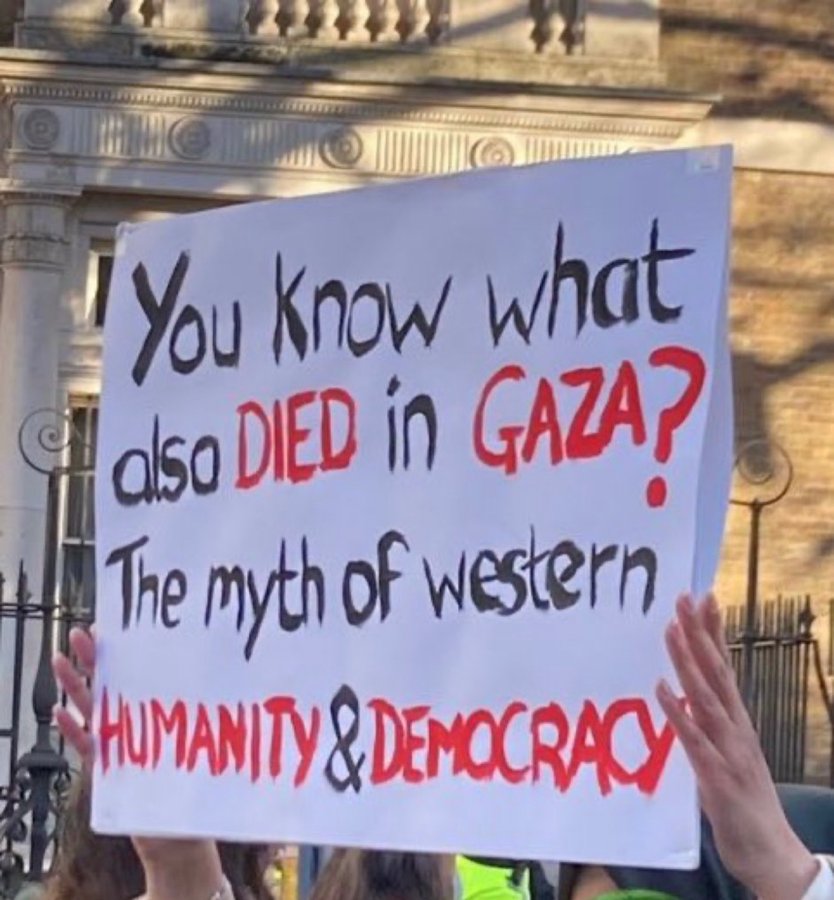
The on-going ethnic cleansing and genocide of Palestinians in 2023, marks the end of the façade of the peaceful Western liberal order. At least 940,000 people have been killed by direct war violence in Iraq, Afghanistan, Syria, Yemen, and Pakistan. While these countries were subject to the different ebbs and flows of US imperial violence. Palestinians have paid the heaviest price.  The historical occupation of Palestine has always been a socio-economic precondition for the cohesion of the G-7 but the current ethnic cleansing can no longer be contained through the usual narrative control tools and an ever intensifying climate of fear promulgated to the ends of silencing and chilling legitimate support for Palestine internationally. As Steven Salaita notes, the genocide has shown us that ‘Impunity isn’t beholden to disapproval’, and we continue to bear witness to the genocide for ourselves and for the next generation. The current genocide is the clearest expression of the decrepitude of the Western order in a state of ongoing entropy. What follows shall be bereaved of the usual pretences of ‘democracy’ and ‘human rights’ and thus more naked, brutal and yet more reactionary. The Western order is generating the conditions for its demise. In this, Palestine leads the way. Palestine changes everything.

Read More »

Everyday Politics in the Libyan Arab Jamahiriya: Q&A with Matteo Capasso

In Everyday Politics in the Libyan Arab Jamahiriya, Matteo Capasso provides an alternative analysis of Libya’s history and regime under Colonel Gaddafi leading up to the 2011 events that sanctioned its fall. The book offers a compelling counterargument to the mainstream narrative of Libya as a stateless, authoritarian and rogue state by focusing on international and geopolitical dynamics impacting Libya’s governance.

Q.1 Your book argues against the dominant western analysis of Libya under Colonel Gaddafi as a dictatorship, completely dependent on its economic legitimacy from oil. To quote:

This book has cautioned readers from rushing to define the Jamahiriya as an umpteenth authoritarian regime in the Arab world that crushes and controls its people. The significance of this issue lies in how the increasing repressible characteristic of the regime inevitably reflected wider power’

What do you mean by wider power dynamics?

When you pick any book on the political history of Libya, you are bound to encounter the argument that Qaddafi’s Libya (not the Libyan Arab Jamahiriya or the Libyan government) was a stateless society, governed ruthlessly by a dictator who was aiming to disrupt the US-led international order.  In the book, I define these arguments as a conceptual tryptic, including the ideas of statelessness, authoritarianism and rogue state. The book starts off questioning the use of these analytical frameworks and instead proposes to address questions of political legitimacy and authority via the study of the everyday. To do so, however, brought me to face another problem, namely the fact that most academic studies approach the ‘everyday’ with an overemphasis on the agency and power of the people. This, in turn, has led to dismiss a bit too quickly the impact of global and structural factors; and this is where I come to answer your question. While the everyday gained prominence and became a privileged site for studying politics in the Arab region, especially in the aftermath of the 2011 mass uprisings, these analyses  remain disconnected from long-standing international dynamics of politics and political economy. In other worlds, how were these states integrated in the wider international political economy? Did the political projects pursued by the Libyan government, especially in the aftermath of the 1969 revolution, challenge the interests of Western geopolitical forces? Why was Libya progressively subject to military assaults and geopolitical pressure?  If one ignores—rather conveniently—these aspects, it ends up to square one, basically explaining the politics of the country as the result of internal factors. In this manner, one not only delinks the socio-political formation of countries in the Global South from the international world, but also ends up flattening out its hierarchies existing.

Read More »

Whose Polycrisis?

‘if God the Father had created things by naming them, Elstir recreated them by removing their names, or by giving them another name’.

Marcel Proust (II, 566)

An emerging consensus originated in the US has declared 2022 as the year of the ‘Polycrisis’, with a view to marking the beginning of an era of turbulence and unrest in the global economy.  Under this conceptualisation, recent events including the Covid-19 pandemic, climate change catastrophes, the Russian invasion of Ukraine and the rise in energy and food prices are generally postulated as separate crises, which can have an effect on each other but nevertheless have separate origins.  This centrifugal analysis of events predicates on the decline of the uni-polar world order, as well as acknowledging the emergent structural weaknesses in the traditional western powers; all of which can be loosely interpreted as occurring in a period during which power is dispersing and perhaps as a consequence of this dispersion, the current drivers of crisis have multiplied, leading to a multitude of crises, in contrast to preceding historical instances.

In spite of the current use of the term, the origins of the Polycrisis date further and can be more sparsely contextualised. However, there is no doubt that it has now become an important neologism for conventional western media and policy institutes, especially adopted by Bretton Woods Institutions, as well as other leading investors.

Civil society has also used this term as a neat summary, however, theirs is a critical response and is not interchangeable with how powerful International Financial Institutions (IFIs), policy think-tanks and investors use the term.  In this sense, the instrumentalisation of this neologism, seems to have more value than its meaning, with the discernible possibility that any perceived political mileage of the Polycrisis, is a complete transformation away from its intellectual roots. Nonetheless, as an artefact, the intellectual roots and the political role of the Polycrisis merits an integrated analysis beyond its instrumentalisation. 

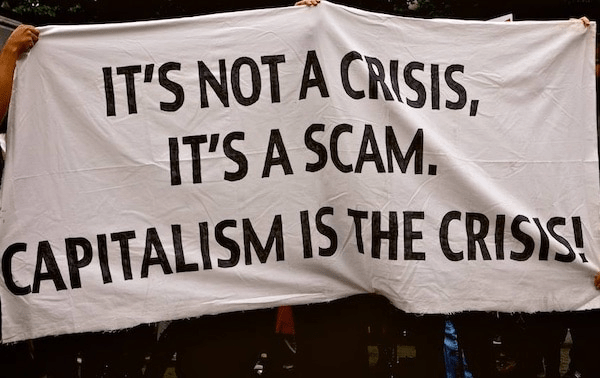
A remarkable feature of liberal thought is the tendency towards identification of social phenomena through the selective elevation of their key distinguishing features, which are abstract enough to form ‘systems’ and neutral enough to subsume the inherent contradictions of capitalist development. Pandemics, climate breakdown, wars and global deflationary pressures are not mere externalities of the capitalist system but intrinsic to its operations- long predicted by a diverse group of thinkers. That these events converge in time is a political outcome, subject to planetary limits, not abstract systemisation, as the Polycrisis seems to imply.  

Critical responses to the Polycrisis have pointed towards its disregard in accounting for the long and sustained crisis of the capitalist world order and a resort towards ‘brute empiricism’ to conceptualise things as they appear to be,  rather than questioning what is occurring beneath mere appearances. Prima-facie accounts often seek to capture the zeitgeist in the endeavour to simplify things. However, there is a need to differentiate between simplification and reductionism. As a concept, the Polycrisis is simultaneously all-encompassing as well as abstract.

In an attempt to grasp both these aspects, this short blog starts with a focus on three messages of the Polycrisis: a) the qualitative nature of change, b) the drivers or causes of crises and c) the role of Bretton Woods Institutions in adopting the concept. In addition, the blog proposes an alternative way of understanding the contemporary crisis, which hinges on the decline of the western capitalist model, followed by some thoughts on multipolarity and geopolitics. 

Read More »

Sanctions and the changing world Order: Some Views from the Global South

In the aftermath of the Russian invasion of Ukraine, major world powers including the United States and the European Union have introduced sanctions on Russia. These wide ranging sanctions have been approached diversely by states, leading to distinct  bilateral and  multilateral approaches. The marked absence of a global consensus is notable. As the invasion and the sanction regime continues, the global economy is also slowing down with the imminence of a global depression. While the majority of analysis debates the efficacy of the current sanctions, this Q&A with sociologist and author of the A People’s Green New Deal, Max Ajl, political scientist and author of the forthcoming Race, Nature, and Accumulation, Bikrum Gil, and historian and author of Finance in Colonial Zimbabwe: Money, Sanctions and War Economy, Tinashe Nyamunda, analyses the structural and political nature of sanctions situating its modern iteration in a historical light. We ask them about the history of global sanctions, whether they an effective deterrent to wars, why countries in the global south have abstained from the current sanctions, how should we understand the current sanctions in the global order of neoliberalism, and whether sanctions are leading towards a new round of a non-aligned movement.

Read More »

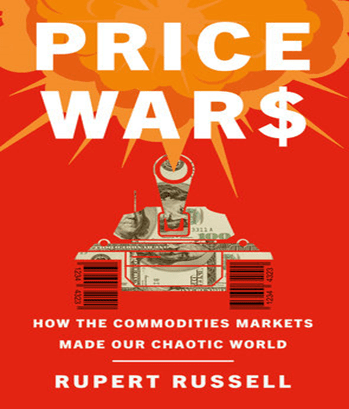
Price Wars: How the Commodities Markets Made Our Chaotic World: Q&A with Rupert Russel

In Price Wars: How the Commodities Markets Made Our Chaotic World, sociologist and filmmaker Rupert Russell travelled to some of the world’s most chaotic places: war zones in Ukraine, Iraq, and Somalia, the climate wars in Kenya and Guatemala, and Venezuela’s economic catastrophe. Told as gonzo investigation into what made the 2010s so tumultuous, Russell links each of these eruptions to swings in commodity prices, and the financial speculators whose bets set their prices.

Read More »

COVID in Pakistan, the Role of Middle-Classes and the Unprecedented Demand for a New Social Contract

Screenshot 2020-06-21 at 10.15.40

A conversation with and Dr. Juvaria Jafri and Dr. Aasim Sajjad.

Aasim Sajjad Akhtar is Professor of Political Economy at the National Institute of Pakistan Studies, Quaid-e-Azam University and a founder of the Awami Workers Party (AWP).  His research has focused on state theory, informality, colonial history, rise of the middle classes and social movements in Pakistan. His latest book is ‘The Politics of Common Sense: State, Society and Culture in Pakistan’.

 Juvaria Jafri is a Lecturer in International Political Economy at City University. Her research is on financial development in Pakistan, including inclusive finance, fintech, and impact investing strategies. Her latest co-edited book is ‘Geofinance between Political and Financial Geographies: A Focus on the Semi-Periphery of the Global Financial System.’

Introduction

The full impact of the COVID-19 pandemic on developing countries is still unfolding. While many countries have managed to achieve some stability in eliminating the spread of the crisis, others are struggling on various fronts. In South Asia, India has received much global attention owing to the violence of a hasty lockdown which was imposed without warning and an accompanying social safety net. Other countries in the region including Bangladesh, Srilanka and Nepal also continue to grapple with the existential question of how to ensure that contagion control does not come at the expense of destroying livelihoods. 

In this interview we focus on the situation in Pakistan. We invited Aasim Sajjad and Juvaria Jafri to address some questions related to the current situation in Pakistan. The following four questions were designed to provide a glimpse of how the pandemic is impacting the existing socio-economic structure of the Pakistani economy particularly focusing on class inequality, fin-tech as a potential solution and the activist and citizen-led first historic demand for a long-term welfare package. 

Read More »