A new Washington Consensus on the role of the state?

By Ilias Alami, Adam Dixon and Emma Mawdsley

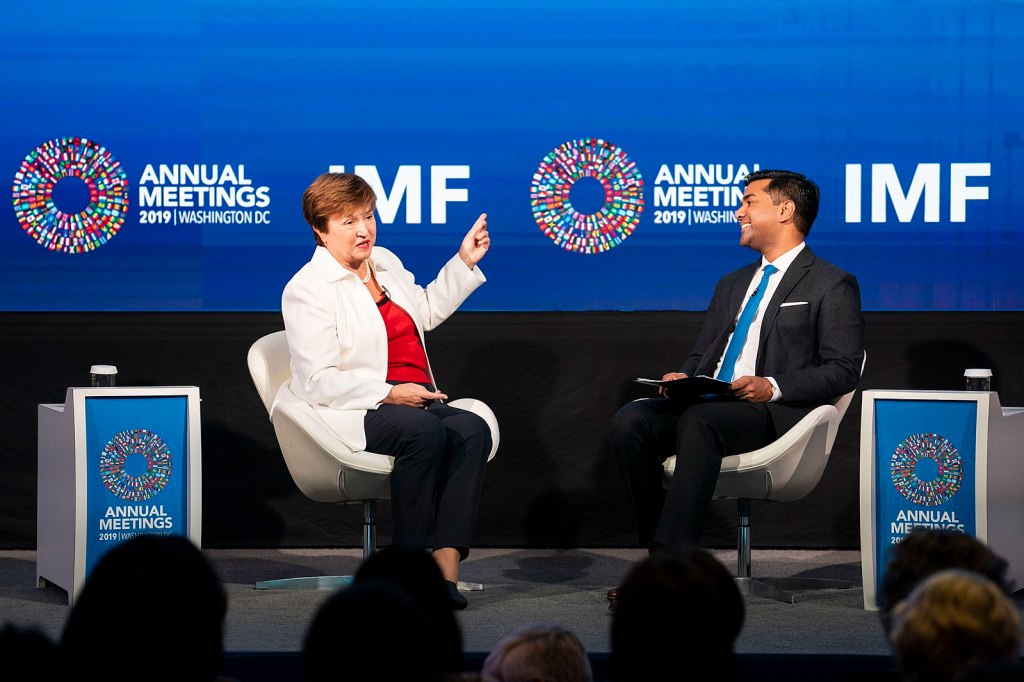
In a recent op-ed, Martin Sandbu of the Financial Times argues that “the conversion by the IMF and World Bank to support the activist state would put Saul of Tarsus to shame.” According to him, we may be witnessing the rise of a new Washington Consensus, which embraces deficit spending (by rich countries), “temporary solidarity surtaxes” on the rich and businesses, green public investment, and other forms of government intervention. This is not only to address the short-term effects of the pandemic, but also to stimulate demand across the world economy. Sandbu finds evidence of this new consensus in the benign view that the IMF has taken on Biden’s “rescue package”, and claims that “the new Washington consensus could prove as politically powerful as the old one.” In another op-ed in October 2020,

Sandbu characterised this new consensus as follows:

“After 1945, the guiding assumption was, first, that the state knew best, then that the private sector was best. We are about to transcend both, in favour of an economic worldview based on finding ways in which government intervention can guide the private sector to perform better. In that sense, economic planning and the activist state are back.”

It is indeed striking that the IMF, the World Bank, the OECD, the G20, and other multilaterals, have adapted their discourse on the role and place of the state in development. This predates the COVID-19 pandemic. In an open access paper recently published in Antipode, we document the emergence of this new vision of the state in development and outline its key features. Since the early 2010s, these institutions have produced a remarkable wealth of material explicitly concerned with old and new forms of state ownership and intervention. Witness, for instance, this November 2020 EBRD Transition report titled The State Strikes Back, or this chapter dedicated to state-owned enterprises in the IMF 2020 Fiscal Monitor. Our analysis of such policy documents and others suggests that we are witnessing a gradual yet fundamental reorientation of official agendas and discourses about the state. This emerging vision embraces a fuller role of the state in development (than the post-Washington Consensus), including as promoter, supervisor, and owner of capital. Our analysis expounds the material context in which this vision is emerging. Two interrelated transformations are particularly important.

Read More »

Intellectual monopoly capitalism and its effects on development

What is new with contemporary (global) leading corporations? If gigantic monopolies are a repeated phenomenon in capitalism’s history, why all the fuss we see every day regarding high concentration?

Leading corporations of the 21st century are intellectual monopolies. These are firms that rely on a permanent and expanding monopoly over portions of society’s knowledge. A recent joint OECD and European Union report shows that the top 2000 corporations in business expenditure in research and development (BERD) concentrated 60% of total IP5[1] patents between 2014 and 2016 (Dernis et al., 2019).

How did this happen if intellectual rents enjoyed by the innovator were supposed to disappear once the rest of the industry adopts the new technique? They disappeared if the secret was broken, the patent expired, or when another firm innovated, overcoming the innovating firm’s advantage. Knowledge is cumulative and those innovating have a greater absorptive capacity to keep innovating. Aided by a more stringent and global intellectual property regime, the continuous reinforcement of knowledge monopolies has led to a perpetuation of the core, maximizing rentiership over time.

Intellectual monopolies may not monopolize the markets they operate, which can even be competitive markets like Amazon’s marketplace, where Amazon sells its products with millions of other sellers. Their monopolistic condition relies on their capacity to significantly and systematically monopolize knowledge, which generally – but not always – contributes to market concentration.

Read More »

What Is Value? A Marxist Perspective

Marx’s critique of capitalism, and more specifically his theory of value, is still very relevant today, as I argue in my new book Fetishism and the Theory of Value: Reassessing Marx in the 21st Century.

But his work is often misunderstood, not only by orthodox economists but also by others – such as ‘greens’ – who seek inspiration in his writings. Economists, if they refer to his work at all, have tended to focus on the quantitative labour theory of value, ignoring what Marx called the qualitative theory of value: his critique of the economic categories of ‘bourgeois’ economics which mystify –  and hence also justify – the reality of what is really going on. The concept of fetishism is crucial to this theory, but by economists this has been either ignored or treated as the work of Marx the philosopher or Marx the sociologist. Marx introduces the concept of commodity fetishism in the very first chapter of Capital Volume I, where he seeks to get to grips with the mysterious phenomenon of exchange value. Rather than simplistically equating value with price – as is the practice of the market system and mainstream economics – he delves deep into the beliefs and practices that constitute and sustain the capitalist system. In other works, he applies the concept of fetishism to capital, money and interest-bearing capital. By reference to what he calls the ‘Trinity Formula’ he shows how, by presenting profit as the return on capital and rent as the return on land, both profit and rent are taken for granted, and go unchallenged. That the surplus value generated in production accrues solely to capital is treated as somehow ‘natural’.

In my book, I show the continuing relevance of Marx’s theory today, especially with regard to finance and the environment. Both the financial crisis of 2008 and the continuing crisis of environmental destruction are related to the way in which the market increasingly extends its grip over our lives: through the financialisation of everyday life, and through the use of market instruments and market principles that shape our relationship with nature.

Read More »

The Social (Relations) Dilemma

The Social Dilemma that is currently streaming on Netflix has garnered much attention by raising a single question – how have we come to accept as normal the fact that a few hundred tech-enthusiasts in Silicon Valley has had an unprecedented impact on billions of lives around the world? Directed by Jeff Orlowski, the Social Dilemma features tech industry insiders raising ethical concerns about business models that shape our everyday digital experience. 

Though the docudrama has topped charts, the narrative on reckoning with this digital Frankenstein moment is not new. For example, Black Mirror is a popular show streaming on Netflix that speculates on how unchecked tech developments can result in a dystopian world. What makes Social Dilemma unique is perhaps because it features an array of “prodigal tech-bros” – usually white males who got rich working for big tech, but then got disillusioned and subsequently achieved “enlightenment”. 

The tech-bros point out that most platforms were started with good intentions to improve the quality of human lives. However, due to the advancements in AI, coupled with a shareholder model of revenue maximization, these platforms have become weaponized by those with nefarious interests. This has threatened liberal democracies, leading to political polarization. We are warned that a civil war is on the horizon, ironically triggered by social networks apparently aimed at bringing people together.

Read More »

The return of the visible hand: How struggles for economic and political dominance turn state capitalism into authoritarian capitalism

budapest-parliament-hungarian-parliament-building-hungary-people-politicians-viktor-orban-hungarianBy Gerhard Schnyder and Dorottya Sallai

The state has made a return with a vengeance in economic matters in the past decade or so. Mainly due to the success of the Chinese model and the – less permanent – strong economic performance of countries like Brazil and Russia, the erstwhile Washington Consensus of the superiority of markets over states as mechanisms of economic coordination has been put in serious doubt.

Scholars have picked up on this trend by increasingly referring to the term (new) ‘state capitalism’. Some consider it an undesirable threat to the existing economic world order, while others show how states can effectively promote development and economic growth.

While the term state capitalism has been useful to bringing the state back in yet again into debates in political economy, the term itself is not unproblematic. Indeed, there is a risk that it perpetuates, rather than surpasses, the sterile debate about the state versus the market. Put bluntly: If there is such a thing as state capitalism, what does non-state capitalism look like?Read More »

Financializing state capitalism: Exchanges, financial infrastructures & the active management of capital markets in China

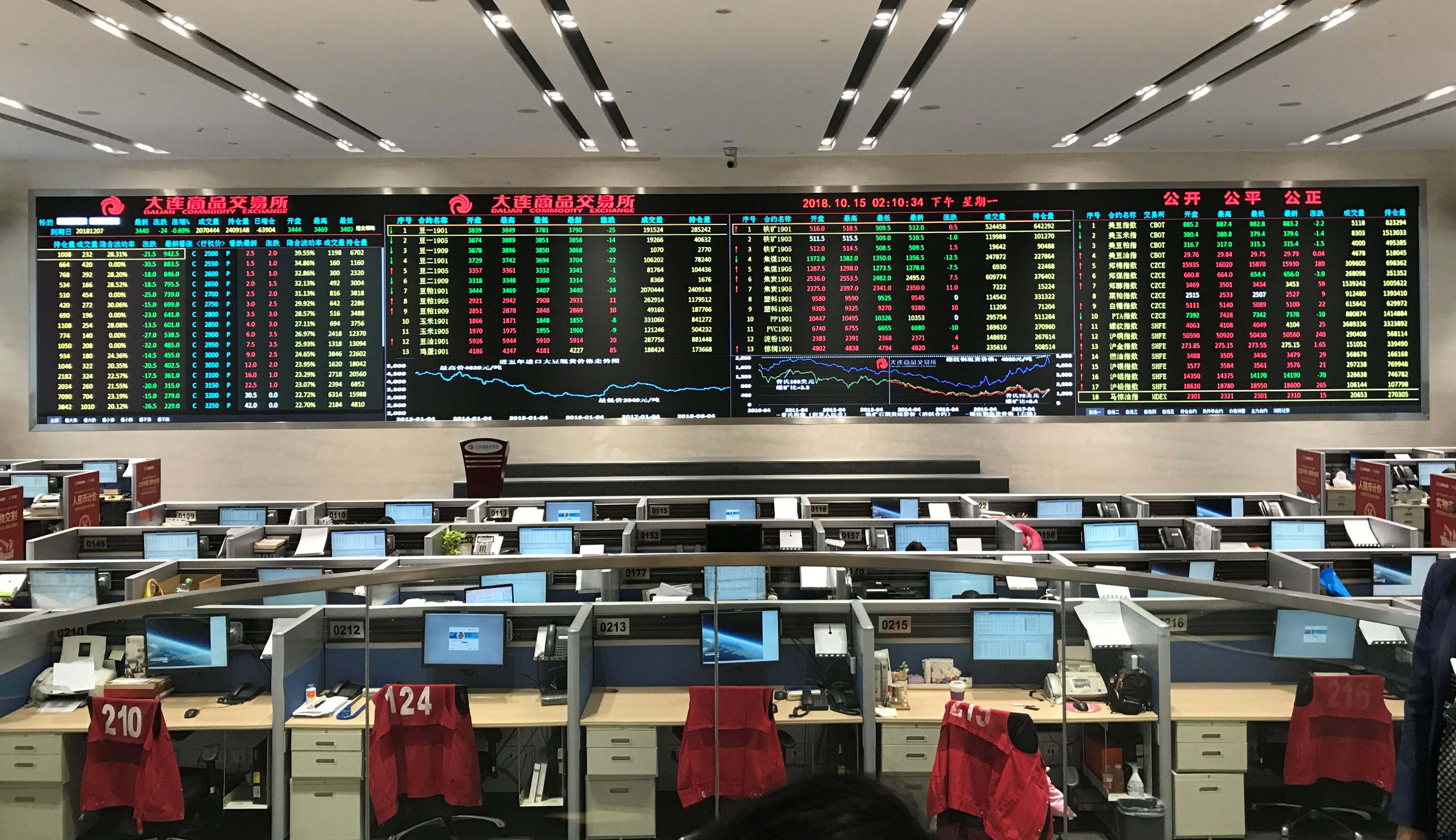
DCE trading floorThe development of capital markets has been a core focus of financialization research. For Epstein, financialization ‘means the increasing role of financial motives, financial markets, financial actors and financial institutions in the operation of the domestic and international economies’, while Pike and Pollard define financialization as the ‘growing influence of capital markets, their intermediaries and processes in economic and political life’. Other scholars also attribute a significant role to capital markets in financialization processes, be it in the dissemination of market-based financial activities and practices, the rise of shareholder value-oriented corporate governance, or ‘the increased ability to trade risk’. At the heart of and as a precondition of many aspects of financialization stand capital markets and their development. 
This is not only the case when it comes to financialization in advanced economies, but also with respect to the study of financialization in developing and emerging economies. Financialization processes are not uniform, they are rather variegated and refracted by national institutional settings that lead to different trajectories of financialization. As Lapavitsas and Powell emphasized, ‘both the form and the content of financialization vary according to institutional, historical and political conditions in each country’. This has also been picked up in debates about the relationship between financialization and the state. Previously, many scholars argued that financialization often results in a relative loss of state power vis-à-vis finance and the effects on developing economies are often described as potentially negative with financialization for instance decreasing their borrowing capacity and thereby policy space or deepening existing power asymmetries between states. But stemming from earlier discussions on transformations of the developmental state, more recent scholarship has highlighted that financial market development has often been actively facilitated by states. It argues that an increasing hybridization of financialization processes takes place in which state and (quasi-)state institutions often co-constitute financialization processes. 

Contributing to the growing literatures on variegated financialization and the state, in a paper titled ‘Financialization with Chinese characteristics? Exchanges, control and capital markets in authoritarian capitalism’ (recently published in Economy & Society) I argue that states are not only important actors facilitating financialization but can also exercise a considerable degree of control over financialization, thereby shaping its very form. Instead of a financialization process that follows a neoliberal logic and constrains state power, what we see in China is a ‘financialization with Chinese characteristics’ where the state actively tries to manage financialization and its social outcomes. Read More »

Is Postcolonial Capitalism a Thing to Itself? Reviewing Sanyal’s Rethinking Capitalist Development

18607553

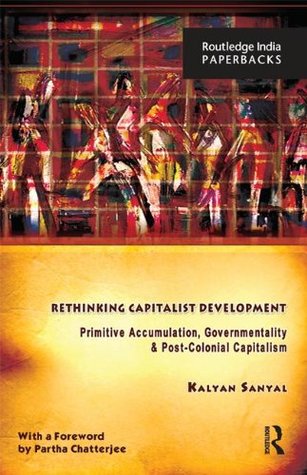
Kalyan Sanyal’s Rethinking Capitalist Development (2007, 2014) is a rare work of political economy for many reasons. It is written by an economist, but it’s so interdisciplinary that you won’t be able to tell. It is an attempt to theorize capitalism in the postcolonial context from the inside-out rather than outside-in, i.e. with no reference to an ideal type. It refuses to sit neatly in theoretical boundaries — it is not entirely Marxist, not entirely Postmarxist, not entirely neo-Gramscian, not entirely Foucauldian, but a strange concoction of all. Perhaps the only thing that is not rare is that like most interesting and influential works that emerge from the Global South, it too has been largely ignored in the academic circles of the Global North, especially in Economics. Read More »

RMB internationalisation as an extension of Chinese state capitalism

wallpaperflare.com_wallpaper

Why has the RMB gone global?

More than a decade has passed since the launch of what is now widely known as ‘RMB internationalisation’, or the strategic attempt by the Communist Party of China (CPC) to expand the global reach and usage of the Chinese currency, the renminbi (RMB). Such is the scale and ambition of this strategy, some policymakers and scholars have proclaimed RMB internationalisation as a form of reserve currency succession – as a challenge to the US dollar as the world’s preferred currency for market exchange. This development is especially intriguing given how the financial system within China remains relatively insulated in spite of market oriented reforms since 1978. Could RMB internationalisation truly be about global currency supremacy when financial flows in and through China continue to be highly scrutinised?Read More »