Renewing Dependency Theory: The Case of Walter Rodney

The failure of mainstream development policy to deliver on the promise of eradicating global poverty is increasingly difficult to deny (World Bank 2024). As a result, theories of global development are opening to alternative and critical approaches. In this context there has been a renewal of interest in dependency theory as a rich heterodox tradition of political economy (Kvangraven 2021; Chilcote and Salém Vasconcelos 2022; Antunes de Oliveira and Kvangraven 2024). In a recent paper, I turned to one of the foundational scholars of dependency, Walter Rodney (1942-1980), to work through some of the strengths and limits of dependency theory for contemporary studies (Johnson 2023).

Read More »

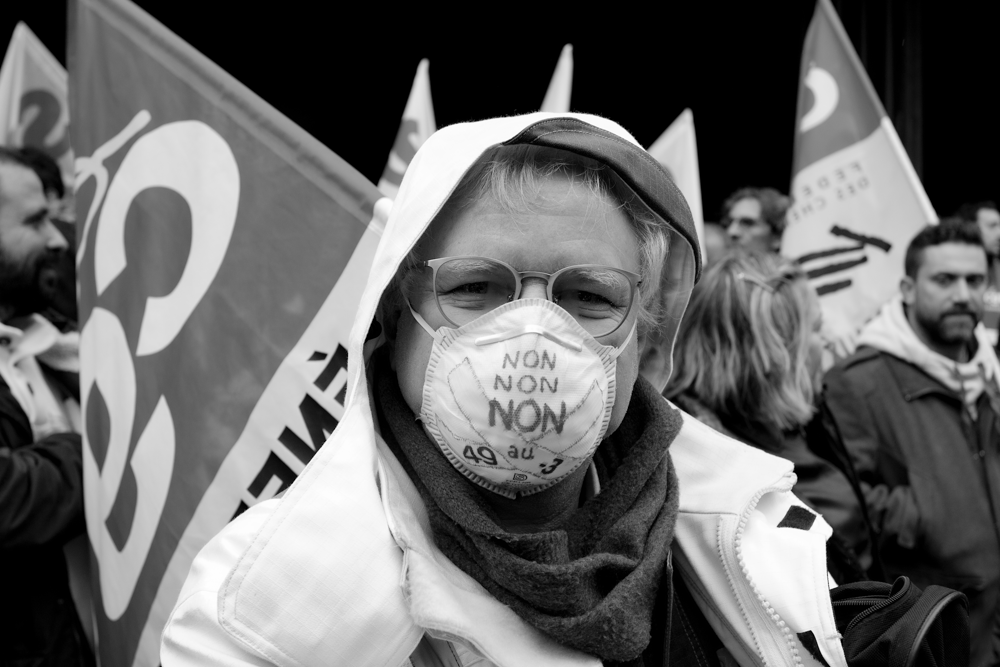
Condensing the Gaza crisis

The Gaza crisis has underscored the deep fractures of domestic politics in Western Europe, the US and Australia. It is as much a domestic political crisis as a conflict in the Middle East.

What is the nature of this crisis? Well, it is not one but multiple crises that are condensed around the Gaza war. Now condensation is an interesting concept – first used by Freud to show how a single idea or dream stands for multiple associations and ideas. We can think of the Gaza crisis as a political condensation of several multiple and intersecting crises and their  different temporalities. It condenses a series of fracture points: the crisis of representation, an increasingly authoritarian response to the political conflict, the unravelling of the international liberal order and the politics of race and class. It reinforces a shift to what the Marxist political theorist Nicos Poulantzas termed authoritarian statism which is the intensification of authoritarian tendencies within ostensibly democratic institutions and processes.

First, it is now fashionable to apply the term decolonisation to global politics but this decolonization is always seen as ‘out there’ and distinct from the politics of class. Instead, I want to argue the Gaza crisis has brought decolonisation back home to the streets of London, Paris, Berlin, Sydney and New York. It is often forgotten that many of those on the streets are demanding not just a ceasefire in Gaza but a political voice that is marginalised.  And let’s not forget that this plays out in the register of both class and race.  Many – but by no means all – of those in the streets are the new migrant working class and Gaza is an expression of their political discontent. The social theorist – Stuart Hall – famously said that race is the medium through which class is lived and in the Gaza crisis we see an intersection of class and race. It is return of the political time of colonial politics but this time in the metropolis of the old colonies. This class and domestic dimension is often forgotten in the sanitised version of decolonisation that circulates within academia. Again, the Gaza crisis condenses existing political fractures.

Read More »

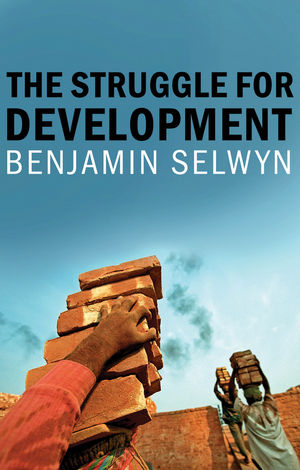
The Struggle for Development

This post is adapted from the preface for the newly published Turkish edition of The Struggle for Development, first published in 2017. The original edition aimed to root development thinking and practice in the analysis of class relations, and intellectual and political support for labouring class struggles. Turkey is experiencing numerous social struggles that illuminate the relevance of the arguments in this book. It is my hope that this book contributes to illuminating the social, developmental, value of these struggles.

Collective struggles by labouring class communities – in and beyond the workplace – have the capacity to generate real human developmental gains for these communities. Consequently, these struggles and the labouring classes that pursue them, should be considered as developmental.  

The majority of development thinking across the political spectrum – whether theoretically or policy focussed – tends to downplay labouring classes, their struggles and the gains they generate.  Rather, such struggles are usually ignored or are portrayed as obstacles to development, because they do not adhere to dominant capitalist notions of development. 

Capitalist notions and strategies of development take many forms, and can be thought of as existing along a spectrum – from more market-led/neoliberal, to more state-directed forms. In this book I argue that, despite notable differences, these forms of development represent varieties of capital-centred development. Here capital accumulation is prioritised as the basis of economic and human development. As I show in this book, both market led and state led forms of development are based upon the assumption that labouring classes represent an objective input into the development process, rather than a subjective agent of development. This assumption legitimates labour exploitation and repression for the greater ‘good’ of capital accumulation.  

Read More »

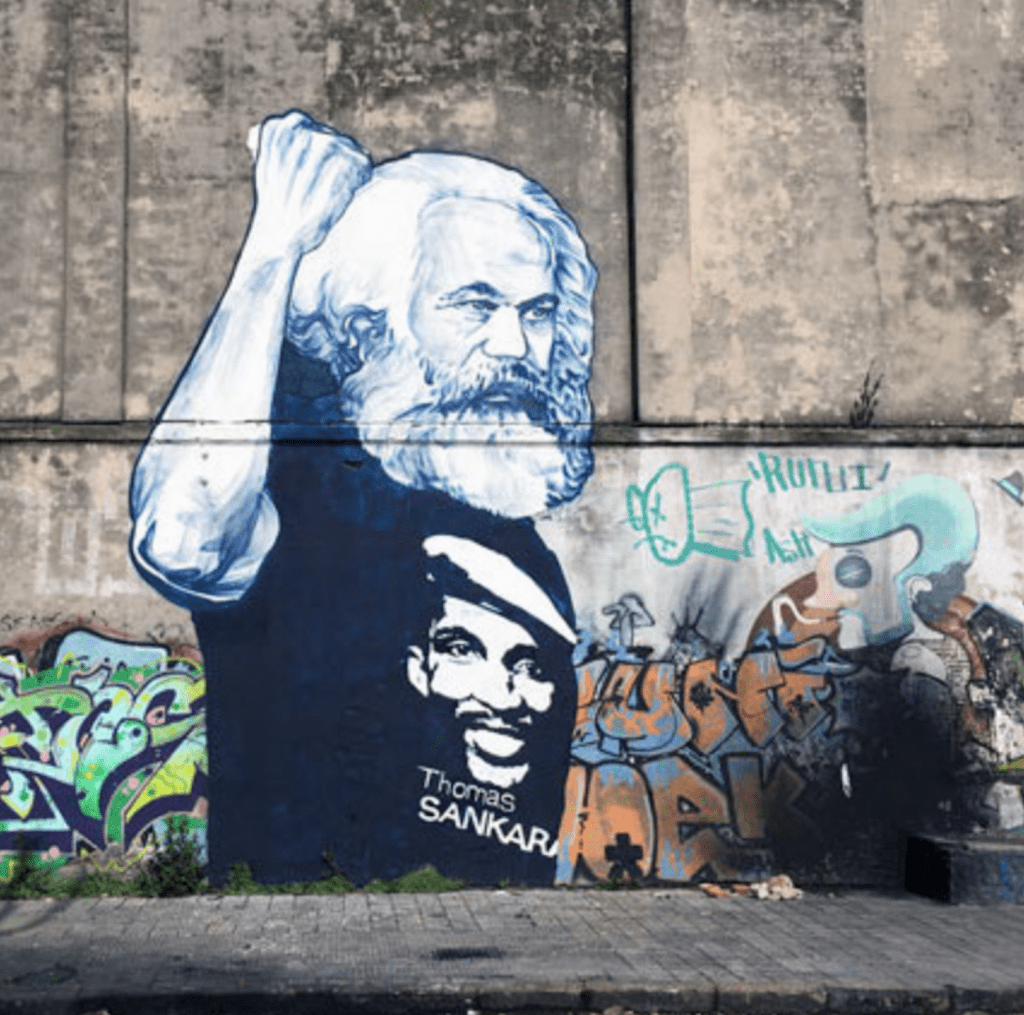
From Post-Marxism back to Marxism?

The Handbook of Marxism and Post-Marxism I co-edited with Alex Callinicos and Stathis Kouvelakis aims to present the development of Marxism as a militant tradition in dialogue with other traditions and within itself. Even if it was conceived almost six years ago, the multiple crises we are confronting today – economic, political, social, gender, environmental and biological – vindicate the spirit of our project. The project seeks to look at Marxism as a tradition that is rooted in and addresses the totality of capitalist social antagonisms and, by doing so, is able to think strategically beyond capital. 

Several contributions challenge reductionist interpretations of Marx’s critique of political economy, and the idea that Marxism is irremediably Eurocentric and underestimates race, gender and ecology. This opens a space for a more complex, and I would say fertile, dialogue with Post-Marxists currents. The format of the Handbook – combining longer contextual essays and shorter essays on individual thinkers mainly – aims at facilitating this dialogue. We chose this format, rather than concentrating on themes and concepts, in order to capture the specificity of, and interactions between, individual thinkers and problematics. 

In the final part of the book, “Marxism in an Age of Catastrophe”, John Bellamy Foster and Intan Suwandi forcefully argue that Marx inaugurated traditions of thought that can intellectually encompass the present age of catastrophe, announced by the floods and fires around the world as well as by the Covid-19 pandemic. These reflections complement the first part of the Handbook, “Foundation”, which points to the strong connection Marx and Engels posited between the critique of political economy and a politics of working-class self-emancipation. Thanks to this connection, they were able to conceive of capitalism as a global, gendered, racialized and ecological class antagonism in which struggles over wages and working conditions are organically linked to struggles over dispossession, social reproduction, ecology, imperialism and racism. Support for the demands of the most oppressed is thus crucial for the advancement of the working class as a whole. 

Read More »

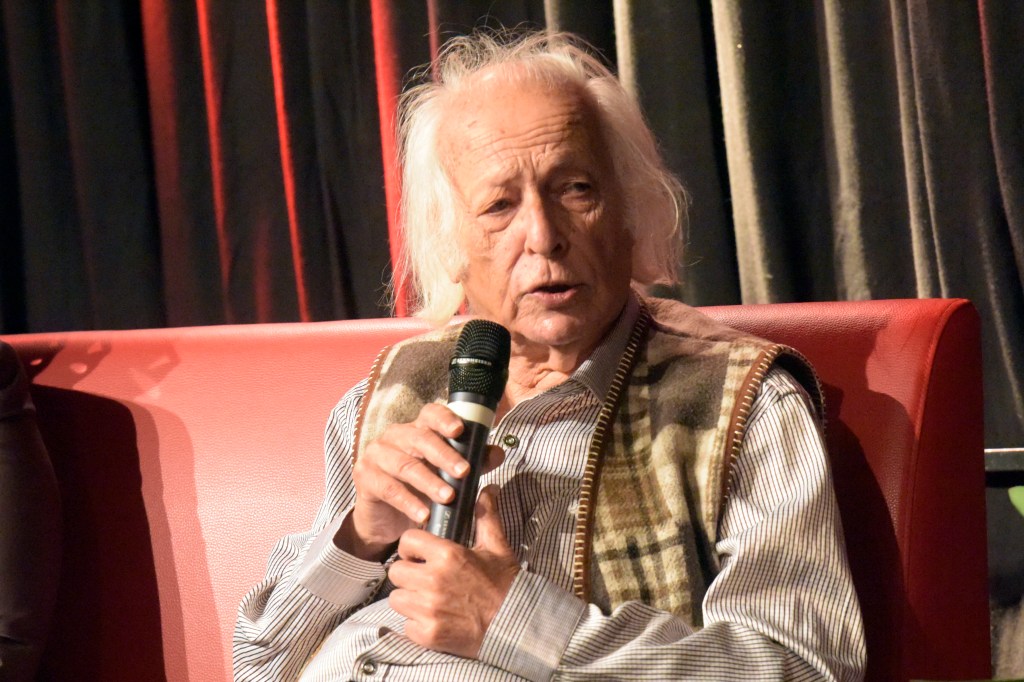
Enduring Relevance: Samir Amin’s radical political economy

By Ingrid Harvold Kvangraven, Maria Dyveke Styve, Ushehwedu Kufakurinani and Ray Bush

In moments of great uncertainty there is refuge to be found in the work of intellectual titans like Samir Amin. After the sad news of his passing in August 2018 in Paris, aged 86, we began thinking about how best to explore the enduring relevance of his analysis and concepts to make sense of contemporary crises.

The pertinence and analytical heft of Amin’s work is particularly important in the contemporary period marked by the interconnected crises related to COVID-19, Black Lives Matter, the climate emergency, and looming debt crises across the periphery. In the years ahead, confronting these multiple and intertwined crises will require the kind of commitment to combining research with political engagement that Amin demonstrated.

Amin’s ability to weave together thorough analysis of the polarising effects of capitalism with concrete political projects for an international radical left makes his work particularly relevant in our quest to understand capitalism, its particularities across the world, and oppositions to it. There is a younger generation of scholars, of which we are a part, that is particularly hungry for Amin’s perspectives, one that came of age in a time where the universities have been thoroughly marketised and moulded by neoliberal processes, and where intellectual production and debates are not necessarily embedded within social struggles.

Read More »

Neoliberalism on Trial: Jokowi 2.0, Omnibus Bill and the New Capital City

piqsels.com-id-jxnok

When the majority of Southeast Asian countries began to enact more aggressive responses to the novel coronavirus, Indonesia turned a deaf ear to virus mitigation efforts. As it had no confirmed cases of the coronavirus as of February, Joko Widodo’s (Jokowi) government instead kept pushing extensive economic reform agendas. It submitted a 1,028-page Job Creation Omnibus Bill on 12 February, calling the bill the country’s third great structural reform program after the  1998 International Monetary Fund’s (IMF) Letter of Intent and the 1967 Foreign Direct Investment Law. Despite criticism from the opposition, the president insisted on this neoliberal agenda, claiming that the objective of the bill is to promote more foreign direct investment (FDI) in the manufacturing sector and thus create more jobs. 

What effects do neoliberal policies have on political and economic life in Indonesia and state-capital relations in particular? This blog post follows David Harvey (2006) in taking a historical-geographical approach to investigate this question, with a focus on policies put in place in the current president Jokowi’s second term. For many observers, such a bold move to deregulate the economy signals the resurgence of state-led development in a new form. Put differently, what this article would like to argue is that deregulation, an all-encompassing hegemonic ideology rather than simply a policy, has become some sort of ‘banner to unite under’ for the ruling capitalist class in Indonesia. Read More »

Assessing the ‘Return’ of the State: Bringing Class Back In

49626859048_f8b85f881c_o

There are decades where nothing happens; and there are weeks where decades happen’, words famously attributed to Lenin. In the last few weeks the Covid-19 pandemic has led to an extraordinary series of events throughout the world. Our everyday lives, the way our economies are organised, and the ways that we exercise our basic rights and freedoms are being transformed. These changes were unimaginable only a few weeks ago.

A significant aspect of these ‘extraordinary times’ is governments’ extraordinary responses to the economic meltdown triggered by the coronavirus crisis. Within the space of just a few weeks, one taboo after another in Western capitalism has been broken, as The Economist puts it. As monetary policy measures (i.e. unlimited QE, record low interest rates) proved to be insufficient, unprecedented fiscal stimulus packages including wage and income guarantees came to the fore. In the EU, the so-called ordoliberal principles of competition, free market and a commitment to a balanced budget (that were harshly imposed upon Greek and other peripheral European economies during the Eurozone crisis) appear to have been all but forgotten by the core capitalist countries. ‘We will protect our strategic companies from foreign takeovers’ declared the president of the European Comission. The infamousschwarze Null’ budget policy of Germany, for example, was abandoned as the German government foresees an extra 156 billion in new government debt this year, and an extra €600 billion to bail out big companies if necessary. In the UK, the traditionally austerity-loving Conservative Party’s Chancellor of the Exchequer announced an enormous coronavirus package of £350 billion. The Trump administration has signed the largest ever US financial stimulus package, amounting to $2 trillion, which includes ‘helicopter money’ for the citizens. Whatever it takes’ became the motto of G20 leaders and finance ministers. All of a sudden, austerity ended as the reproduction of the capitalist system became impossible without the protective measures that were introduced. This reflects the fact that austerity was a political choice all along; despite being framed as ‘TINA’ for years. Read More »

‘Climate Emergency’, COVID-19 and the Australian capitalist state

covid-19-4926456_1920Now is the hour of our collective discontent. In order to pursue the agenda set out for this blog post series, namely: ‘to precisely identify the strategic, structural/epochal, or more contingent factors involved in the emergence of particular state–capital hybrids, as well as the specific institutional, organizational, and legal forms that facilitate such emergence’ (Alami & Dixon, 2019) my contribution examines the Australian state over the summer of 2019-20, into the COVID-19 pandemic. I argue that the COVID-19 pandemic highlights the instability and amenability to capital of our present conjuncture in ways that the bushfire crisis did not. Further, the pandemic renders our present conjuncture potentially far less stable and amenable to capital than declaration of a national ‘climate emergency’ could have, and therefore the left should consider how to force deep reorientations of state-led action (and therefore form and function) while it can.

The need for an adequate state theory

Existing scholarship on neo-Marxian theories of the state are the foundations of an appropriate diagnosis of this moment, though in the heart of an historic conjuncture is not the time to attempt a full synthesis or unified theory. Instead we should begin by using our compounding crises to work through our existing analyses and critiques. In keeping with this research agenda, I will begin with a Poulantzean reading of the state – not the blunt Althusserian structuralism of his earlier work, but his later and more nuanced work on the state theorised as an ever-contingent social relation. The state is thus conceived of as a material condensate of the balance of class struggle, meaning it is possible to isolate points of rupture and work upon and through them to alter the balance of power.

Without a reconfiguration of political and economic power, the crises we face will not resolve, but escalate by orders of magnitude. A neo-Marxian theorisation of the state reframes this political moment with a materialist analysis of the issues confronting our societies. The points of possible rupture have now become more apparent and should guide leftist strategy into and through the COVID-19 pandemic.

From ‘climate emergency’ to global pandemic (from theory to praxis)

Over the 2019-20 summer, Australia burned. Vast swathes of the country were covered in marauding fires; communities were evacuated; homes were destroyed; irreplaceable heritage landscapes were lost forever and millions of animals perished. Those physically distant from the fires were nonetheless impacted by the resulting cloaks of particulate matter draped across the country at levels ‘unmatched in terms of severity, duration and extent’ in Australia’s recent memory.

Much of the resulting political jousting focused on whether or not funding had been cut for core services that would have ameliorated the situation. Over the course of the summer, communities mobilised to meet the relentless blazes, with numerous online fundraising campaigns set up to try and resource volunteer fire services. Rolling demonstrations and protests were held across the country, demanding action from state and federal governments.

Read More »