The pressure to provide and perform: Anti-feminism, masculinity consultants, and the threat of male expendability in contemporary Nairobi

Women are the reason why men have changed because women are hard on men. […] The expectations they come with into a relationship, and generally how they have been brought up, or the life they live, that is what gives some men stress. […] When someone is living with a woman in the house, you find that issues are many because money is little.

Wellington Ochieng, 36-year old labor migrant from western Kenya

During almost three years of ethnographic fieldwork among male migrants in Pipeline, an over-populated high-rise estate in Nairobi’s chronically marginalized east, I heard complaints like Wellington’s almost daily. Migrant men, in my case predominantly Luo from western Kenya who came to Nairobi with high expectations of a better future, bemoaned a life full of pressure caused by the romantic, sexual, and economic expectations of their girlfriends, wives, and rural kin. The blame often lay on ‘city girls’ who were portrayed as materialistic ‘slay queens’who ‘finish’ men by leaving them bankrupt only to suck away the next sponsor’s wealth after grabbing him with their ‘Beelzebub nails’ as Wellington called the colorful nails sported by many Nairobi women. Soon, so a fear expressed repeatedly by my interlocutors, most men would no longer be needed at all and Kenya’s economy would be ruled by economically powerful women who raise chaotic boys brought up without an authoritative father figure. Such fears of male expendability also manifested in imaginations about a future in which more and more men and women would live in homosexual relationships or ‘contract marriages’ that replace trust and love with contractual agreements. When my flat mate Samuel, a student of economics divorced from the mother of his baby son, returned to our apartment after passing the neighbor’s house where a group of women celebrated a birthday, for instance, he just shook his head and sighed: ‘We live like animals in the jungle. Women and men separately. We only meet for mating and making babies. Maybe that’s where we’re heading to.’ Overwhelmed by their wives’ and girlfriends’ expectations, many migrant men who spoke to me in Pipeline decided to spend as little time as possible in their marital houses. Instead, they evaded pressure by lifting weights in gyms, stockpiling digital loans and informal credits, placing bets in gambling shops, gulping down a cold beer in a Wines & Spirits, playing the videogame FIFA, or catcalling ‘brown-skinned’ Kamba women on the roads. Some men who could no longer cope took even more drastic measures involving murder and suicide. One man, for instance, cut the throat of his girlfriend only to try to kill himself, while another tried to poison himself, later quoting the wife’s actions and character as the cause. Anything appeared better than spending time with the ‘daughters of Jezebel’ who were waiting for them in the cramped houses of Pipeline, sometimes demanding migrant men to engage in romantic and sexual practices they were unfamiliar with as expounded upon by Wellington:

When you come to Nairobi, our girls want that you hold her hand when you are going to buy chips, you hug her when you are going to the house, I hear there is something called cuddling, she wants that you cuddle, at what time will you cuddle and tomorrow you want to go to work early? […] you don’t go to meet your friends so that you show her you love her, you just sleep on the sofa and caress her hair, to me, this is nonsense because that is not romantic love, I think that romantic love, so long as I provide the things I provide, and we sire children, I think that’s enough romance. […] Another girl told me to lick her, and I asked her ‘Why do you want me to lick you?’ She said that she wanted me to lick her private parts. Are those places licked? […] Those things are things that people see on TV, let us leave them to the people on TV.
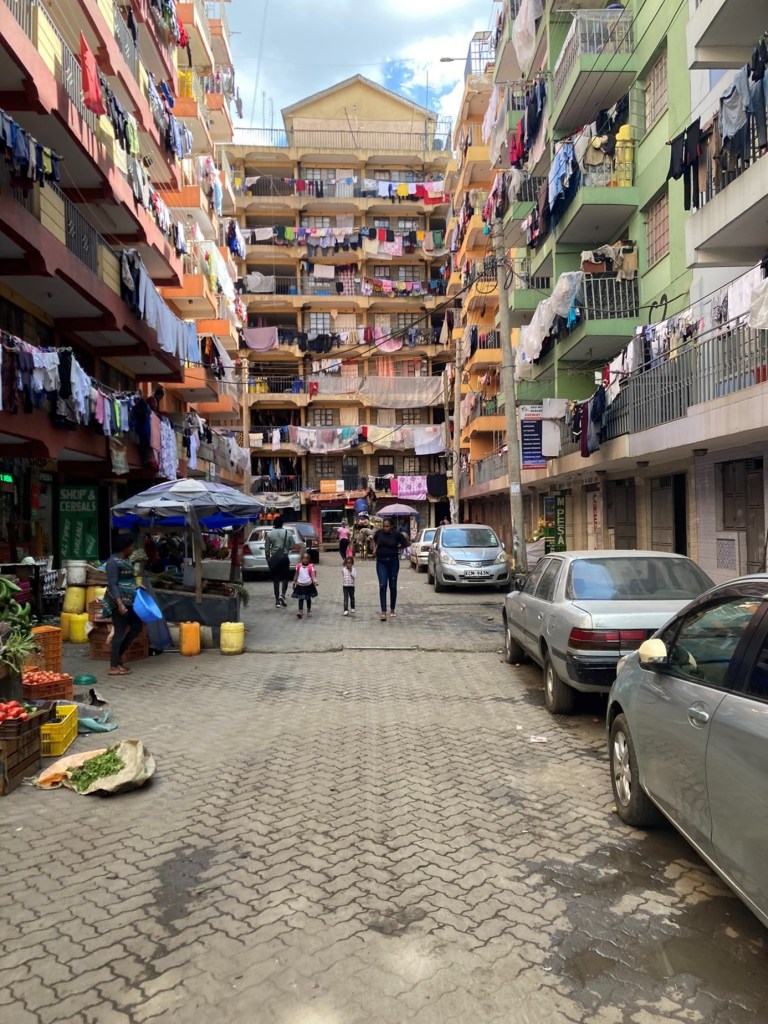
Figure 1: Pipeline

Read More »

Gendering the debt crisis: Feminists on Sri Lanka’s financial crisis

By Kanchana N. Ruwanpura, Bhumika Muchhala and Smriti Rao

Countless images of women carers flitted through April-July 2022 on Sri Lankan television screens, social media, and newspapers. Carers with young children, mothers with new-borns leaving them with equally young children while they stood in queue for gas or kerosene, children doing their homework on tuk-tuks while their parents got in line for petrol and diesel. Yet, Sri Lankan policy pronouncements rarely mention working-class women. In a country where women comprise 52% of the population, this is astounding. Especially so when the dominant three foreign exchange earners for the country – garments, tea exports and migrant workers to the Middle East – rest on the efforts of women workers. 

In the current response to Sri Lanka’s debt crisis, the voices and needs of working-class women are once again being ignored by policymakers, despite the evidence all-around of women intensifying their unpaid labour even as the conditions under which they perform paid labour deteriorate. 

As feminist economists, our argument is straightforward: debt justice is a feminist value and principle. And at the core of our understanding of debt justice is the principle that working class women cannot be made to pay for the ‘odious debt’ generated by the recklessness and corruption of (almost entirely male) Sri Lankan political elites.

Read More »

Feminist political economy, land, and decolonisation: Rama Salla Dieng in conversation with Lyn Ossome

By Lyn Ossome and Rama Salla Dieng

In this interview, Rama Salla Dieng shares her thoughts on methods, feminist political economy, land questions in the Global South, radically reclaiming parenting as a political terrain of subversion and resistance, commitments to decolonisation while located in the western academy, radical acts of self-care, and African feminism.

Read More »

The triple day thesis: Theorising motherhood as a capability and a capability suppressor

Where do people not say, “I want to do X, but the circumstances of my life don’t give me a chance”? To this sort of common discontent, the [capabilities] approach responds by saying, “Yes indeed, in some very important areas you ought to be able to do what you have in mind, and if you aren’t able, that is a failure of basic justice.

                                                                                                                       Martha Nussbaum, 2011

The Triple Day Thesis: Describing the Triple Day Problem

The triple day thesis presents a theoretical analysis of motherhood from a capability perspective as a path to resolving maternal capability failures within the triple day – the triple day problem. The triple day thesis of motherhood is conceptualized as a mother who engages in the reproductive work of childbearing and childrearing (the single day), in addition to waged work (the double day) and self-reproductive work (the triple day).

In my article “The Triple Day Thesis” (2021), I formally define self-reproduction as involving tasks or activities that a person, in this case a mother, undertakes to replenish herself physically, medically, emotionally, intellectually, socially, psychologically, or other forms of replenishment that is primarily beneficial to her non-economic well-being. Self-reproductive activities could involve having time for recreation; time for healthy living practices; time for friendships and joining associations, awareness groups etc., within the community; the “me-time” for basic personal hygienic practices, to pray, reflect on and plan one’s life; and time to engage in academic work which is the more intellectual form of self-reproduction. A combination of one or more of these self-reproducing or self-realizing activities within a twenty-four-hour day including sleep hours would make up what I call the triple day.

According to the triple day thesis, it is within the triple day that several of the central capabilities Martha Nussbaum (2011) proposes in her capability theory of social justice take place. Nussbaum’s central capabilities for women’s human flourishing include life, bodily health, bodily integrity, senses, imagination and thought, emotions, practical reason, affiliation, concern for other species, play, and control over one’s material and political environment.

The absence of self-reproduction in women’s lives due to the pursuit of motherhood, entails the absence of human flourishing, and therefore constitute social (gender) injustice. It is this which describes the problem of the triple day.

Read More »

Dependency, gender, and race

In the classical works of dependency theory, such as the Dialectics of Dependency (Marini 2011 [1973]); Socialism or Fascism (Dos Santos 2018 [1978]); Dependency and Development in Latin America (Cardoso and Faletto 1979) and Latin American Dependent Capitalism (Bambirra 2012 [1978]), race and gender are absent. This absence is at odds with both the evident reality of racial and patriarchal oppression in Latin America and the concomitant rise of feminist and anti-colonial literature in the social sciences. In fact, in the exciting intellectual and political environment of the 1960s and 1970s, it would not be difficult to imagine productive dialogues between Ruy Mauro Marini and Margaret Benston, and Vânia Bambirra and Amilcar Cabral. Sadly, these dialogues never took place. Instead, the first generation of dependency scholarship privileged debates with white, male scholars engaged in modernisation sociology, structuralist economics and Marxist orthodoxy. With the sole exception of Vânia Bambirra’s forgotten writings about peripheral women’s liberation, gender and race remain to this day ignored by the dependency tradition.

Although the absence of race and gender does indeed represent a major blind spot in the work of dependency writers, the most seminal concepts coined by some of the early dependency writers such as Ruy Mauro Marini and Vânia Bambirra have ‘intersectional’ (Crenshaw 1989; 1991) potential. By that, I mean that they can be understood as referring to more than simply class-based dynamics of domination. Let us consider two examples: Marini’s concept of the ‘super-exploitation’ of labour and Bambirra’s definition of Latin American ruling classes as ‘dominated–dominant’.

Read More »

Informal employment and the social reproduction of value

In the last year, the rise and spread of the COVID-19 pandemic has laid bare the fictitious nature of some of the categories we deploy to conceptualise the world of labour. Indeed, it has revealed the contingent nature of the separation between productive and reproductive spaces, times and realms when it comes to labour processes.

According to estimates produced by Janine Berg, Florence Bonnet, and Sergei Soares, when the crisis hit, around 30% of North American and Western European workers were in occupations that could allow home-based work, as opposed to only 6% of sub-Saharan African and 8% of South Asian workers. This is to say that in the Global North, the pandemic could de facto manufacture million homeworkers overnight, following national lockdowns. In many cases, these would still be contributing to formal sectors of the economy.

It is rather unsurprising that this shift to homeworking could not materialise in the Global South. Labour relations here are largely characterised by informal employment, in its double character – namely, employment in the informal economy and informalised employment in otherwise formal settings. While homeworking represents one segment of informal employment, its major share is composed instead of precarious forms of casual employment, far more difficult to immediately insource in home-settings. By the time the crisis hit, according to the ILO, informal employment constituted 69.6 percent of employment in the Global South and, given the share of working people it hosts, it constituted over 60 percent of total employment on our planet.

One of the key characteristics of informal employment is the interpenetration between productive and reproductive dynamics, activities and realms. The ever-growing reality of informal employment forces us to reflect and revise theories of value generation and extraction, and ultimately the basis of exploitation worldwide. That is, they force us to re-engage in the study of key Marxian categories of analysis, in ways that may account for how the majority on earth labours. These ways must necessarily account for the centrality of social reproduction in the working of labour processes and relations worldwide.

Read More »

The Home, The World: Anti-Racist Feminist Politics and Communities of Care in a Pandemic

Without community there is no liberation, no future, only the armistice most vulnerable and temporary between me and my oppression.” Audre Lorde to Tony Morrison

The Home

Toni Morrison is one of the writers who wrote the most about ‘the home and racial justice’. In her emblematic novel Beloved, set in the post-Civil War South, she tells the story of a young girl murdered by her formerly-enslaved mother, Sethe. Sethe is importantly surrounded by the unheimlich (Freud), the stranger, where the foundations of our ethical judgment on slavery are found. In the United States, in the period 1882 to 1895, approximately one-third to half of the average black mortality rate corresponded to children under the age of five (Bhabha, 2002). We face the dilemma of judging these acts.

Sethe, in an act of love, kills her daughter Beloved to avoid her master’s appropriation of her daughter. Sethe was a pariah in the post-slavery society of the United States. She knew from when she was a slave what it meant for a woman to have her children taken when her breasts were full of milk; that she would have been beaten to exhaustion for others to take her milk. She was raped by her master, as was the case for many of the slaves of Sweet Home; that name itself being a mockery of a plantation that was held under a system of slave laws that collaborated on that tragic fate. If a female slave escapes, there is a double loss; the capacity for reproduction and for manual labor. The slave society must permanently produce new slaves for reproduction (Bidaseca, 2010).

Sethe insistently repeats:”It wasn’t a story to share. They forgot it like a nightmare (…) What should be forgotten before it is shared; what should be hidden and silenced as to not interrupt our present?”. I wondered in my book Perturbando el texto colonial. Los estudios poscoloniales en América Latina (2010): “This is not an easy story to transmit” but it needs to, as says Bhabha (2002), so that it may be engraved in our subconscious.

Read More »

Hidden Abodes in Plain Sight: What the COVID-19 Pandemic has revealed and why we need to put Social Reproduction at the centre of a more just post-Covid world

By Sara Stevano, Alessandra Mezzadri, Lorena Lombardozzi and Hannah Bargawi

After over a year of suffering, death and profound transformations of everyday life, it is time to take stock of the COVID-19 crisis so far and craft visions for a future centred on the value of social reproduction. In our article ‘Hidden Abodes in Plain Sight’ recently published in the special issue on Gendered Perspectives on COVID-19 in Feminist Economics, a social reproduction lens is used to analyse the COVID-19 crisis.

What is social reproduction? Social reproduction is ‘the fleshy, messy, and indeterminate stuff of everyday life’ as well as ‘a set of structured practices’, as vividly put by Cindi Katz, that are needed for the reproduction of both life and capitalist relations. In other words, it encompasses all the work, unpaid and paid, and the socio-cultural practices, institutions and sectors that are essential for the regeneration of our lives and society. As such, it speaks about the organisation of work both within and outside households. This is a key vantage point, we argue, to explore the impact of the COVID-19 crisis.

In fact, this crisis is fundamentally different from previous ones exactly because it shakes the foundational elements of our economies and societies: the organization of work, in its multiple forms. To fully analyse this process, we need to consider the interplay between reproductive and productive work, explore the effects of the crisis in the world of work, and map the interconnections with the reorganization of the role of the household within it. Notably, the tragic outcomes of the crisis should be understood as also dictated by the greatly damaging effects of decades of neoliberalization, austerity, and privatization of social reproduction, which as argued by Nancy Fraser, have produced a chronic crisis of care across the world economy. Households have been subject to a double squeeze. They have socialised this chronic crisis of care, while also being hit by declining income shares from paid employment. During the same period, in fact, labour markets experienced the feminization and informalisation of employment.

The COVID-19 pandemic has exacerbated an already critical situation in terms of socioeconomic inequality and the squeeze on social reproduction across the globe. However, the crisis may also lay the foundations for a rediscovered appreciation of the significance of social reproduction.

Read More »