A recent article on the “average impact of microcredit” by Dr. Rachel Meager (LSE) has received much praise over the past few weeks. Meager deploys Bayesian hierarchical modelling to provide a new take on the argument in favour of a reformed system of microcredit. Her work builds on the data provided by six randomized control trials (RCTs) conducted by Abhijit Banerjee and colleagues (see Banerjee, Karlan and Zinman, 2015). Meager makes an attempt to exculpate the microcredit model from the awkward fact that its impact on the poor has been very much less than originally envisaged. She also claims to show that the critics have overstated the negative impact of microcredit. Microcredit should therefore continue to be a policy intervention, she goes on to say, but there need to be changes in the operating methodology for a more meaningful development impact to be possible in the future.
While seemingly a well-meaning attempt to explore the impact of microcredit, we were struck by the way that her overall argument appears to seriously misunderstand, and it definitely misrepresents, the existing research onmicrocredit as a development instrument. Read More »
Is philanthrocapitalism a vehicle for so-called “development”? In an article recently released in Globalizations (here), Juanjo Mediavilla (University of Valladolid, Spain) and I analysed the phenomenon of philanthrocapitalism as a financing for development (FfD) instrument from the perspective of Critical Development Studies and Discourse Theory. We argue that we are witnessing the deepening of a neoliberal development agenda, where philanthrocapitalism and the elites play a key role. Read More »
Over the past decade the expansion of digital-financial inclusion through innovations in financial technology (fin-tech) has been identified by the World Bank, the G20, USAID, the Bill & Melinda Gates Foundation, and other major international institutions, as a key way to promote development and alleviate poverty in the Global South (GPFI, 2016; Häring 2017; World Bank, 2014). Perhaps the most influential and widely reported publication pushing forward this narrative is an article examining M-Pesawritten by US-based economists TavneetSuri and William Jack—and published in the prestigious journal Science—entitled ‘The Long-run Poverty and Gender Impacts of Mobile Money’. M-Pesa isa mobile phone, agent-assisted platform for transferring money from one person to another. It was originally developed with funding from DFID and has quickly become a darling of the digital-financial inclusion movement. In this particular article,the authors make the far-reaching claim that ‘access to the Kenyan mobile money system M-PESA increased per capita consumption levels and lifted 194,000 households, or 2% of Kenyan households, out of poverty’ (Suri and Jack, 2016: 1288).
Suri and Jack’s article in Sciencehas sent ripples through the global development community and has served—as perhaps was intended—to solidify support for upping the promotion of digital-financial inclusion initiatives across the Global South. Importantly, the article’sclaims of unprecedented poverty reduction have been uncritically picked up by all of the international development agencies and microcredit advocacy organisations, as well as by many mainstream economists, so-called ‘social entrepreneurs’, tech investors, and media outlets. Much like microcredit in the 1980s, fin-tech and digital-financial inclusion is now very widely seen as a key—if not the key—to reducing global poverty and promoting local development.
In this post we summarise our recent article entitled ‘Is Fin-tech the New Panacea for Poverty Alleviation and Local Development?’ (Bateman, Duvendack, and Loubere, 2019), which challenges Suri and Jack’s findings, and urges the global development community to take a second, more critical look at their study. We argue that the article contains a worrying number of omissions, errors, inconsistencies, and that it also employs flawed methodologies. Unfortunately, their inevitably flawed conclusions have served to legitimise and strengthen a false narrative of the role that fin-tech can play in poverty alleviation and development, with potentially devastating consequences for the global poor.Read More »
In recent decades, market-based solutions such as financial inclusion have become more popular in developed countries to reduce inequalities and boost wealth and incomes of the poor. There is no better example of this than the recent thrust of low-income families, women, ethnic minorities, and the young into the subprime mortgage lending expansion in the USA since the early 2000s. Higher access to formal loans for these households was argued to enable them to climb the magical ladder of homeownership and achieve their American Dream. But as we know, the picture didn’t turn out to be quite so rosy.
10 years since the Great Recession, many families are not seeing recovery as the impact of the crisis was substantially harsher for the subprime borrowers (Young 2010; Henry, Reese, and Torres 2013). Financial inclusion in the subprime period turned out to be predatory. In this post, I explore how things went wrong when policy makers failed to account for the institutional conditions in the US economy, which led to dramatically different experiences of financial inclusion across social classes, gender, race, and generations.Read More »
Microfinance has been widely hailed as one of the most innovative tools for fighting against poverty. It has generated global attention over the last two decades, especially since the UN declared 2005 the ‘Year of Microcredit’ and the 2006 Nobel Peace Prize was awarded to microfinance pioneer Muhammad Yunus and the Grameen Bank. This led to a significant expansion of the sector in the last decade. According to the World Bank (2015), the microfinance industry is estimated to have $60-100 billion in loans outstanding, and several thousand microfinance organizations reach an estimated 200 million clients. 32.5 million of these clients are in India and 90 percent of them are women.Read More »
Late developers are nowadays confronted with the problem of having to earn foreign currency to finance structural transformation under extremely unfavourable conditions. The dependency on forex is rooted in the international financial architecture and represents a major pitfall for countries trying to catch up. However, this structural impediment to transformation is not paid much attention to by the dominant development economics.Read More »
On 8th November, 2016, the Indian government announced that it was banning the use of 500 and 1000-rupees currency notes from midnight, effectively scrapping 86% of India’s currency notes by value. The Indian public would have to change the outlawed currency notes for new ones at bank counters by the end of the year.
In the following months and years, the move, which came to be known as demonetisation, caused immense suffering to the Indian public and damage to the Indian economy. So, why was it carried out? In an upcoming paper, Daniela Gabor and I seek to demystify demonetisation by locating it within wider changes in the Indian economy—changes that started in the financial inclusion space but are now reverberating across the entire financial sector. We refer to this process of change as digital financialisation.Read More »
A decade has passed since the Global Financial Crisis (GFC) which seems an apt time to begin talking about the event that has pushed the concept of financial education to the core of global policymaking debates. Despite its growing popularity today, financial education has existed in the premise of global policymaking for the past few decades. The benefits of financial education seem endless; poor national financial literacy levels have been blamed for adverse socioeconomic effects such as high national household debt and/or a general irrational exuberance in financial consumption behaviour (see e.g. here). Along the same lines, low national financial literacy rates have been seen as indicative of overall financial instability, the types that have been argued and blamed as causal mechanisms of the GFC. Thus, financial education is held as an empowering dogma, its dissemination seen as providing citizens with the knowledge that would empower them to access financial services in a sustainable and meaningful manner. Read More »


 In recent decades, market-based solutions such as financial inclusion have become more popular in developed countries to reduce inequalities and boost wealth and incomes of the poor. There is no better example of this than the recent thrust of low-income families, women, ethnic minorities, and the young into the subprime mortgage lending expansion in the USA since the early 2000s. Higher access to formal loans for these households was argued to enable them to climb the magical ladder of homeownership and achieve their American Dream. But as we know, the picture didn’t turn out to be quite so rosy.
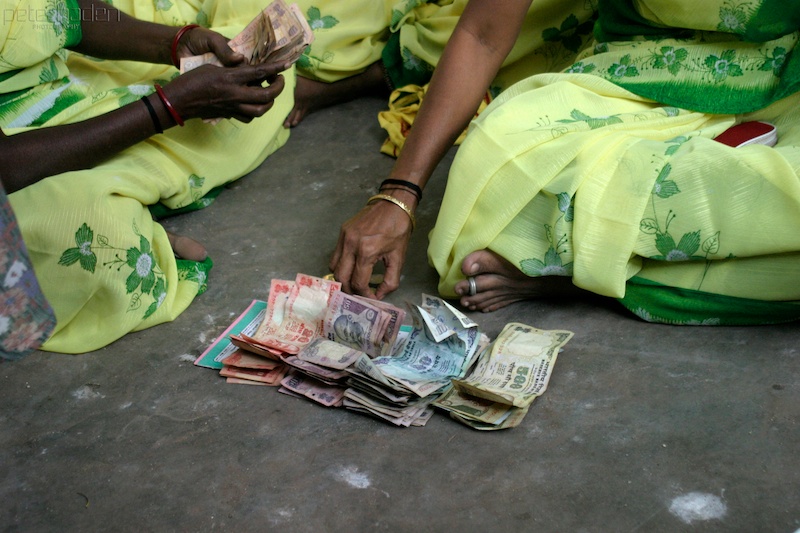
  Microfinance has been widely hailed as one of the most innovative tools for fighting against poverty. It has generated global attention over the last two decades, especially since the UN declared 2005 the ‘Year of Microcredit’ and the 2006 Nobel Peace Prize was awarded to microfinance pioneer Muhammad Yunus and the Grameen Bank. This led to a significant expansion of the sector in the last decade. According to the World Bank (2015), the microfinance industry is estimated to have $60-100 billion in loans outstanding, and several thousand microfinance organizations reach an estimated 200 million clients. 32.5 million of these clients are in India and 90 percent of them are women.
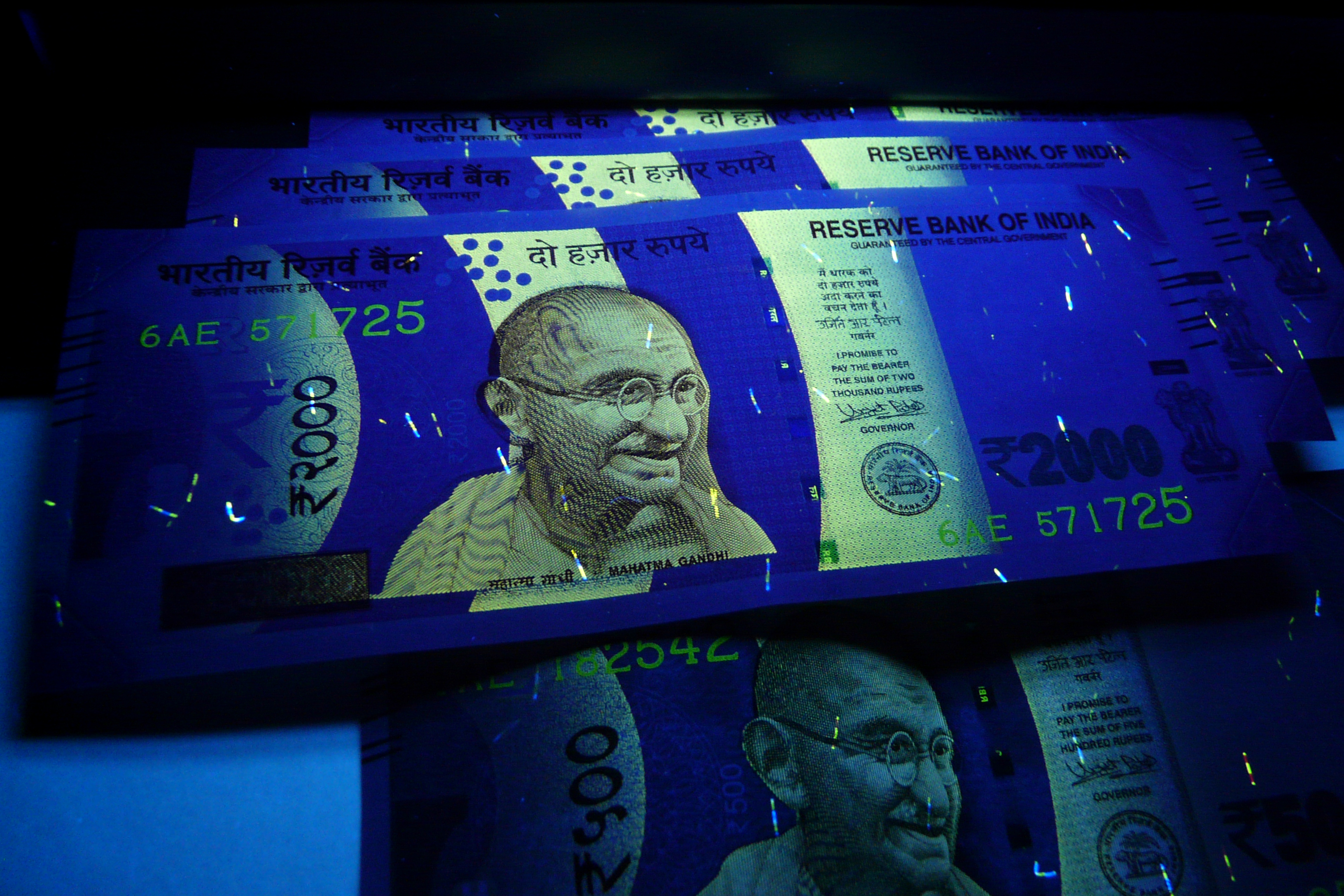 On 8th November, 2016, the Indian government announced that it was banning the use of 500 and 1000-rupees currency notes from midnight, effectively scrapping 86% of India’s currency notes by value. The Indian public would have to change the outlawed currency notes for new ones at bank counters by the end of the year.
 A decade has passed since the Global Financial Crisis (GFC) which seems an apt time to begin talking about the event that has pushed the concept of financial education to the core of global policymaking debates. Despite its growing popularity today, financial education has existed in the premise of global policymaking for the past few decades. The benefits of financial education seem endless; poor national financial literacy levels have been blamed for adverse socioeconomic effects such as high national household debt and/or a general irrational exuberance in financial consumption behaviour (see e.g.
