Private Equity in the Global South: Locusts? Vampires? The contagion effect

The effectiveness of private equity has been a subject of ongoing debate in countries of the Global North. There is substantial evidence highlighting the extractive practices associated with private equity operations across Western nations. Examples include the decline of the British high street and the financial instability of local councils in the UK, particularly in the provision of child care. Similarly, in the United States, private equity has been linked to the attrition of an already fragile healthcare system. In France, Germany and the UK., its influence has contributed to the deterioration of care homes, raising significant concerns about its broader social and economic impact.

In a recent blog, Michael Roberts characterized private equity as “vampire capital“, encapsulating the widely recognized critique that private equity firms function through a rentier model. These firms are frequently associated with practices such as asset stripping, worker lay-offs, and opting for excess leverage that increases the debt burdens of their acquisitions, all while failing to provide compelling evidence of value creation. This perspective aligns closely with earlier criticisms of private equity. During the 2000s, private equity operations were similarly likened to a swarm of locusts, reflecting widespread disapproval of their extractive and often detrimental economic practices.

In summary, such analogies emphasize the aftermath of private equity operations, leaving behind “carcasses and barren landscapes.” Nevertheless, the evidence of a hollowed-out socio-economic landscape in the Global North has not deterred the international expansion of private equity into countries of the Global South. On the contrary, ongoing reports of American private equity capturing British markets have emerged in tandem with the globalization of Western private equity. In so-called “emerging markets,” this expansion manifests in various forms, including an enthusiasm for deploying “moral money” through international development initiatives.

This article examines the role of private equity in Global South countries, focusing on three key characteristics: the escalation of indebtedness, the weakening of public markets, and the public subsidy function of development finance in facilitating private equity investments.

Read More »

Post-Conflict Recovery and Trade Explainer

The Gender and Trade Coalition was initiated in 2018 by feminist and progressive activists to put forward feminist trade analysis and advocate for equitable trade policy.

This article is the second in a series of short, Q&A format ‘explainers’ unpacking key trade issues produced for the Gender and Trade Coalition by Regions Refocus. It was written by Senani Dehigolla (Regions Refocus), Erica Levenson (Regions Refocus), Anita Nayar (Regions Refocus), Nela Porobić (WILPF), and Fatimah Kelleher (Nawi–Afrifem Macroeconomics Collective). Read the full article here and catch up on past explainers here.

  1. Does Trade Enhance Post-Conflict Recovery?

Post-conflict contexts can refer to a spectrum of situations of violent political conflict (both inter-state and within states) which share similar considerations for reconstruction and development. Countries recovering from conflict wrestle with the challenges of sustaining peace while restoring their economies, rebuilding devastated social and physical infrastructure, and providing basic services to people whose lives have been upended by displacement and insurmountable loss (Cohn and Duncanson 2020; Mallett and Pain 2018). Many realities do not reflect the static term ‘post-conflict’, as conflicts can restart and end at different times in different parts of a country (Mallett and Pain 2018; Turner, Aginam and Popovski 2008). While trade may provide opportunities for exports and economic growth, unfettered trade liberalization can be counter-productive to domestic industries’ recovery and does not necessarily benefit affected populations or lead to lasting peace (Kurtenbach and Rettberg 2018; Langer and Brown 2016; Oxfam 2007).

According to the infamous McDonald’s theory of peace, no two countries that both have a McDonald’s have ever fought a war against each other; this is because they are assumed to engage in free trade with one another and, therefore, a war would threaten both of their economies (Friedman 2000). Adhering to this theory, the World Trade Organization (WTO) Trade for Peace Programme highlights the role of trade and economic integration in promoting peace and security. It presents post-conflict contexts as a new opportunity to generate profit for multinational corporations (MNCs) based on the argument that integration into the multilateral trading system leads to stability and economic well-being.

In reality, turning post-conflict recovery into a one-size-fits-all outcome can lead to violent and incomplete re-integration into the global economy (Kurtenbach and Rettberg 2018; Langer and Brown 2016; Mallett and Pain 2018). This directly affects disarmament, demobilization, and reintegration (DDR) programs on the ground which are critical to rebuilding post-conflict societies (Woodward 2013). Conflict can be further fueled by economic activities, with MNCs at worst capitalizing on conflict and post-conflict contexts to increase land grabs and labor rights violations, and at best continuing with business as usual despite the conflict (see for example Abed and Kelleher 2022; Frynas and Wood 2001).

Opening recovering domestic industries to highly competitive global markets can lead to the elimination of local economic actors and the further weakening of domestic industries, which deepens inequalities within and between countries (Krpec and Hodulak 2019). Even while some post-conflict countries such as Sri Lanka and Uganda have benefited from trade liberalization according to macroeconomic indicators, their GDP growth has failed to produce jobs for domestic populations, thereby neglecting to heal post-conflict wounds (Mallett and Pain 2018, 265). While trade liberalization may facilitate reintegration into the economic system, the same cannot be said for trade liberalization’s ability to facilitate the recovery of “the conditions of people’s lives nor a society’s recovery from war” (Cohn and Duncanson 2020, 5).

Read More »

If the Washington Consensus was really over, what would that look like for development strategy?

If it still looks like a duck, swims like a duck, and quacks like a duck – then it probably still is a duck.

Recent years have witnessed a notable re-embrace of the state’s role in the economy, leading some to declare that the set of free market economic policy reforms widely known as the Washington Consensus has come to an end.

First popularized by U.S. President Ronald Reagan and U.K. Prime Minister Margaret Thatcher in the 1980s, the Washington Consensus policies offered a set of policy guidelines for developing countries, many of which were struggling with high debt and high inflation at the time. These free market reforms included trade and financial liberalization, privatization, deregulation, the removal of capital controls, fiscal austerity (cutting public spending) in order to achieve strict targets for maintaining low inflation and low fiscal deficits, the adoption of independent central banks, and deregulating restrictions on foreign investment, among others. Broadly speaking, the policies sought to roll back the role of the state in the economy and unshackle the animal spirits of the free market. In the 1980s, adopting the policies became binding conditions for developing countries to receive debt relief and new lending by the International Monetary Fund (IMF) and World Bank, in the 1990s, the policies served as the basis for World Trade Organization (WTO) membership rules – and ever since then, the policies have become a cornerstone of the curricula in economics departments at universities across the world.

Read More »

Neoliberalism and global development before and after the Washington Consensus: Agricultural credit at the World Bank

We’ve witnessed a revival of debates about the Washington Consensus and the future of neoliberalism in recent months. Recent increases in public spending have led several commentators to conclude, or lament, that decades of neoliberal consensus have been shattered. Much of this debate is misguided, rooted in a mistaken dichotomy between ‘states’ and ‘markets’, and a corresponding conception of neoliberalism as primarily involving a reduction in the role of the former. Efforts to rehabilitate the Washington Consensus, meanwhile, rely on flimsy and heavily ideological counterfactuals.

In this post, I want to take up another angle on this question, asking: what is ‘the market’ in practice? In particular, I take a closer look at the emergence of the idea that ‘interest rates should be market-determined’. This was a core tenet of the ‘Washington Consensus’ in John Williamson’s original formulation. It was also, historically, a key argument of neoliberal economists. From the early 1970s, several influential pieces (e.g. McKinnon 1973; Shaw 1973) urged the deregulation of interest rates, arguing that while usury caps were intended to assist small farmers, they wound up forcing banks to concentrate on relatively low-risk loans to government or large-scale industry.

In practice, though, the relatively simple proposition that ‘interest rates should be left to the market’ invited a whole range of difficult questions and political challenges.

In a recent article in New Political Economy tracing the history of World Bank agricultural credit programmes (Bernards 2021), I show how neoliberal approaches to development have never really involved ‘shrinking the state’ and unleashing markets so much as fraught and failure-prone efforts to figure out who and what should be governed by, and how to construct, markets.

Read More »

Understanding development in a Global Value Chain World: Comparative Advantage or Monopoly Capital Theory?

By Benjamin Selwyn and Dara Leyden

The recent period of globalisation – following the collapse of the Eastern bloc and the integration of China into the world economy – is in essence the period of global value chains (GVCs). From low to high-tech, basic consumer goods to heavy capital equipment, food to services, goods are now produced across many countries, integrated through GVCs.

The big question in development studies is whether this globalised reconfiguration of production is contributing to, or detracting from, real human development? Is it establishing a more equal, less exploitative, less poverty-ridden world? To understand these complex dynamics, scholars rely on economic theories. These theories must be relevant to the GVC-world and equipped to tackle these pertinent questions.

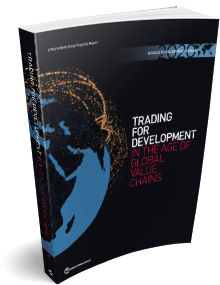
In 2020 the World Bank published its World Development Report Trading for Development in the Age of Global Value Chains (WDR2020, or ‘the Report’) to address these questions. It confidently proclaimed that ‘GVCs boost incomes, create better jobs and reduce poverty’ (WDR2020: 3). Given the World Bank’s promotion of neoliberal globalisation, this conclusion is unsurprising.

However, before accepting the Report’s claims at face value, we should reflect on the findings of Robert Wade (2002: 220). These annual World Bank reports serve as “both a research-based document and a political document…. the Bank’s flagship message must reflect back the ideological preference of key constituencies and not offend them too much, but the message must also be backed by empirical evidence and made to look technical”.

When globalisation is booming it may be possible for the report’s liberal bias to appear to complement its data. However, the GVC world has generated such inequalities that the dissonance between the report’s liberal bias and its own data is stretched to breaking point.

Drawing on our recently published article, this blog post uses the Report’s own data to undermine its core claims. It shows that the GVC world enhances the dominance of transnational corporations (TNCs), concentrates wealth, represses the incomes of supplier firms in developing countries, and creates many bad jobs – with deleterious outcomes for workers.

Read More »

A new Washington Consensus on the role of the state?

By Ilias Alami, Adam Dixon and Emma Mawdsley

In a recent op-ed, Martin Sandbu of the Financial Times argues that “the conversion by the IMF and World Bank to support the activist state would put Saul of Tarsus to shame.” According to him, we may be witnessing the rise of a new Washington Consensus, which embraces deficit spending (by rich countries), “temporary solidarity surtaxes” on the rich and businesses, green public investment, and other forms of government intervention. This is not only to address the short-term effects of the pandemic, but also to stimulate demand across the world economy. Sandbu finds evidence of this new consensus in the benign view that the IMF has taken on Biden’s “rescue package”, and claims that “the new Washington consensus could prove as politically powerful as the old one.” In another op-ed in October 2020,

Sandbu characterised this new consensus as follows:

“After 1945, the guiding assumption was, first, that the state knew best, then that the private sector was best. We are about to transcend both, in favour of an economic worldview based on finding ways in which government intervention can guide the private sector to perform better. In that sense, economic planning and the activist state are back.”

It is indeed striking that the IMF, the World Bank, the OECD, the G20, and other multilaterals, have adapted their discourse on the role and place of the state in development. This predates the COVID-19 pandemic. In an open access paper recently published in Antipode, we document the emergence of this new vision of the state in development and outline its key features. Since the early 2010s, these institutions have produced a remarkable wealth of material explicitly concerned with old and new forms of state ownership and intervention. Witness, for instance, this November 2020 EBRD Transition report titled The State Strikes Back, or this chapter dedicated to state-owned enterprises in the IMF 2020 Fiscal Monitor. Our analysis of such policy documents and others suggests that we are witnessing a gradual yet fundamental reorientation of official agendas and discourses about the state. This emerging vision embraces a fuller role of the state in development (than the post-Washington Consensus), including as promoter, supervisor, and owner of capital. Our analysis expounds the material context in which this vision is emerging. Two interrelated transformations are particularly important.

Read More »

The Washington Counterfactual: don’t believe the Washington Consensus resurrection

By Carolina Alves, Daniela Gabor and Ingrid Harvold Kvangraven

Decades of research have documented the devastating impacts of the Washington Consensus in the developing world. Yet revisionist accounts of this story have emerged in recent years. Remarkable amongst these, a recent blog post by the Peterson Institute for International Economics –  “Washington Consensus stands the test of time better than populist policies” – draws on research that is jaw-droppingly ideological and flawed. 

Read More »

The pathology of economics

COVID-19 exposes the deadly dominance of neoclassical economics in Africa.

On February 24, 2021 Ghana received a vaccine shipment (600,000 doses), the first to sub-Saharan Africa under the COVAX facility. It amounted to a tiny fraction of the hundreds of millions needed on a continent increasingly ravaged by the pandemic. Contrast this to the tens of millions already vaccinated in the UK and US. The optimism that Africa would be spared by “early lockdown”, “less dense population, “the effect of ultraviolet”, “a climate that meant people spent more time outside” and “Africa’s youthful population” has rapidly faded. Officially there are now more than 100,000 deaths on the continent, but the real numbers are much higher due to the paucity of testing and the lack of capacity to accurately track and evaluate causes of mortality.

The shortage of tests and vaccines are exacerbated by the West’s hyper-nationalism restricting the import of these two vital tools to combat the pandemic. The same forces have also generated a scarcity of personal protective equipment (PPE), the lack of monoclonal antibody and other treatments, and terrible shortages of medical oxygen so vital to keeping people alive. How is it possible, 60 years after independence, for African countries to be so highly dependent on the goodwill of the outside world for basic health goods? A good deal of the answer lies in the pathology of economics and related policies, which have spread like a pandemic globally and have come to dominate both the West and the continent of Africa. How did this come about? How does it relate to the strategies that have undermined African capacities to mitigate the effects of the pandemic on the health and welfare of its people? And what should be done?

Read More »