The burgeoning scholarship over the past several decades documenting youth stalled in their quest for adulthood, the scholarship on waiting, on restless underemployed laborers buying time in the informal economy, on the crisis of African masculinities, on the accumulating material and psychic pressures of unmet familial and community responsibilities – all these are ways of depicting the longue durée of failure best contextualized within the beguiled patriarchal promise of colonial civilizing missions: the breadwinning wage.
In this blog, I draw from my recent book, A Man among Other Men: The Crisis of Black Masculinity in Racial Capitalism, to explore how socioeconomic forces particular to the postcolonial African city induce a permanent state of pressure among young men at the interrupted point of social becoming. Observing that the crisis of work is also a crisis of masculinity, I historicize the pressures of late capitalism in African cities – namely, surviving in informal economies – within the longue durée of the wage economy. I show how the introduction of wage labor during European colonial rule produced at its outset an overwhelmingly unachievable male breadwinner norm. The salary was both an entitlement and a source of intense pressure as it produced a novel form of patriarchal privilege but also the social and domestic responsibilities that came to collapse manhood with this exceptional, and exceptionally rare, form of economic activity. Examining these pressures within the long shadow of colonialism critically illuminates the role of race-making and racial difference in the emergence of financial expectation and deeply personalized societal failure among contemporary urban African men.
“At its best, one of the most creative activities is being involved in a struggle with other people, breaking out of our isolation, seeing our relations with others change, discovering new dimensions in our lives … it [is] a powerful collective experience”.
Silvia Federici, 1984
News broke on the very last day of 2022 that members of the New School’s part-time faculty (PTF) union – ACT-UAW 7902 – had voted to ratify a new five-year contract, following what some are calling the longest adjunct strike in American history (Hamberg, 2022). A ’tentative agreement’ was reached on December 10th, after almost a month of strike action where more than 1,600 PTF members had taken to the picket line. Their existing contract had expired, and there was no sign of a satisfactory renewal. The dispute was multifaceted, but primarily concerned poor pay, uncompensated labour time, general job security and health insurance coverage.
The agreement solidified a historic pay increase (the largest PTF at the New School have ever received), as well as an enhanced offer for paid family leave, improved terms for annualisation, compensation for labor performed outside of the classroom and improvements in health care access (Hamberg, 2022). Whilst there is much to be celebrated in these gains, for the New School community this was a month-long struggle marked with uncertainty, tension, and growing hostility. The disconnect between the university’s administration and its community of faculty and students was made painfully, publicly evident. Observers couldn’t help but call hypocrisy on an institution founded on radical values employing “corporate union-busting tactics … antithetical to [its] progressive heritage” (Hamberg, 2022).
Much can be gleaned from this contained episode: the state of higher education following a period of its incessant marketisation; the power of organised labour to rally against exploitation; the role higher education specifically can play in a wider workers’ movement. This blog post will attempt to place the New School’s recent ACT-UAW 7902 strike in its wider context, that of an (inter)national worker movement, both within the higher education sector and beyond. By doing this, I will elicit some of the unique contributions academics, other university workers and students themselves can offer such a movement.
The trajectory of mainstream economics can be understood in terms of how the discipline historically responded to moments of crises by attempting to “theoretically fix” the understandings related to five core “questions” of capitalist political economy – namely land, trade, labour, state, and legal-institutional framework. This involved legitimising improvements in land that led to the dispossession and the destruction of the commons, justifying free trade based on comparative advantage as opposed to mercantilist state intervention, reducing labour to a factor of production that was supposedly rewarded based on its marginal productivity and hence not being exploited, legitimising state intervention to stabilise capitalism and developing a legal-institutional framework to protect markets from popular democratic pressures. These “theoretical fixes” served to ideologically legitimise, preserve, and perpetuate the core content of capitalist social relations even as it corresponded with the modification of the surface-level appearances of capitalism.
Contemporary land grabs and agricultural investments have generated huge attention. The transformations in land tenure, production and social reproduction in the aftermath of land rushes have generated a richliterature. A central question is about labor, and its implications for structural transformation and agrarian futures.
Extraversion, exports and the labor question
In Senegambia, the intersecting pressures of food, land, and capital were historically linked to the quest for new labor and cash crops (cotton, then groundnut, followed by fresh fruits and vegetables) in frontier markets for Europe. Some of these transformations have been widely documented by Egyptian economist Samir Amin, Senegalese historian Boubacar Barry and American historian Sven Beckert. In 1819, the Ndiaw Treaty between France and the leaders of the Waalo Kingdom (in northern Senegal) was signed, allowing France to set up three agricultural bases in northern Senegal for export. This agricultural colonization project failed mostly because of the resistance of the inhabitants of the Waalo Kingdom (the Waalo-Waalo) and the inability of French colonial leaders to secure land concessions they thought were automatically and permanently transferred to them through the treaty. The Waalo leaders, who managed the land on behalf of their community, understood otherwise. This conflicting interpretation on how land is governed became a recurrent source of conflict.
Another problem was the shortage of labor—the Waalo-Waalo refused forced labor and preferred to cultivate their subsistence crops rather than those for export. This refusal led to the return of clandestine slave trade and related abuses. The insecurity created by Waalo’s neighbors and the resistance of merchant capital added to the failure. These are key to understanding how various historical dynamics have sedimented to make the Senegal River Valley Region (historical Waalo) the site of the land rush that began in 2007-2008, especially for the production of export fresh fruits and vegetables.
Revisiting this rich history offers us a better understanding of relations of exploitation and contemporary resistance to extractivism by a number of communities in this region. It is a reminder of the violence of primitive accumulation, a violence that is ongoing. Tanzanian historian Issa Shivji puts it well:
The early encounter of Africa with Europe was not commercial involving the exchange of commodities, but rather the unilateral looting of human resources. African slavery was neither a trade, nor a mode of production. It was simply a robbery of a people on a continental scale perpetrated over four centuries through force of arms.
Despite the subsequent attempt to develop new crops in 1826 in Saint-Louis, merchant capital eventually prevailed with the failure of agriculture. As a result, post-colonial leaders “inherited a country organized by and for merchant capital” after 1960 as Catherine Boone puts it. In the same vein, Koddenbrock, Kvangraven and Sylla note how merchant capital subsequently established colonial and post-colonial structures of extraction.
Beyond processes of land acquisition, it is important to pay attention to how land becomes capital and how agricultural workers are included, excluded, or rather adversely incorporated into these agri-food networks.For instance, in her 2011 essay on land grabbing in Southern Africa, Ruth Hall provides a useful typology of agricultural transformations from subsistence to capitalist imperatives. Besides models that are based on the displacement of primary producers and the establishment of large export-oriented agricultural estates, Hall emphasizes “commercialization in situ” and “outgrower” schemes whereby petty commodity producers and other land users are incorporated into commercial value chains. This is a further invite to go beyond eurocentrism and methodological nationalism in our analyses of the genealogy of capitalism and of processes of exploitation.
Global value chains (GVCs) “boost incomes, create better jobs and reduce poverty,” according to the World Bank. Since the collapse of the Eastern Bloc in 1991 and the reintegration of China into the global economy, world trade has become increasingly organized through GVCs. For example, the components and inputs for Apple’s iPhone, an icon of contemporary capitalist globalization, are made by millions of workers in over fifty countries.
Transnational corporations (TNCs) — labeled “lead firms” in the academic literature — established GVCs as part of their competitive strategies, outsourcing existing work or starting up new activities in countries where labor costs were cheap. State managers across the Global South increasingly gave up on establishing integrated domestic industries and sought instead to enter GVCs as component suppliers. Today, over four hundred fifty million workers are employed in GVC industries.
Many prominent figures suggest that these systems of production and distribution represent radically new development opportunities. As the former secretary general of the Organisation for Economic Co-operation and Development (OECD), Ángel Gurría, claimed:
Everyone can benefit from global value chains . . . encouraging the development of and participation in global value chains is the road to more jobs and sustainable growth for our economies.
The academic Gary Gereffi, the intellectual father of GVC analysis, asserts that development across the Global South requires supplier firms “linking up with the most significant lead firm in the industry.”
In reality, GVCs are a great boon for some of the world’s biggest companies, but not for their workers. It would be more accurate to describe many GVCs as global poverty chains.
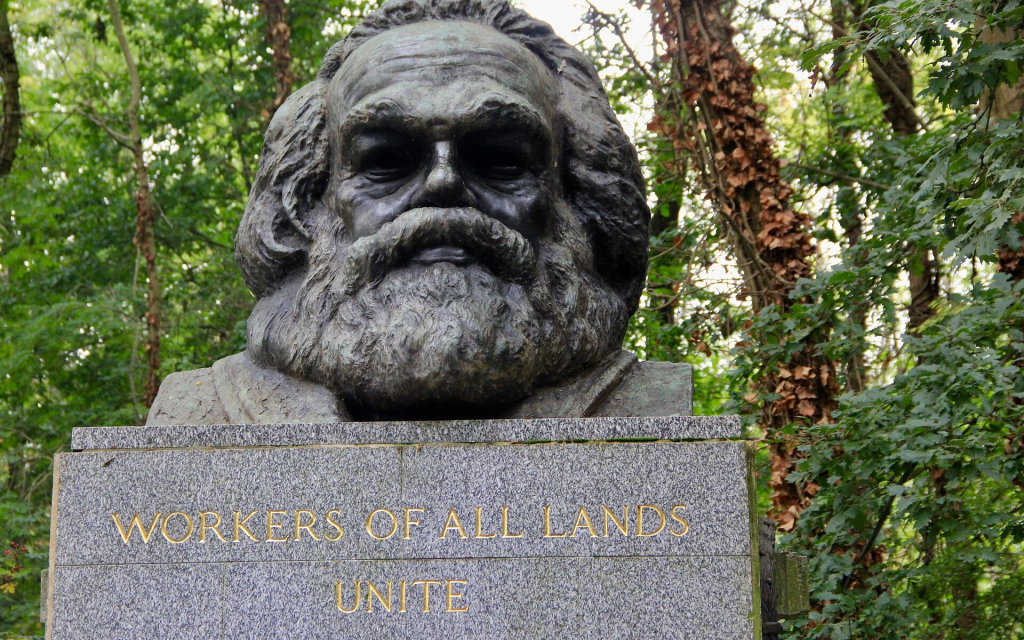
It is widely believed that Marx did not systematically consider the role of colonialism within the process of capital accumulation. According to David Harvey, Marx concentrated on a self-closed national economy in his main work. Although he did mention colonialism in Part 8 of Capital Volume 1 on the so-called primitive accumulation, this would only belong to a pre-history of capital, not to its everyday development. Based on a similar assumption, some postcolonial scholars criticise Marx for being Eurocentric, even a complicit supporter of Western imperialism, who ignored the agency of non-Western people.
If we read some passages from the Manifesto we could think that they are right. How can we explain otherwise Marx and Engels praising the role of the bourgeoisie drawing even the most barbarian nations into civilisation or the view that the liberation of colonised peoples depended on the victory of the revolution in Europe?
Before I start, let me make a short premise. In my first book I read Marx’s Capital in the light of his writings and articles on Ireland, China, India, Russia, and the American Civil War. At the time I believed that Marx only published a significant, but still limited amount of writings on the colonial question, those available in the Collected Works and in collections like Marx & Colonialism. But then in 2007 I worked at the Berlin-Brandenburg Academy of Sciences and Humanities, contributing to the complete edition of Marx’s and Engels’s writings. I thus “discovered” some of Marx’s 20,000 print page long notebooks (just to give you an idea, the printed notebooks alone would look like a new Collected Works). These writings show that Marx was interested in colonialism all his life, including when he wrote the Manifesto.
What came out of my reading? Let me start with the question of Marx’s field of analysis in Capital Volume 1. To analyse capital reproduction ‘in its integrity, free from all disturbing subsidiary circumstances’, Marx treats the world of commerce as one nation (1976: 727) and presupposes the full worldwide imposition of the capitalist mode of production. Does this mean that Marx analysed a “self-enclosed national economy” as Harvey and others believe? In my view, this abstraction means exactly the opposite. Marx’s positing a coincidence between the national and global levels is a premise for conceptualising the world market, which includes both internal and foreign markets of all nations participating in it. This abstraction makes it possible to include expansionism into the analysis of capital accumulation. In this framework, a country’s economic system is not confined within its national borders but consists of all production branches where capital is freely transferable, including the colonies and dependent economies.
If I had to describe three central characteristics of the Indian economy—its three defining features in the neoliberal period—they’d be i) premature de-industrialization and expansion of the services sector, ii) growth in the absence of formal job-creation, and instead an explosion of informality, and iii) the declining share of agriculture in value added even as its share in employment remains sizeable. In June-July 2019, I did intensive fieldwork in Sangli, a village in Rewari district in southern Haryana, to make sense of the ways in which these processes interact with agrarian change and play out for agrarian households, i.e. the contemporary Agrarian Question [1].
Sangli is in Haryana, where Green Revolution techniques (high yielding seed varieties, chemical fertilizers and pesticides, and agricultural machinery like tractors and threshers) were adopted early on. It also happens to be close to the industrial belt that extends from the national capital Delhi to its surrounding districts, where foreign capital has congregated in the neoliberal era. This makes it an interesting place to study processes of generation and re-investment of agrarian surpluses, and to peer into the relationship between “modernized” agriculture and neoliberal industrial and urban growth that has dwarfed the rural economy.
The race to pay drivers as little as possible is underway in Indonesia. In this competition, the participants are platform companies in online transportation services, such as Gojek, Grab, Shopee Food, Maxim, InDriver. Some researchers argue that competition between platform companies will create equilibrium prices, also called a race to the middle, which is considered positive.
This positive assessment of the platform’s inter-corporation competition is rooted in the neoclassical economic notion of perfect competition. In this theoretical framework, it is assumed that competition equalizes supply and demand to create a balance of goods prices, wages, and profits; the results of which will create mutual benefits. Therefore, the preconditions for such competition are emphasized as important from a policy perspective. These preconditions include strong legal systems to support the operation of the ‘free’ market and the minimization of state intervention, which is thought to distort market price signals.
However, the story of perfect competition is far removed from how competition actually plays out. Indeed, capitalism is not as harmonious as the neoclassical framework suggests. This has led to the recognition of imperfect competition within the neoclassical framework. Stiglitz, for example, sees that markets may not work perfectly because of information asymmetries. The Marxist economist Anwar Shaikh has proposed an entirely different view of competition. For him, what takes place in capitalism is not perfect competition, but real competition. In a real competition framework, there is competition between companies to cut production costs so as to enable them to lower commodity prices below those of their competitors. With lower prices compared to their competitors, their commodities tend to be chosen by consumers. This means that competition is a fight to beat rival companies, which often leads to a process of centralization: the strong get stronger and the weak get competed out of the market.