On the perils of embedded experiments

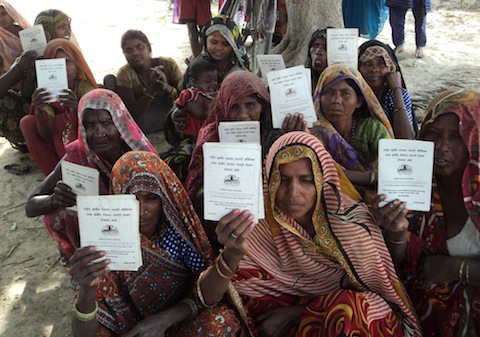
There is growing interest in ‘embedded experiments’, conducted by researchers and policymakers as a team. Aside from their potential scale, the main attraction of these experiments is that they seem to facilitate speedy translation of research into policy. Discussing a case study from Bihar, Jean Drèze argues that this approach carries a danger of distorting both policy and research. 

Evidence-based policy is the rage, to the extent that even village folk in Jharkhand (where I live) sometimes hold forth about the importance of ‘ebhidens’, as they call it. No one, of course, would deny the value of bringing evidence to bear on public policy, as long as evidence is understood in a broad sense and does not become the sole arbiter of decision-making. However, sometimes evidence-based policy gets reduced to an odd method that consists of using randomised controlled trials (RCTs) to find out ‘what works’, and then ‘scale up’ whatever works. That makes short shrift of the long bridge that separates evidence from policy. Sound policy requires not only evidence – broadly understood – but also a good understanding of the issues, considered value judgements, and inclusive deliberation (Drèze 2018a, 2020a).

Enormous energy has been spent on the quest for rigorous evidence, much less on the integrity of the process that leads from evidence to policy. As illustrated in an earlier contribution to Ideas for India (Drèze et al. 2020), it is not uncommon for the scientific findings of an RCT to be embellished in the process. This follow-up post presents another case study that may help to convey the problem. It also illustrates a related danger – casual jumps from evidence to policy advice. The risk of a short-circuit is particularly serious in ‘embedded experiments’, where the research team works ‘from within’ a partner government in direct collaboration with policymakers.

The case study pertains to an experiment conducted in Bihar in 2012-2013 and reported in Banerjee, Duflo, Imbert, Mathew and Pande (2020)1. This is a large-scale, influential experiment by some of the leading lights of the RCT movement – indeed, a formidable quartet of first-rate economists reinforced by one of India’s brightest civil servants, Santhosh Mathew. The high technical standards of the study are not in doubt, and nor is the integrity of the authors. And yet, I would argue that something is amiss in their accounts of the findings and policy implications of this study.

Read More »

Neoliberal capitalism and the commodification of social reproduction, from our home to our classroom

It is official: we are getting ready for another round of industrial action in the UK higher education sector. For those who may be wondering what the current UCU national strike 2021-22 is all about, a short recap may help. Higher education UCU members are striking because of planned pensions cuts that risk pushing academic staff into ‘retirement poverty’; to fight against ever-growing labour casualisation in universities; and because of the growing inequalities of gender, race and class the UK higher education sector has nurtured in the last five decades. Colleagues at Goldsmith – to whom we shall extend all our support – are also fighting against planned mass staff redundancies.

We – higher education workers and students – were on this picket before, so many times, fighting other policies deepening the process of commodification of education. We were on this picket fighting cuts in real wages – which education workers are still experiencing. We were on this picket to fight against the trebling of university fees for our BA students. At SOAS, where I work, we were on this picket to fight against cuts to our library, against Prevent, against the deportation of SOAS cleaners on campus ground – an event which remains the darkest chapter of SOAS industrial relations and for which the university has not yet apologised in recognition of the harm caused to the SOAS 9 and to all our community. We hope the school will acknowledge the need to do so, so that we can move forward, together.

We were at other demonstrations and on other picket  lines, protesting against austerity, in the aftermath of the 2008 financial crisis, against climate change, against racism and in support of Black Lives Matter, against gender violence. The picket really is a sort of archive, which can be consulted backward to reconstruct a history of attacks to our rights – at work, at home, or both.

And if we consult this archive, we can clearly see a pattern emerging in the last decades, a pattern which in fact connects neoliberal Britain with many other places in the world economy, which have also experienced processes of neoliberalisation. All the pickets and demonstrations, become a sort of tracing route; we can reconnect the dots spread across a broader canvas. These dots design a specific pattern; that of a systematic attack to life and life-making sectors, realms and spaces.

Neoliberal capitalism, starting from the 1980s, has promoted a process of systematic de-concentration of resources in public sectors, and particularly in so-called ‘socially reproductive sectors’, that is those that regenerate us as people and as workers. This attack has been massively felt in the home, which has become a major battleground for processes of marketization of care and social reproduction. The withdrawal of the state from welfare provisions, the rise and rise of co-production in services (i.e. the incorporation of citizens’ unpaid labour in public service delivery;  a practice further cheapening welfare) –  and processes of partial or full privatisation of service delivery in healthcare and education have generated massive reproductive gaps. These gaps have been filled through outsourcing of life-making to others. Homes have become net users of market-based domestic and care services. The in-sourcing of nannies, au-pairs, and elders carers, from a vast number of countries in the Global south and transition economies have remade the home as a site of production and employment generation, at extremely low costs.

Read More »

(After) Neoliberalism? Rethinking the Return of the State

By Ishan Khurana and John Narayan

A number of commentators have recently suggested neo-liberalism is dead, or is in a process of retreat. During the disruption of global commodity chains caused by the Covid 19-pandemic, free-market policies that have dominated the global economy for the past 40 years appear to have less purchase. Here, authors point to a reversion to a national form of capitalism and protectionism, the questioning of globalization and return of state intervention in the economy. A prime example is the Biden regime’s approach to the US economy, which has turned to deficit driven social spending, expansion of union rights and protectionist measures to public procurement. This hasn’t come out of nowhere – with the neo-liberal global economy being zombie-like since the 2008 global financial crisis.

The fracturing of the global economy along national lines may herald conflict and a new cold war between the US and China. However, the retreat of neo-liberalism also seems to offer a possible opening – through a critique of globalization and a return of the state. Here, a rejuvenated politics of the left may be able to avoid the pitfalls of an emergent authoritarian capitalism and launch a new national form of progressive politics around welfare policies such as the Green New Deal and Universal Basic Income in locations such as the UK and US.

Neo-liberalism is in trouble, but missing from these debates about its demise is a discussion of neo-liberalism in the Global South and, thus, the reality of what the crisis of neo-liberalism means for all rather than simply those within the Global North. 

Read More »

Living in the shadows of Dubai

Figure 1:. Dubai Marina, an affluent residential area in New Dubai. Photograph by Jonathan Ngeh, 2015.  

By achieving economic success while embracing market friendly policies: lower taxes, free trade, privatization and deregulation, Dubai has earned the reputation as a neoliberal success story. As it is typical of neoliberal economic policies, economic growth has not trickled down to the people at the bottom of the socio-economic pyramid. Rather, inequality has been reenforced, and Dubai consists of two distinct parts: ‘Old’ Dubai housing and representing the distressed and economically disadvantaged, and ‘New’ Dubai where the economically and politically powerful live (see Figure 1 and 2).  Existence of poverty alongside wealth puts pressure on both poor and rich city residents. Among the poor, the kind of pressure they face usually is related to the lack of money to provide basic needs for themselves and their dependents, as highlighted in Dawson’s remarks on Johannesburg (Dawson 2020). On the other hand, the rich (and also the poor) face pressure caused by challenges that are psychological or social or both. Drawing on ethnographic fieldwork with mostly African migrants in Dubai in 2015 and 2020, focusing particularly on their housing and labour market conditions, this piece’s central argument is that the extreme inequality in Dubai puts economic pressure on low-income migrants, the city’s poorest residents, while the juxtapositions of poverty and wealth right next to each other exert psychological pressure on the wealthy by instigating fear of low-income migrants because of crime concerns.

Figure 2: Deira, a district in Old Dubai where many low-income migrants live. Photograph by Jonathan Ngeh, 2015.  

With migrants accounting for over 80 percent of the population in Dubai and the UAE (de Bel-Air 2015, United Nations Department of Economic and Social Affairs 2019), the city and country stand out as a leading immigration destination in the world. While some of the Africans I encountered in the UAE travelled for studies or tourism, the vast majority of them had migrated for economic reasons–in search of employment or with the intention to establish their own businesses. Convinced by the prospects of greener pastures in Dubai, these economic migrants spent their savings to pay for the migration journey. In some cases, migrants or family members borrowed money at high interest rates to cover the cost of migration. In either case, the financial obligations of African labour migrants in Dubai increased because of migration. Upon arrival in Dubai, they were shocked to realise that opportunities are limited and the living conditions for the majority of migrant workers are unbearable.

Read More »

World Development under Monopoly Capitalism

Photo: do bicycles come from? Source: WDR2020, Figure 1.1, pp. 16.

One of the main effects (I will not say purposes) of orthodox traditional economics was…a plan for explaining to the privileged class that their position was morally right and was necessary for the welfare of society.

—Joan Robinson1

The recent period of globalization—following the collapse of the Eastern bloc and the reintegration of China into the world economy—is one where global value chains have become the dominant organizational form of capitalism. From low to high tech, basic consumer goods to heavy capital equipment, food to services, goods are now produced across many countries, integrated through global value chains. According to the International Labour Organization, between 1995 and 2013 the number of people employed in global value chains rose from 296 to 453 million, amounting to one in five jobs in the global economy.2 We are living in a global value chain world.3

The big question is whether this global value chain world is contributing to, or detracting from, real human development. Is it establishing a more equal, less exploitative, less poverty-ridden world? Which political economic frameworks are best placed to illuminate and explain the workings of this world?

Recent critical scholarship has applied monopoly capital concepts and categories to the analysis of global value chains. John Bellamy Foster and others have illuminated how global value chains represent the latest form of monopoly capital on a world scale.4 John Smith shows how surplus-value transfer and capture—from workers in poorer countries to lead firms in northern countries—is portrayed by mainstream economists as “value added” by those firms.5 Intan Suwandi analyzes how global value chains are enabled by, and also intensify, differential rates of worldwide labor exploitation.6

Mainstream advocates of global value chain-based development tend to ignore such critical analyses, and continue to preach the benefits of global value chain integration by drawing on examples and data that support their claims. However, it says much about the anti-developmental dynamics generated by global value chains when a World Bank report advocating global value chain-based development actually provides data that supports the analyses of the aforementioned critical authors.

Here, we interrogate the data used and the claims made in the World Bank’s World Development Report 2020, titled Trading for Development in the Age of Global Value Chains (WDR2020, or “the report”).7 While the report portrays global value chains as contributing to poor countries’ development through job creation, poverty alleviation, and economic growth, we reveal how its data shows the opposite.8

Read More »

The Struggle for Development

This post is adapted from the preface for the newly published Turkish edition of The Struggle for Development, first published in 2017. The original edition aimed to root development thinking and practice in the analysis of class relations, and intellectual and political support for labouring class struggles. Turkey is experiencing numerous social struggles that illuminate the relevance of the arguments in this book. It is my hope that this book contributes to illuminating the social, developmental, value of these struggles.

Collective struggles by labouring class communities – in and beyond the workplace – have the capacity to generate real human developmental gains for these communities. Consequently, these struggles and the labouring classes that pursue them, should be considered as developmental.  

The majority of development thinking across the political spectrum – whether theoretically or policy focussed – tends to downplay labouring classes, their struggles and the gains they generate.  Rather, such struggles are usually ignored or are portrayed as obstacles to development, because they do not adhere to dominant capitalist notions of development. 

Capitalist notions and strategies of development take many forms, and can be thought of as existing along a spectrum – from more market-led/neoliberal, to more state-directed forms. In this book I argue that, despite notable differences, these forms of development represent varieties of capital-centred development. Here capital accumulation is prioritised as the basis of economic and human development. As I show in this book, both market led and state led forms of development are based upon the assumption that labouring classes represent an objective input into the development process, rather than a subjective agent of development. This assumption legitimates labour exploitation and repression for the greater ‘good’ of capital accumulation.  

Read More »

Investment, Sustainability, Decent Jobs: Challenges and Promises for the Sub Saharan African Auto Industry

In a comparative research recently conducted for IndustriALL Global Union/ FES South Africa, we[1] tried to shed light on the high potential of the automotive industry in Sub Saharan Africa. At the same time, we explored the key challenges and pressing issues that need to be addressed for a sustainable industrial development path in the region. Our research report focuses on seven countries, identified as promising, fast-growing or broadly committed to supporting their Auto sector: Ghana, Kenya, Ethiopia, Namibia, Nigeria, Rwanda and South Africa.

First and foremost, the report claims attention towards these economies, and industries,  that are still largely underexplored, that still enjoy very limited visibility, whereas the largest portion of research on industrial development and on the Automobile industry is often addressed to traditionally established industries in the Global North (Europe, US, Japan) or to emerging giants in the Global South (China, Mexico, Brazil etc.). Our objective was thus to emphasise the increasingly important role that these seven industries, and the Sub Saharan African region more broadly, can play within the Global Auto Industry. Despite structural weaknesses that do persist, and despite the heavy impact of the Covid-19 pandemic, these seven countries share a willingness to own their industrial development trajectory, and to widen their participation in Global Production Chains. In this regard, the local auto industry remains an important bet.

Read More »

Informal employment and the social reproduction of value

In the last year, the rise and spread of the COVID-19 pandemic has laid bare the fictitious nature of some of the categories we deploy to conceptualise the world of labour. Indeed, it has revealed the contingent nature of the separation between productive and reproductive spaces, times and realms when it comes to labour processes.

According to estimates produced by Janine Berg, Florence Bonnet, and Sergei Soares, when the crisis hit, around 30% of North American and Western European workers were in occupations that could allow home-based work, as opposed to only 6% of sub-Saharan African and 8% of South Asian workers. This is to say that in the Global North, the pandemic could de facto manufacture million homeworkers overnight, following national lockdowns. In many cases, these would still be contributing to formal sectors of the economy.

It is rather unsurprising that this shift to homeworking could not materialise in the Global South. Labour relations here are largely characterised by informal employment, in its double character – namely, employment in the informal economy and informalised employment in otherwise formal settings. While homeworking represents one segment of informal employment, its major share is composed instead of precarious forms of casual employment, far more difficult to immediately insource in home-settings. By the time the crisis hit, according to the ILO, informal employment constituted 69.6 percent of employment in the Global South and, given the share of working people it hosts, it constituted over 60 percent of total employment on our planet.

One of the key characteristics of informal employment is the interpenetration between productive and reproductive dynamics, activities and realms. The ever-growing reality of informal employment forces us to reflect and revise theories of value generation and extraction, and ultimately the basis of exploitation worldwide. That is, they force us to re-engage in the study of key Marxian categories of analysis, in ways that may account for how the majority on earth labours. These ways must necessarily account for the centrality of social reproduction in the working of labour processes and relations worldwide.

Read More »