
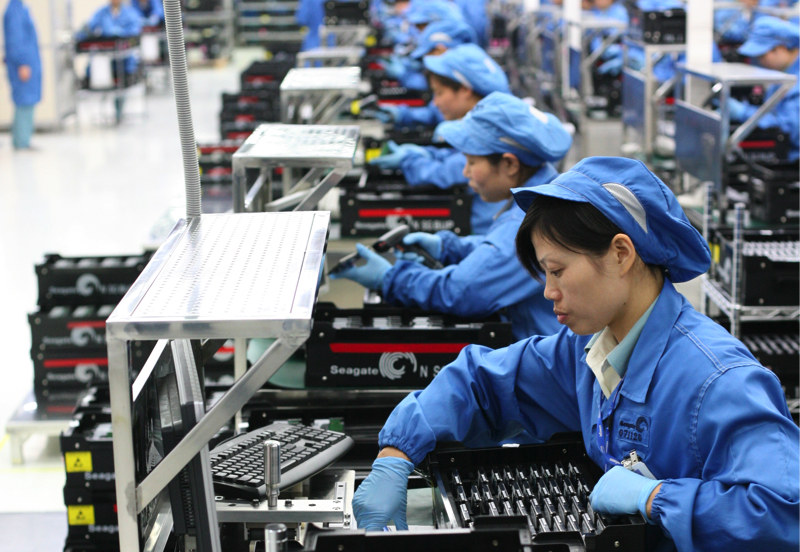
In two previous posts on this blog, I’ve discussed the issue of premature deindustrialization and some of its possible consequences. In a recent paper, I, along with co-author Bret Anderson of Southern Oregon University, explored the potential consequences of premature deindustrialization further by examining the possible connections between premature deindustrialization and the defeminization of industrial employment. Premature deindustrialization is a situation in which the shares of manufacturing value added and employment begin to shrink at per-capita income levels much lower than those of the early industrializers, along with manufacturing employment peaking at lower levels. The scarce manufacturing jobs that do remain, however, are likely to be relatively high paying jobs that countries and workers compete for. In our work, we assessed whether premature deindustrialization is a feminizing or defeminizing force in industrial employment. By examining 62 countries from 1990 to 2013, we find that premature deindustrialization is likely to amplify the male bias of industrial upgrading.Read More »

 Recent research suggests that late industrializers have not been following previously observed patterns in terms of sectoral change and employment, but the effect of these changing structural patterns on well-being and the distribution of gains from growth has not yet been systematically examined. There is a global shift towards both lower employment in industry at all levels of income per capita and de-industrialization, the shift from manufacturing to service employment, taking place at significantly lower levels of income (See work by
  Developing Economics