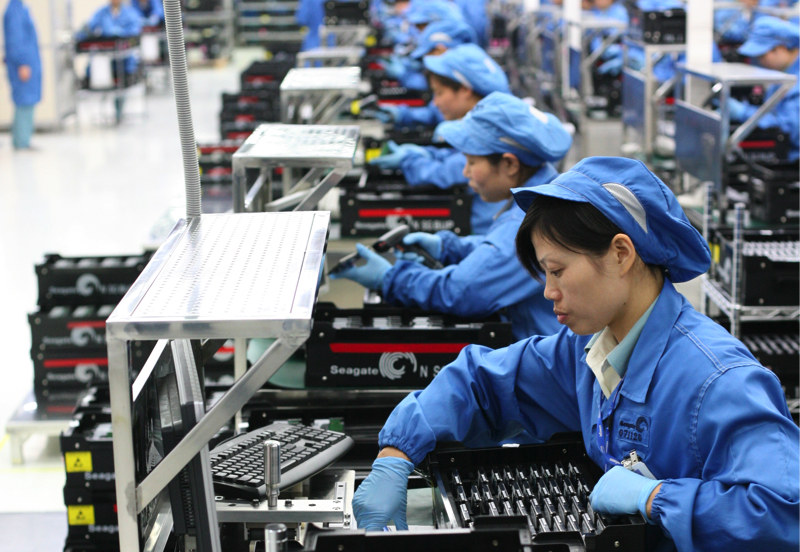
 Recent research suggests that late industrializers have not been following previously observed patterns in terms of sectoral change and employment, but the effect of these changing structural patterns on well-being and the distribution of gains from growth has not yet been systematically examined. There is a global shift towards both lower employment in industry at all levels of income per capita and de-industrialization, the shift from manufacturing to service employment, taking place at significantly lower levels of income (See work by Timmer, de Vries, and de Vries; Subramanian; and Rodrik here, here, here and here).
Deindustrialization, Employment Generation, and the “Precarization” of Global Labor
There are many reasons why these new patterns may have negative effects on inclusive development; some recent research emphasizes the important role that periods of high levels of manufacturing employment have played in now wealthy countries, and the dearth of wealthy countries that have skipped such a phase; there are concerns about the effects of lower levels of manufacturing output on both growth and employment generation ( See again Timmer, de Vries, and de Vries and Rodrik).Read More »


 Developing Economics