How to adapt to a changing climate is one of the foremost questions of our era. In the last decade, microfinance has shot to prominence as a highly-promoted tool of adaptation to climate and environmental change. In an abridged version of a 2009 report commissioned by the Grameen Foundation and Oxfam US, Dowla argues that ‘within the populations that will be most affected by global warming, the plight of many individuals is linked to the ability of microfinance institutions to adapt to the consequences of climate change’.
With access to already-existing as well as newly-adapted financial products and services, the argument goes that people and communities will be better placed to reduce risk, diversify their livelihoods, and build assets. ‘Green microfinance’ would facilitate adaptation in two key ways: ‘by improving ex-post [after the event] risk recovery’ via coping capacity enhancement, and ‘by improving ex-ante [before the event] risk reduction’ via adaptive capacity enhancement. Recommended strategies include improving access to microcredit for climate change responses as well as promoting insurance schemes to reduce the burden of climate risk on society.
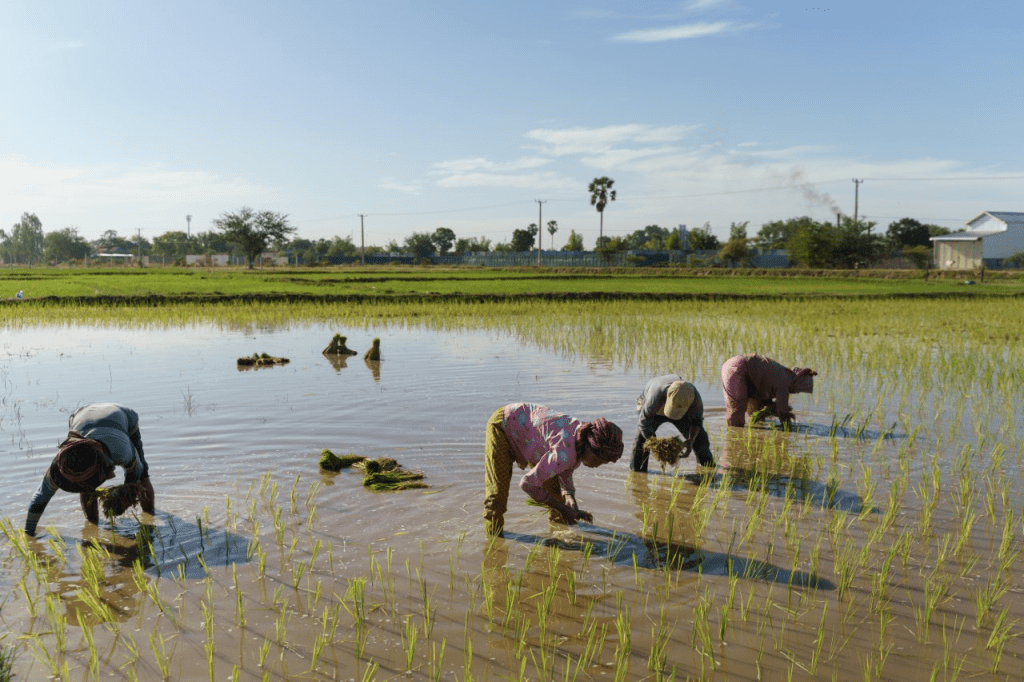
In contrast to these emerging discourses and practices that frame microfinance as a key tool of climate adaptation, our recent research with rice farmers in rural Cambodia finds that microfinance loans are leading to an over-indebtedness emergency that significantly undermines borrowers’ long-term coping and adaptive capacity in a changing climate. Such loans often push households to borrow more, work more, sacrifice food quality and quantity, quit farming, and erode and sell their assets, including land. The cost of financialised coping strategies can trap rural populaces in financial obligations which they struggle to service and which manifests ultimately as over-indebtedness. Microfinance ends up promoting a particular form of climate adaptation: one that is individualised, incremental, and geared towards the further integration of populations into processes of capital accumulation.
This form of adaptation is highly profitable. Indeed, as Dowla argues in that same paper, each new climate-linked shock ‘opens up opportunities for the microfinance institutions and their clients’. Yet the corollary to this profitability is that the costs of such an adaptation tend to be borne by the poor, who find themselves exposed not only to the rigours of the environment but now the global market too.
Read More »

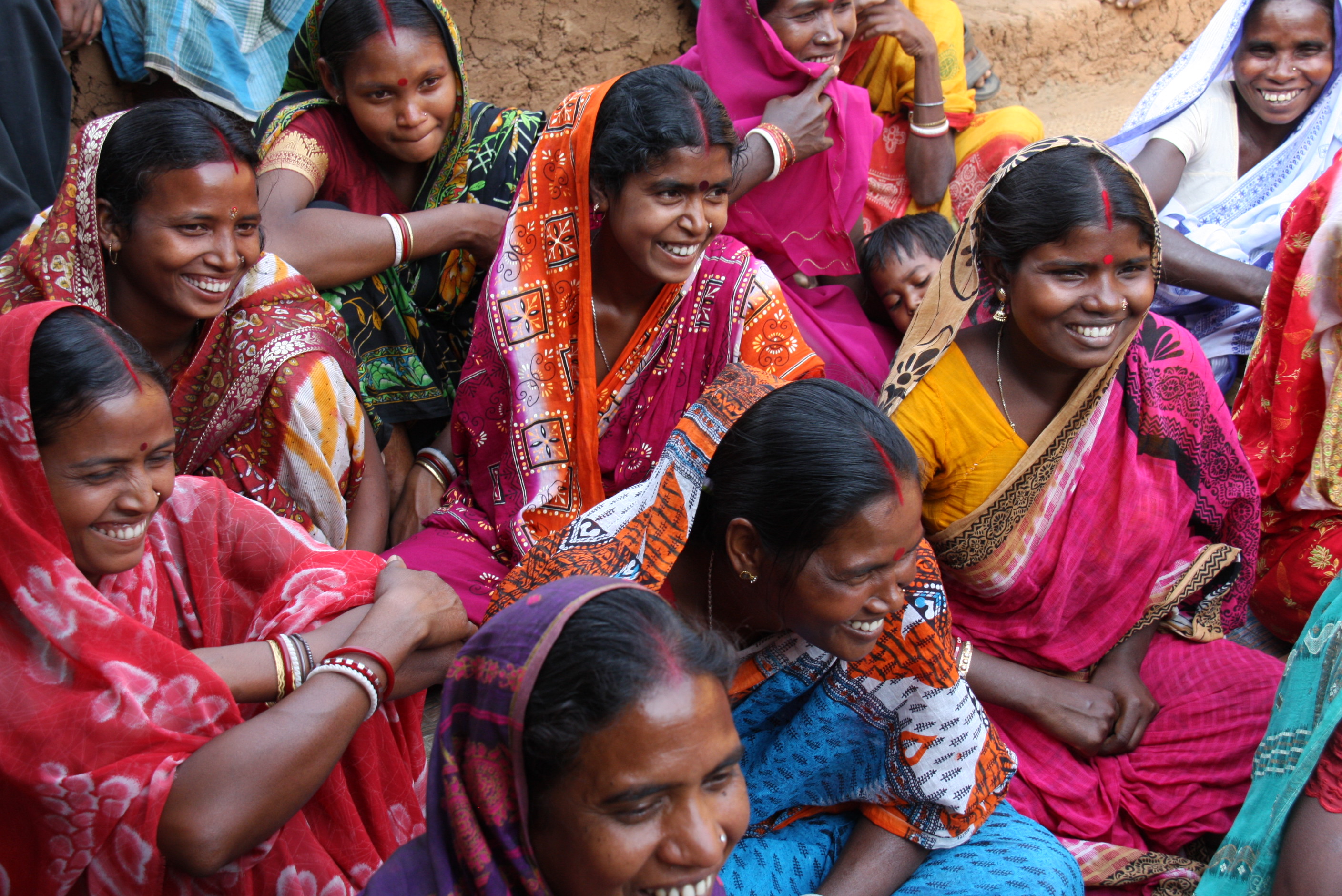 Microfinance has been widely hailed as one of the most innovative tools for fighting against poverty. It has generated global attention over the last two decades, especially since the UN declared 2005 the ‘Year of Microcredit’ and the 2006 Nobel Peace Prize was awarded to microfinance pioneer Muhammad Yunus and the Grameen Bank. This led to a significant expansion of the sector in the last decade. According to the World Bank (2015), the microfinance industry is estimated to have $60-100 billion in loans outstanding, and several thousand microfinance organizations reach an estimated 200 million clients. 32.5 million of these clients are in India and 90 percent of them are women.
 Developing Economics