Colonialism and the Indian Famines: A response to Tirthankar Roy

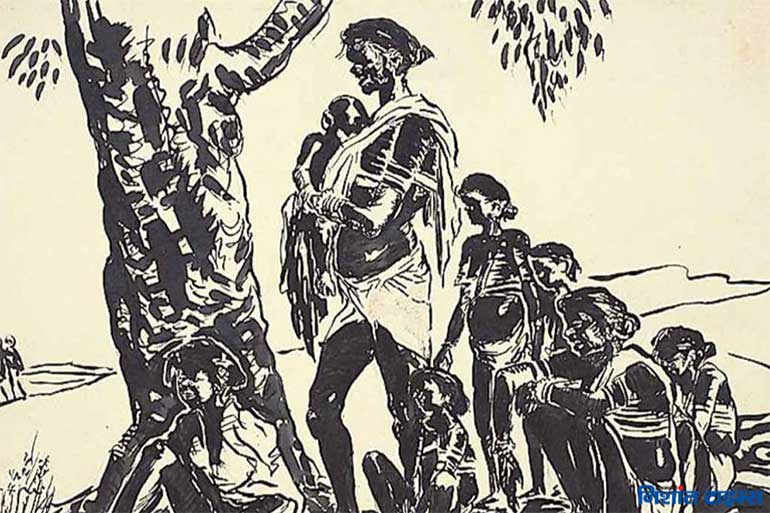
Responding to Sullivan and Hickel’s recently published research article (in World Development) and an opinion article (in Al Jazeera), Tirthankar Roy, points out how the authors are wrong in claiming that British colonial policies caused several famines in India. All that is fine, except that these articles neither investigate nor come up with any original claim regarding the causes of famines in colonial India. The central claim in their research article is that capitalism did not necessarily result in an improvement of human welfare in the 19th century – contrary to the relatively popular belief that it did. In the opinion piece, they argue the same, but solely with a focus on the negative impact of British colonial policies in India in terms of excess deaths, decline in wages and living conditions. In order to support this distinct set of claims, among other supporting evidence and quantitative techniques, Sullivan and Hickel cite one existing claim (from prior literature) that colonial policies induced multiple famines in India. And yet, as the term colonialism has become a triggering point for Roy in recent years, he titles his shadow boxing exercise as “Colonialism did not cause the Indian famines”. If the intention of Roy is to refute Sullivan and Hickel’s original claim, he fails at it miserably. If the intention of Roy is to weaken Sullivan and Hickel’s set of supporting evidence, one may argue that he does so at least partially, but that’s true only for the opinion piece (and not the research article). However, I will argue in this response why Roy fails to achieve even that! This leaves one to speculate Sir Tirthankar Roy’s real intentions, which is not the task of the current article.

Read More »

Amartya Sen’s Work Shows Us the Human Cost of Capitalist Development

Indian economist Amartya Sen has posed a devastating challenge to the dominant capitalist understanding of development. But Sen’s own analytical framework doesn’t go far enough in exposing the inherently exploitative logic of capitalism.

Amartya Sen is one of the most influential thinkers about development in the contemporary world. Since the 1970s, he has published widely across the disciplines of economics and philosophy. He received the Nobel Prize for Economic Science in 1998. In 2010, Time magazine rated Sen as one of the world’s one hundred most influential people.

There is a predominant notion of development trumpeted by international institutions, many academics and journalists, and politicians of most stripes. It holds that economic growth provides the basis for human development. Given that under capitalism, economic growth is for the most part rooted in capital accumulation, “growth-first” notions of development are essentially capital-first notions.

This way of thinking places capitalist firms, managers, and the states that back them at the helm of the human development project. It conveniently excuses the ways in which such growth generates, and is often based upon, novel forms of poverty and oppression for workers. Sen’s writings pose a major challenge to the growth-first/capital-first idea of development.

Read More »

A Multilateral International Monetary System


By Paulo L. dos Santos and Devika Dutt

“One of the chief contributions to peace that the Bretton Woods program offers is that it will free the small and even the middle-sized nations from the danger of economic aggression by more powerful neighbours. The lesser nation will no longer be obliged to look to a single powerful country for monetary support or capital for development, and have to make dangerous political and economic concessions in the process. Political independence in the past has often proved to be sham when economic independence did not go with it.” —Henry Morgenthou Jr (1945)

The world economy has a Dollar problem. Reliance on the currency of a single country as the world’s chief way to organise trade, carry out financial settlements, and store value creates a series of inequitable economic imbalances and policy tensions—both within the US and across the global economy. It bestows disproportionate economic and political power on the US government and financial institutions; exposes world trade and finance to instability and disruptions originating in the Dollar zone; imposes huge costs on the world’s small and even middle-sized nations; and fuels disproportionate growth in the US financial sector, bolstering its influence in that country’s political economy.

A Historical Problem

This problem is not new. In fact, the inability to develop an equitable and genuinely multilateral international monetary system is one of capitalism’s most striking institutional failures, going back to the early days of the industrial revolution. The gold standard of that time and its successors have always privileged some economies at the expense of others, and created policy biases favouring the interests of creditors and capital, at the expense of debtors and wage earners. 

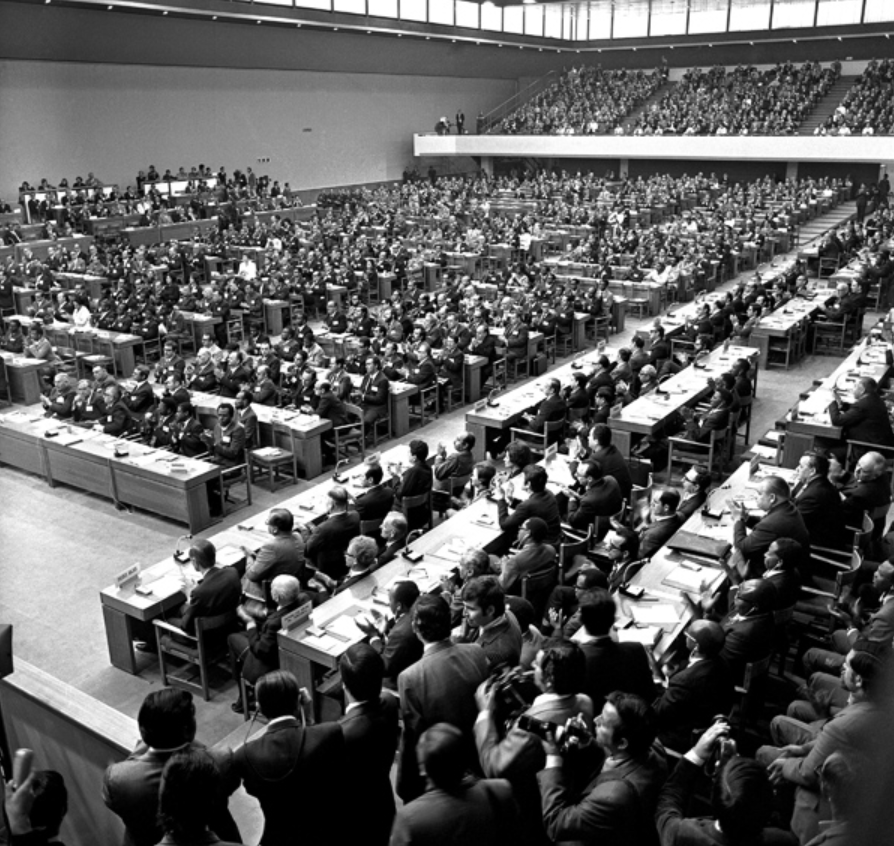
Only once in the history of capitalism did policy-makers from leading capitalist powers even consider the possibility of building a genuinely multilateral, equitable system: during the 1943-44 debates on the post-World-War-II economic order. But despite the aspirations and statements of participants like John M Keynes and then-US Treasury Secretary Henry Morgenthou Jr, the Bretton Woods conference led to the creation of a system centred on the US Dollar, under which foreign central banks could present dollars to the Federal Reserve for exchange into gold. 

That system effectively charged US authorities with the supply of the world’s ultimate international reserves. In this task they were constrained only by the willingness of central banks in other states to hold Dollars instead of gold. As French Finance Minister Giscard d’Estaing put it in the 1960s, this arrangement defined an exorbitant privilege for the US economy, which enjoyed a lot of space for effectively issuing Dollars to acquire goods and assets overseas.

By the late 1960s, it became clear that the US economy could no longer uphold its obligations under the Bretton Woods system. Its steady loss of competitiveness in international trade, fiscal pressures from its protracted, losing war in Vietnam, and increases in social spending in response to domestic political turmoil, led to growing trade deficits, mass outflows of Dollars, and concerns that US authorities would not be able to meet foreign demand for convertibility of greenbacks into gold. In response, the US unilaterally abandoned its commitment to convertibility in 1971.

Coming amidst a series of successful national liberation and anti-colonial struggles across the world, the US’s inability to sustain the Bretton Woods system fed hopes that a new, equitable international monetary order could be constructed. The 1974 call by the United Nations for a New International Economic Order explicitly pointed to the need for a new monetary system centered on the “promotion of the development of the developing countries and the adequate flow of real resources to them” as means to dismantle “the remaining vestiges of colonial domination” and removing the obstacles in the way of international convergence in measures of economic development and living standards.

Read More »

Whose Polycrisis?

‘if God the Father had created things by naming them, Elstir recreated them by removing their names, or by giving them another name’.

Marcel Proust (II, 566)

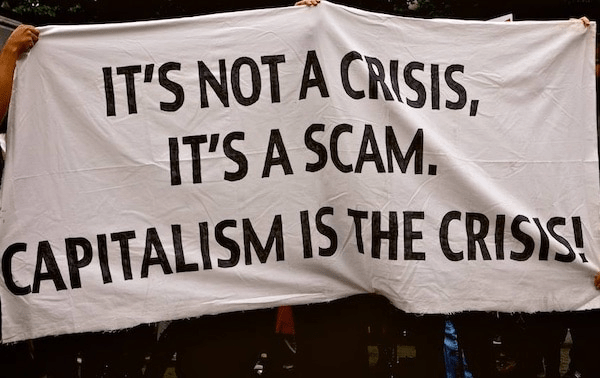
An emerging consensus originated in the US has declared 2022 as the year of the ‘Polycrisis’, with a view to marking the beginning of an era of turbulence and unrest in the global economy.  Under this conceptualisation, recent events including the Covid-19 pandemic, climate change catastrophes, the Russian invasion of Ukraine and the rise in energy and food prices are generally postulated as separate crises, which can have an effect on each other but nevertheless have separate origins.  This centrifugal analysis of events predicates on the decline of the uni-polar world order, as well as acknowledging the emergent structural weaknesses in the traditional western powers; all of which can be loosely interpreted as occurring in a period during which power is dispersing and perhaps as a consequence of this dispersion, the current drivers of crisis have multiplied, leading to a multitude of crises, in contrast to preceding historical instances.

In spite of the current use of the term, the origins of the Polycrisis date further and can be more sparsely contextualised. However, there is no doubt that it has now become an important neologism for conventional western media and policy institutes, especially adopted by Bretton Woods Institutions, as well as other leading investors.

Civil society has also used this term as a neat summary, however, theirs is a critical response and is not interchangeable with how powerful International Financial Institutions (IFIs), policy think-tanks and investors use the term.  In this sense, the instrumentalisation of this neologism, seems to have more value than its meaning, with the discernible possibility that any perceived political mileage of the Polycrisis, is a complete transformation away from its intellectual roots. Nonetheless, as an artefact, the intellectual roots and the political role of the Polycrisis merits an integrated analysis beyond its instrumentalisation. 

A remarkable feature of liberal thought is the tendency towards identification of social phenomena through the selective elevation of their key distinguishing features, which are abstract enough to form ‘systems’ and neutral enough to subsume the inherent contradictions of capitalist development. Pandemics, climate breakdown, wars and global deflationary pressures are not mere externalities of the capitalist system but intrinsic to its operations- long predicted by a diverse group of thinkers. That these events converge in time is a political outcome, subject to planetary limits, not abstract systemisation, as the Polycrisis seems to imply.  

Critical responses to the Polycrisis have pointed towards its disregard in accounting for the long and sustained crisis of the capitalist world order and a resort towards ‘brute empiricism’ to conceptualise things as they appear to be,  rather than questioning what is occurring beneath mere appearances. Prima-facie accounts often seek to capture the zeitgeist in the endeavour to simplify things. However, there is a need to differentiate between simplification and reductionism. As a concept, the Polycrisis is simultaneously all-encompassing as well as abstract.

In an attempt to grasp both these aspects, this short blog starts with a focus on three messages of the Polycrisis: a) the qualitative nature of change, b) the drivers or causes of crises and c) the role of Bretton Woods Institutions in adopting the concept. In addition, the blog proposes an alternative way of understanding the contemporary crisis, which hinges on the decline of the western capitalist model, followed by some thoughts on multipolarity and geopolitics. 

Read More »

The labor of land

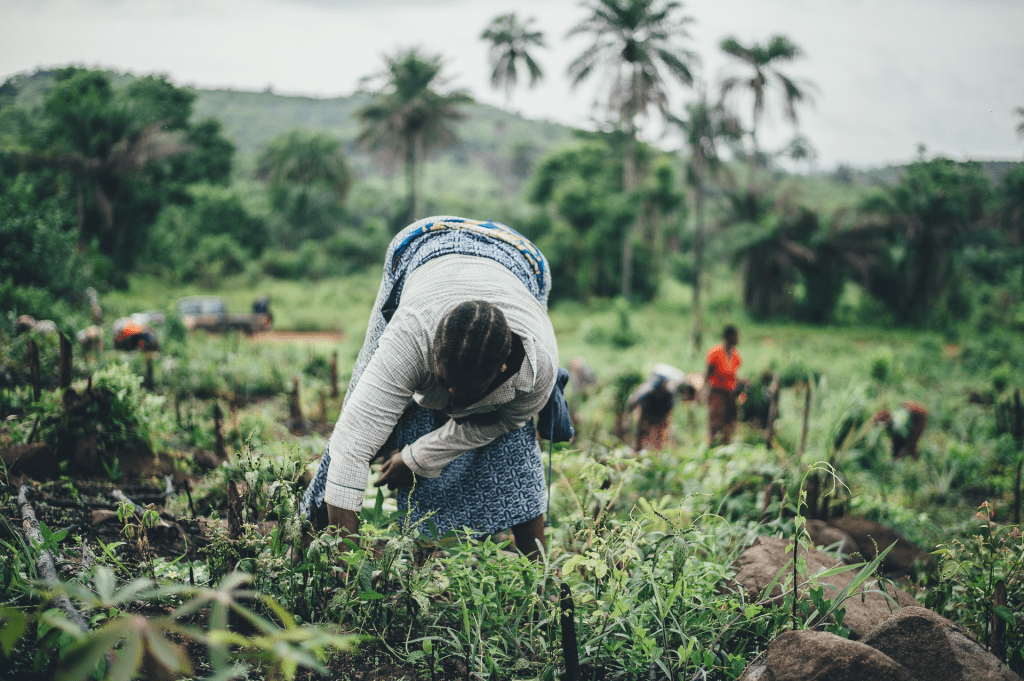
Contemporary land grabs and agricultural investments have generated huge attention. The transformations in land tenure, production and social reproduction in the aftermath of land rushes have generated a rich literature. A central question is about labor, and its implications for structural transformation and agrarian futures.

Extraversion, exports and the labor question

In Senegambia, the intersecting pressures of food, land, and capital were historically linked to the quest for new labor and cash crops (cotton, then groundnut, followed by fresh fruits and vegetables) in frontier markets for Europe. Some of these transformations have been widely documented by Egyptian economist Samir Amin, Senegalese historian Boubacar Barry and American historian Sven Beckert. In 1819, the Ndiaw Treaty between France and the leaders of the Waalo Kingdom (in northern Senegal) was signed, allowing France to set up three agricultural bases in northern Senegal for export. This agricultural colonization project failed mostly because of the resistance of the inhabitants of the Waalo Kingdom (the Waalo-Waalo) and the inability of  French colonial leaders to secure land concessions they thought were automatically and permanently transferred to them through the treaty. The Waalo leaders, who managed the land on behalf of their community, understood otherwise. This conflicting interpretation on how land is governed became a recurrent source of conflict.

Another problem was the shortage of labor—the Waalo-Waalo refused forced labor and preferred to cultivate their subsistence crops rather than those for export. This refusal led to the return of clandestine slave trade and related abuses. The insecurity created by Waalo’s neighbors and the resistance of merchant capital added to the failure. These are key to understanding how various historical dynamics have sedimented to make the Senegal River Valley Region (historical Waalo) the site of the land rush that began in 2007-2008, especially for the production of export fresh fruits and vegetables.

Revisiting this rich history offers us a better understanding of relations of exploitation and contemporary resistance to extractivism by a number of communities in this region. It is a reminder of the violence of primitive accumulation, a violence that is ongoing. Tanzanian historian Issa Shivji puts it well:

The early encounter of Africa with Europe was not commercial involving the exchange of commodities, but rather the unilateral looting of human resources. African slavery was neither a trade, nor a mode of production. It was simply a robbery of a people on a continental scale perpetrated over four centuries through force of arms.

Despite the subsequent attempt to develop new crops in 1826 in Saint-Louis, merchant capital eventually prevailed with the failure of agriculture. As a result, post-colonial leaders “inherited a country organized by and for merchant capital” after 1960 as Catherine Boone puts it. In the same vein, Koddenbrock, Kvangraven and Sylla note how merchant capital subsequently established colonial and post-colonial structures of extraction.

Beyond processes of land acquisition, it is important to pay attention to how land becomes capital and how agricultural workers are included, excluded, or rather adversely incorporated into these agri-food networks.For instance, in her 2011 essay on land grabbing in Southern Africa, Ruth Hall provides a useful typology of agricultural transformations from subsistence to capitalist imperatives. Besides models that are based on the displacement of primary producers and the establishment of large export-oriented agricultural estates, Hall emphasizes “commercialization in situ” and “outgrower” schemes whereby petty commodity producers and other land users are incorporated into commercial value chains. This is a further invite to go beyond eurocentrism and methodological nationalism in our analyses of the genealogy of capitalism and of processes of exploitation.

Read More »

Why global value chains should be called global poverty chains

Global value chains (GVCs) “boost incomes, create better jobs and reduce poverty,” according to the World Bank. Since the collapse of the Eastern Bloc in 1991 and the reintegration of China into the global economy, world trade has become increasingly organized through GVCs. For example, the components and inputs for Apple’s iPhone, an icon of contemporary capitalist globalization, are made by millions of workers in over fifty countries.

Transnational corporations (TNCs) — labeled “lead firms” in the academic literature — established GVCs as part of their competitive strategies, outsourcing existing work or starting up new activities in countries where labor costs were cheap. State managers across the Global South increasingly gave up on establishing integrated domestic industries and sought instead to enter GVCs as component suppliers. Today, over four hundred fifty million workers are employed in GVC industries.

Many prominent figures suggest that these systems of production and distribution represent radically new development opportunities. As the former secretary general of the Organisation for Economic Co-operation and Development (OECD), Ángel Gurría, claimed:

Everyone can benefit from global value chains . . . encouraging the development of and participation in global value chains is the road to more jobs and sustainable growth for our economies.

The academic Gary Gereffi, the intellectual father of GVC analysis, asserts that development across the Global South requires supplier firms “linking up with the most significant lead firm in the industry.”

In reality, GVCs are a great boon for some of the world’s biggest companies, but not for their workers. It would be more accurate to describe many GVCs as global poverty chains.

Read More »

Layers of compounding pressure: the gendered experiences of rural migrant youth in Addis Ababa, Ethiopia

“I have lived everything there is to be lived in this city. Now I need to leave because all that is left for me here is misery and I want a better life for my child.”

It is with these words that Tizita, a 21-year-old mother-of-one from Gojjam in northern Ethiopia, described her dismay at life in Addis Ababa when I interviewed her in 2022. After living in the Ethiopian capital for eight years, she had had enough. Tizita was set on moving to one of the Gulf States, a part of the world from where many of the women she met on the street had returned from and were planning to re-migrate to. Having previously worked as a domestic worker in Addis Ababa, and having learnt that sex work was the only way to make “real money” in the city, the young woman remained focused on meeting the fundamental purpose of her migration project: transforming her life.  

For Fikadu, a 27-year-old man from Wollega in western Ethiopia, the strain of life in the city is similar, yet different. Unlike for young women like Tizita, whose income-earning activities are overwhelmingly limited to domestic work, petty street work, commercial sex work and begging, the fractions of the informal economy available to migrant men are slightly wider. Nevertheless, this is not to say that times have not been hard. Having previously worked as a street vendor selling second-hand clothes, Fikadu has had to downscale his work and is struggling to meet the rising costs of food, rent, sending money to his family of origin, and realising his plans for the future:  

Our supplies disappeared and when they were back, the price went up by more than double. That was the end of it. Now I pay for my life here by selling socks, but I don’t let that dismay me. I remain focused on my plans of transforming my life here, and once things improve I will start saving for my own metalwork shop.” 

The testimonies of Tizita and Fikadu form part of a longitudinal qualitative research project that maps the livelihood strategies of a sample of migrant youth in Addis Ababa at two points in time between 2018 and 2022. Drawing on these findings, this blog outlines some of the ways in which rural-urban migrant youth between the ages of 15-27 experience and counteract pressure. Through an exploration of migrants’ everyday strategies of navigating the city, findings presented here show how dealing with the intricacies of urban life relates intimately to the lives rural youth left behind and the imaginary futures they aspire towards, the ways in which youth relate to the social and economic responsibilities they carry, and the manner in which subjective pressure experienced by women and men has a compounding effect that further exacerbates the challenges migrant youth face.

Read More »

Top posts of 2022

Although many commentators hoped 2022 would be a ‘return to normal’, this year has been anything but that. On Developing Economics, contributors have been grappling with many fundamental issues, ranging from social reproduction, labour exploitation and unrest, the many failuers of contemporary development policies, decolonisation, the food regime, new debt crises and industrialisation. Among the most widely read posts are those that challenge hegemonic thinking about the crises unfolding this year on both the left and right. For example, Farwa Sial’s interview with Max Ajl, Bikrum Gil and Tinashe Nyamnuda challenges the uncritical use of sanctions by the West in the face of Russia’s invasion of Ukraine, and Güney Işıkara’s critique of polycrisis challenges what he deems to be superficial and ultimately inadequate efforts on the left to understand the contemporary crisis of capitalism. Amidst all the hype about returning to normal, contributors on DE also recognize both that pre-pandemic times were also deeply unequal, exploitative, and extractive, which calls for a deeper appreciation of critical scholarship that can help us understand the forces that produce this inequality even in allegedly normal times, and that the crisis responses have been highly unequal across the world.

This year we also launched a new podcast where you can listen to critical scholarship on development and economics in a conversational format. Season 1 is now out and you can listen to episodes on environmental issues, mining, labour, and global value chains.

Here are the top 10 most read posts of 2022:

  1. Sanctions and the changing world Order: Some Views from the Global South (Farwa Sial interviews Max Ajl, Bikrum Gil and Tinashe Nyamunda)
  2. Race to the bottom: Competition between Indonesian food delivery platform companies for cheap gig workers (by Arif Novianto)
  3. (After) Neoliberalism? Rethinking the Return of the State (by Ishan Khurana and John Narayan)
  4. Neoliberal capitalism and the commodification of social reproduction, from our home to our classroom (by Alessandra Mezzadri)
  5. Feminist political economy, land, and decolonisation: Rama Salla Dieng in conversation with Lyn Ossome (by Lyn Ossome and Rama Salla Dieng)
  6. Beating around the Bush: Polycrisis, Overlapping Emergencies, and Capitalism (by Güney Işıkara)
  7. Marx and Colonialism (by Lucia Pradella)
  8. Who’s in control? Wall Street Consensus, state capitalism, and spatialised industrial policy (by Seth Schindler, Ilias Alami and Nick Jepson)
  9. On the perils of embedded experiments (by Jean Drèze)
  10. Ignorance is Bliss: Why should we study Leontief? (by Thair Ahmad)

This is just a tiny, tiny sample of our around 40 posts on the blog this year, so please have a browse through the rest of the blogs too. You can also follow our active blog series on State Capitalism(s) and Pressure in the City, and delve into all COVID-19 related analysis here, and book reviews here. In 2023, Developing Economics will continue to provide much-needed critical perspectives on development and economics. Want to join the conversation?: Become a contributor.