The pressure to provide and perform: Anti-feminism, masculinity consultants, and the threat of male expendability in contemporary Nairobi

Women are the reason why men have changed because women are hard on men. […] The expectations they come with into a relationship, and generally how they have been brought up, or the life they live, that is what gives some men stress. […] When someone is living with a woman in the house, you find that issues are many because money is little.

Wellington Ochieng, 36-year old labor migrant from western Kenya

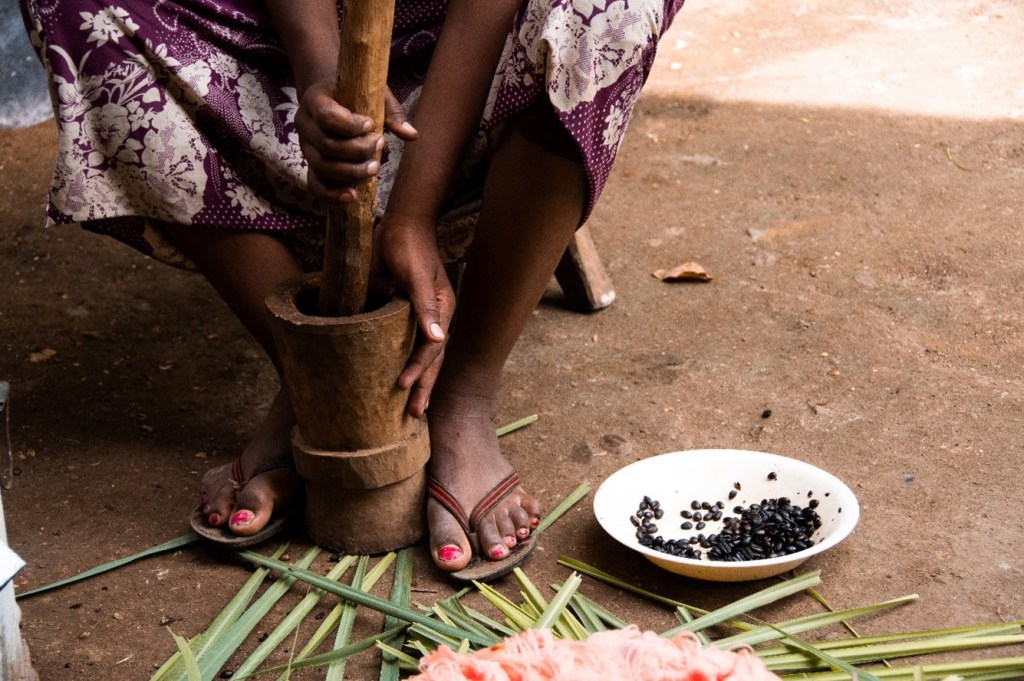
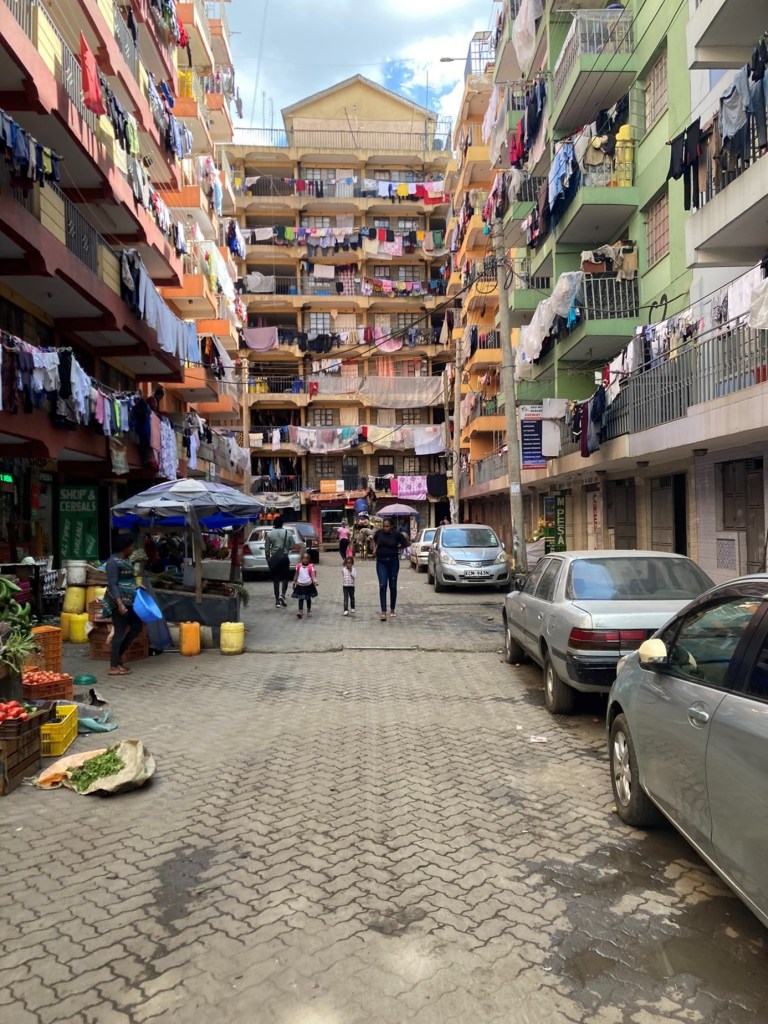
During almost three years of ethnographic fieldwork among male migrants in Pipeline, an over-populated high-rise estate in Nairobi’s chronically marginalized east, I heard complaints like Wellington’s almost daily. Migrant men, in my case predominantly Luo from western Kenya who came to Nairobi with high expectations of a better future, bemoaned a life full of pressure caused by the romantic, sexual, and economic expectations of their girlfriends, wives, and rural kin. The blame often lay on ‘city girls’ who were portrayed as materialistic ‘slay queens’who ‘finish’ men by leaving them bankrupt only to suck away the next sponsor’s wealth after grabbing him with their ‘Beelzebub nails’ as Wellington called the colorful nails sported by many Nairobi women. Soon, so a fear expressed repeatedly by my interlocutors, most men would no longer be needed at all and Kenya’s economy would be ruled by economically powerful women who raise chaotic boys brought up without an authoritative father figure. Such fears of male expendability also manifested in imaginations about a future in which more and more men and women would live in homosexual relationships or ‘contract marriages’ that replace trust and love with contractual agreements. When my flat mate Samuel, a student of economics divorced from the mother of his baby son, returned to our apartment after passing the neighbor’s house where a group of women celebrated a birthday, for instance, he just shook his head and sighed: ‘We live like animals in the jungle. Women and men separately. We only meet for mating and making babies. Maybe that’s where we’re heading to.’ Overwhelmed by their wives’ and girlfriends’ expectations, many migrant men who spoke to me in Pipeline decided to spend as little time as possible in their marital houses. Instead, they evaded pressure by lifting weights in gyms, stockpiling digital loans and informal credits, placing bets in gambling shops, gulping down a cold beer in a Wines & Spirits, playing the videogame FIFA, or catcalling ‘brown-skinned’ Kamba women on the roads. Some men who could no longer cope took even more drastic measures involving murder and suicide. One man, for instance, cut the throat of his girlfriend only to try to kill himself, while another tried to poison himself, later quoting the wife’s actions and character as the cause. Anything appeared better than spending time with the ‘daughters of Jezebel’ who were waiting for them in the cramped houses of Pipeline, sometimes demanding migrant men to engage in romantic and sexual practices they were unfamiliar with as expounded upon by Wellington:

When you come to Nairobi, our girls want that you hold her hand when you are going to buy chips, you hug her when you are going to the house, I hear there is something called cuddling, she wants that you cuddle, at what time will you cuddle and tomorrow you want to go to work early? […] you don’t go to meet your friends so that you show her you love her, you just sleep on the sofa and caress her hair, to me, this is nonsense because that is not romantic love, I think that romantic love, so long as I provide the things I provide, and we sire children, I think that’s enough romance. […] Another girl told me to lick her, and I asked her ‘Why do you want me to lick you?’ She said that she wanted me to lick her private parts. Are those places licked? […] Those things are things that people see on TV, let us leave them to the people on TV.

Figure 1: Pipeline

Read More »

Agricultural production, sectoral imbalances and inflation in Albania: A Kaleckian view

The current remarkable surge in inflation is considered to be a nearly global phenomena (Reinhart and Lucker 2022), affecting both developed and developing nations. While there may be common drivers of inflation, such as factors associated with the Covid-19 pandemic followed by Russia’s invasion of Ukraine, there are considerable variations in the causes of it, especially with reference to developing countries, including Albania. Drawing on Kalecki’s (1976) Essays on Developing Economies, I argue that there are also domestic factors attributed to the increase in inflation that resides in the structural sectoral imbalances of the Albanian economy.  

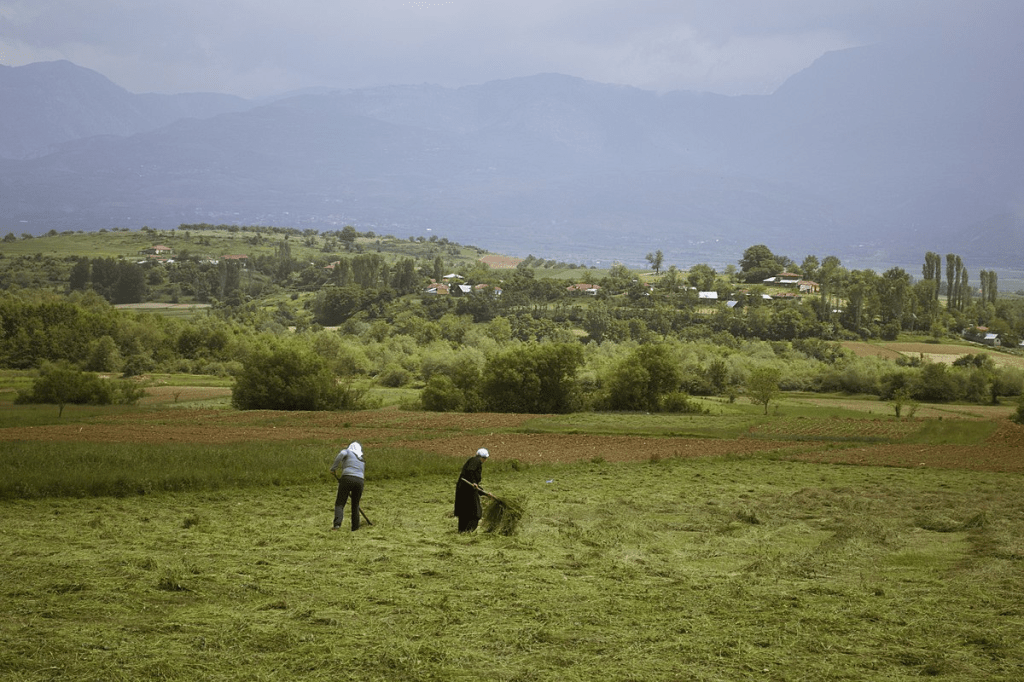
Rising prices in Albania sparked protests across the country in March 2022. The protests highlighted the rise in food prices which increased by more than 9% compared to March in the previous year; with the price of bread being the main contributor to such increase. With Albanians spending more than 42% of their total budget on food, rising prices of ‘necessities’ adds more pressure to the poor households to make ends meet. Nearly a quarter of Albanians, 640,000 people, already live in poverty (Kote 2022) and soaring prices in the economy could push people further into poverty. But what is pushing food prices to soar in a country where agricultural land accounts for 24% of overall land, a good Mediterranean climate, and water resources, all of which are crucial for agricultural development? Despite these favourable conditions, the productive capacity of Albania’s agriculture sector to meet domestic demand for food and feed meets is only one third (World Bank, 2022a).  

Read More »

Dependence and ecology in contemporary Latin America, part 2: Limits to sub-imperial autonomy

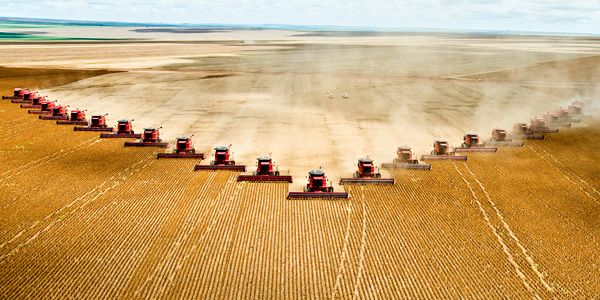
Brazilian agribusiness’s fervour for Soybean cultivation has manifested itself domestically as much, if not more so, than externally, with deforestation accelerating as plantations abound with similar velocity in both the Brazilian Amazon and the Paraguayan Chaco. The domestic intensification of Soybean cultivation can, in large part, be attributed to growing demand from China, the world’s primary soybean consumer (Song et al, 2009). China is the largest market for both Paraguayan and Brazilian soy, with both nations essentially relying on continued Chinese imports to balance their trade deficits (Giraudo, 2020). Accordingly, the impact of Chinese demand on Brazilian agriculture, and on other resource sectors across the region (Ganchev, 2020; Oviedo, 2015), replicates many of the dynamics previously mentioned with regards to Brazilian ‘Subimperialism’ in Paraguay.

As soybeans are typically exported with minimal processing, and monocrop agriculture generates comparatively little employment (Giraudo, 2020), few of the benefits of the soybean supply-chain are appropriated within Brazil. Meanwhile, cheap Brazilian soybeans indirectly support the Chinese labour system by lowering the price of staple foods, especially pork, allowing Chinese manufacturers to keep wages low, thereby maintaining the competitiveness of Chinese exports (Wise & Veltmeyer, 2018). With Chinese demand likely to remain high, it seems inconceivable that either the Brazilian or the Paraguayan economies will wean themselves off of soy and will instead remain conditioned by, and dependent on, the whims of the Chinese industrial system

Furthermore, this integration of soybeans into the Chinese industrial economy exacerbates the existing China-Brazil trade imbalance. 98.4% of Chinese exports to Brazil are manufactures, whilst the majority of Brazilian exports to China are primary-resources, with soybeans representing the single most valuable export-commodity (Jenkins, 2012). Low-price Brazilian commodities thereby fuel an industrial system which exports value-added goods back to Brazil, creating a trade-deficit which entrenches the nation’s dependence on the industrialised core, reproducing the fundamental dynamics observed by dependency theorists in the mid-twentieth century (Frank; 1966; Prebisch, 1962).

Read More »

Dependence and ecology in contemporary Latin America, Part 1: The colonization of Paraguayan soy cultivation by Brazilian business

Though its influence may have waned in recent decades, dependency theory remains an indispensable prism through which to regard the bifurcated, or polarized, development of national economies within the capitalist world-system. This framework, in which the persistence of uneven development is attributable to the interrelation between the industrialised core and the underdeveloped periphery, admits both the geographic and historical scope to adequately tackle the hard problems of political economy and to accurately trace the chains of dependency which inhibit peripheral economies. Through two blog posts, I wish to explore how dependency theory can help us understand various ecologies of dependence in Latin America, including Brazilian agribusiness in Paraguayan soy (this blog post) and the role Chinese industrial demand plays in constraining Brazilian subimperial autonomy in soy cultivation (in the second blog post). In this post, the colonization of Paraguayan soy cultivation by Brazilian agribusiness is used to demonstrate that Sub-imperialist powers can achieve relative autonomy within the periphery by making dependent weaker states in their vicinity.

Read More »

Gendering the debt crisis: Feminists on Sri Lanka’s financial crisis

By Kanchana N. Ruwanpura, Bhumika Muchhala and Smriti Rao

Countless images of women carers flitted through April-July 2022 on Sri Lankan television screens, social media, and newspapers. Carers with young children, mothers with new-borns leaving them with equally young children while they stood in queue for gas or kerosene, children doing their homework on tuk-tuks while their parents got in line for petrol and diesel. Yet, Sri Lankan policy pronouncements rarely mention working-class women. In a country where women comprise 52% of the population, this is astounding. Especially so when the dominant three foreign exchange earners for the country – garments, tea exports and migrant workers to the Middle East – rest on the efforts of women workers. 

In the current response to Sri Lanka’s debt crisis, the voices and needs of working-class women are once again being ignored by policymakers, despite the evidence all-around of women intensifying their unpaid labour even as the conditions under which they perform paid labour deteriorate. 

As feminist economists, our argument is straightforward: debt justice is a feminist value and principle. And at the core of our understanding of debt justice is the principle that working class women cannot be made to pay for the ‘odious debt’ generated by the recklessness and corruption of (almost entirely male) Sri Lankan political elites.

Read More »

Building up debt traps: Risk, climate adaptation and microfinance

How to adapt to a changing climate is one of the foremost questions of our era. In the last decade, microfinance has shot to prominence as a highly-promoted tool of adaptation to climate and environmental change. In an abridged version of a 2009 report commissioned by the Grameen Foundation and Oxfam US, Dowla argues that ‘within the populations that will be most affected by global warming, the plight of many individuals is linked to the ability of microfinance institutions to adapt to the consequences of climate change’.

With access to already-existing as well as newly-adapted financial products and ser­vices, the argument goes that people and communities will be better placed to reduce risk, diversify their livelihoods, and build assets. ‘Green microfinance’ would facilitate adaptation in two key ways: ‘by improving ex-post [after the event] risk recovery’ via coping capacity enhancement, and ‘by improving ex-ante [before the event] risk reduction’ via adaptive capacity enhancement. Recommended strategies include improving access to microcredit for climate change responses as well as promoting insurance schemes to reduce the burden of climate risk on society.

In contrast to these emerging discourses and practices that frame microfinance as a key tool of climate adaptation, our recent research with rice farmers in rural Cambodia finds that microfinance loans are leading to an over-indebtedness emergency that significantly undermines borrowers’ long-term coping and adaptive capacity in a changing climate. Such loans often push households to borrow more, work more, sacrifice food quality and quantity, quit farming, and erode and sell their assets, including land. The cost of financialised coping strategies can trap rural populaces in financial obligations which they struggle to service and which manifests ultimately as over-indebtedness. Microfinance ends up promoting a particular form of climate adaptation: one that is individualised, incremental, and geared towards the further integration of populations into processes of capital accumulation.

This form of adaptation is highly profitable. Indeed, as Dowla argues in that same paper, each new climate-linked shock ‘opens up opportunities for the microfinance institutions and their clients’. Yet the corollary to this profitability is that the costs of such an adaptation tend to be borne by the poor, who find themselves exposed not only to the rigours of the environment but now the global market too.

Read More »

Ha-Joon Chang has exposed the fallacies of neoliberalism

Korean economist Ha-Joon Chang is a brilliant, best-selling critic of neoliberal orthodoxy. But Chang stops far short of taking the necessary next step: questioning the capitalist system itself.

Ha-Joon Chang is a rarity in the contemporary world: an economics professor who is highly critical of the neoliberal free-market orthodoxy, advocates progressive social change, writes and speaks accessibly, and is very, very popular.

Chang’s books have sold millions of copies, and he is a regular contributor to mainstream media outlets. According to Chang himself, his aim is not simply to challenge free-market orthodoxy, but also to support, through his work, the kind of “active economic citizenship” that will demand “the right courses of action from those in decision-making positions.”

While socialists can learn a lot from Ha-Joon Chang’s work, we also need to read it critically and identify some of the gaps in his thinking. Chang’s self-professed aspiration is to promote an alternative form of capitalism, but our goal should be to develop an alternative to capitalism.

Read More »

Beating around the Bush: Polycrisis, Overlapping Emergencies, and Capitalism

It is in vogue nowadays to describe the multifaceted and intertwined crises of capitalism without referring to capitalism itself. Obscure jargon of ‘overlapping emergencies’ and ‘polycrisis’ are brought up to describe the complexity of the situation, and they serve, with or without intention, to conceal the culprit, namely the totality of capitalist relations. This short piece discusses the content, function, and limits of these evasive practices with concrete examples.

A Hodgepodge of Risks

“A polycrisis is not just a situation where you face multiple crises” writes Adam Tooze, it is rather a situation “where the whole is even more dangerous than the sum of the parts” (Tooze 2022a). Even at first sight, he is able to count seven radical challenges on the radar, including Covid, inflation, recession, hunger crisis, climate crisis, nuclear escalation, and a ‘Trumpite’ Republican Party storming back to power.

Former long-time Harvard President, Larry Summers celebrates the term polycrisis for its capacity to capture the many aspects at stake, and adds: “I can remember previous moments of equal or even greater gravity for the world economy, but I cannot remember moments when there were as many separate aspects and as many cross-currents as there are right now” (Summers 2022). Make no mistake, the approval comes from a life-time mouthpiece of the establishment, foe of the working classes and the oppressed, frank enough to argue as the then Chief Economist of the World Bank that “the economic logic behind dumping a load of toxic waste in the lowest wage country is impeccable”.   

In Tooze’s view, in the 1970s, too much or too little growth, or late capitalism could be shown as the ultimate source of the problems at hand depending on one’s political position. What makes the current moment distinctive is the fact that “it no longer seems plausible to point to a single cause” (Tooze 2022b). He is thus quite explicit that one should avoid the use of grand narratives, or, in line with that, the designation of the capitalist mode of production as the root cause of the radical challenges upon us.

Read More »