Beyond ideology, we need an emergency tax for emergency times: What the UK could learn from tax debates in Latin America

Paying for the energy price guarantee has highlighted a deep political cleavage around tax ideology. Reframing windfall as emergency will be critical to leverage a change in direction. 

Tax is always contentious. Debates surrounding who should pay, how much, and where the revenues are redistributed to are the heart of state power and national and global political economies. No one likes paying taxes but seeing tax only through the lens of either powerful interest groups or electoral politics misses the extent to which the contemporary tax debate in the UK, in particular in relation to so-called ‘windfall’ taxes on energy companies is driven by ideology. Ideas of tax – which ones should be levied, at what rate, to whom – are embedded in wider ideas of state and the role of government in socio-economic life. In the UK, political parties that call for higher taxes are associated with an interventionalist and redistributive state, while those who argue for low taxes believe in individual responsibility and markets. But the UK is currently facing an unprecedented economic crisis and the decision not to backdate taxes on the extraordinary profits energy companies have been making to pay for state intervention in energy markets in September 2022 has been based on ideology, underpinned by a set of ideals and ideas, when what is needed is a pragmatic response to an emergency. If opposition parties could move away from the language of ‘windfall’ that suggests the need to ‘punish’ companies for excess profits and speak instead of the need to come together to respond a national emergency, it might have helped them cut through the government’s ideology approach. To do so, there are lessons that can be learned from elsewhere, in this case Latin America.

Read More »

Epistemicides vs Epistuicides: What are we missing in the decolonial movement?

Academia has always been political. On some occasions, it has been appropriated and deployed to meet political ends while in other occasions it has modelled itself to challenge politicisation. In their study of curriculum framework governing economics teaching in Brazilian higher education, Guizzo, et al (2021: 258) show how the idea of a pluralist education system is under threat from a “strong disciplinary, institutional and wider political pressures with both domestic and global roots”. Indeed, the threats towards education systems in the global South often have global as well as local origins. These days, the threat of epistemicides – that is the killing of a people’s knowledge – has displaced and suffocated academic spaces in the global South (de Sousa Santos 2016; Ndlovu-Gatsheni 2018). This killing has taken both subtle and unsubtle forms. One way this has happened has been through dominant and domineering western oriented knowledge production institutions and systems which disregard approaches and writings from the global South.

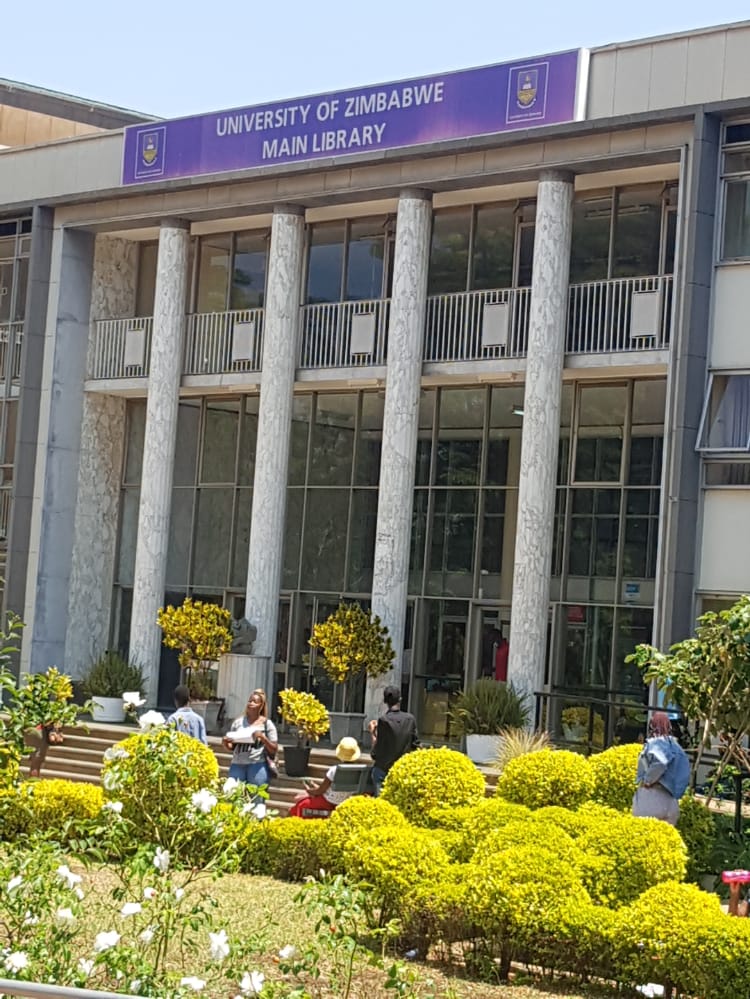
In this discussion, however, I will use the case of the University of Zimbabwe to show how domestic roots have also contributed towards the suffocation of academic spaces. I argue in this piece that epistemicides work together with epistuicides (see Kufakurinani 2022) – a process where a people kill their own knowledge systems. The twin evils of epistuicides and epistemicides have suffocated knowledge production in the global south. Indeed, the problem of a dominant western centric gaze has been a subject of examination by decolonial thinkers. Mainstream journals in many disciplines have been known to promote certain perspectives and specific research approaches at the expense of others.  It is in this context that there has been a huge global movement to decolonise and decentre knowledge systems and knowledge production in many disciplines. Admittedly, decolonisation has become a buzz word over the years to the point of losing meaning. For me, decolonisation is simply about elevating alternative and at times rare voices and perspectives, particularly those from the global south. These voices and perspectives may be parallel or even contradictory to dominant perspectives and voices.

Read More »

Want to understand industrialisation in resource-rich countries such as Uzbekistan? Read Marx (and Iñigo Carrera)

The commodity supercycle of the 2000s and 2010s gave rise to a rich debate in the academic literature about the possibility for resource-rich countries to muster the primary commodity price bonanza for development. As in past debates on the rise of Asia as the ‘world’s factory’, industrial policy was once again at the forefront of discussion.

On the one hand, orthodox scholars insisted that the use of market distortions to channel resources towards industrialisation would be a risky gamble with little guarantee of success. Instead, as the Asian ‘tigers’ and China before them, developing countries would do well to make good use of the market to identify their comparative advantages. In this view, industrial policy continues to be inefficient and wasteful, especially as it creates plenty of opportunities for corruption rather than development. On the other hand, heterodox researchers argued that state intervention was crucial to divert resource rents to specific nascent industries that would never be able to withstand international competition without sustained support. As both the Asian ‘tigers’ and China more recently used robust industrial policy to develop globally competitive industries, developing countries should also use targeted policy intervention to ‘upgrade’ to higher value-added manufacturing for export.

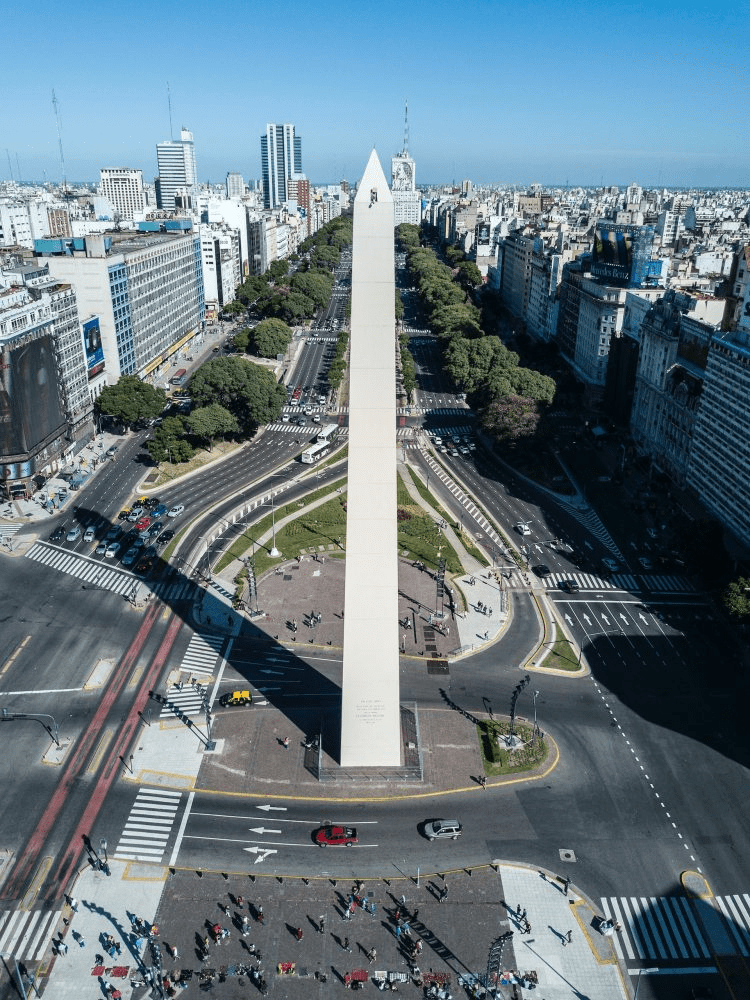
Still, one question that eludes both orthodox and heterodox literature concerns why, for decades, multinational corporations would consistently invest in manufacturing in resource-rich countries such as, for instance, Argentina, Brazil, and Egypt. This has been the case despite the small scale and high costs of production in these markets (making them inefficient, per orthodox scholars), whose output is mostly sold domestically rather than exported (pace heterodox scholars).

In a recently published open access article in Competition & Change, I applied Argentinian scholar Juan Iñigo Carrera’s original elaboration on Marx to the under-researched case study of the car industry in Uzbekistan to answer precisely this question. I found this same orthodox-heterodox binary to dominate the literature on ‘transition’ from the command to the market economy in Uzbekistan, too. Orthodox researchers averred that state-owned auto company UzAvtoSanoat failed to develop due to inefficiency and corruption, in particular due to the distortions of the government’s industrial policy. Heterodox scholars instead found industrial policy to be the very reason behind the creation of a successful export-oriented car industry, in particular during the commodity supercycle when part of total output was exported mostly to Russia. Neither, however, could explain why Korean Daewoo Motor Company (DMC) and American General Motors (GM) entered into a joint-venture with UzAvtoSanoat, despite the small domestic scale (hence high costs) of automobile production in the country, which is mostly purchased domestically.

Read More »

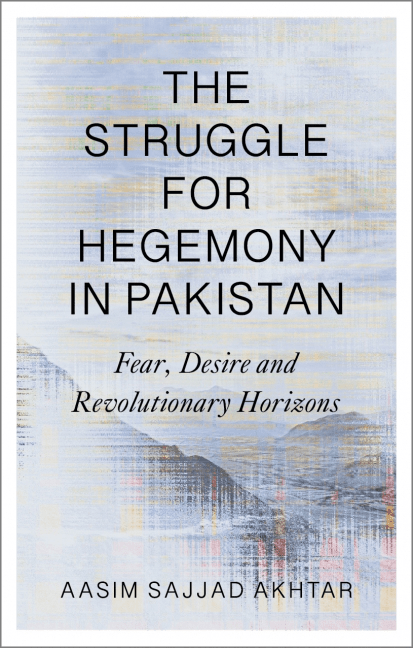
Floods in Pakistan: Where is the ‘International Community’ for the imperialized zones of the world-system?

The world’s brief concern for the plight of more than 35 million Pakistanis deprived of their homes, livelihoods and dignity by this summer’s unprecedented monsoon-related floods was summed up in late August by a suitably passionate video appeal by Secretary-General of the United Nations, Antonio Gutierrez. He implored the ‘international community’ to step up and take responsibility; as he rightly noted, Pakistan has contributed a pittance to the global emissions that drive climate change, and it is not ‘just’ for the country’s long suffering people to be left isolated.

Of course the UN does not deploy terms like empire and reparations, which a truly meaningful message would have contained. Mr. Gutierrez subsequently travelled to Pakistan on September 8, presumably to try and sustain what little media and donor attention the floods had garnered. As it turned out, Queen Elizabeth II passed away on the same day. Unsurprisingly, the imperial monarch’s death became a global concern overnight, while Pakistan’s colonial peripheries faded even further from the public eye. Let alone other bilateral and multilateral donors, the UN itself has to date disbursed only a small fraction of the US$160 million that it promised to raise for flood relief in late August.

A spade, as the proverbial saying goes, ought to be called a spade. Over the past two decades, at least some of the underlying structural causes of global warming and climate change have been identified and articulated, time and again, most notably at gatherings of the world’s richest and most powerful people. But even where emissions targets are agreed, the biggest polluters – western imperialist powers – are simply not doing enough. There is now very little chance that we will contain warming to 1.5 degrees Celsius, and as the Pakistan example demonstrates, there will be more and more hell to pay for the historically imperialized zones of the world-system.

Of course, there is much that is not even acknowledged, nay, spoken of, within the so-called ‘international community’. Like the fact that our political-economic system, the global regime of capital accumulation, is based on the deliberate expropriation of working people and the natural resources that sustain them. In Pakistan, the rest of South Asia and much of postcolonial Africa/Latin America, there is no forest, water body, landed plain or mountainous highland that is safe from violent grabs by a nexus that comprises local big men, state functionaries, ‘development’ practitioners, powerful states (western and increasingly non-western powers like China) and multinational corporations.

That more than half of Pakistan is inundated certainly has to do with unprecedented monsoon rains, particularly in the ethnic peripheries of Sindh and Balochistan. But the fallouts of mega infrastructure like dams, canals and drains, made through WB and ADB monies, and imbued with British-era colonial engineering logics motivated by the desire to conquer nature, are plain to see. As is the fact that real estate moguls and big construction lobbies are running riot across the country, thereby further eroding already fragile eco-systems upon which millions of people rely for their livelihoods. As Rosa Luxemburg said: ‘A natural economy… confronts the requirements of capitalism at every turn with rigid barriers. Capitalism must therefore always and everywhere fight a battle of annihilation against every historical form of natural economy that it encounters’.

Read More »

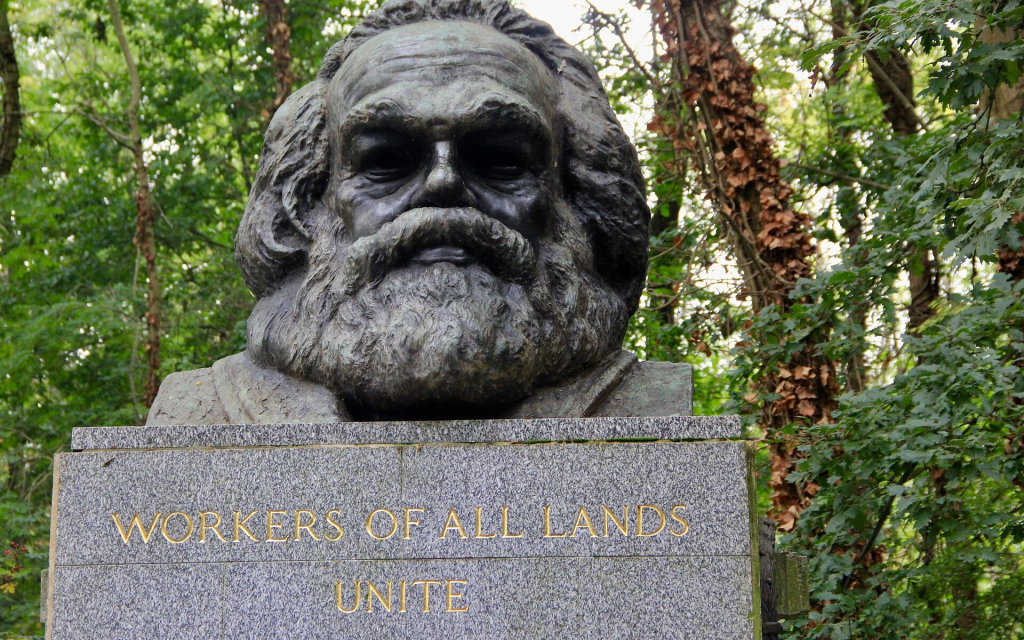
Marx and Colonialism

It is widely believed that Marx did not systematically consider the role of colonialism within the process of capital accumulation. According to David Harvey, Marx concentrated on a self-closed national economy in his main work. Although he did mention colonialism in Part 8 of Capital Volume 1 on the so-called primitive accumulation, this would only belong to a pre-history of capital, not to its everyday development. Based on a similar assumption, some postcolonial scholars criticise Marx for being Eurocentric, even a complicit supporter of Western imperialism, who ignored the agency of non-Western people.

If we read some passages from the Manifesto we could think that they are right. How can we explain otherwise Marx and Engels praising the role of the bourgeoisie drawing even the most barbarian nations into civilisation or the view that the liberation of colonised peoples depended on the victory of the revolution in Europe?

Before I start, let me make a short premise. In my first book I read Marx’s Capital in the light of his writings and articles on Ireland, China, India, Russia, and the American Civil War. At the time I believed that Marx only published a significant, but still limited amount of writings on the colonial question, those available in the Collected Works and in collections like Marx & Colonialism. But then in 2007 I worked at the Berlin-Brandenburg Academy of Sciences and Humanities, contributing to the complete edition of Marx’s and Engels’s writings. I thus “discovered” some of Marx’s 20,000 print page long notebooks (just to give you an idea, the printed notebooks alone would look like a new Collected Works). These writings show that Marx was interested in colonialism all his life, including when he wrote the Manifesto.

What came out of my reading? Let me start with the question of Marx’s field of analysis in Capital Volume 1. To analyse capital reproduction ‘in its integrity, free from all disturbing subsidiary circumstances’, Marx treats the world of commerce as one nation (1976: 727) and presupposes the full worldwide imposition of the capitalist mode of production. Does this mean that Marx analysed a “self-enclosed national economy” as Harvey and others believe? In my view, this abstraction means exactly the opposite. Marx’s positing a coincidence between the national and global levels is a premise for conceptualising the world market, which includes both internal and foreign markets of all nations participating in it. This abstraction makes it possible to include expansionism into the analysis of capital accumulation. In this framework, a country’s economic system is not confined within its national borders but consists of all production branches where capital is freely transferable, including the colonies and dependent economies.

Read More »

Ignorance is Bliss: Why should we study Leontief?

What is at stake?

Let’s start with a story. A friend asked me what my favourite genre of fiction is. I replied: microeconomics. If you get the joke, you would be laughing. Otherwise, you would be wondering why I said that. Well, that’s the truth. Take any standard economics textbook, we find ourselves in the fictional worlds of ‘let’s assume there are two goods’ and ‘if we move from point A to B’. It is true and well understood that these assumptions and imaginations are meant to break down complex phenomena. However, this entry point of supply and demand curves with the endless possibilities of hypothetical scenarios is not the only way to study/introduce economics. In this regard, I put forth the relevance of studying Wassily Leontief’s work and argue that it adds pluralism to economics education at least in three aspects: 1) methodology (philosophical and mathematical approach), 2) the unit of analysis (micro to macro and in between), and 3) ideas at the margins (reading thinkers like Piero Sraffa and other classical political economists). Now we shall deal with these three themes individually.

Read More »

A value perspective of price and currency stability in Zimbabwe

In his mid-term budget speech, Zimbabwe’s Finance and Economic Development Minister, Hon. Prof. Mthuli Ncube identified rising inflation and currency depreciation as the major challenges requiring “the support of all stakeholders and citizens”.  Zimbabwe is failing to ward off persistent inflation. According to Ncube’s mid-term budget report, headline inflation increased from 60.7% in January to 191.6% in June 2022.

In this post, I will argue that whilst price and the exchange rate have some importance, preoccupation with them can constrain economic development. I start off by giving a brief background of inflation in Zimbabwe as well as inflation targeting policies, before arguing that sheepishly pursuing currency and price stability equates to commodity fetishism. I then look at the real beneficiaries of price and currency stabilisation policies. Finally, I attempt to demystify value and price in Zimbabwe’s context.

Read More »

Re-embedding the economy to rethink (sustainable) development

‘On ne développe pas ; on se développe.’

This famous sentence from Joseph Ki-Zerbo could be translated as ‘we do not enforce development; we develop ourselves.’ However, development paradigms have been largely influenced by external views, mainly those of Western countries. “Development” is considered as a moral concept. Many people around the world suffer and don’t have access to welfare programmes that are fundamental to strive, hence the need for development, through the improvement in terms of basic needs and democratic institutions. However, development as a concept is far from having a universal definition, on how to develop and the ultimate goals of this development. Development paradigms are fundamentally linked to ideologies. In particular, the connection between the economics discipline and the dominant development paradigm is deep. Thus, rethinking development also calls for rethinking the assumptions in the economics discipline. In this blog, I summarize the main ideas of a recent paper I published (“From economic growth to the human: reviewing the history of development visions over time and moving forward”).

The holy triad of economics: ‘market-scarcity-rationality’

Karl Polanyi established two different definitions of economics: a formal one, used to justify the rise of self-regulated markets, and a substantive one, trying to show that markets are not a universal truth in the history of human exchanges. The formal definition refers to the logic of rational action and decision-making based on alternative uses of scarce resources. This formal approach has gradually become the dominant definition of (mainstream) economics, through the theory of utility value, based on the subjective utility associated with the consumption of goods and services. In this view, the primary focus is the individual, captured through the market relationships that he or she enters into. Resources, as natural resources, are allocated through market mechanisms, the main instrument of efficiency in what is called neoclassical economics. The implications of these assumptions are very important for development.

Since the process of formal decolonization began, the mainstream view of development has been founded on the assumption that post-colonial economies can develop in the same manner that Western countries did. In this sense, they are assumed to simply be at a later stage of Western economic history. In this context, economic growth is often considered an indicator of progress. This idea gained currency with modernization theories that started to dominate mainstream development discourse after the second World War, conceiving development as an imitative process, establishing from the onset a distinction between a modern sector (capitalist economy derived from the Global North) and a traditional sector (considered as a subsistence economy, that should be abolished). With the Washington consensus in the 1980s and the resulting structural adjustments, pulling developing countries towards stability, getting them as close as possible to the market ideal was the new goal for development, society becoming an auxiliary of the economy. In the 1990s, the discourse of international financial institutions evolved, as they incorporated political and social dimensions to their economic analyses to better explain the failures of the past. However, instead of challenging the fundamental assumption of this narrative, the new incorporations simply include more ways in which the developing countries need to ‘catch up’, such as through developing better institutions. We went from economic determinism to institutional determinism and not much has changed over time.

However, the mainstream view of development has been challenged from many quarters. For example, as scholars from the Global South long understood, underdevelopment and development are actually two sides of the same coin, based around the uneven accumulation of capital on a world scale. Dependency theorists, the regulation school, and post-developmentalist theorists all recognized this. Economic growth and capital accumulation in the Global North still relies on continuous patterns of colonization. Even alleged attempts to become more sustainable, as with electric cars or renewable energy, rely on continuous extraction of raw material in the Global South.  It is time now for new frameworks for development thinking.

Read More »