 Bradford deLong has recently argued that neoliberalism provides a way for former colonies to close the gaps with their erstwhile colonial masters. But this argument ignores the fact that several economic policies of colonial times were explicitly laissez-faire in nature.
The recognition of the dangers of allowing finance a free hand in the economy has led to a rethink of the soundness of neoliberalism as an economic and policy doctrine, from no less an organisation such as the IMF. Dani Rodrik has attacked the theoretical foundations of neoliberalism itself, judging that its insistence on allowing for unhindered market activity is bad economics itself, for economic models that make a theoretical case for markets cannot be easily transplanted into the real world in the way that advocates of neoliberalism believe.
Yet this is not to say that the concept is dead and buried. As Harvey (2007) points out, neoliberalism is a political economic process that ostensibly seeks to organise society and economies around the principle of free market activity, while primarily attempting to shift the balance of power towards dominant economic classes that control capital. Seen in this light, neoliberalism is still a powerful force shaping political and economic changes in much of the world today.
Bradford deLong’s blog post, first published in 1998 and re-published now shows that the term “neoliberalism” still carries intellectual currency. His is a curious argument; neoliberalism provides the only suitable path for countries of the developing world to close the gap with their former colonial powers. Access to the latest goods and technology allows developing economies – with low levels of productivity – to boost productivity and output growth, and consequently incomes. The reason the State should stay away from the economic sphere in the developing world is because democratic institutions have not been established yet, and hence the political sphere is vulnerable to capture by elites.Read More »

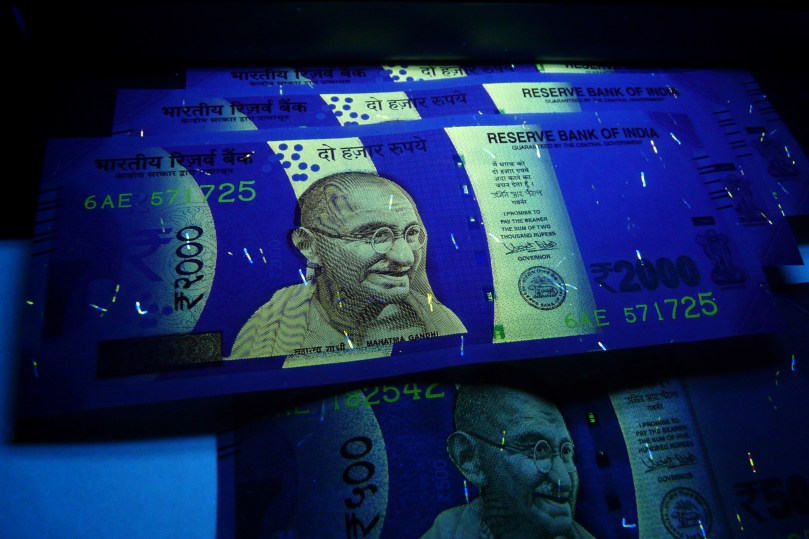 On 8th November, 2016, the Indian government announced that it was banning the use of 500 and 1000-rupees currency notes from midnight, effectively scrapping 86% of India’s currency notes by value. The Indian public would have to change the outlawed currency notes for new ones at bank counters by the end of the year.
 A decade has passed since the Global Financial Crisis (GFC) which seems an apt time to begin talking about the event that has pushed the concept of financial education to the core of global policymaking debates. Despite its growing popularity today, financial education has existed in the premise of global policymaking for the past few decades. The benefits of financial education seem endless; poor national financial literacy levels have been blamed for adverse socioeconomic effects such as high national household debt and/or a general irrational exuberance in financial consumption behaviour (see e.g.
 Why are poor people offered financial inclusion products? One answer to this question is that the poor have
  India’s opposition leader has
 Developing Economics