 While classical political economy has been considered outdated by many social scientists, I argue here that it can provide insights about the world today and the challenges we face.[1] One of these insights has to do with the early disagreement that existed between Adam Smith and the mercantilists of his era with regards to the wealth of nations, a topic sometimes captured under the label “development”. Based on this disagreement, this blog post develops a typology of Smithian and Mercantilist nations as different models of capitalist development that may be considered alternatives for developing countries today.Read More »
Property rights and transaction costs in developing countries: A political settlement perspective

Transaction costs due to distributional conflicts, political settlements, and weak enforcement capacity have important implications for the implementation of property rights in developing countries. While critical analysis of these factors is missing in the mainstream economics approach to property rights, it is obvious that incorporating such analysis will be crucial in designing policies to minimize transaction costs that hinder an efficient functioning of property rights. Specifically, there is a need for an alignment of interests among powerful political and economic interests if property rights are to be more efficient at reducing transaction costs.
A fundamental limitation of contemporary property rights theory is its inability to incorporate factors that might reduce property rights from solving transaction costs, particularly in developing countries. This piece reviews the mainstream explanation of the relationship between property rights and transaction costs and then evaluates factors that can inhibit property rights from reducing relevant transaction costs, which include distributional conflicts, costly enforcement capacity, political settlement, and measurement problems. Major emphasis is placed on social conflicts and organization of power which are missing from the conventional analysis of property rights.
In this respect, the political settlements framework developed by SOAS economist Mushtaq Khan can enrich our understanding of the operations of property rights in developing countries. Khan (2018) defines political settlements as “social orders characterised by distributions of organizational power that together with specific formal and informal institutions effectively achieve at least the minimum requirements of political and economic sustainability for that society”. In short, political settlement means the distribution of power among different groups.Read More »
Misunderstanding the average impact of microcredit?
By Milford Bateman and Maren Duvendack
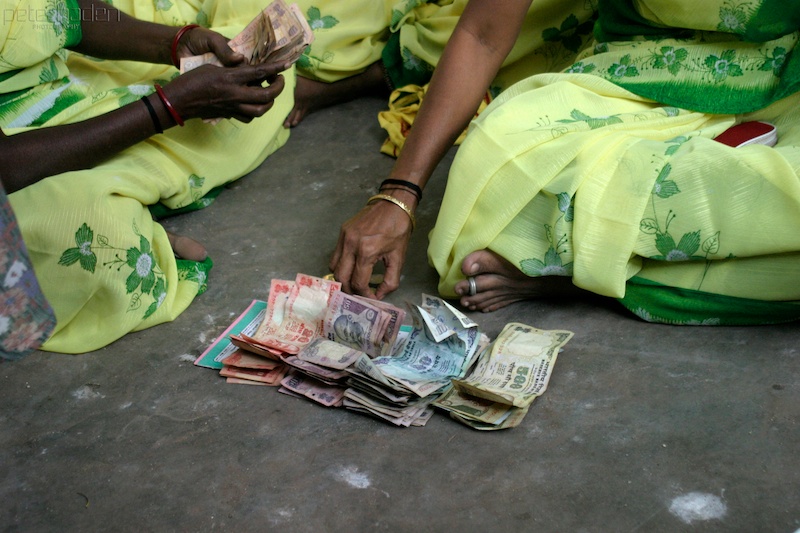
A recent article on the “average impact of microcredit” by Dr. Rachel Meager (LSE) has received much praise over the past few weeks. Meager deploys Bayesian hierarchical modelling to provide a new take on the argument in favour of a reformed system of microcredit. Her work builds on the data provided by six randomized control trials (RCTs) conducted by Abhijit Banerjee and colleagues (see Banerjee, Karlan and Zinman, 2015). Meager makes an attempt to exculpate the microcredit model from the awkward fact that its impact on the poor has been very much less than originally envisaged. She also claims to show that the critics have overstated the negative impact of microcredit. Microcredit should therefore continue to be a policy intervention, she goes on to say, but there need to be changes in the operating methodology for a more meaningful development impact to be possible in the future.
While seemingly a well-meaning attempt to explore the impact of microcredit, we were struck by the way that her overall argument appears to seriously misunderstand, and it definitely misrepresents, the existing research on microcredit as a development instrument. Read More »
Mind the Gap: Addressing the Class Dimension in Higher Education
 The debate in Higher Education (HE) in the UK is slowly starting to recognise that inequality in education is both the cause and consequence of societal elitism. As a result, there is an increasing debate about widening access to academia, and more and more newspaper articles are devoting attention to the few who made it through the Oxbridge close-circle system.
On the 17th of May 2019 the Reteaching Economics and IIPPE Teaching Political Economy working group organised a workshop on economic pluralism, teaching and research. I was chairing the panel on “Challenges and Opportunities for the Economics Curriculum Around Decolonisation, Gender and Diversity” which included brilliant contributions from Dr Meera Sabaratnam (SOAS), Dr Lucia Pradella (King’s College), Dr Ingrid Kvangraven (University of York) and Ali Al-Jamri (Rethinking Economics, Diversity Campaign Manager). They addressed various political, historical and cultural issues around neocolonialism, imperialism, racism, sexism and gender segregation in HE at large and in the economic discipline in particular. Considering the potential great complementarity of the topics, I thought it was relevant to bring in the class dimension in the discussion. I noticed that while the marginalization of women and people of color is rightly getting increasing attention, the class dimension is sometimes forgotten. Indeed, although class remains a crucial lens to untangle injustice and exclusion in the HE industry, it isn’t dealt with with as much urgency. Maybe also because it’s a bit less visible. Indeed, last week I was discussing this issue with another ‘academic migrant’ from Southern Europe, and he suggested: “Panels should ask “what do your parents do/did for a living?” during job interviews.
To prepare my presentation, I approached a couple of ‘data intelligence’ offices in UK universities asking for facts about the class dimension of access to higher education in the UK. I was pointed to the Office for Students, which is a new resource that enables us educators, but also students, to look at various key bits of data on the university sector as a whole, and on individual universities. A very useful resource indeed!
So here is what I found, and the results are pretty discouraging. Read More »
An Alternative Economics Summer Reading List, 2019
 This summer, we take stock of the most interesting economics-related books that have been released over the past year. Every year, Martin Wolf of the Financial Times makes a similar list. However, by his own admission, he only reads within the tradition of his own training in mainstream economics. While his 2019 summer list includes several excellent books, such as The Case for People’s Quantitative Easing by Frances Coppola and The Sex Factor by Victoria Bateman, we are still struck by the strong white-male-mainstream-Western bias in Wolf’s list, with the books almost all written by white (20/21) men (18/21) about topics mostly focused on the US and Europe.
To complement Wolf’s list, we have put together an Alternative Economics Summer Reading list with authors from across the world, with more varied backgrounds – and writing about more wide-ranging topics, and from a wider variety of critical perspectives. Our alternative list also reflects our belief that issues such as structural racism, imperialism, ideology and the philosophy of science are central to understanding economics.
It is not that we think that Martin Wolf is in particular responsible for the lack of diversity and monism in our reading decisions: other curators such as the Economist (for example, here) also perpetuate the myth that the books worth reading about economics are mostly those written about the US and Europe, by white men trained trained in mainstream economics. Read More »
Philanthrocapitalism: How to Legitimize the Hegemony of the Rich with a “Good Vibes” Discourse

Is philanthrocapitalism a vehicle for so-called “development”? In an article recently released in Globalizations (here), Juanjo Mediavilla (University of Valladolid, Spain) and I analysed the phenomenon of philanthrocapitalism as a financing for development (FfD) instrument from the perspective of Critical Development Studies and Discourse Theory. We argue that we are witnessing the deepening of a neoliberal development agenda, where philanthrocapitalism and the elites play a key role. Read More »
Hirschman’s Linkages: Passé in the Age of Global Production Sharing?

How does economic development happen? After World War II, many development economists rose to prominence, such as Paul Rosenstein-Rodan (the big push), Arthur Lewis (the dual-sector model), Walter Rostow (the linear stages of growth) and Albert Hirschman (unbalanced growth and linkages). Given the continued importance of industrial policy, it is particularly worthwhile to revisit the idea of forward and backward linkages — one of the central tenets of development thinking pioneered by Hirschman.Read More »
The Curious Case of M-Pesa’s Miraculous Poverty Reduction Powers

By Milford Bateman, Maren Duvendack and Nicholas Loubere
Over the past decade the expansion of digital-financial inclusion through innovations in financial technology (fin-tech) has been identified by the World Bank, the G20, USAID, the Bill & Melinda Gates Foundation, and other major international institutions, as a key way to promote development and alleviate poverty in the Global South (GPFI, 2016; Häring 2017; World Bank, 2014). Perhaps the most influential and widely reported publication pushing forward this narrative is an article examining M-Pesa written by US-based economists Tavneet Suri and William Jack—and published in the prestigious journal Science—entitled ‘The Long-run Poverty and Gender Impacts of Mobile Money’. M-Pesa is a mobile phone, agent-assisted platform for transferring money from one person to another. It was originally developed with funding from DFID and has quickly become a darling of the digital-financial inclusion movement. In this particular article, the authors make the far-reaching claim that ‘access to the Kenyan mobile money system M-PESA increased per capita consumption levels and lifted 194,000 households, or 2% of Kenyan households, out of poverty’ (Suri and Jack, 2016: 1288).
Suri and Jack’s article in Science has sent ripples through the global development community and has served—as perhaps was intended—to solidify support for upping the promotion of digital-financial inclusion initiatives across the Global South. Importantly, the article’s claims of unprecedented poverty reduction have been uncritically picked up by all of the international development agencies and microcredit advocacy organisations, as well as by many mainstream economists, so-called ‘social entrepreneurs’, tech investors, and media outlets. Much like microcredit in the 1980s, fin-tech and digital-financial inclusion is now very widely seen as a key—if not the key—to reducing global poverty and promoting local development.
In this post we summarise our recent article entitled ‘Is Fin-tech the New Panacea for Poverty Alleviation and Local Development?’ (Bateman, Duvendack, and Loubere, 2019), which challenges Suri and Jack’s findings, and urges the global development community to take a second, more critical look at their study. We argue that the article contains a worrying number of omissions, errors, inconsistencies, and that it also employs flawed methodologies. Unfortunately, their inevitably flawed conclusions have served to legitimise and strengthen a false narrative of the role that fin-tech can play in poverty alleviation and development, with potentially devastating consequences for the global poor.Read More »

