Decolonising development with Frantz Fanon

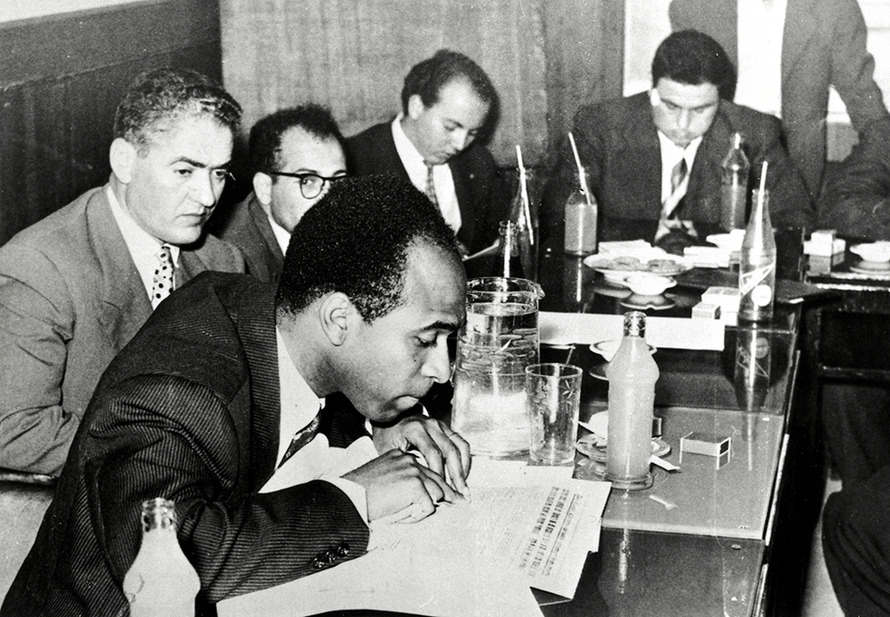
The great cultural theorist Stuart Hall called Frantz Fanon’s The Wretched of the Earth ‘the bible of decolonisation’ as it encapsulated the urge for freedom across the colonial world (1). Fanon illuminates how racism represented an organising principle for capitalist classes by systematically devaluing the lives of the majority of the world’s population. ‘For centuries the capitalists have behaved like real war criminals in the underdeveloped world,’ he wrote. ‘Deportation, massacres, forced labour, and slavery were the primary methods used by capitalism to increase its gold and diamond reserves, and establish its wealth and power’ (2).

One of the reasons for Fanon’s popularity among those who want to decolonise development is that he argued that post-colonial countries should forge their own paths to development rather than attempting to follow already developed countries. ‘The Third World must not be content to define itself in relation to values which preceded it,’ he warned. ’On the contrary, the underdeveloped countries must endeavour to focus on their very own values as well as methods and style specific to them.’

Not only did Fanon explain the horrors inflicted by colonialism upon native populations; crucially, he also conceived of real human development as a process rooted in a collective labouring class (comprising workers and poor peasants) transcending capitalist brutality.

However these two elements of his thought — the critical identification of the violence of colonialism, and a real human developmental alternative to it — have often been disconnected by thinkers influential to the decolonial movement. This represents a dangerous misinterpretation of Fanon. It obscures his vision of a decolonised world and the social forces able to construct it.

Read More »

What Pressure Produces: The Generative Aspects of Pressure amidst Urban Displacement in Dakar

Figure 1: The old terminus building in Dakar, known simply as “La Gare”

During my early days of fieldwork in the old city centre of Dakar, Senegal, I was sitting with the trader Fatim in her tiny market stall under a tattered, weather-worn parasol. Fatim watched over her goods that were balanced on top of some old, repurposed metal drums. The rusty tracks of the former Dakar-Niger railway line stretched out on the ground behind us, forming the backdrop to this small outdoor market. A few dozen other rickety stalls were lined up along the old platform that led to the abandoned terminus building known simply as “La Gare” (Figure 1). Fatim thrust her arm out to indicate the space around her and exclaimed, ‘Often, when people come here, they look around and say, “There is nothing here! …Some people think the market at the Terminus (Marché de la Gare) doesn’t exist anymore, so they don’t come’.

The Terminus (La Gare) was the last station at the end of the Dakar-Niger railway line. The line had formerly connected the landlocked Malian capital, Bamako, to the Senegalese capital on the Atlantic coast. During the first decade of decolonisation a thriving Malian wholesale and retail market – le Marché de la Gare – had emerged at the Dakar Terminus. When I arrived in Dakar in 2013 to conduct fieldwork, however, the passenger train, on which the Malian shuttle traders supplying the market had travelled, was no longer running; and the flourishing Malian market at the Terminus no longer existed. In 2003, under pressure from the World Bank, the Malian and Senegalese governments had privatized the formerly State-owned rail network. In 2009, the Senegalese passenger train running between the Malian border and Dakar was discontinued. In the same year, the Malian market at the Dakar terminus was bulldozed by Senegalese authorities, supposedly to make way for “The Seven Wonders of Dakar” (https://www.youtube.com/watch?v=s1O1wNsfmaM, accessed 7th of June 2023) – a prestigious, but as yet unfinished, construction project.

In this blog post I explore how the traders evicted from the Terminus had responded to persistent uncertainty and economic pressure following the demolition of their market. Rapid and unequal urban developments are occurring across the world, and particularly in the fast-growing cities of Africa. Such developments lead to disruption, uprooting and disorientation, creating immense economic and psychological pressures on urban traders whose livelihoods depend on working in a specific location in the city and accessing certain infrastructures and networks in that space, to connect with suppliers, customers, and middlemen. The following analysis explores what is produced by these pressures – not in a naively optimistic sense of “good things emerging” from pressure, but in a temporal sense of understanding the long-term outcomes produced by pressure. Specifically, I argue that the economic uncertainty and sense of disorientation and uprootedness associated with eviction from the Dakar Terminus had led to a kind of urban diasporic formation among the displaced traders. The analysis thus contributes a temporal perspective on pressure, showing what urban dwellers’ responses to pressure may generate in the longer term.

Read More »

De-dollarisation and Internationalisation of Other Currencies: Geopolitics and Implications for Dollar Diplomacy

By Sangita Gazi and Christabel Randolph

In a 2022 report, International Monetary Fund (IMF) states that ‘[t]he dollar’s share of global foreign-exchange reserves fell below 59 percent in the final quarter of last year, extending a two-decade decline’. However, surprisingly, the decline in the dollar is not associated with the ‘increase in the shares of the pound sterling, yen, euro, and other long-standing reserve currencies.’ Instead, the shift in the dollar’s share in the reserve currency system went in two directions—a quarter into the Chinese renminbi and three-quarters into the currencies of smaller countries that have historically played a limited role as reserve currencies. This piece examines the shifts underlying this trend with a focus on increased regional alliances in trade and payment systems technology. We conclude with forecasts and implications for a more multipolar monetary order and ‘dollar diplomacy.’

Since the onset of the Covid-19 pandemic, geopolitical tensions and economic stagnation have led to fragmentation in cross-border trade and payment systems. The ongoing Ukraine-Russia conflict and international sanctions imposed by the Western economies have also contributed to this situation by causing disruptions for countries with trade relationships with Russia, particularly for essential commodities like fuel, grain, and oilseed. Moreover, many countries are running low on U.S. dollar reserves amidst inflation, prompting them to consider alternative currencies for cross-border trade settlements. This is further exacerbated by the aggressive rate hikes by the Federal Reserve in an attempt to contain domestic inflation within the U.S. The historical correlation between the U.S. dollar and commodity prices has been disrupted for the first time. As a result, evidence suggests a degree of regional fragmentation in trade-related activities and the use of alternative currencies, leading to a shift away from the U.S. dollar as the primary currency for international trade. For instance, in March 2023, the yuan was the most widely used global currency, surpassing the U.S. dollar and euro.

Further, central banks from emerging markets and developing economies seek to diversify their foreign currency reserve composition. The shift began in April 2022, after key Russian banks were removed from SWIFT following Russia’s invasion of Ukraine. China increasingly uses the yuan to buy Russian commodities, such as oil, coal, and metals, settling their bilateral trade with Russia in Chinese currency instead of dollars. In a similar effort, India has made several initiatives to create bilateral trade relationships with countries like Bangladesh, the United Arab Emirates, and Malaysia to internationalize the rupee and use it to settle cross-border trades. This trend toward exploring alternative currencies may affect the global financial landscape. Still, its impact is uncertain due to concerns about newer currencies’ volatility and regulatory systems.

Read More »

Review:* Special issue of Africa Development by Post-Colonialisms Today**

A new calendar year ushers in the usual array of tropes on Africa. They include why the continent is failing, what it should be doing better and why it has so much resilience in dealing with its own frailty. Overwhelmingly, Western institutions (NGOs, credit rating agencies, etc.) repeat tired mantras of the international financial institutions, ignoring the insights of African scholar activists and the historical backdrop to the continent’s contemporary crises. Neglect of such analysis leads to the failure to understand why and how different African countries are in the mess that they are and why the mess has structural continuities and conjunctural discontinuities. The antidote to Western-centric analysis is the superb collection of essays in a special issue of Africa Development, a journal of the Council for the Development of Social Science Research in Africa (CODESRIA), which emerged from the Post-Colonialisms Today project. The range and insight of the collection is difficult to capture in a short review, but there are two continuous themes among contributors: the importance of revisiting the historical past and the significance of sovereignty, or the absence of it.

Read More »

Financial Statecraft and its Limits in the Semi-Periphery

Over the past decade, two, intertwined research agendas on international financial subordination (IFS) and subordinate financialization (SF) have proposed to identify how an increasingly finance-dominated global capitalism incorporates the (Semi-)Peripheries.

The IFS research agenda recognizes that a “subordinate” national currency comes with a risk premium increasing the costs of financing public debt – in other words, the current, US dollar-based currency hierarchy acts as a structural fiscal constraint in the Global South, limiting the scope for badly needed public investments. Foreign capital – in the form of foreign currency-denominated sovereign and private debt-, foreign aid, and foreign direct investment – is then touted as a solution to this artificial and unfair developmental constraint.

The SF agenda examines how this straightjacket on fiscal space has been further compounded with the liberalization of global capital mobility over the past forty years, diffusing credit-based accumulation strategies from the Core to the Peripheries: the financialization of (semi-)peripheral economies radically misallocates financial resources from socially and environmentally vital public goods and transformative industrial policies towards developmentally regressive strategies of accumulation driven by speculation and asset-price inflation.

Programmatic visions for liberating (semi-) peripheral economies from the dual constraints of a national fiscal space suffocated by the global currency hierarchy and globally mobile capital flows which deepen financialization are underdeveloped. Two scales of action are plausible: At the international level, de-dollarization is promoted by the BRICS bloc, but it remains uncertain what forms of international financial solidarity and collaboration, if any, will materialize under its aegis. The national level comprises an alternative scale as the State continues to be perceived as the most likely candidate for ringfencing domestic social, environmental, and developmental objectives from the pressures of global capital mobility and the structural constraints of the global currency hierarchy.

In a recent co-authored piece with Pınar EDönmez, we study the politics governing the management of money in Hungary and Turkey, two semi-peripheral economies where the executive has built a vast array of direct and indirect tools to intervene in monetary policy, retail banking and credit allocation to manage financial subordination.

Read More »

Combining dependency theory and the regulation school: Understanding economic rents in Burkina Faso

Dependency theory is experiencing some kind of comeback and has been discussed at length on the Developing Economics blog. However, one criticism that often comes up when researchers work on the phenomenon of dependency is the fact that the separation between the spheres of periphery and centre may be too simple, insofar as the working class is also exploited in the countries of the centre, and the elite also benefits from such a system in the periphery. While some strands of dependency theory may provide important angles for analysis of trade between the Global North and South, such analysis also risks pitting development in the center against underdevelopment in the periphery. It is worth noting, however, that many dependency theorists did not think of the world in such binary terms, but rather centered class analysis in their frameworks.

In our recent work, we approach the problem of dependence slightly differently in an attempt to nuance our analysis. Dependence is linked to the country’s international insertion, marked by both political and economic relations of domination with the industrialized countries of the “center”, and is reflected in unequal economic specialisations and unfavourable terms of trade. However, ‘dependent’ countries have followed varied trajectories, which need to be analysed in their context, as dependency is not black and white. Let’s zoom in on West Africa. There, dependency is mainly based on rentier-type economic regimes. A rent is defined as obtaining income without contributing to the production of additional goods and services. In a paper dedicated to the situation in Burkina Faso, we have sought to understand a very specific historical case, representing an important rentier economy that was also well integrated into the global economy. We have sought to combine dependency and regulation theories to understand the stability of such a rentier economy. Let’s explore the economic history of Burkina Faso.

Read More »

The South Asia to Gulf Migration Governance Complex – Edited by Crystal A. Ennis and Nicolas Blarel: Review

Migration Governance: Moving Away from “Uncle Always Knows”

Almost everyone on social media has that one Instagram friend who posts bronzed pictures in Santorini, or screenshots of champagne flutes atop the Burj Khalifa, the Dubai skyline looming in the background.  To those internationals for whom travelling on holiday was an annual rite of passage, the pandemic’s travel restrictions resulted in adventures that were inopportunely thwarted. Conversely, to economic migrants everywhere, the implications of banned travel, whether by air, train, or foot, equated directly with the fundamental ability to survive. The scrambles of governments worldwide to gauge appropriate responses to COVID-19 was understandable, inasmuch the magnitude of the event was entirely unprecedented, and the need to contain its spread dire. Yet, one of the largest follies of the pandemic remains undebated: instinctive government responses moved to ban travel without duly considering the global interconnectedness of labour markets in the modern age. Belonging to one state but working in another meant that with travel bans, economic migrants were either shackled to their workplaces, away from their families; or held back from gainful employment whilst trapped at home. In most contexts, migrants are to countries like an unknown opening band at a music concert: the audience does not fundamentally care, and everybody is simply waiting for the headline act. In their origin states, migrant workers often escape the focus of governments who are more concerned with those who remain behind. In the meanwhile, the countries to which they migrate often look at them as charity, despite these workers’ crucial role in economic development. Since they belong to places differently, being of and from multiple geographies at once, migrant workers have shifted typical state-worker relationships to a new realm. What, therefore, does good governance look like for an individual- a migrant– who is from several places at once?

Multiple answers to this question can be gleaned from The South Asia to Gulf Migration Complex. As the title suggests, the volume focuses on the South Asia-Gulf migration nexus. There are various considerations that render this book highly topical. First, the movement of people around the world, particularly for employment, has outmoded traditional conceptions of citizenship and a worker’s relationship with a state. This necessitates the re-engineering of these traditional conceptions of citizenship in ways that account for a dynamic and modern global workforce which is constantly on the move. Second, a fitting place to start thinking about the redefinition of worker-state relations is from the lens of workers emigrating from South Asia into the Arab Gulf. These geographies are of particular significance given the staggering volume of South Asian emigrants in the Arab Gulf, with over 80 percent of the region’s labour force being comprised of migrants, as Blarel and Ennis describe in their introduction. Governing this sizeable migrant workforce is what is collectively termed Kafala, a complex set of legal and policy frameworks centred around an employer-oriented visa sponsorship system. For years now, the Kafala system has come under severe criticism from human rights groups for rendering low-wage migrant workers in various conditions of modern day slavery, most recently with the example of Qatar, during the FIFA 2022 World Cup. Further compounding the importance of the South Asia-Gulf nexus is the phenomenon of South-South migration, where the Gulf’s ambitious development projects tend to drive largescale demands for a workforce that can be tailored to expand and contract as per their whimsy (Ennis and Blarel; Hamadah; Walton-Roberts et al). Above all, this volume is timely given the now universal tussle between the need for good governance and sustainable worker livelihoods on the one hand, versus competing pressures for labour market flexibility on the other (Devkota; Babar; Hamadah).

Read More »

Authoritarian Neoliberalism and Post-Soviet Currency Boards

The surge of right-wing populism in East-Central Europe is often portrayed as an unforeseen shift from the earlier post-1989 liberalization path. The “illiberal transformation” narrative underlines stark differences between the policy arsenals that informed democratization and marketization reforms in the early 1990s and those fueling current “democratic backsliding.” Yet this framing conceals the analytical maneuver of disconnecting the political sphere from its socioeconomic counterpart, thereby limiting democracy to the former and defining democratic participation based on electoral competition.

It was precisely this separation, which at the dawn of post-communist transformation, tended to align democratization not with leveling erstwhile power and wealth disparities, but with eradicating rent-seeking by the lingering elements of Soviet bureaucracy. Conceived in this way, democratization was deemed to be an engine of market reforms. Insofar as much of the “transitology” scholarship operated with a parochial “democracy” versus “authoritarianism” dichotomy, it repeatedly obscured authoritarian tendencies in consolidating democratic systems.

In the recently published article Democratic Facades, Authoritarian Penchants: Post-Communist Monetary Restructuring in the Baltic States, I argue that the corpus on “authoritarian neoliberalism” is well-positioned to instigate a much-needed departure from this externalization of “political” and “socioeconomic” spheres when revisiting the intricacies of post-communist transformation in general and monetary reforms in the Baltic states in particular.

Read More »