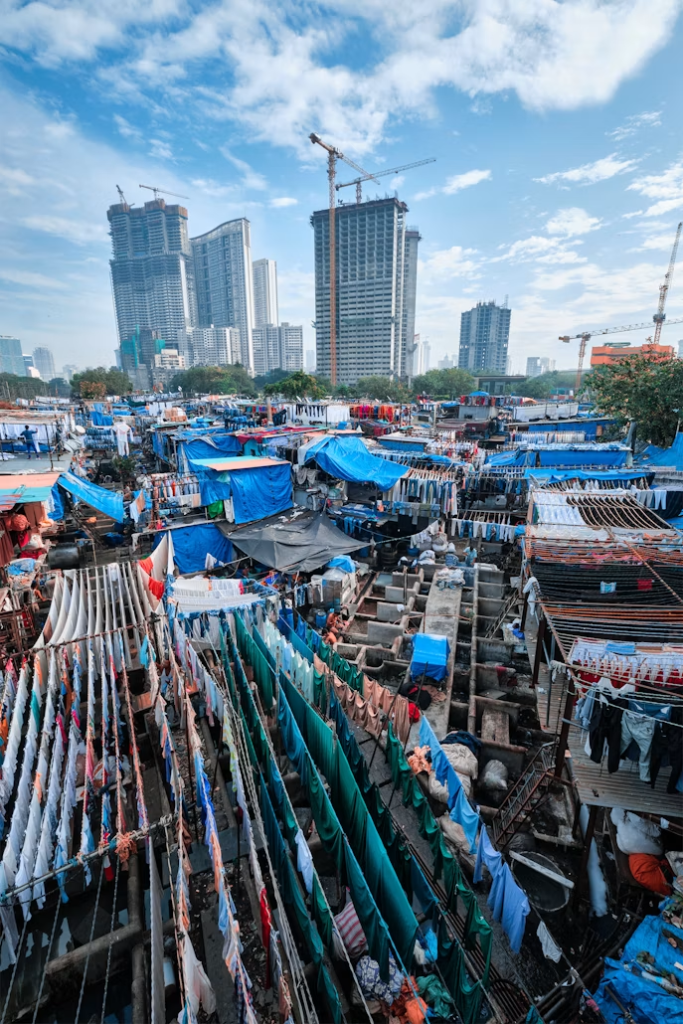
Across the Global South, cities, and city-regions are growing fast, drawing attention to questions of urban development and its place in contemporary processes of capitalist development. But development for whom? By whom? These are pressing questions amidst growing (urban) inequalities. They are all the more preoccupying given widespread assumptions that urban labouring classes remain weak and, in many instances, ‘surplus’ to the needs of capital. Pushing back against these assumptions, researchers and organisers gathered recently to ask, what would urban development look like if it started with workers? What would it mean to envisionlabour-led urban development (LLUD) —rather than capital- or state-centred development? Their collective reflections follow, as does an invitation: join their conversation via a new listserv.
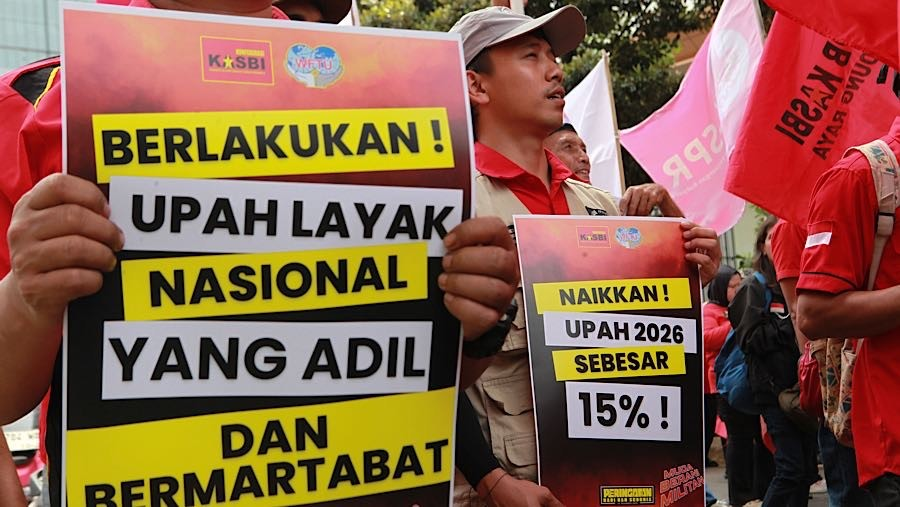
What actually constitutes the key agenda for workers in Indonesia beyond celebrating May Day as a symbol of struggle? Wages in Indonesia are never truly “negotiated”; they are determined, stabilized, and at the same time separated from the political power that should be able to challenge them. Since the authoritarian New Order regime, the state has built a corporatist framework that not only suppresses independent worker organizations but also fragments the possibility of forming an effective collective force. Reformasi did open space for freedom of association, yet instead of producing consolidation, what emerged was fragmentation—many unions, but weak and divided. Thus, when integrated into global value chains, this configuration finds its function: the state no longer needs to repress workers overtly; it suffices to stabilize wages through mechanisms that appear technocratic, while allowing fragmentation to persist. In this way, low wages in Indonesia are not a failure, but rather the result of a strategy historically shaped and continuously reproduced—a form of partial class accommodation, uneven, and spatially conditioned.
Control over workers today no longer operates primarily through open repression, but through the way wages are calculated and normalized as a technical matter. Wage-setting formulas that link minimum wage increases to inflation and economic growth are presented as rational policies to maintain balance between worker and business. Yet this is precisely where the politics operates: wage conflict is removed from the arena of collective bargaining and locked into calculations that from the outset limit bargaining space. This shift becomes clear when compared to the mechanism based on Decent Living Needs (KHL), which—although not entirely free from depoliticization—still opened space for surveys and the articulation of demands, particularly in industrial areas with high concentrations of workers. Because it was seen as disrupting worker cost stabilization, this space was later closed through formulas that standardize increases while simultaneously dampening conflict. Concessions to workers are not entirely eliminated, but emerge as the result of struggles that under certain conditions succeed in forcing the state and capital to grant space, as in the case of THR and the expansion of social security through BPJS. However, these achievements do not alter the fundamental structure of wages, which remains low and fragmented; rather, they appear as limited and segmented compromises. Thus, what is produced is not merely wage stabilization, but also the management of workers’ power itself: on the one hand, there are forms of protection that are concentrated and appear progressive, while on the other, the underlying structure continues to maintain spatial differentiation and the collective weakness of worker. In this condition, class compromise does not occur comprehensively, but is produced partially, unevenly, and remains locked within a low-wage regime.
Somewhere in the state of Maharashtra, a cotton farmer took his own life after years of compounding debt and crop failure. Across India, this tragedy is not rare. The National Crime Records Bureau recorded 11,290 farmer and farm-labourer suicides in 2022—roughly one death every hour—with debt consistently identified as a leading cause (Down to Earth, 2023). In Sulawesi, Indonesia, villages are being cleared to make way for nickel smelters that supply the batteries of the global electric-vehicle boom. Workers at the Indonesia Morowali Industrial Park earn higher wages than they would in farming, but face fatal furnace explosions and respiratory damage as recurring occupational risks (Campbell & Lee, 2024; Global Witness, 2025). And on the streets of Jakarta, Yogyakarta, and Surabaya, a new population of electric motorcycle drivers pedal their way through twelve-, fourteen-, sixteen-hour days (Novianto, 2025a), servicing loans they never chose and rental fees that can never be fully paid.
These are not three unrelated stories. They are distinct moments in a single global process: the uneven, extractive, and deeply political reorganisation of labour under the banner of the green transition. In this article, I want to argue, drawing on my fieldwork with electric-vehicle (EV) platform drivers in Indonesia, that this reorganisation has produced what I call a regime of green debt bondage—a configuration in which ecological transition, platform governance, and financialised credit converge to bind workers to perpetual labour without delivering the promised climate dividend.
Debt bondage is most often associated with pre-capitalist or early-capitalist forms of coercion: the indentured plantation worker, the brick-kiln labourer, the trafficked domestic servant (Breman, 2007; Brass, 2011; LeBaron, 2014). Its reappearance inside the shiny, algorithmic, climate-friendly infrastructure of platform capitalism should unsettle us. It signals not a rupture from coercive labour regimes, but their transformation into more diffuse and systemically embedded forms. What I call green debt bondage refers to a condition in which workers are not only tied through credit, rental schemes, and platform deductions, but are also structurally compelled to remain within precarious work due to the absence of viable, decent employment alternatives.
In this regime, indebtedness does not operate in isolation; it interacts with broader labour market constraints that limit workers’ capacity to exit. Debt becomes a mechanism that deepens this entrapment—pushing drivers to work longer hours, accept worsening conditions, and absorb greater risks simply to service obligations they cannot easily escape. As such, the “greening” of transport in Southeast Asia does not merely reorganise infrastructure, but reconfigures coercion itself: embedding exploitation within both financial relations and structural labour precarity under the banner of ecological transition.
Early in his second presidency, Donald Trump’s imposition of tariffs was met with widespread scepticism. Critics warned of economic decline and a global backlash. Yet the current landscape for the United States paints a more complex picture.
So what’s the true picture? Much of this FDI is going into the US’s burgeoning semiconductor sector. This inward investment is indeed a stark reversal from the post-1991 trend of outbound American capital, when US firms raced to set up factories in countries where it was cheaper to manufacture.
And the surge is bolstered by commitments of US$300 billion (£225 billion) in capital investment commitments from tech giants like Amazon, Microsoft, Alphabet and Meta. These investments reflect both Trump’s aggressive diplomacy and his close relationship with Silicon Valley’s tech elite.
Despite concerns about a tech bubble, these investments signal a deepening state-private partnership, and a reorientation of priorities with a view to coming out on top in the global AI race.
Central to this strategy is the reshaping of global supply chains. At a conference of venture capitalists in March, US vice-president J.D. Vance criticised US firms for their reliance on cheap overseas labour. He warned of the risks of losing the US’s technological advantage, especially to China.
The International Trade Union Confederation’s (ITUC) 2025 Global Rights Index was released on 2 June. The report presents a sobering picture of escalating violations of workers’ rights globally. Based on data from 151 countries, the Index reports that 87% of countries violated the right to strike, 80% restricted collective bargaining, and over 70% impeded union registration or denied access to justice. These trends, the report argues, reflect a “coup against democracy”—an ongoing assault on core labour rights driven by repressive governments, emboldened corporations, and a broader authoritarian and conflict-ridden global capitalism.
The Middle East and North Africa (MENA) region once again emerges as the most repressive in the Index (with an overall score of 4.68; a score of 5 indicates no guarantee of rights), with all countries in the region found to have violated fundamental rights to organise and collectively bargain, as well as registration of unions. The right to strike was suppressed in 95% of countries in the region, while over half of MENA states arbitrarily arrested or detained workers (p.28). The list of the ten worst countries for working people is composed mainly of Global South countries, with MENA cases including Egypt, Tunisia, and Türkiye. Over the past few years, my research has focused on the political economy and labour relations of these three countries[i], and below I briefly discuss them with insights drawn from the ITUC report.
However, before turning to these cases, it is important to highlight some potential limitations or problems in the ITUC report. While its findings are grounded in substantial and credible documentation, the non-contextualised regional framing of the Global Rights Index risks reproducing a familiar issue regarding the Middle East: the tendency to isolate MENA as uniquely authoritarian or culturally predisposed to repression. By highlighting MENA as the “worst region” without sufficiently situating its labour regimes within broader historical and structural dynamics, the Index could be seen to implicitly (albeit unintentionally) reinforce exceptionalist interpretations that have long shaped conventional understandings of the region.
When considering the Global South in general, and the MENA region in particular, we must not overlook the dynamics inherent to uneven capitalist development, such as persistent global and regional inequalities, the imperatives of cheap labour in hierarchical global production networks, IFI conditionalities, and the long-term consequences of war, occupation, and imperialist intervention. In countries like Egypt and Tunisia, and historically in Turkey, for example, the role of the IMF and World Bank in shaping labour markets through austerity, privatisation, and deregulation has been central to the weakening of collective rights. The region is also the most unequal in the world by income and wealth, according to the World Inequality Report 2022—a fact that reinforces the political utility of repressing labour as a force of potential redistribution and mobilisation.
While specific political regimes certainly shape labour practices, and domestic political agency is not insignificant, these conditions should not be viewed as ‘anomalies’ within an otherwise democratic capitalism. That countries like the United States and the United Kingdom (major centres of ‘liberal democratic capitalism’) are both rated as systematically violating workers’ rights (with a score of 4, p.21) should caution against any simplistic division between “authoritarian” and “democratic” regimes under capitalism. Rather, what we are witnessing is a global pattern of labour repression under crisis-ridden global capitalism.
The Gender and Trade Coalition was initiated in 2018 by feminist and progressive activists to put forward feminist trade analysis and advocate for equitable trade policy.
This article is the third in a series of short, Q&A format ‘explainers’ unpacking key trade issues produced for the Gender and Trade Coalition by Regions Refocus. It was written by Erica Levenson (Regions Refocus) with inputs from Carol Barton (WIMN) and Catherine Tactaquin (WIMN). The authors give their thanks to Neha Misra (Solidarity Center), Irem Arf (ITUC), Liepollo Lebohang Pheko (Trade Collective), and Mariama Williams (ILE), who reviewed various versions of the article and provided helpful feedback. Read the full article here and catch up on past explainers here.
1. What Does Trade Have to do With Migration?
The movement of people is a phenomenon as old as human history, and indeed predates nation-states. Migration is not something that begins and ends so much as it is a process, from the roots of the conditions which form the imperative to migrate, to the migration journey, gradual integration, and complex notions of citizenship and identity. This is precisely what makes migration flows a reflection of the social, economic, and political context in which they happen. Modern migration flows, then, reflect the stark structural inequalities that exist in the global economic order. This view correlates to the core-periphery model of migration, which sees migration as the result of acute labor shortages in capitalist centers that need to be filled through migration inflows from peripheries, drawing parallels to the Marxian concept of a reserve army of labor (Sassen-Koob 1981). As feminist scholars have argued, continuous flows of labor power from the Global South to the North are possible not simply due to the will of the Global North, but because institutions in countries of origin facilitate them (Nawyn 2010).
Rather than this core-periphery model of migration, a simplistic push-pull model guides migration provisions in international trade agreements. Informed by neoclassical economics, the push-pull model assumes that migration is the result of micro-level decision making processes that weigh the ‘pros and cons’ of migration, envisioning a simplistic calculation of factors such as perceived wage differentials, employment conditions, and migration costs. Migration is effectively reduced to a household decision meant “to minimize risks to family income or to overcome capital constraints” (Aldaba 2000, 6).
There is a persistent assumption in trade governance that migration and trade are substitutes. Both European Union and United States policymakers have tried to substitute open markets for open immigration policies: to open their markets to exports from states in the Global South in order to reduce migration. This was the explicit goal of former US President George H.W. Bush when he signed NAFTA, and of the EU in liberalizing trade with Northern African states (Campaniello 2014). Simultaneously as the US and EU agreed to liberalize trade, they increased their border policing and passed restrictive migration policies. But these and other free trade agreements have failed to curb migration through substitution because of a key flaw in their assumption: that increasing free trade leads to increases in GDP and wages in developing countries. In fact, quite the opposite is true– trade liberalization has severely hindered the economies of developing countries. Consequently, free trade agreements have actually increased migration in the long-term (Orefice 2013).
There is a clear gap in structural understandings of the relationship between trade and migration and a need to challenge the ideologies of the people governing them. It is high time to acknowledge the many unfulfilled promises which have been hung on trade liberalization and the socioeconomic catastrophes it has instead led to (Aguinaga et al. 2013; Benería, Deere, and Kabeer 2012; Flynn and Kofman 2004; Hannah, Roberts, and Trommer 2021; Harrison 1997). A critical feminist analysis of the relationship between trade and migration points out the numerous connections between deeply unequal trade and migration governance regimes and illuminates urgent areas in need of improvement.
Narayana Murthy, the founder of Infosys, has attracted significant attention for his recent interview in which he advises Indian youth to work 70 hours a week to contribute to the nation’s growth. Mr. Murthy, who also happens to be the father-in-law of the UK’s Prime Minister Rishi Sunak, supports his advice by drawing parallels to the post-war recoveries of Germany and Japan. He suggests that Indian corporate leaders should similarly consider increasing employees’ working hours to enhance productivity
In my view, Mr. Murthy’s advice is ignorant and misinformed at best, or highly malicious at worst. In either case, it is profoundly misguided. In this blog, we will critically assess his statement, examining both its intent and factual accuracy. This discussion will also lead to broader reflections on the themes of work and leisure
The Sveriges Riksbank Prize in Economic Sciences in Memory of Alfred Nobel 2023 was awarded to Claudia Goldin, professor of economics at Harvard University, for “having advanced our understanding of women’s labour market outcomes”. Goldin is now one of three women who have been awarded the prize, and, more importantly, this is the first time that the prize recognises research that makes a fundamental distinction between economic outcomes of men and women. Her work makes significant contributions to both the empirical and theoretical aspects of the theme, particularly in the context of the US.
Empirically, she applied innovative ways to unearth data for women’s labour market outcomes in the US at a time when the labour force surveys only collected this information for men. This allowed her to uncover the long-term trend of economic outcomes for women. Her work revealed that there was no linear relationship between economic growth and development and the women’s labour force participation. Instead, bringing together cross-country evidence and historical data, she empirically established a U-shaped relationship between women’s employment and economic growth. This implies that at low levels of economic growth, larger share of women tend to participate in the labour market, largely in agriculture. However, with economic growth and a sectoral shift away from agriculture, women’s participation faltered. Goldin argued that the “income effect” — the rise in household incomes alongside economic growth along with the increasing use of technology in agricultural activities — may explain women’s initial withdrawal from employment. However, beyond a certain level of economic growth, women’s participation rose as their education levels increased and as more white-collar emerged by replacing the factory jobs that are often stigmatised for women.





 Developing Economics