India’s Finance Minister Nirmala Sitharaman has said, while replying to a discussion on the economic slowdown in the Rajya Sabha, ‘growth may have come down, but it is not a recession yet and it won’t be a recession ever’. Drawing on data up until December 2019, I evaluate to what extent India’s economy is indeed slowing down.
Figure 1: Quarterly Rate of Growth of GDP in India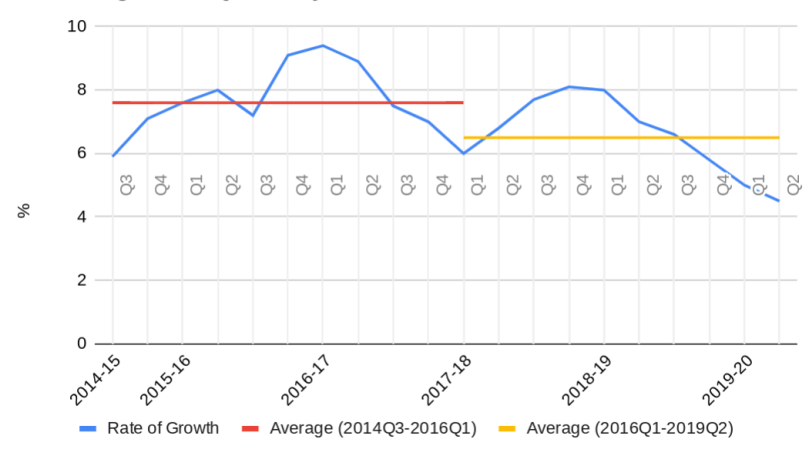
No, it’s not a recession, defined strictly in technical terms, i.e. on the whole, the level of activity hasn’t fallen, even though certain crucial sectors, like automobiles, are seeing a fall. What we have instead is a slow down, a severe one at that, with falling rate of growth of GDP for five straight quarters (figure 1). The Indian government is hiding behind economic jargon to obfuscate the reality that is biting the economy. The writing is on the wall. The Indian economy is facing a severe crisis and the sooner we come to terms with it, the better. Based on a recent paper in Economic and Political Weekly, this blog discusses the changing growth levels in the Indian economy, the reasons for the recent slowdown, and some possible short and long term solutions.Read More »
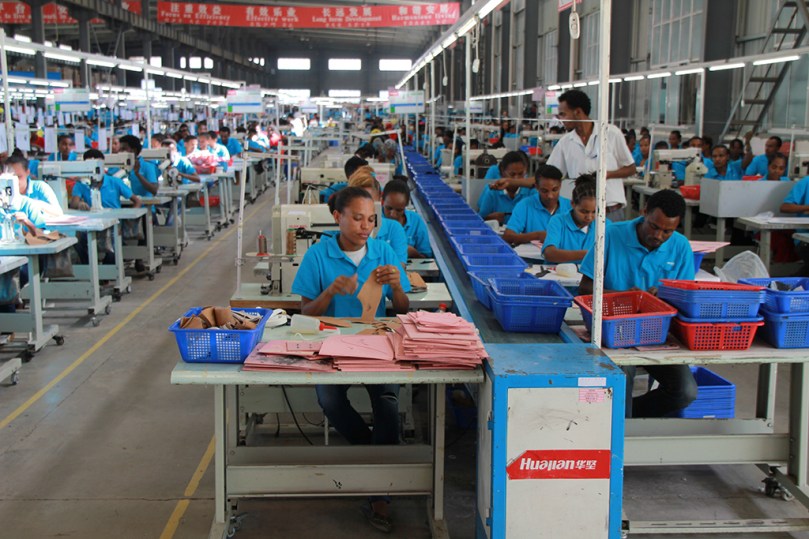

 Microfinance has been widely hailed as one of the most innovative tools for fighting against poverty. It has generated global attention over the last two decades, especially since the UN declared 2005 the ‘Year of Microcredit’ and the 2006 Nobel Peace Prize was awarded to microfinance pioneer Muhammad Yunus and the Grameen Bank. This led to a significant expansion of the sector in the last decade. According to the World Bank (2015), the microfinance industry is estimated to have $60-100 billion in loans outstanding, and several thousand microfinance organizations reach an estimated 200 million clients. 32.5 million of these clients are in India and 90 percent of them are women.
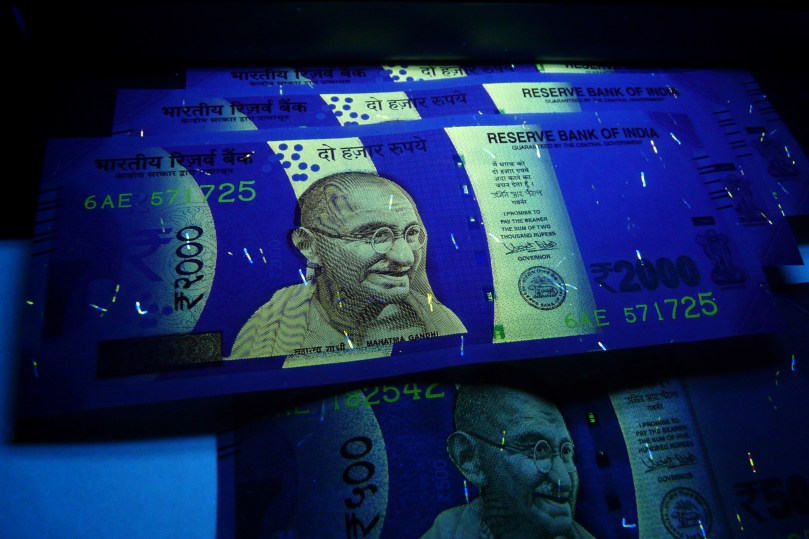 On 8th November, 2016, the Indian government announced that it was banning the use of 500 and 1000-rupees currency notes from midnight, effectively scrapping 86% of India’s currency notes by value. The Indian public would have to change the outlawed currency notes for new ones at bank counters by the end of the year.
 A decade has passed since the Global Financial Crisis (GFC) which seems an apt time to begin talking about the event that has pushed the concept of financial education to the core of global policymaking debates. Despite its growing popularity today, financial education has existed in the premise of global policymaking for the past few decades. The benefits of financial education seem endless; poor national financial literacy levels have been blamed for adverse socioeconomic effects such as high national household debt and/or a general irrational exuberance in financial consumption behaviour (see e.g.
 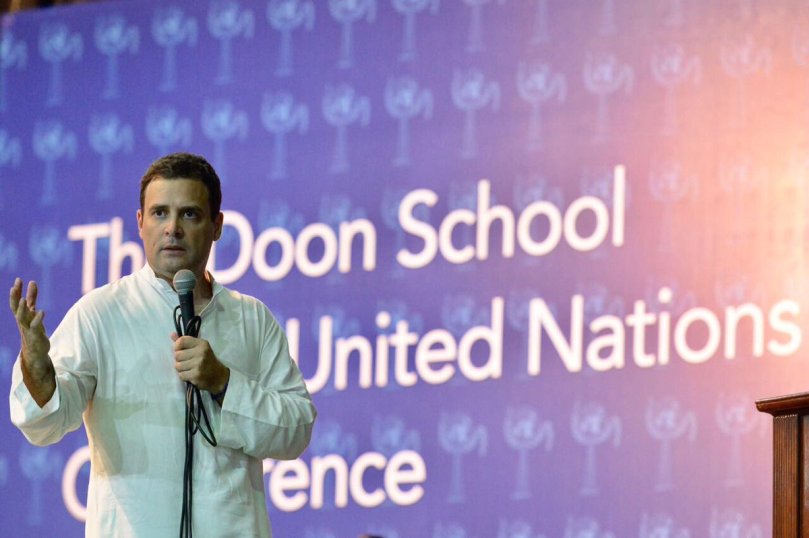 India’s opposition leader has
  Bradford deLong has recently argued that neoliberalism provides a way for former colonies to close the gaps with their erstwhile colonial masters. But this argument ignores the fact that several economic policies of colonial times were explicitly laissez-faire in nature.
