Constructing a Global History of Human Rights and Development

The history of global human rights has been, as Joseph Slaughter puts it: “hijacked” by Euro-American narratives (Slaughter, 2018). It has been claimed, through history books and the institutional memory of bodies such as the United Nations or Amnesty International, that human rights can be traced back to documents such as the Magna Carta, that they were intellectually developed and promoted globally through the ages of Enlightenment and Imperialism, and that they were enshrined in the Universal Declaration of Human Rights of 1948.

Even in recent decades, attempts to frame and conceptualise the latest milestone of human rights, which took place at the height of globalisation in the 1970s, was a Western ‘revival’ or ‘rediscovery’ of human rights as a transnational tool through which states could be held accountable for their violation of rights. Crucial reference points for scholars today include the so-called ‘Human Rights Utopia’ of the 1970s (see Moyn, 2010) or the development of ‘New’ Human Rights two decades later (see Nelson & Dorsey, 2008). To reconstruct the past, scholars often seek changes in the discourse of global institutions; they analyse the most widely reported human rights movements; they call upon the emergence and establishment of organisations such as Amnesty International; they run keyword searches of major international newspapers; and they look to the political discourse of major global players, all of which are largely based in the Global North.

No wonder, then, that the major turning point of the transnational human rights movement is so precisely associated with the year of 1977, when Amnesty International won the Nobel Peace Prize and US President Jimmy Carter incorporated human rights into the country’s foreign policy. The so-called utopia that was set forth during this transformative moment in history was that human rights came to represent an alternative to anti-establishment movements against US imperialism and consumerism. It also represented an alternative to socialist states, which for many of the Left was proving to be a disappointing avenue for meaningful change. A transnational social movement of solidarity was also imagined as the key to holding states accountable for the human rights violations of their own citizens.

The result of this revisionist history is not only an incomplete picture, but what Walden Bello calls “the [structural] resubordination of the [Global] South within a US-dominated global economy” (Bello, 1994 cited in Slaughter, 2018). As the agency of Global South-identifying actors is denied, so is their role in shaping what today are known as rights of self-determination, sustainable development, peace, minority, and rights to natural resources and the environment, among other things.

Yet there exists an alternative history to human rights that has been obscured through attempts to narrate the past. This history has been prevented from entering the debate, I would argue, for three key reasons: first, dominant historical narratives emphasise actors and institutions of the Global North as the leading protagonists in the process of the construction of human rights. Second, and as a result of the first, methodological approaches have been limited by what is perceived as the spaces within and through which concepts and practices of human rights are constructed and diffused globally. Third, potential alternative sources of ideas surrounding human rights and their global diffusion are and have almost always been brushed aside as anything but potential sources of human rights: they have been labelled as socialist, anti-colonialist, anti-imperialist, and even terrorist, none of which could possibly be compatible with human rights.

But the issue does not stop at asking the right questions. The problem cannot be solved simply by asking whether and if so what Global South actors and organisations contributed to human rights norms, concepts, and practices, but also how they did so. And this requires returning to the drawing board methodologically. If potential contributions do not take place within dominant institutions, state-to-state dialogue, and major international organisations, then we need to look beyond these spheres for our evidence.

Read More »

Living in the shadows of Dubai

Figure 1:. Dubai Marina, an affluent residential area in New Dubai. Photograph by Jonathan Ngeh, 2015.  

By achieving economic success while embracing market friendly policies: lower taxes, free trade, privatization and deregulation, Dubai has earned the reputation as a neoliberal success story. As it is typical of neoliberal economic policies, economic growth has not trickled down to the people at the bottom of the socio-economic pyramid. Rather, inequality has been reenforced, and Dubai consists of two distinct parts: ‘Old’ Dubai housing and representing the distressed and economically disadvantaged, and ‘New’ Dubai where the economically and politically powerful live (see Figure 1 and 2).  Existence of poverty alongside wealth puts pressure on both poor and rich city residents. Among the poor, the kind of pressure they face usually is related to the lack of money to provide basic needs for themselves and their dependents, as highlighted in Dawson’s remarks on Johannesburg (Dawson 2020). On the other hand, the rich (and also the poor) face pressure caused by challenges that are psychological or social or both. Drawing on ethnographic fieldwork with mostly African migrants in Dubai in 2015 and 2020, focusing particularly on their housing and labour market conditions, this piece’s central argument is that the extreme inequality in Dubai puts economic pressure on low-income migrants, the city’s poorest residents, while the juxtapositions of poverty and wealth right next to each other exert psychological pressure on the wealthy by instigating fear of low-income migrants because of crime concerns.

Figure 2: Deira, a district in Old Dubai where many low-income migrants live. Photograph by Jonathan Ngeh, 2015.  

With migrants accounting for over 80 percent of the population in Dubai and the UAE (de Bel-Air 2015, United Nations Department of Economic and Social Affairs 2019), the city and country stand out as a leading immigration destination in the world. While some of the Africans I encountered in the UAE travelled for studies or tourism, the vast majority of them had migrated for economic reasons–in search of employment or with the intention to establish their own businesses. Convinced by the prospects of greener pastures in Dubai, these economic migrants spent their savings to pay for the migration journey. In some cases, migrants or family members borrowed money at high interest rates to cover the cost of migration. In either case, the financial obligations of African labour migrants in Dubai increased because of migration. Upon arrival in Dubai, they were shocked to realise that opportunities are limited and the living conditions for the majority of migrant workers are unbearable.

Read More »

 A People’s Green New Deal: A Symposium

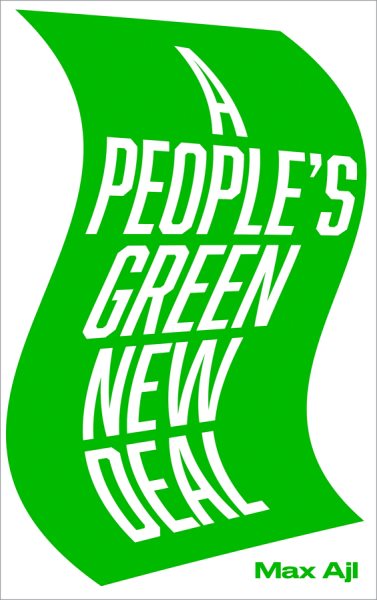
Max Ajl’s A People’s Green New Deal intervenes in current debates regarding green planning, green future, green stimuli, and eco-socialism. It surveys a wide range of existing literature on the ecological and social crisis, ranging from ruling-class “great transitions,” to eco-modernist elixirs of the right and the left which bank on technological solutions to today’s social and ecological problems. It then considers and critiques an array of liberal, left-liberal, and social democratic proposals, some of them going under the eco-socialist moniker, and shows how they rest on continued exploitation and primitive accumulation of the periphery. 

A People’s Green New Deal contributions lie in, first, using frameworks of dependency theory, accumulation on a world scale, and ecologically uneven exchange to illuminate the costs and consequences of distinct approaches to the climate crisis, left and right. Second, the book’s emphasis on agriculture, land use, and agro-ecology makes it unique amongst books on the Green New Deal and parallel debates. Its emphasis on decolonization, national sovereignty, anti-imperialism, and climate debt repayments from the North to the South is a third contribution. A fourth is how it deals with technology. 

This review forum assesses the contribution of A People’s Green New DealSakshi situates APGND in terms of a counter-epistemology to Eurocentric and empire-blind resolutions, if not really solutions, to the social and ecological crises to which mainstream Green New Deals are addressed. Sheetal Chhabria assesses APGND’s contribution to thinking on a planetary scale about appropriate planning for a just transition, while criticizing the book’s uncritical embrace of certain Indian nationalist tropes. Güney Işıkara raises questions regarding political agency and organization, the role of national-level planning in any form of national-level green transition, and how to approach anti-imperialism on a world scale.  

Read the contributions:

Beyond Green Restoration: An Eco-Socialist GND

Following the resolution introduced by Alexandria Ocasio-Cortez and Ed Markey, the term Green New Deal (GND) has become the gravitational center of climate action debates. On the one hand, conservatives, as well as some leftist circles, designate the AOC-Markey resolution as “socialist”. On the other hand, the term GND was first made public by Thomas Friedman in his NY Times column as a capitalistic and patriotic project which serves as “the basis of a new unifying political movement for the 21st century” (p.4). It comes as no surprise that so much political confusion accrues around the concept of a GND.

Max Ajl’s A People’s Green New Deal is the best leftist response I have read to the discussions whirling around this notion. It is clear-minded and well written. Politically, it constructs a consistent, uncompromising, anti-imperialist vision, well aware of the fact that tamed horizons are easily coopted and rearticulated by the ruling classes thanks to the elasticity of capital accumulation. Theoretically, its foundations are found in the “inherently polarizing” frameworks of dependency theory, world-system analysis, and (environmentally) unequal exchange (p.14).

Ajl evaluates GND proposals not only on the basis of targeted changes in physical production, but also in terms of their systemic implications. Some GNDs aim to preserve or strengthen capitalism, while others are designed to attack or abolish it (p.3). Correspondingly, the book is divided into two parts. The first one is concerned with what Ajl calls Capitalist Green Transitions (p.16) or “ruling class agendas” (p.20), while the second part sketches his vision of a People’s Green New Deal.

Read More »

Debunking the “Eco-Fortress Nationalism” of the AOC/Markey Green New Deal

tractor, tiller, tilling, equipment, agriculture, karnataka, india, transportation, mode of transportation, land, land vehicle, field, one person, landscape, agricultural machinery, day, nature, rural scene, plant, environment, driving, farm, dirt, agricultural equipment, outdoors, farmer, 4K

Photo: Farming in Karnataka, India.

Max Ajl’s People’s Green New Deal is a brutal reminder for the American left that even the most celebrated and progressive developments in American politics are still simply American politics, in other words they are a politics for America, and America first. Ajl situates both the longer history of environmental destruction and the response to it within a planetary frame without losing sight of geographical unevenness. The book is divided into two parts. The first part is where Ajl systematically debunks the American-centrism of the Cortez/Markey Green New Deal (GND). The second part is an imagination-widening exposition of an alternative People’s Green New Deal that centers the livelihood of the majority of the world’s people by putting forth an anti-imperial and anti-capitalist framework for a just transition. 

Read More »

A People’s Green New Deal – An Exercise in Just Knowledge Production

In his speech before the General Assembly of the United Nations in 1984, Thomas Sankara makes the following astute observation regarding the African petite bourgeoisie and its public intellectuals:  

“Our professors, engineers and economists are content simply to add a little colouring, because they have brought from the European universities of which they are the products only their diplomas and the surface smoothness of adjectives and superlatives. It is urgently necessary that our qualified personnel and those who work with ideas learn that there is no innocent writing. In these tempestuous times, we cannot leave it to our enemies of the past and of the present to think and to imagine and to create. We also must do so.”

In the same speech, Sankara continues to caution against planning for the uplifting of a nation if such plans are ignorant of, or are wilfully erasing, the disinherited masses and the wretchedness inherited by them. Sankara’s postulation, emerging from the socio-political contexts of the African continent, provides a sound theoretical foundation for knowledge production in the contemporary worlds we inhabit. The popular narratives around climate change have strived to communicate the gravity of planetary collapse and measures required to avert ecological and environmental crises worldwide. Nevertheless, the urgency of envisioning a new world shows little self-reflection as to its epistemic positions and privileges. Climate change discourses in the Global North, academic or otherwise, have largely been constrained by the desire to brave the planetary crises with limited disruption to existing race and class privileges. In terms of how the problems of climate change are identified and defined and the range of solutions to address them, the western epistemologies remain rudimentary.

Consequently, the range of green new deals or the visions for just-transition and sustainable utopias remain agnostic to the everyday realities and struggles of the Global South against imperialism and colonialism. It is unclear if Black, Indigenous, and People of Colour are better placed to partake in these futures than they are now. Max Ajl’s A People’s Green New Deal provides a refreshing and rich scholarly alternative to how an ideal green new deal should be imagined.

Read More »

Can Joan Robinson’s ideas cast some light on today’s profound economic challenges?

By Carolina Alves and Jan Toporowski

Cambridge Journal of Economics Special Issue / Deadline for submitting papers via CJE refereeing process: 30th April 2022.

2023 marks the fortieth year since the passing of Joan Robinson and her one-hundred-and-twentieth anniversary. This special issue of the Cambridge Journal of Economics aims at presenting a collection of papers that reflect the extraordinary breadth of Robinson’s career and examine what insights these might offer the economics profession and policy makers to address our seemingly most intractable problems of inadequate demand, rising margins with falling competition, and widespread and seemingly intransigent inequality and its consequences. For Robinson the purpose of our discipline is in understanding the real world to enable all global citizens to enjoy life to the full. It is therefore fitting that we follow her lead and demand that we ask of ourselves whether we have done enough to address her challenges to economic theory.

Despite making her international reputation in the Marshallian tradition of economics, she came to regard her generalisation of John Maynard Keynes’s theories and their integration with Kaleckian and Marxian insights as her more substantial contribution, along with a vigorous defence of rigorous evidence-based thought over inductive mathematical modelling. Among an impressive body of work, three books by Robinson mark key moments in the evolution of her ideas: The Economics of Imperfect Competition (1933), An Essay on Marxian Economics (1942), and The Accumulation of Capital (1956) (Marcuzzo, 2003).

In 1933, she made her international reputation with brilliant work within the orthodoxy on imperfect competition, offering an internal critique of the marginalist theory of distribution. Only a decade later, her reflections on reading Karl Marx persuaded Robinson to question the Marshallian methodology, in particular its polite theory of income distribution which became so incongruous during and after the depression (Marcuzzo, 2003).1 Finally, in 1956, she had the courage to follow the logic of her argument to examine the whole neoclassical theory of income distribution and its predominant method, facing the might of the now dominant American economics profession in the [in]famous capital controversy. She had to accept the pyrrhic victory of her interlocutors accepting she was right, yet the profession moving on regardless.

Read More »

International support for the least developed countries: moving out of the mainstream

Next January the next United Nations Programme of Action for least developed countries (LDCs) will launch in Doha. It will set the framework for the next 10 years of international support for the world’s 46 officially poorest and most structurally disadvantaged countries, home to around a billion people.  

LDCs are low-income countries confronting severe structural impediments to sustainable development. Membership of the category is based on three criteria: income per capita, human assets and economic and environmental vulnerability.  

Assistance for LDCs currently falls under three categories: trade, aid and a range of ad hoc measures broadly aimed at help with taking part in the international system, such as lower contributions to the UN budget and support for travel to international meetings like the annual UN General Assembly.  

Support is largely based on the premise that LDCs are artificially or temporarily excluded from global commerce. Preferential market access, temporary development assistance and help with participating in multilateral processes are intended to tackle this defect, in turn helping the LDCs ‘catch up’.  

Dating to 1971, the category is the only one recognised in UN and multilateral legal texts. There is no official ‘developing country’ or ‘middle income’ category with associated support measures. Low income countries are not specifically targeted, and the small and vulnerable states are only recognised as a working group at the World Trade Organisation. They are not acknowledged in the legal texts. 

Although donors don’t meet aid pledges and support doesn’t go far enough, official targets are possible because the LDC group is officially recognised in the UN system and has legal bearing. An example of such a target is the commitment by developed countries to deliver 0.15-0.20% of gross national income (GNI) in development assistance to LDCs. The European Union offers duty-free, quota-free market access to LDC exports under its Everything But Arms (EBA) trade scheme for LDCs. 

The theory behind support for LDCs is implicitly based on the mainstream economics view that LDCs lag behind because they aren’t exposed enough to correct market prices and conditions. The removal of so-called distortions like overseas tariff and non-tariff barriers, alongside temporary development assistance and help taking part in the global system, is supposed to free up these economies to play a fuller role in the international economy. Economic growth will drive development and reduce poverty. 

The evidence shows that for most LDCs this theory never worked. Until the pandemic the economies of some LDCs were performing well. Up to 12 could leave the category in coming years. A few, like Bangladesh, Cambodia and Myanmar, were able to take advantage of lower tariffs for their garment exports. These three countries account for 87% of imports to the EU under EBA.  

But half were supposed to meet the criteria by 2020, according to international targets. 12 graduations falls well short. The six that have left since the formation of the category in 1971 have not all done so because of better international market access or special support measures. Commodity exports, tourism or improved health and education are mostly responsible.  

The remaining LDCs aren’t catching up. The gap is widening. The pandemic devastated the group. Gross domestic product (GDP) shrank 1.3% on average in 2020, with the economies of 37 contracting during the year and extreme poverty in the group rising by a staggering 84 million. But even before Covid, average real GDP per capita for the group had long diverged from other developing countries and the rest of the world.  

Read More »