In a recent article, I discussed the poor state of Latin American economies drawing on some rather obscure works by Raúl Prebisch, explicitly addressed to the disturbing role of capital flows on (primarized and open) Latin American economies. I find that the post-2008 cyclical trend of capital flows is an exacerbated version of what has been affecting Latin America since the days of Prebich .
Mainstream literature on capital flows to developing countries has shared two important commonalities since the 1990s. This literature, for example in the tradition of New Institutional Economics, tends to assume a beneficial effect of capital inflows, which leads to an improvement of peripheral institutions, whose deficiencies are ostensibly the main cause of economic turmoil and/or failure in attracting capital flows. In doing so, however, mainstream economists deliberately overlook the asymmetric characteristics of the international monetary system and the persisting hegemony of the US Dollar.
In a recent paper we engaged with common critiques of the concept and the movement for more pluralism in economics. We found that while the majority of the critiques are either unfounded, easy to dismiss or address strawmen, others do highlight challenges the pluralist movement should address.
In 2017, we were spending a week at the Summer Academy for Pluralist Economics, when the German economist Johannes Becker published a blog article on Makronom entitled “The Movement for Pluralist Economics risks its success” (translated from German). He argues that the movement for pluralist economics faces a decision: it could continue to be a movement of fundamental opposition against the ‘economic mainstream’, or it could start striving for ‘real change’. Economics professors, at least in Germany, Becker argued, were highly perceptive and open-minded towards alternative perspectives in economics. If the movement would focus more on constructive engagement with economics faculties rather than on fundamental critique, then there would be a greater amount of pluralist seminars and lectures.
Being surrounded by around 100 fellow pluralists who dedicated a week of their summer to study different approaches to economics, the accusation of simply being a movement of unconstructive opposition seemed alienating to us. So we drafted a response, arguing that pluralist economics is about both critique and the construction of alternative practices. Based on this response, we wrote an article evaluating the critiques posed toward pluralist economics, drawing from philosophy of science, philosophy of economics, and philosophy of interdisciplinarity. When writing the paper, which has recently been published in the Journal of Economic Methodology, we indeed found many critiques of pluralism to be unconvincing, yet we also discovered that some critiques of pluralism are not easily dismissed. They should be taken seriously by pluralists because an honest engagement with these critiques rather than the neglect of their relevance could, we believe, make the movement for pluralism in economics more convincing and successful.
But his work is often misunderstood, not only by orthodox economists but also by others – such as ‘greens’ – who seek inspiration in his writings. Economists, if they refer to his work at all, have tended to focus on the quantitative labour theory of value, ignoring what Marx called the qualitative theory of value: his critique of the economic categories of ‘bourgeois’ economics which mystify – and hence also justify – the reality of what is really going on. The concept of fetishism is crucial to this theory, but by economists this has been either ignored or treated as the work of Marx the philosopher or Marx the sociologist. Marx introduces the concept of commodity fetishism in the very first chapter of Capital Volume I, where he seeks to get to grips with the mysterious phenomenon of exchange value. Rather than simplistically equating value with price – as is the practice of the market system and mainstream economics – he delves deep into the beliefs and practices that constitute and sustain the capitalist system. In other works, he applies the concept of fetishism to capital, money and interest-bearing capital. By reference to what he calls the ‘Trinity Formula’ he shows how, by presenting profit as the return on capital and rent as the return on land, both profit and rent are taken for granted, and go unchallenged. That the surplus value generated in production accrues solely to capital is treated as somehow ‘natural’.
In my book, I show the continuing relevance of Marx’s theory today, especially with regard to finance and the environment. Both the financial crisis of 2008 and the continuing crisis of environmental destruction are related to the way in which the market increasingly extends its grip over our lives: through the financialisation of everyday life, and through the use of market instruments and market principles that shape our relationship with nature.
On the 21st of November 2020, Mumbi Seraki – a YouTuber – uploads a new ‘prophetic update’ titled ‘They’ve CANCELLED CHRISTMAS!’. Her YouTube shows are followed by more than 60 000 followers across Sub Saharan Africa and deal with, what she refers to as, the ills of society, the struggles of African nations and ideas for a better Africa. She opens her ‘prophetic update’ with the following statement:
“I really do pray that you are well in all your ways and that you are moving into living life truly on your own terms and out of the ‘matrix’, so that you can be free and you won’t have to become one of these mask wearing zombies walking around. Really, get out of the big cities, if you can, don’t wait till the last minute.”
Seraki’s statements should be interpreted against the background of the Covid-19 havoc that raises questions about how safe it is to live in major cities such as Nairobi where most Covid-19 cases are being reported. Nonetheless, the image of cities populated by ‘zombies’ affirms questions about the (in)habitability of Kenyan cities increasingly beleaguered by the pressures and absurdities of late capitalism that were already relevant way before the pandemic. Her advice to liberate oneself from the ‘matrix’ of life in the capital by moving upcountry is particularly intriguing and will be further unpacked hereinafter.
In this blogpost, I shed light on life ‘under pressure’ from the perspective of Nakuru, a vibrant secondary Kenyan city of approximately 500, 000 inhabitants situated 160 km Northwest of Nairobi, where I conducted more than 18 months of ethnographic research. My fieldwork shed light on how people in Nakuru made sense of their urban lifeworlds, yet did so with ‘heat’, a leitmotiv illuminating different ‘confrontations’ about a variety of opposing or cohesive uses, ideas and/or meanings of technologies, symbols, and substances that flow through the highland city.
The recent ‘insurrection’ on Capitol Hill should put an end to any liberal illusions that 2021 would usher in, in Biden’s words, a return to decency. Surreal images of the QAnon Shaman roaming the US Senate may yet become one of the defining photographs of the Trump presidency. In many ways it is symbolic of the President himself – inchoate and unashamedly atavistic yet, emboldened by law and order, obstructive and corrosive.
Many of these themes are touched upon in Eric Lonergan and Mark Blyth’s short book Angrynomics. In many senses it is a timely book, published just weeks after the murder of George Floyd and in the midst of the largest global recession since the Second World War, these are fertile grounds for anger. Certainly there is very little to dispute about Lonergan and Blyth’s premise:
“We have an abject failure of policy. Rather than presenting a major programme of economic reform, the global political elite has offered nothing substantive, instead choosing either to jump on the bandwagon of nationalism or insist that nothing fundamental is wrong… The political classes, bereft of ideas, are now desperately peddling old ideologies and instincts, or pursuing bizarre distractions like Brexit.”
As a result of this abject failure, people are angry. They are either publicly anger or privately angry. That public anger either manifests itself in moral outrage (think, for instance, of an Extinction Rebellion protest) or tribal rage (for example, and this is used in the book, fans at a football match). Private anger, meanwhile, gives us an insight into the daily micro-stresses of people’s lives. This is the Lonergan and Blyth typology of anger.
Whose Anger?
While the authors are clear that “we need to draw a clear distinction between legitimate public anger and cynical manipulation of tribal anger for political ends” (22), their analysis often fails to live up to the task. Through the centrality of “legitimate moral grievances in the Rust Belt” in explaining the election of Trump (25) and the “real stressors” of immigration driving the Brexit vote (111-112), Angrynomics ends up sidestepping important discussions of race for an overly simplistic explanation of class.
State capital has increasingly taken on marketized forms. From state enterprises to sovereign wealth funds, it is increasingly difficult to find much difference at the operational level with cognate organizations in the private sector. Manager cadres have become professionalized, with many having spent significant time honing their skills in the private sector before taking up their positions in state entities. Business practices and corporate governance standards typical of private capital and the syllabi of elite business schools have become the norm. This includes, as to be expected, an embrace of a shareholder value logic. State entities in doing so are becoming increasingly financialized, not dissimilarly to their peers in the private sector.
By Jimi O. Adesina, Andrew M. Fischer and Nimi Hoffmann
In a piece, published on 22 December 2020, that he describes as the most important thing he wrote in 2020, Nic Cheeseman penned a strong criticism of what he calls the ‘model of authoritarian development’ in Africa. This phrase refers specifically to Ethiopia and Rwanda, the only two countries that fit the model, which is otherwise not generalisable to the rest of the continent. His argument, in a nutshell, is that donors have been increasingly enamoured with these two countries because they are seen as producing results. Yet the recent conflict in the Tigray region of Ethiopia shows that this argument needs to be questioned and discarded. He calls for supporting democracy in Africa, which he claims performs better in the long run than authoritarian regimes, especially in light of the conflicts and repression that inevitably emerge under authoritarianism. His argument could also be read as an implicit call for regime change, stoking donors to intensify political conditionalities on these countries before things get even worse.
Cheeseman’s argument rests on a number of misleading empirical assertions which have important implications for the conclusions that he draws. In clarifying these, our point is not to defend authoritarianism. Instead, we hope to inject a measure of interpretative caution and to guard against opportunistically using crises to fan the disciplinary zeal of donors, particularly in a context of increasingly militarised aid regimes that have been associated with disastrous ventures into regime change.
We make two points. First, his story of aid dynamics in Ethiopia is not supported by the data he cites, which instead reflect the rise of economic ‘reform’ programmes pushed by the World Bank and IMF. The country’s current economic difficulties also need to be placed in the context of the systemic financial crisis currently slamming the continent, in which both authoritarian and (nominally) democratic regimes are faring poorly.
Second, we reflect on Cheeseman’s vision of aid as a lever of regime change. Within already stringent economic adjustment programmes, his call for intensifying political conditionalities amounts to a Good Governance Agenda 2.0. It ignores the legacy of the structural adjustment programmes in subverting deliberative governance on the continent during the 1980s and 1990s.
By Jo Inge Bekkevold, Arve Hansen and Kristen Nordhaug
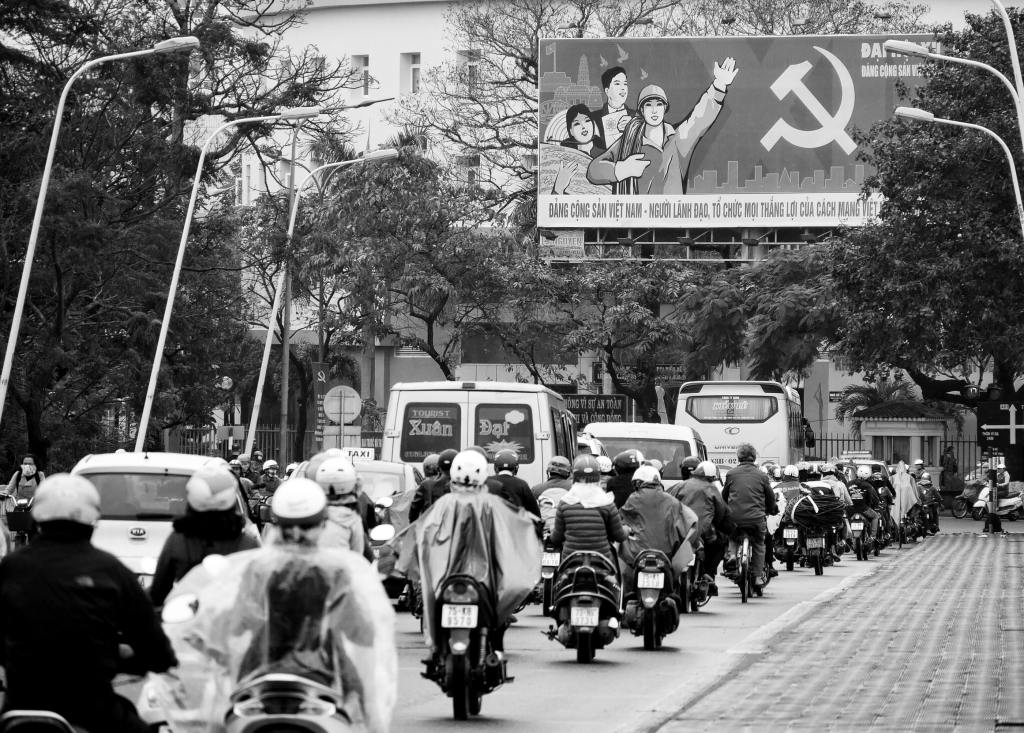
China, Vietnam and Laos have for three decades been among the fastest growing economies in the world. In other words, three of the best growth performers in global capitalism are authoritarian states led by communist parties with socialism as the official development goal. This fact has received surprisingly little attention, especially when considering their strong performance on a wide range of development indicators. Many claim China and Vietnam indeed represent some of the most impressive “development success stories” the world has seen in recent decades. The three countries claim to have found their own model of development combining a market economy with socialism – ‘the socialist market economy’. According to official definitions, this is not capitalism, but a more sustainable and socially just way of making a market economy work for national development and the improvement of living standards. In “The Socialist Market Economy in Asia: Development in China, Vietnam and Laos”, an edited volume newly published by Palgrave Macmillan, we engage with the coherence, achievements and failures of this particular development model.