During the last two decades, Modern Monetary Theory (henceforth MMT) has won wide academic recognition and public influence. Its most prominent achievements include shifting the public debate on the conduct of economic policy and reviving interest in the theory of money. The former tends to attract most of the attention of both advocates and critics of MMT, but this is unjustified. MMT policy conclusions result from its underlying understanding of money, as some of the more illuminating MMT thinkers make abundantly clear (Bell, 2001; Tcherneva, 2006; Wray, 2010, 2014). A far richer assessment of MMT economic policy proposals would result by first considering the foundations of its theory of money, that is, neo-Chartalism.
In a recent article, we contrasted MMT with the Marxist theory of money. We showed that there were four important points of disagreement between these two schools of thought, namely on: (i) the ontology of money, (ii) the state and money, (iii) state economic policy, and (iv) world money and monetary sovereignty. We supported our argument with historical examples that we omit here for reasons of space.
This book is a tribute to Sam Moyo. Apart from the great mind and big heart that he was, Moyo was also one of a few in our age to distinguish himself in setting new standards for knowledge production in the social sciences. Some might expect such a feat to require the approval of established centers of learning in the North. But his litmus test was relevance to the tectonic shifts underway in Africa and the South since decolonization. Moyo became a leading light in the quest for epistemic sovereignty at a crucial juncture, when Africa and the South as a whole were succumbing to neoliberal adjustment, and when his own country, Zimbabwe, was gaining independence.
Who was Sam Moyo?
Moyo belonged to the generation of Pan-Africanist intellectuals responsible for defending the gains of liberation and devising strategies of epistemic survival in the midst of structural adjustment. Their epicenter was the Council for the Development of Social Science Research in Africa (CODESRIA), of which Sam eventually became president. He distinguished himself by his relentless drive to build and defend research capacities in Africa, refusing the lure of professional stability and fame abroad. Those who had the good fortune to meet him would affirm that he pursued this mission with flair, generosity, and a ‘charming inflexibility’ on matters of ideology. In 2002, he founded the African Institute for Agrarian Studies (AIAS), in Harare, Zimbabwe, against all odds, in the midst of radical land reform and Western sanctions.
Moyo also forged ahead with the building of new solidarities across the South to recuperate a common front. This he did via CODESRIA, as well the Third World Forum (TWF) and World Forum for Alternatives (WFA) led by Samir Amin, in which he participated over many years. In the 2000s, he also spearheaded the Agrarian South Network (ASN), a new tri-continental initiative with its own research agenda, regular activities, and publishing outlet, Agrarian South: Journal of Political Economy. Those of us who were closest to him knew that the whole of this work of art was much larger than the sum of its parts: new epistemic standards were being set for generations to come.
We locate Moyo’s trajectory in the Pan-Africanist tradition of political economy, where we made significant contributions to the evolving land, agrarian and national questions at continental level and in his home country. In the introductory chapter of the book, we trace his overall contribution to tri-continental solidarity in the social sciences and the development of a global research agenda. We bring to light Moyo’s leading role in the frontlines of the struggle for epistemic sovereignty in Africa and the South at a time when neoliberal restructuring set its sights on autonomous knowledge production and when epistemological questions succumbed to a potent ‘cultural turn’. Moyo fought with great perseverance for autonomous institutions in Africa and the South and for the integrity of the intellectual traditions produced in the struggles for liberation. He defended an approach to political economy which was homegrown in Africa and fundamentally anti-imperialist, against Western intellectual trends, whether materialist or culturalist. This was the vision and mission that defined his Pan-Africanism, tri-continental solidarity, and cosmopolitanism.
Writing about Indigenous rights or climate and environmental justice movements as a non-Indigenous person is difficult and complex. The magnitude of difficulty becomes manifold if the authorial voice falls somewhere on the white, western knowledge spectrum. What we have to say matters less than what we have learned in thinking with the Indigenous people and their knowledge forms. For non-Indigenous scholars, there is a constant need to be alert to the possibilities of reproducing colonial power structures and epistemic frameworks while engaged in knowledge production. The only way out of this conundrum is to constantly learn from Indigenous voices and epistemologies and be sensitive to structural inequities and epistemic injustices that have marred the academe. It is not adequate to merely provide nodding acknowledgement to the idea of environmental justice. Interrogating the colonial and settler colonial structures within environmental movements must be a continuous process. Particularly, the idea of Indigenous environmental justice is yet to assume the place it deserves in the literature on environmentalisms, environmental activism, or even Marxist ecology. While Black-Green solidarity and alliance is an indispensable condition for the flourishing of the environmental movements, the work towards achieving it has been disappointingly slow. These concerns resurfaced as I read Andreas Malm’s new work How to Blow Up a Pipeline.
“You need pressure to make water flow” Nikhil Anand
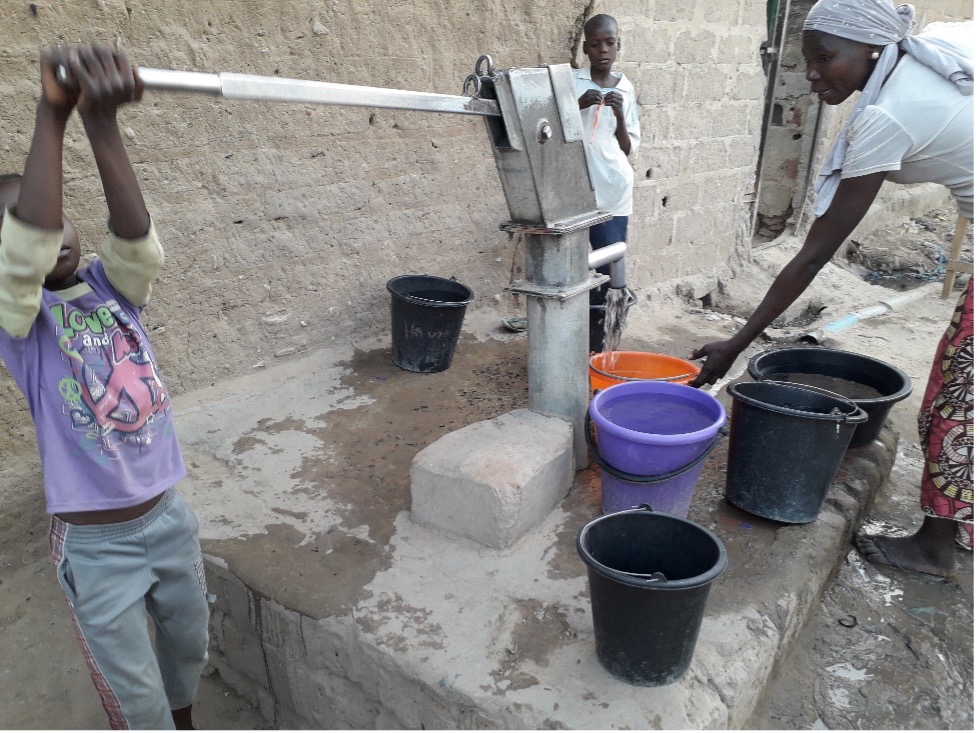
Pressure is not always a metaphor for “constraints” or “burden”; it is also a concrete and basic requirement for municipal water supply. Across many cities of the Global South, end-users, city officials, development NGO professionals or agents of the water business (street porters, water fountain managers or public water tap owners) struggle to provide and access water services – a process often characterized by negotiation and contestation. In N’Djamena, Chad, hardships linked to everyday water access fuel two distinct paradoxes. First, maintaining water pressure is a constant source of economic pressure. Before the Covid-19 pandemic, end-users were already compelled to adapt their “hydraulic habits” to their needs and financial resources. Evidence on the ground indicates that the pandemic has introduced a second paradox: the Chadian state has taken official steps to mitigate economic pressure in the daily life of inhabitants in Chad funding a 6 month free water policy, but this has done little in practice beyond decreasing the water pressure (the necessary force that pushes water through pipe, makes it flow and available to end-users) for N’Djamenois who need it most. As such, this blog post argues that economic pressure for the poor has increased while water pressure has dropped as a result of the pandemic and a government intervention that explicitly aimed at addressing the issue Quite predictably, the pandemic has generated additional economic constraints on informal businesses and might have complicated an already knotty landscape in addition to tremendous climate-related problems, foremost among them flooding. However, available evidence suggests that the policy designed to alleviate the burden of bills on those in need failed. Instead of increasing water availability, it reduced and in some cases even cut the water flow. The limited extension of the water supply network also made the policy pointless to many, while wealthier end-users connected to the water supply network enjoyed the policy as a bonanza. This demonstrates that infrastructural expansion, not just emergency funding, is critical to any meaningful water and sanitation improvements.
There is a long-standing debate on how economics as a subject is gender blind giving rise to various branches within the subject that seek to address ‘the woman question’ (as early feminism has been labeled) within the discipline. Giandomenica Becchio’s book A History of Feminist and Gender Economics is not merely an attempt to understand the history of economics and how the various dimensions of ‘the woman question’ have entered the discipline of economics over the years. The book also explores the work of women economists who mostly remained unheard in the discipline, the women who struggled to enter into the academic realm and the debates within these economists about addressing ‘the woman question’.
“Defund the Police” is a powerful slogan. It articulates a vision of a better world that so many of us on the left want to live in. A world free from the arbitrary state violence on display in the killings of George Floyd, Breonna Taylor, and Eric Garner. At the same time, either implicitly or explicitly, it also expresses a strong desire to address the problems that afflict American society with redistribution instead of violence through the provisioning of public goods such as education, health care, housing, and the like. To be sure, I want more than anything to live in this world, one without policing and with robust social democratic programs like universal single-payer health care and guaranteed housing. However, the politics of defund the police is not how we get from here to there.
The Israeli occupation has consistently inflicted disastrous economic costs on the Palestinians, costs that economists have examined for decades. One dimension that has been missing in these examinations, however, relates to the distortions in the structure of the Palestinian economy, and the detrimental impacts of these distortions. The term economic structure refers to the contribution of different economic sectors, including agriculture, manufacturing, construction, and trade, to the key macroeconomic variables of output (GDP) and employment.
Whereas a comprehensive study of these structural distortions is beyond the scope of this blog post, we zoom in on one particular economic sector that has been playing an increasingly dominant role in the Palestinian economy: internal trade. Briefly, internal trade refers to the retail and wholesale buying and selling of goods, including trade with Israel. The increased relevance of the contribution of internal trade to total economic activity in Palestine is part of an ongoing shift away from productive sectors, such as agriculture and manufacturing, towards services, trade, and construction.
This post argues that the dominance of internal trade at the expense of productive sectors is neither a result of a conscious policy effort by the Palestinian Authority (PA) nor an outcome of “laissez faire” market governance. Rather, it is a byproduct of Israeli occupation policies, and a clear consequence of the Palestinian economy’s dependence on the Israeli economy since 1967. The post argues that internal trade is a microcosm of the Palestinian economy as a whole, highlighting the futility of international and donor support for development under occupation. Rather, what is needed involves empowering independent, transparent, accountable, and collective Palestinian policy-making, a quality of leadership and governance that the Palestinian leadership of the last 25 years cannot lead or carry out.
Although social reproductive work has historically been associated with women in different modes of production, with the spatial separation of reproduction from production in industrial capitalist society, women were further associated with the domestic sphere and reproductive work. The burden of reproductive work on women has increased even more in the last four decades as a result of neoliberal policies. Neoliberalism, which is characterised by the increasing privatisation of social reproduction and worsening labour conditions, has forced more women to accept low-paying, informal jobs while at the same time performing an increased amount of reproductive work in their families due to significant cuts in social welfare provisions.
Today, the COVID-19 pandemic has once again shown the great importance of social reproduction to international and national political economies, and the destructive effects of neoliberalism on lives on a global level. Thus, in both the academic and political arenas, we need once again to underline the centrality of social reproduction and women’s unpaid reproductive labour to society and capitalist production.
In my recently published article, I suggest a methodological-analytical approach to understand the relations of production and social reproduction: a comprehensive and relational approach that locates these social relations in their historical and geographical context and within the everyday.