Abolition Will Not Be Randomized

28476745294_cf7a695ec4_o

By Anastasia Wilson and Casey Buchholz

In the wake of the current uprising in support of Black Lives Matter, there has been increasing interest in the use of mainstream empirical methods in economics — like randomized control trials (RCTs) and administrative data evaluation — to address issues of racism and violence in the institution of policing. These interests are well intentioned, but similar to prior debates, we are reminded that “there is reason for concern” about the relevance of these approaches amidst a mass movement calling for deep structural and institutional change. In just two weeks, mass protests have sprung up across the U.S. and the world calling for the defunding, disbanding, and abolition of police as well as the dismantling of white supremacy. This moment has the potential to bring about an institutional and structural shift in our politics, society, and economy. Given this, we will echo many of the concerns shared by economists about the limits of some empirical methods, the biases embedded in administrative data, and the relevancy of these approaches to the current moment calling for immediate change. Read More »

Addressing the Pandemic in the Philippines Necessitates a New Economic Paradigm

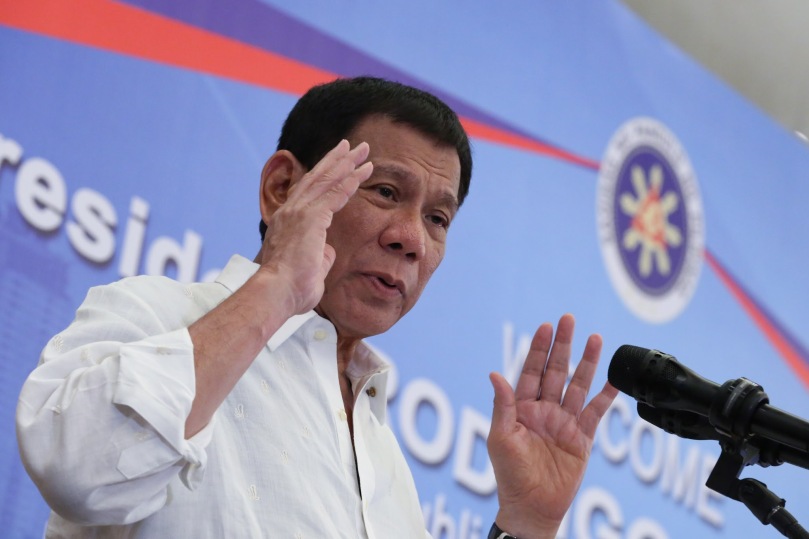
Rodrigo_Duterte_delivers_his_message_to_the_Filipino_community_in_Vietnam_during_a_meeting_on_September_28In his late-night Talk to the Nation on COVID-19 on 6 April, Rodrigo Duterte, the populist President of the Philippines, echoed the affirmation of leaders from rich countries in North America, Europe, and Asia: to do “whatever it takes” for the economy to survive the pandemic. The problem, however, is that, on his own admission, Duterte is incompetent in economics. His stubbornly militaristic mindset and police-centric approach to governance is even more problematic when dealing with complex developmental causes and impacts of the coronavirus outbreak.

Yet the Philippine state’s inadequate institutional capacity to respond to the epidemic goes deeper. Given the national economy’s position in the hierarchical global economic system, its structural weaknesses impacts on how effective the government’s response can be. The current mainstream approaches to resolve the pandemic and the multiple crises of capitalism would fail to address the convoluted historical process of maldevelopment of the Philippines. Thus, a radical political strategy with a new economic paradigm for post-pandemic reconstruction is needed.    Read More »

Financializing state capitalism: Exchanges, financial infrastructures & the active management of capital markets in China

DCE trading floorThe development of capital markets has been a core focus of financialization research. For Epstein, financialization ‘means the increasing role of financial motives, financial markets, financial actors and financial institutions in the operation of the domestic and international economies’, while Pike and Pollard define financialization as the ‘growing influence of capital markets, their intermediaries and processes in economic and political life’. Other scholars also attribute a significant role to capital markets in financialization processes, be it in the dissemination of market-based financial activities and practices, the rise of shareholder value-oriented corporate governance, or ‘the increased ability to trade risk’. At the heart of and as a precondition of many aspects of financialization stand capital markets and their development. 
This is not only the case when it comes to financialization in advanced economies, but also with respect to the study of financialization in developing and emerging economies. Financialization processes are not uniform, they are rather variegated and refracted by national institutional settings that lead to different trajectories of financialization. As Lapavitsas and Powell emphasized, ‘both the form and the content of financialization vary according to institutional, historical and political conditions in each country’. This has also been picked up in debates about the relationship between financialization and the state. Previously, many scholars argued that financialization often results in a relative loss of state power vis-à-vis finance and the effects on developing economies are often described as potentially negative with financialization for instance decreasing their borrowing capacity and thereby policy space or deepening existing power asymmetries between states. But stemming from earlier discussions on transformations of the developmental state, more recent scholarship has highlighted that financial market development has often been actively facilitated by states. It argues that an increasing hybridization of financialization processes takes place in which state and (quasi-)state institutions often co-constitute financialization processes. 

Contributing to the growing literatures on variegated financialization and the state, in a paper titled ‘Financialization with Chinese characteristics? Exchanges, control and capital markets in authoritarian capitalism’ (recently published in Economy & Society) I argue that states are not only important actors facilitating financialization but can also exercise a considerable degree of control over financialization, thereby shaping its very form. Instead of a financialization process that follows a neoliberal logic and constrains state power, what we see in China is a ‘financialization with Chinese characteristics’ where the state actively tries to manage financialization and its social outcomes. Read More »

Pandemic Discourses – A Global Contagion Demands Global Perspectives

EYjy6gEWAAAKYPI


By Sakiko Fukuda-Parr, Manjari Mahajan, and Mark W. Frazier

As the inaugural issue of Pandemic Discourses goes online, 4.7 million cases of COVID-19 and nearly 320,000 deaths have been recorded by the World Health Organization. The waves of cases and deaths have been closely followed by mounting economic losses, leaving governments, communities, and individuals scrambling to find appropriate responses. Yet, even in this uniquely global moment, popular discourse around the pandemic has remained trapped within familiar terms.

Media coverage has to a large extent focused on experiences of the United States and Europe. The frameworks developed to respond to the pandemic have also been US/Euro-centric, frequently inward-looking and isolationist, paying scant attention to expertise, knowledge, and capacities elsewhere. The experiences of other parts of the world, even when taken into account, often serve to cement prior prejudices. In response to this lopsided discussion, Pandemic Discourses aims to foster a more expansive dialogue that encompasses voices from the global South, including China, India, and beyond.Read More »

The COVID-19 Distraction and Brazil’s Environmental Cliff

Amazon RainforestBrazil faces boiling social unrest. An institutional crisis breeds entropy into an already stressed social system fraught with inequality, increasing poverty and an escalating number of deaths from coronavirus. 

A few days ago, despite another daily mass body count, the country stopped to watch the footage of a 22nd April meeting with President Bolsonaro’s cabinet. The tape release was commanded by a Supreme Court judge in an inquiry into an alleged interference by Bolsonaro in the Brazilian federal policy to protect one of his sons, currently under investigation.

The footage is horrendous to the democratic sensitivities and bitter to any political or civic taste. But I would like to point out one single intervention in the meeting that speaks to the country’s entrapment into its own version of ‘fail-forward’ neoliberalism. It reveals a government fixated in dismantling any piece of State regulation and privatizing any available company owned by the State. 

Philip Mirowski has argued in his 2013 book Never Let a Serious Crisis go to waste that cognitive dissonance boosts neoliberal thought to the point that no countervailing evidence can shake its disciples’ convictions of its ultimate truth. No matter how apocalyptical a crisis may seem, there is always reason to blame government intervention for all evils plaguing the Earth. Read More »

The Nature of Social Reality: Issues in Social Ontology (Review)

9780367188931

Review of Lawson, T. (2019). The Nature of Social Reality: Issues in Social Ontology. London and New York: Routledge.

Ontology is the study of being. Social ontology is the study of social being or, in other words, the study of the nature and basic structure of social reality. We all do ontology all of the time, economists included, whether we like it or not. For all practices carry ontological presuppositions. Economists only have a choice between doing ontology explicitly or implicitly. Tony Lawson’s contributions stand out and are of such profound significance precisely because he explicitly grounds his analysis in an account of social ontology. It is only by redressing the ontological neglect that has for some decades characterised the discipline that a productive transformation of economics is at all feasible. 

Lawson is perhaps best known amongst heterodox economists for his critique of the mainstream emphasis on mathematical modelling. Lawson shows that the implicit ontological presupposition of an insistence of mathematical modelling is a world of isolated atoms and argues that, as the social realm is not characterised by isolated atoms, the mainstream approach will produce largely irrelevant research. However, it would be wrong to consider this critique to be his major contribution. Rather, it is but one of an increasing number of powerful (sometimes startling) results derived from Lawson’s three-decade project of developing and defending, along with other participants of the Cambridge Social Ontology Group, an account of the nature of social reality. 

The Nature of Social Reality: Issues in Social Ontology provides the latest developments that Lawson has made in the field of social ontology. Here, he sets out an account of social ontology that has come to be regularly referred to as a theory of social positioning, demonstrating its explanatory power. An exciting feature of the book is that it sets out the theory of social positioning in its most advanced form to date and then puts it to work through analysing the nature of the corporation, money and emancipatory practice. Whilst Lawson is pursuing themes in social ontology at an advanced level, he takes great pains to ensure that the analysis is everywhere accessible. The detailed and provocative accounts of the corporation and of money provide ample illustrations of the enormous potential of the social positioning framework.  Read More »

Cambridge Journal of Economics Special Issue on Financialisation in developing and emerging economies: Manifestations, Drivers and Implications Deadline 31st August 2020

Screenshot 2020-05-18 at 08.07.58In December 2018, we organised a two-day workshop on “How to Conceptualise Financialisation in Developing and Emerging Economies? Manifestations, Drivers and Implications” at Girton College, University of Cambridge. The idea behind this event was to move away from a significant focus on developed economies when discussing financialisation phenomena and give more space to find out what is happening in developing and emerging economies (DEEs). Existing studies on DEEs have often focussed on particular case studies. Investigating empirical aspects already observed in developed economies, There have been both limited attempts to engage with the concepts and perspectives from the Global South and at systematising the literature and in analysing particularities of DEEs.

The workshop was a success in many fronts, such as attendance, quality of papers and exchange of ideas. Five roundtables attempted to encompass key crucial aspects of this discussion in the context of DEEs, namely, Financialisation and The Global Economy, Financialisation and Production, Variegated Financialisation, Financialisation and the State, and Micro-financialisation. This was complemented by two excellent plenaries approaching both the theorisation of financialisation in DEEs and the avenues for future research. See the programme here.Read More »

Book Review of Money, Markets, and Monarchies: The Gulf Cooperation Council and the Political Economy of the Contemporary Middle East

71Hnm6fLtjL

Money, Markets, and Monarchies: The Gulf Cooperation Council and the Political Economy of the Contemporary Middle East, Cambridge: Cambridge University Press, 2018. ISBN: 9781108453158 (paper); ISBN: 9781108614443 (ebook)

Adam Hanieh’s book ‘Money, Markets, and Monarchies: The Gulf Cooperation Council and the Political Economy of the Contemporary Middle East’ is one of the most important works on contemporary Middle East. The book analyses the specificity of the Gulf Cooperation Council (GCC) as part of global capitalism by focusing on the socio-economic structures of the six Gulf States, the interlinkages between them and other socio-economic and financial relationships with the rest of the world. Joining other scholars, Hanieh draws attention to the fact that scholarship on the Middle East including the GCC has inclined towards an exceptionalism which overwhelmingly focuses on the Middle East as a resource-rich country and a site of various conflicts. This reductive emphasis diminishes the various ways in which the region integrates the contemporary patterns of capital accumulation and historical lineages of familial and monarchic capitalism. As he mentions, even the modern concept of the ‘BRICS’ excludes the large population of the Middle East. Filling this vacuum, the book focuses on how the GCC absorbs and reproduces contemporary modalities of capital accumulation in diverse sectors including finance, agribusiness, real estate, retail, telecommunications, and urban utilities. The six states of Gulf Cooperation Council (GCC) including Saudi Arabia, the United Arab Emirates, Kuwait, Qatar, Oman, and Bahrain have special linkages with global powers including the US, Israel, China and other Arab states. As important logistics hubs and sites of intermediate supply chains these states also connect with other countries.Read More »