On the Journals: Western Populism and Economic Development

Donald_Trump_by_Gage_Skidmore_5.jpeg

The election of Donald Trump last year and Britain voting to leave the EU (‘Brexit’) left a lot of people angry and confused. While there was a lot of in-depth media coverage trying to make sense of the phenomenon immediately after the fact, the academic analysis is as usual late to the game because of the lag associated with academic publishing

Only these past couple of months have academic articles dealing with the issue started appearing. Real World Economics Review, for example, published an excellent special issue on Trumponomics in March. Although the analysis tends to be Western-centric, there have been a few notable pieces that take a more global perspective and/or deal with economic consequences for the developing world.Read More »

The Financialization of Africa’s Development

3298090388_48692b855d_b.jpeg

Financial development has gained prominence in Africa. Only with slight reservation around the regulatory environment, most country and regional studies of financial development paint a strikingly positive picture of its impact on growth, poverty and inequality. [i] This optimism with finance in Africa is corroborated with increase in financial flows, expansion of commercial bank branches, growth of regional banks, rise in microcredit institutions and success of mobile payment systems. [ii] However, poverty and inequality remain persistently high. There are more poor people in Africa today than in 1990, and 7 of the 10 most unequal countries in the world are in Africa. [iii] Hardly has any progress been made in addressing a most obstinate infrastructure gap unsettling the continent. In addition, Africa’s most recent average growth of 1.5 per cent is at its lowest in two decades. As such, the underscored belief in financial development as a driver of progress is exaggerated, since it seems to disregard the immediate needs of the people on the continent.

For these reasons, a growing body of literature now demonstrates wariness with the financial development narrative. An aspect of this literature reveals that the success story of microfinance in Africa is not quite what the proponents claim it to be. There is evidence of how the poor were plunged into a crisis of over-indebtedness in South Africa, through microfinance lending. By 2012, the country’s debt amounted to a staggering 75 per cent of disposable income. [iv] This experience contradicts the proposed poverty alleviating effects of microfinance. Like other forms of finance, its dominant motivation has been found to be profit seeking rather than poverty alleviation. Similar caution has been expressed about the celebrated rise of electronic payment systems,[v] prominent in Kenya, Nigeria and Uganda. Yet, more than just caution is needed to ensure that the proliferation of finance does not continue to wield detrimental effects on economic development in African countries.Read More »

Hazards of a Tourist Boom

Bad_i_varme_kilder.jpeg

by Silla Sigurgeirdottir and Robert H. Wade

Iceland is surfing a tourist boom. From 440,000 tourists in 2008, numbers started surging in 2011 to reach 1.3 million in 2015 and 1.8 million in 2016. The resident population is 330,000 in an area over 40% that of the United Kingdom. Having experienced the sharpest crash of all the OECD economies in 2008-2009 Iceland regained the pre-crash level of average income by late 2014. GDP grew super-fast at over 6% in 2016, and forecasts suggest annual growth of almost 5% between 2017 and 2019, one of the fastest in the OECD.

Pre-tax salaries rose nearly 10% a year in both 2015 and 2016. Foreign exchange reserves are ample. Inflation is low, at less than 2% through 2016. Household debt to income is low. The state is paying down public debt fast; the current level is around 50% of GDP. The banks have passed stringent stress tests, with unusually low leverage ratios, low loan to value ratios, strong liquidity positions (especially in foreign currencies) and high capital ratios (close to 30%). A repeat financial crash is very unlikely.

So what is not to like? Given what is happening in Europe and the United States, political leaders elsewhere would love to have Iceland’s problems. Still, those problems could develop badly for the population at large.Read More »

How India can benefit from FDI: lessons from China

India_textile_fashion_industry_workers.jpeg

by Ilan Strauss and Vasiliki Mavroeidi*

With the launch of India’s Make in India campaign, Karl P. Sauvant and Daniel Allman asked in their recent Perspective: “What can India learn from China?”, focusing on attracting FDI. However, the issue is not only attracting FDI, but benefitting from it fully. Liberalization alone will not enable Make in India to transform India into a manufacturing hub. Targeted industrial policies are required to ensure that FDI upgrades domestic capabilities.

Read More »

How Racist Rhodesia Did It And ‘Independent’ Zimbabwe Is Getting It Wrong: Comparing Currency and Finance Under Sanctions

Screen Shot 2017-02-19 at 15.48.07.png

Although Zimbabwe was the victorious outcome of a nationalist struggle against Rhodesia, there were significant continuities in the country’s economic structures in the first two decades of independence. The government exhibited limited commitment to land reform and economic indigenisation. Even though the ZANU PF government needed to be tactful not to upset historical structures of Zimbabwe’s economic inheritance, it needed to strike a delicate balance and undertake some form of transformation to maximise the country’s future prospects. However, limited progress was achieved in terms of economic transformation in the first twenty years of independence, resulting in political disaffection in the 1990s.

To retain political support at the turn of the twenty first century, the state undertook sudden and radical measures aimed at transforming the racial structure of the economy, resulting in the Fast Track Land Reform Programme. However, the racial undertone and process of this overdue exercise was problematic. Moreover, land reform did more than destabilise race relations. Although a steady decline had started in the early 1990s under the weight of the Economic Structural Adjustment Programme (ESAP), land reform prompted rapid economic collapse. The most visible symptom of this was inflation. With its Special Drawing Rights (SDR) suspended at the World Bank and with its government officials facing European Union and American sanctions, these challenges ushered in a deepening political and economic crisis. By comparison, Rhodesian history had also been characterised by political conflict and international sanctions between 1966 and 1979.Read More »

Is Competition Always the Answer? A Case Study of Vietnam’s Power Sector

8066536682_76f7de689c_b

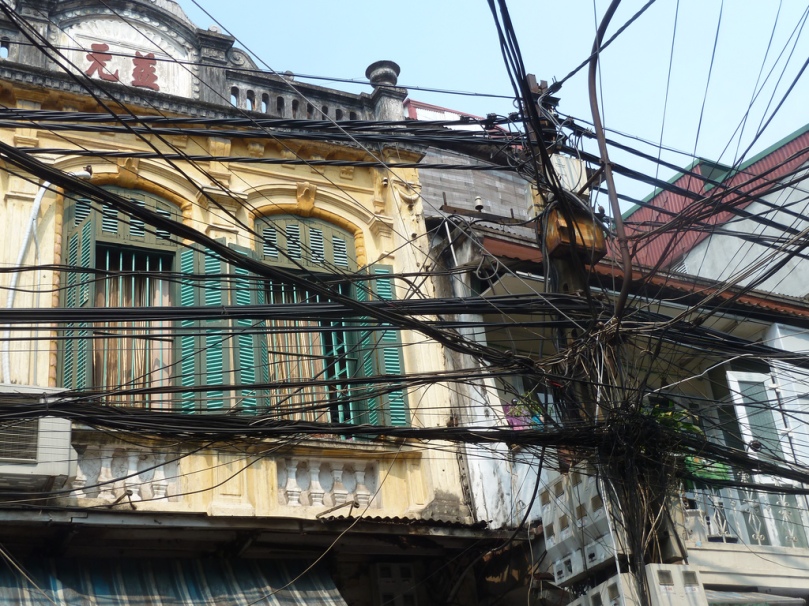
Since 2001, the Vietnamese government has acknowledged the need to increase generation capacity in the electricity sector. With unprecedentedly growing demand of 14% per annum, the electricity industry, however, commonly fails to deliver, especially during peak hours and dry seasons. It is reported that ‘in the whole country there were 3,000 blackout incidents due to system overloading during the first 7 months of 2008’, equivalent to ’14 blackouts a day’ (Nguyen and Dapice, 2010). As a way to mitigate this chronic electricity shortage, the industry’s biggest player, Electricity Vietnam (EVN) has to buy in all that is produced domestically and import from neighbouring countries such as Laos and China. Yet, not only cannot EVN satisfy its primary objective of ensuring a secure electricity supply, but it also suffers significant annual financial losses of hundreds of million dollars. EVN claims that too low average pricing of electricity is the cause of this loss. In addition, audit reports reveal that EVN’s diversification policy had caused further losses.

The inefficiency in infrastructure investment and inadequacy in organizational management have caused anger amongst the public, creating an extremely negative attitude towards the traditional monopoly structure of the electricity sector. Utilising a popular measure, policy makers therefore choose to apply the ‘marketisation’ or liberalization model that is, in theory, similar to the liberalization model that has been implemented in the UK and EU since the 1990s. The main reasons behind the policy are: 1) to assist the government in infrastructure investment; 2) to expose EVN to competitive forces through encouraging private and foreign investment which would force it to improve its financial and operational performance; and 3) to provide affordable and stably-priced electricity. These 3 major objectives are thought to be the outcomes of introducing competition to the traditional monopolistic market structure. This causal link is, however, usually assumed rather than discussed and tested.Read More »

Re-centering Inequality in African Economic History

2010-10-18_10-55-00_Mozambique_Maputo_Macamo.jpeg

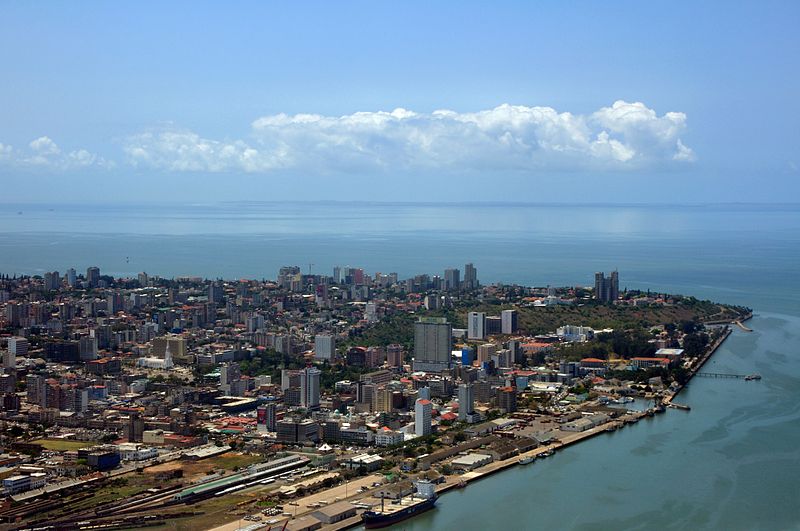
African economic history today lacks a literature to provide an accurate portrayal of economic growth in Africa during the decades after the Second World War. [1] The scholarly field of African Studies has exacerbated problems caused by the lack of synthetic works on African economic history or discussions of national or regional policymaking, because of its focus on localized studies often undertaken with an anthropological focus. One of the fathers of the anthropological turn in African history, Steven Feierman noted in 1999 that the success of his methodology was making it increasingly difficult to tell African history at a macro-level on its own terms. [2]  Read More »

Unequal Inequalities Revisited

1.png

Any discussion of inequality includes an implicit normative or ethical comparison of distributions; a certain distribution of some good, or of gains in that good, is acceptable or not acceptable, is better or worse, is improving or stagnating. If discussions of inequality also inevitably involve rankings and comparisons of different distributions, then how inequality is defined and measured will affect these rankings and comparisons. The choice of measurement of inequality is therefore not value neutral.Read More »