The Case Against the Universal Liberalisation Model for Economic Growth

power-electricity-line-pylon-159218

For years, policy-makers have used the United Nations’ country classification, based on per capita gross national income, as the measurement of their country’s development. The aspiration to move up the scale assumes that: 1) economic growth is the international standard measurement of development; and 2) the more one produces, the better one’s quality of life will be. The history of political movements and economic policies has witnessed both successful and failed attempts to move up the scale. The countries that have accelerated their economic growth have been celebrated worldwide and the general perception is that the people in these countries now enjoy a more resourceful life. This attitude towards economic growth has created a presumption that pro-growth policies observed in more developed countries and actively promoted by international institutions could be applicable in other developing countries. Can this classification ever be misleading?Read More »

Consequences of Deindustrialization in Brazil and South Africa, and Potential Remedies

Sugar_Factory_with_clean_vapor_emission.jpeg

In a previous post, I wrote about the global trend of premature deindustrialization; the trend towards lower levels of industrial employment, and a shift away from industrial employment at lower levels of per capita income, and how the effects on human well-being of these trends are not yet clearly understood. An important question in understanding the impact of these changing structural patterns on individuals’ well-being is to whether either a lifting of the living standards of those not in formal employment, or the generation of employment to replace the manufacturing employment, is taking place.

In a recent working paper, I illustrated how combining a household level indicator of well-being with decomposition of change analysis can shed light on these questions by focusing on two specific episodes of growth; South Africa from 1996 to 2007 and Brazil from 1991 to 2010. Using Census data from IPUMS, I created indices of well-being on a scale of 0-100, using indicators such as child survival rate, access to clean water and electricity, and educations levels, culled from census data. Next, each household was assigned to a “type” based on sectoral employment of the household head and urban/rural location, and average household scores were calculated for each type. A decomposition of change analysis was then used to assign improvement in well-being to improvement within the types and shifts in population between these types.Read More »

Premature Deindustrialization and its Consequences for Human Welfare

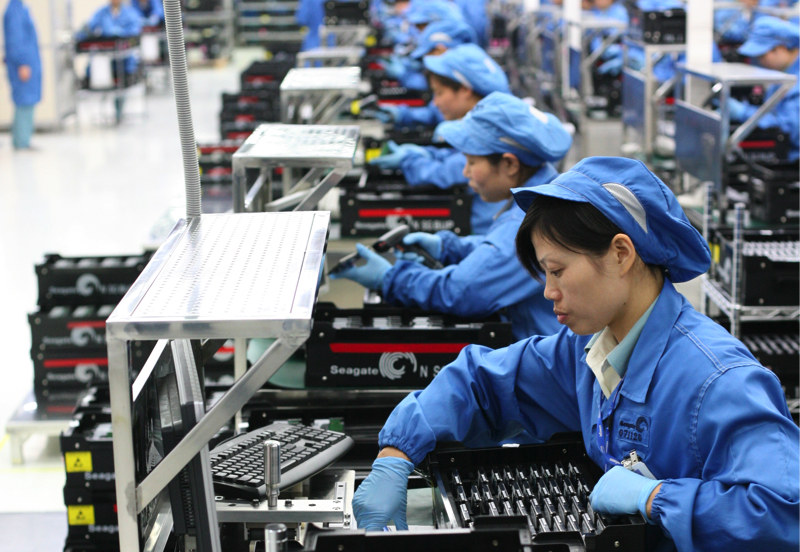
Seagate_Wuxi_China_Factory_Tour.jpegRecent research suggests that late industrializers have not been following previously observed patterns in terms of sectoral change and employment, but the effect of these changing structural patterns on well-being and the distribution of gains from growth has not yet been systematically examined. There is a global shift towards both lower employment in industry at all levels of income per capita and de-industrialization, the shift from manufacturing to service employment, taking place at significantly lower levels of income (See work by Timmer, de Vries, and de Vries; Subramanian; and Rodrik here, here, here and here).

Deindustrialization, Employment Generation, and the “Precarization” of Global Labor
There are many reasons why these new patterns may have negative effects on inclusive development; some recent research emphasizes the important role that periods of high levels of manufacturing employment have played in now wealthy countries, and the dearth of wealthy countries that have skipped such a phase; there are concerns about the effects of lower levels of manufacturing output on both growth and employment generation ( See again Timmer, de Vries, and de Vries and Rodrik).Read More »

Using Minsky to Better Understand Economic Development – Part 2

HymanMinsky-1.jpeg

The work of Hyman Minsky highlighted the essential role of finance in the capital development of an economy. The greater a nation’s reliance on debt relative to internal funds, the more “fragile” the economy becomes. The first part of this post used these insights to uncover the weaknesses of today’s global economy. This part will discuss an alternative international structure that could address these issues.Read More »

“Private Property” and the Dakota Access Pipeline

29357938502_139c5ae7f7_o.jpg

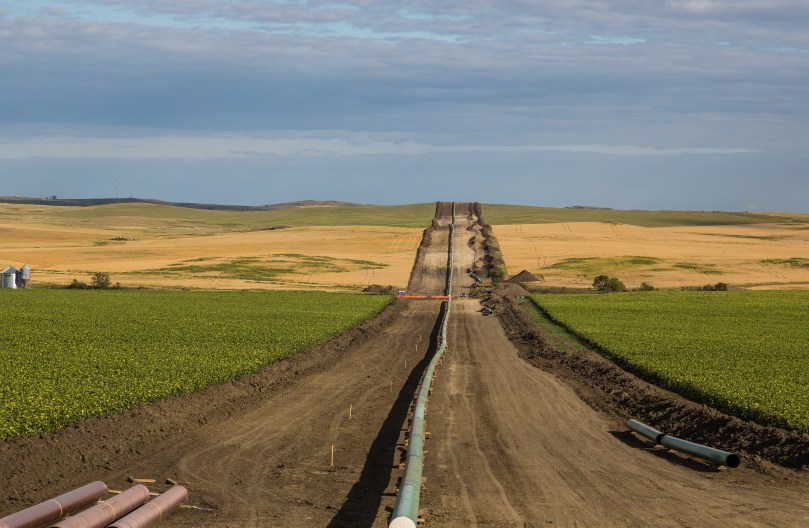
Since the announcement of the Dakota Access Pipeline (DAPL) in 2014, which was planned by Energy Transfer Partners for the transport and access of the Bakken oil fields, it has gained traction as a controversial initiative because of its environmental impact, the threat it poses to water supply and its effect on Native American sacred lands. Since August 2016, a group of protestors have been organizing on the Standing Rock Indian Reservation petitioning against the U.S. Army Corps of Engineers and protesting at the actual site of the pipeline (see this New York Times article). While the violence surrounding the pipeline is within itself shocking, the media coverage has been extremely polarized on the issue. Often falling along partisan lines, “liberal” news sources oppose the pipeline on humanitarian grounds and “conservative” sources support it, but both forms of media glean their conclusions about the pipeline from uncritical understandings of the conflict. Both sources ignore that, at the heart of the issue, are issues surrounding what private property is and the consequences of our chosen definition. Instead of taking for granted colloquial definitions of property we can see the underlying distributional inequality inherent to the pipeline by critically assessing how property and law interact.Read More »

Beyond the Third Moment in Law and Development: New Insights from Legal Political Economy

This blog post provides insights from what I have come to call the legal political economy perspective to critique the World Bank and neoclassical economics more generally. At the heart of what has been called the World Bank’s Third Moment in Law and Development is the claim that government involvement is necessary to eliminate “market failures” and promote both business development and social justice.

In contrast to the mainstream Law and Economics (L & E) approach, which informs the Third Moment, my position, derived from the Critical Legal Studies (CLS) tradition (and its historical ancestor, Legal Realism), is:

  • Property is fundamentally a bundle of rights and thus property ownership at its core entails coercive power struggles between rivals and between owners and non-owners; coercion at its core.
  • The interrelatedness of law and power relations (“If the program of Realists was to lift the veil of legal Form to reveal living essences of power and need, the program of the Critics is to lift the veil of power and need to expose the legal elements in their composition” (Gordon 1984, 109)). These power struggles over economic outcomes occur within the context of background laws that determine property, contracts, and torts.
  • The notion of an economic seesaw in Hale’s framework with potential for instability in property and contractual relations.
  • If the goal is to understand how legal structures shape power struggles then the question becomes how are the laws themselves to be determined? Following the CLS perspective, I would emphasize the role of ideational factors determining the intellectual underpinnings of neoliberal policies—factors that have consciously been created by the financiers of the L & E tradition.

Read More »

Rethinking the Law and Economics Paradigm

url

As a step toward that ideal it seems to me that every lawyer ought to seek an understanding of economics. The present divorce between the schools of political economy and law seems to me an evidence of how much progress in philosophical study still remains to be made. In the present state of political economy indeed, we come again upon history on a larger scale, but there we are called on to consider and weight the ends of legislation, the means of attaining them, and the cost.’ (Oliver Wendell Holmes; 1897) [1]

The World Bank’s policy focus shifted in the 1990s from a market-oriented paradigm to other issues such as social justice, poverty reduction and “market failures”, where institutions had to play a greater role [2]. Known as the Post-Washington Consensus or the Third Moment in Law and Development, this new paradigm emphasizes the importance of “good governance”, the implementation of property rights for economic growth, and makes the following proposition: well-defined and formalized property rights lead to market efficiency, economic growth and development. Hence, since then the establishment of the “rule of law” has become the new goal to reach for developing countries.

However, this Law and Economics paradigm relies on a narrow set of theoretical assumptions and is heavily influenced by neoclassical views of the state, the market and overall competition. But this framework raises some questions: (a) are these assumptions empirically valid, namely is the implementation of property rights a necessary condition for economic growth and development? And (b) are “perfect competition” and “market failures” reliable concepts one should start from to cope with development – if by such term we mean a social and economic process that will ultimately increase human well being?Read More »

Using Minsky to Better Understand Economic Development – Part 1

table-facebook.jpg

This year the global system has seen two major shocks: Brexit, and Trump. What these events have in common is their populist rhetoric that promised to bring back jobs, while also making xenophobic statements. These elections have tapped into growing anxiety over job security, which has not been addressed by most governments and has given room for demagogues to tap into the anger of the people. They reflect a problem that transcends the boundaries of any single nation: the global economy has been in a slump for almost a decade. Governments need to create jobs, and public fiscal stimulus is the way to do so. To allow it, we must rethink that system.

To understand why we have to consider the international system in which nation states currently operate in. Its current characteristics present challenges for developed and developing economies alike. There are two important features to consider: first, the system creates a deflationary bias by requiring recessionary adjustments and hoarding of the international mean of payment (i.e. dollars). Second, it lacks mechanisms to offset the chronic surpluses and deficits between nations, thus breeding financial instability. In a nutshell, it leads to poor creation and distribution of demand that is managed through capital flows. Instead of propping up demand, the global economic system props up debt.

This post will be split into two parts. This first part will employ the theories of Hyman Minsky to explain the features of our current global economy. Next week, we will follow up to discuss  an alternative system that would allow for a better distribution of demand among countries and would support emerging economies’ development by freeing them from the swings of international markets.

Read More »